
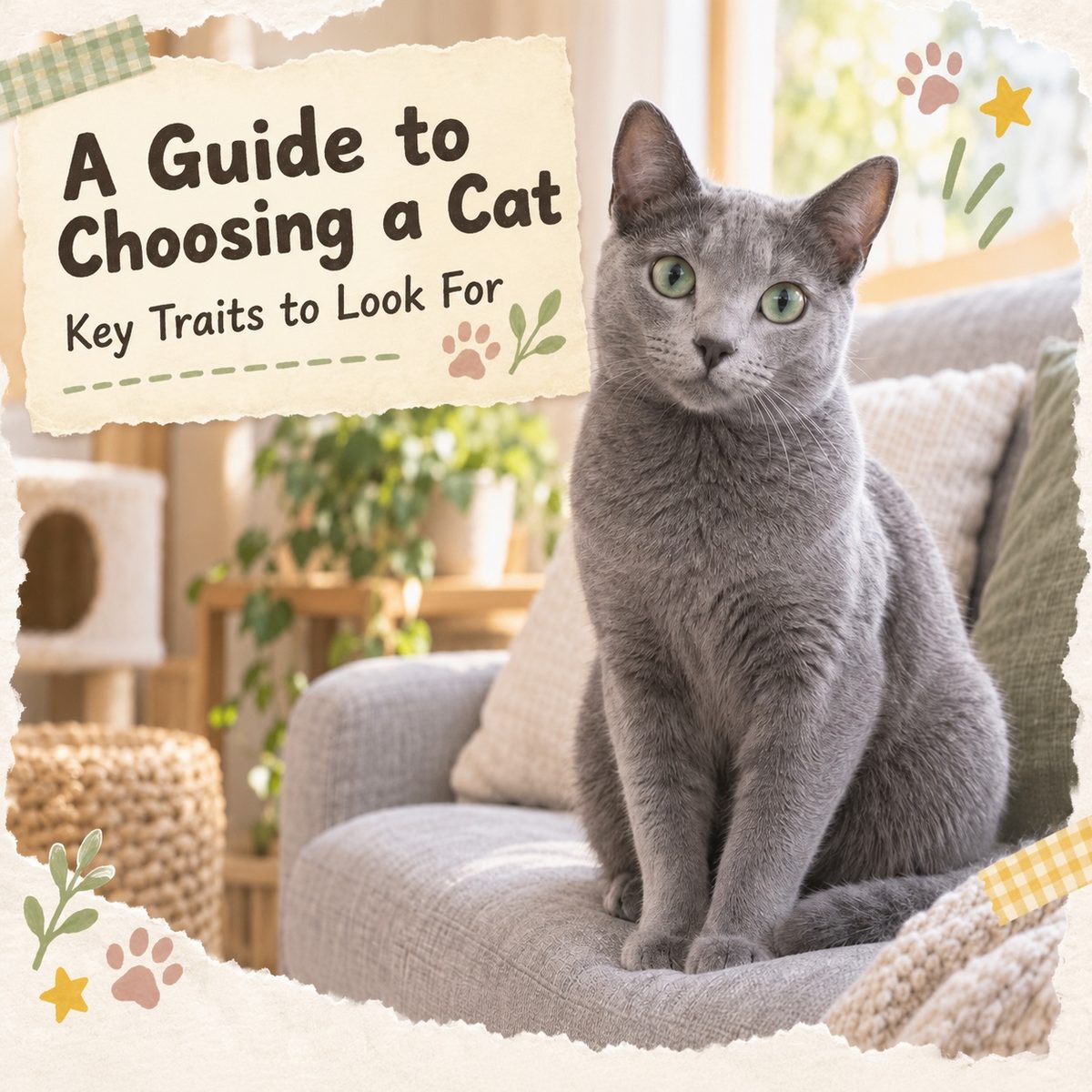
Quick answer: The Russian Blue is a silver-blue velvet-coated, green-eyed 'one-person cat' with a gentle, loyal but shy personality. It suits small Hong Kong flats; as long as you brush regularly, control weight, keep the environment stable, install window screens and watch urinary health, you can raise an elegant, long-lived and aloof companion.
The Russian Blue is the 'silver-blue aristocrat' of the cat world: a double silver-blue coat with emerald green eyes, gentle and intelligent, extremely loyal to its owner, but shy with strangers and afraid of noise and change. It suits Hongkongers with a regular lifestyle who want a cat that 'only recognises you'; environments with constantly changing routines and frequent guests may not be suitable.
What is a Russian Blue? Key points in 30 seconds
The Russian Blue is a natural short-haired breed originating from the northern Russian port, known for its silver-blue double coat, emerald almond eyes and wedge-shaped face. It is quiet, intelligent and extremely loyal to its owner, but shy with strangers—a typical 'one-person cat'. The table below lists the specifications Hong Kong owners most often check; prices, suitability and expenses are broken down below.
| Item | Russian Blue |
|---|---|
| Origin | Russia (Arkhangelsk port) |
| Breed type | Natural breed, short hair |
| Average lifespan | 12–18 years (notably long-lived) |
| Weight | Male 3–5 kg / Female 2.5–4 kg |
| Coat colour | Silver-blue with silky sheen |
| Coat texture | Double short coat, thicker in winter |
| Eyes | Emerald almond eyes (kittens change from yellow to green) |
| Voice | Soft, quiet, no midnight yowling |
| Tolerance of being alone | Medium-low (prone to separation anxiety) |
| Intelligence/trainability | High (can open doors, learn commands) |
| Hong Kong price | About HK$6,000–15,000 |
| Monthly basic expenses | About HK$700–1,300 |
Three essential things to know:
- 'One-person cat' is no joke — Russian Blues bond with one primary caregiver and keep their distance from others; if you want a cat that everyone can cuddle, this is not it.
- Shyness is a breed trait — it's not antisocial, it just needs time; new family members, renovations and moving house can all make it withdraw.
- Short hair does not mean zero grooming — the double coat still needs brushing 2–3 times a week during shedding season, but 1–2 times a week is enough normally.
Remember this: The Russian Blue is a combination of 'aloof to the world, affectionate with you', and the price is that you must provide a stable routine and enough companionship.
Russian Blue price and monthly expenses (2026 Hong Kong market)
Price is only the entry fee; what really affects the decision is the fixed monthly expenses. The table below shows actual Hong Kong market ranges; figures are for reference only—ask about each item before ordering.
| Item | Range | Notes |
|---|---|---|
| Registered breeder | HK$8,000–15,000 | Pedigree certificate, parental health screening records |
| Licensed pet shop | HK$6,000–11,000 | Limited supply, pre-order required |
| Adoption (Russian Blue-like mix) | HK$0–2,000 | Mostly neutered and vaccinated |
| Vaccines (first year, three doses) | HK$900–1,500 | Annual booster thereafter |
| Neutering | HK$1,500–3,500 | Cheaper for males, more expensive for females |
| Monthly food | HK$350–700 | Dry food plus complete wet food, weight control needed |
| Monthly cat litter | HK$120–250 | Clumping clay litter / tofu litter |
| Monthly deworming (shared) | HK$80–150 | Internal and external |
| Monthly grooming supplies | HK$30 (shared) | Silicone brush, de-shedding comb |
| Medical reserve (recommended) | HK$200–500 | Urinary and obesity-related issues |
| Monthly total | About HK$700–1,300 | Excluding major medical costs |
One-off expenses (extra in the first year):
| Item | Range |
|---|---|
| First-year vaccines + deworming | HK$1,100–2,000 |
| Neutering surgery | HK$1,500–3,500 |
| Cat tree + basic equipment | HK$600–2,000 |
| Window screens (essential for high-rise) | HK$800–2,500 |
The item Hong Kong owners most often underestimate is the medical reserve. Although Russian Blues are long-lived and rarely ill, obesity and urinary problems are very common; one ultrasound plus blood test starts at HK$1,500, so saving HK$200–500 a month is practical, not conservative.
Who is the Russian Blue suitable for? 3 self-check questions before deciding
| Owner type | Suitability | Reason |
|---|---|---|
| Work from home / semi-retired | Very suitable | Enough companionship time, shyness becomes stable |
| Single office worker (fixed routine) | Suitable | Regular meetings, Russian Blues love routine |
| Frequent parties / many guests | Not recommended | Frequent strangers make it hide long-term |
| Families with children | Needs assessment | Russian Blues don't tolerate rough handling; teach children |
| 9-to-9 and frequent business trips | Not recommended | Long alone time, high risk of separation anxiety |
Reverse self-check (three questions):
- How many hours a day is someone home, and is the routine regular?
- Can you accept a cat that always keeps its distance from guests and won't roll over and beg?
- Do you have a monthly medical reserve of HK$200–500?
If you can't answer 'yes' to two of the three, it's time to consider other breeds, or adopt a mixed-breed cat first to test your lifestyle.
Russian Blue compared with other breeds
| Breed | Personality keywords | Monthly basic expenses | Beginner suitability |
|---|---|---|---|
| Russian Blue | Shy, owner-bonded, quiet | HK$700–1,300 | Yes (needs time) |
| British Shorthair | Independent, calm, prone to obesity | HK$600–1,200 | Yes |
| Siamese | Vocal, high interaction, hates being alone | HK$800–1,500 | Only if you have time |
| Ragdoll | Affectionate, tolerant of handling, long hair | HK$900–1,600 | Yes (long hair grooming) |
| American Shorthair | Lively, friendly, adapts quickly | HK$600–1,200 | Yes |
| Domestic cat (Hong Kong cat) | Large individual variation, hardiest | HK$500–1,000 | Yes |
In one sentence: for quiet and owner-bonded, choose a Russian Blue; for calm with everyone, choose a British Shorthair; for interaction, choose a Siamese. None is superior—only whether it matches your pace of life.
Russian Blue health check schedule: when to test what
Russian Blues are generally healthy and long-lived; the three things to watch most are urinary tract, weight and teeth. Regular checks are much cheaper than fixing problems after they occur:
| Age | Recommended items | Approximate cost |
|---|---|---|
| 2–4 months | First-year vaccines (three doses) + deworming | HK$900–1,500 |
| 6 months | Pre-neutering blood test + neutering | HK$2,000–4,000 |
| 1 year | Annual check-up + vaccine booster | HK$500–900 |
| 2–6 years | Annual check-up; urine test from age 3 | HK$600–1,200 |
| 7+ years | Every six months: blood test, urine test, thyroid | HK$1,200–2,000 per visit |
Three daily observations (free but must be checked daily):
- Water intake: refill the flowing water fountain daily; a sudden big increase or decrease is a urinary/kidney signal.
- Litter box: frequent visits with little urine, or crying in pain, is an emergency—do not wait.
- Weight: weigh monthly; an overweight Russian Blue loses its waistline, and a loss of more than 5% in a month also needs a vet visit.
Three budget plans for a Russian Blue: thrifty, standard, secure
The same Russian Blue can be kept in three ways; the key is to choose in advance, not to discover a shortage after a problem occurs:
| Item | Thrifty | Standard | Secure |
|---|---|---|---|
| Food | HK$350/month (mainly dry) | HK$500/month (dry and wet mix) | HK$700/month (mainly complete wet food) |
| Cat litter | HK$120/month | HK$180/month | HK$250/month |
| Deworming | Shared HK$80/month | HK$100/month | HK$150/month |
| Medical reserve | HK$0 (rely on cash) | HK$200/month | HK$500/month |
| Extras | — | Annual check-up | Six-monthly check-up + pet insurance |
| Monthly total | About HK$550 | About HK$980 | About HK$1,600 |
| Suitable for | Tight budget, has cash reserve | Most families | Want to avoid sudden large expenses |
Insurance vs self-funded reserve: Hong Kong pet insurance annual premiums are generally HK$1,500–4,000 (depending on age and coverage), with excess and caps. If you already have more than HK$20,000 in liquid cash, saving yourself is more flexible; if not, insurance is a tool to spread sudden risks—you don't need both.
Four common misconceptions about the Russian Blue
Before deciding, clear up these four common misunderstandings:
| Misconception | Reality |
|---|---|
| Russian Blues are 'zero-allergen' cats | No cat is truly zero-allergen; allergens are mainly saliva and skin flakes proteins, Russian Blues just have fewer skin flakes |
| Russian Blues are naturally aloof and dislike people | They are shy with strangers but extremely clingy with owners; don't confuse the two |
| Short hair needs no brushing | The double short coat still sheds heavily in season; brushing 1–2 times a week, 2–3 times during shedding, is still needed |
| Russian Blues are definitely more expensive than British Shorthair blues | Hong Kong market: Russian Blue HK$6,000–15,000, British Shorthair blue HK$5,000–12,000; depends on pedigree, not absolute |
Summary: The Russian Blue is a reward-type breed for 'stable routine + willing to give time'. If you meet the conditions, it rewards you with a quiet, loyal, long-lived silver-blue companion; if you rush in, shyness and separation anxiety can become behavioural problems.
Russian Blue appearance: why recognisable at a glance?
The Russian Blue's silver-blue coat has a silky sheen, paired with a wedge-shaped face and green eyes, giving an aloof and elegant air.
| Item | Information |
|---|---|
| Origin | Russia (Arkhangelsk port) |
| Coat colour | Silver-blue with sheen |
| Coat texture | Double short coat, silky feel |
| Eyes | Emerald almond eyes |
| Body type | Slender and elegant, muscular |
| Weight | About 3–5 kg |
| Lifespan | About 12–18 years (notably long-lived) |
Kittens are born with yellowish eyes; the green takes several months to one or two years to settle—if the whole litter has green eyes, they 'light up' only as they grow.
Russian Blue personality: only the chosen one gets affection
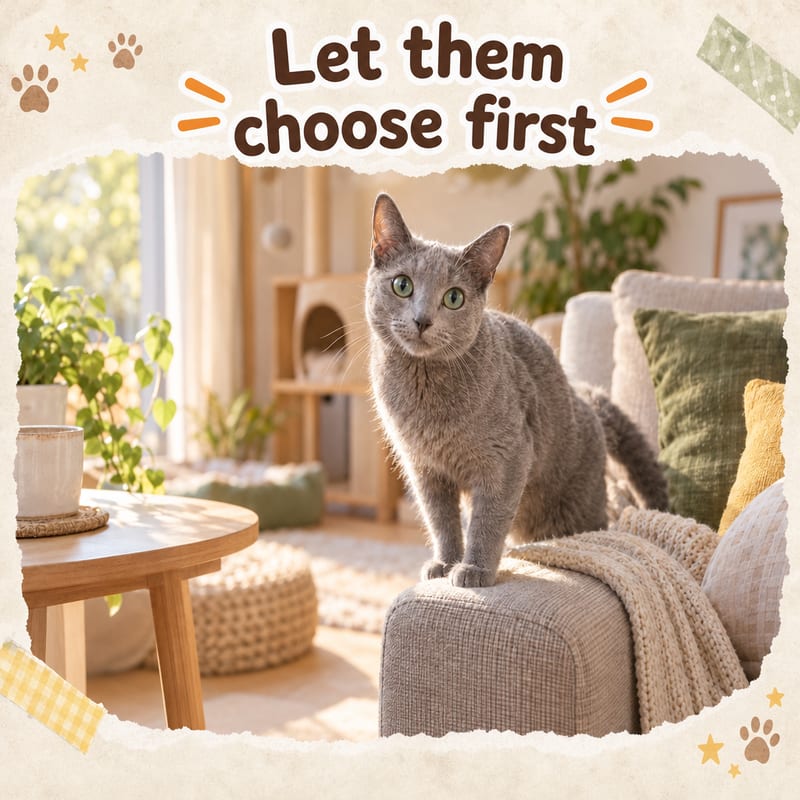
- Gentle and intelligent: mild temperament, strong learning ability, can open doors and learn to sit still
- Loyal and clingy with owners: extremely close to familiar people, likes to follow you everywhere
- Shy with strangers: hides when guests come, needs time to trust new faces
- Loves quiet, sticks to routine: dislikes sudden changes; meal times and litter scooping spots must be fixed
- Soft voice: a quiet cat, no midnight yowling
In one sentence: the Russian Blue is a 'one-person cat'—aloof to the world, affectionate with you. If you want a cat that is 'intelligent, gentle and loyal', the Russian Blue is a good choice; but if you expect it to roll over and beg for every visitor, it will disappoint you and you will be disappointed too.
How to care for a Russian Blue: grooming, diet and environment
1. Short hair, easy care Double short coat—brushing 1–2 times a week is enough, increase frequency during shedding; no need for a groomer.
2. Diet control Russian Blues are slender but prone to obesity; being overweight loses the 'elegant lines' and strains joints—feed at fixed times and amounts, count treats.
3. Stable environment They are sensitive to stress: new family members, renovation noise, moving house all need to be introduced slowly, with fixed meal times and quiet hiding spots.
4. Litter box matters Russian Blues are generally clean; scoop the litter daily and place the box in a quiet spot; if dirty, some Russian Blues will refuse to use it and go elsewhere.
Genetic diseases and health: when to see a vet?
Russian Blues are generally a healthy, long-lived breed without a high-incidence genetic disease like PKD, but still watch for:
- Urinary problems: male cats are at risk of blockage and bladder stones; encourage drinking (a flowing fountain helps)
- Weight management: obesity causes joint and metabolic problems
- Stress-related behaviour: over-grooming, hiding may be signs of anxiety
When to see a vet immediately:
- Frequent litter box visits with no urine, blood in urine (male blockage is an emergency)
- Poor appetite, weight loss, vomiting
- Over-licking to the point of hair loss and broken skin (first rule out skin and stress causes)
- Sudden unusual lethargy or hunching motionless
Is the Russian Blue really hypoallergenic?
The Russian Blue is often called a 'hypoallergenic cat': some say they have less fur and fewer skin flakes. But be clear:
- No cat is truly 'zero-allergen'—allergens are mainly saliva and skin flakes proteins (Fel d 1), not the hair itself
- Some allergy sufferers react less to Russian Blues, but each cat's allergen protein level varies
- People with allergies should test by actual contact before deciding to keep one, not rely solely on 'hypoallergenic' marketing when ordering
Hong Kong living environment: small flats, humidity and window screens
- Suits small flats: Russian Blues have moderate activity and are quiet, no stress in a small flat; one cat tree plus a windowsill satisfies them
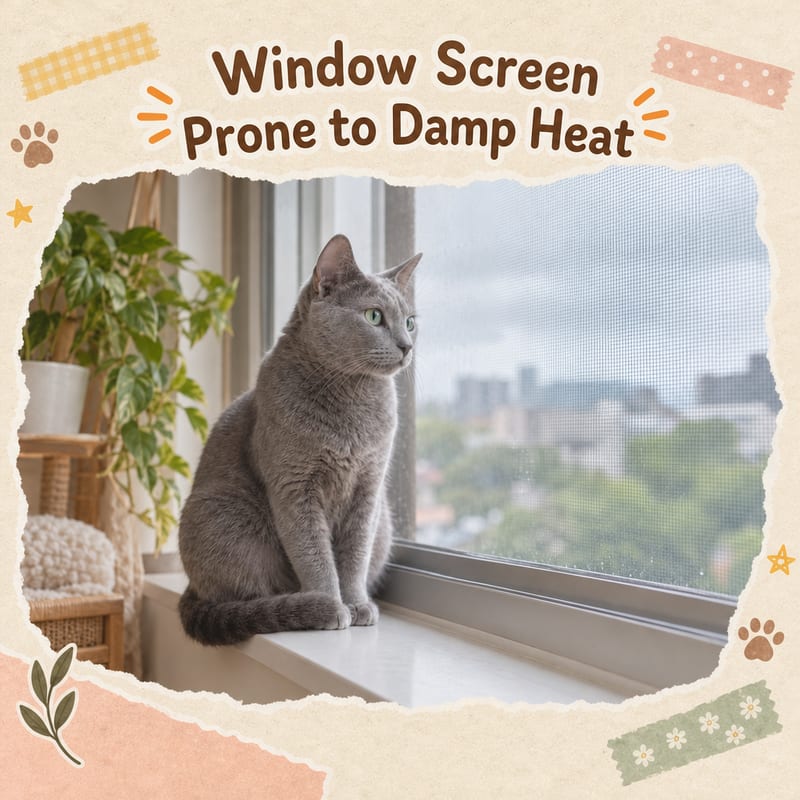
- Hot and humid summers: despite short hair, the double coat dislikes stuffiness—air-conditioning and ventilation, multiple water bowls, frequent brushing during shedding
- Window screens essential: falling from high-rise is the number one killer, regardless of breed, every home must install
- Companionship time: for work schedules of 9-to-6 or more, consider a second cat as company or schedule interaction time to reduce separation anxiety
Russian Blue vs British Shorthair blue: how to tell?
Many people can't tell at first glance, but it's clear once you look:
| Feature | Russian Blue | British Shorthair blue |
|---|---|---|
| Face shape | Wedge-shaped, straight profile | Round face, full cheeks |
| Eyes | Emerald almond eyes | Round orange-gold eyes |
| Body | Slender, long legs | Short, sturdy and compact |
| Coat feel | Silky double coat, silver sheen | Dense plush |
| Personality | Owner-bonded, shy | Independent, steady |
If you like 'aloof and only good to you', choose a Russian Blue; if you want 'calm with everyone', choose a British Shorthair.
If you decide on a British Shorthair, you can see the differences between blue, blue-and-white and silver shaded in British Shorthair colours explained.
Adopt or buy?
- Buy: a relatively rare breed, limited supply in Hong Kong; choose a registered breeder, check parents' personality and health records
- Adopt: purebred Russian Blue adoption cases are few, but 'Russian Blue-like' silver-blue mixed domestic cats appear from time to time—if what you love is this appearance and personality, adopting a mix is equally worth considering
What you can do starting today
- Reserve a fixed, quiet spot for the future Russian Blue's litter box and food bowls.
- Buy a flowing water fountain to help the cat develop a drinking habit.
- Check all window screens in the home.
- Families with allergies should first visit a friend who has a Russian Blue to test their reaction.
To find out which cat food suits weight control and urinary health, see PetChill's cat food reviews and product guides.
This article is for reference only; consult a registered veterinarian for any concerns.
Further reading
- Cat breed quick guide →
- British Shorthair guide →
- Persian cat guide →
- Domestic cat (Hong Kong cat) guide →
Practical guide for small Hong Kong flats: from move-in to daily life
3 days before move-in
- Quiet zone: the innermost room or beside the wardrobe, place the litter box and food bowls, away from the front door and TV wall to reduce stranger noise.
- Climbing plan: for a 300 sq ft flat, a 'ceiling-high pole + windowsill shelf' saves the most space; attach the pole to a corner, add a soft pad on top as a viewing spot; if renting and cannot drill, choose a 150 cm freestanding cat tree by the window.
- Window screen check: metal window screen mesh ≤2 cm, reinforce the frame with nylon ties, add a metal cover to the air-conditioner opening to prevent squeezing through.
Daily schedule (9-to-6 version)
| Time | Task | Tool |
|---|---|---|
| 07:30 | Serve breakfast 30 g, add water | Automatic feeder can be set to avoid oversleeping |
| 08:00 | Quick 3-minute brushing | Silicone short-hair brush, brush along the coat to remove dead hair |
| 12:30 | Check water via camera | IP Cam to watch the water bowl, notify family to refill if empty |
| 19:00 | Serve dinner 30 g, 15 minutes play | Feather wand + tunnel, stop when slightly panting |
| 22:30 | Scoop litter + check window screens | 2 minutes daily, act immediately if litter clumps suddenly increase or screens loosen |
3 summer cooling tips
- Air-conditioning power-saving mode: set to 26°C + fan convection, use a timer to turn off after 3 hours, leave the fan running.
- Double ice pads: place a gel ice pad on top of the cat tree and another on the windowsill; the cat will naturally move to the cool spot.
- Humidity management: place a dehumidifier in the corridor, keep below 60% to reduce skin sensitivity.
Stress warning lights
- Green light: finishes food within 10 minutes, normal 2–3 litter box visits daily.
- Yellow light: hides under the bed when you leave for work but still comes out to eat at night; use a pheromone plug-in to relieve stress.
- Red light: not eating for 24 hours + hiding in the same corner; book a vet immediately, do not wait.
Weekend 30-minute deep clean
- Use a HEPA vacuum on the cat tree and sofa seams to reduce skin flake accumulation.
- Remove and wash the water fountain filter, rinse with 1:20 white vinegar water to remove scale and disinfect.
- Check the food container seal; if opened for more than 6 weeks, switch to new food to avoid oxidation and stale taste.
Follow this checklist and even a 300 sq ft subdivided flat can raise an elegant and healthy Russian Blue.
📌 Key summary
- ✅ Silver-blue velvet coat + green eyes, recognisable at a glance
- ✅ Gentle and loyal, affectionate only with its owner
- ✅ Suits small flats, one cat tree + windowsill is enough
- ❌ Shy with strangers, not suitable for frequent parties
- ❌ No truly zero-allergen cat; allergy sufferers must test in person
 Fuji One full guide →


 K9 Natural full guide →
 Feline Natural full guide →



