
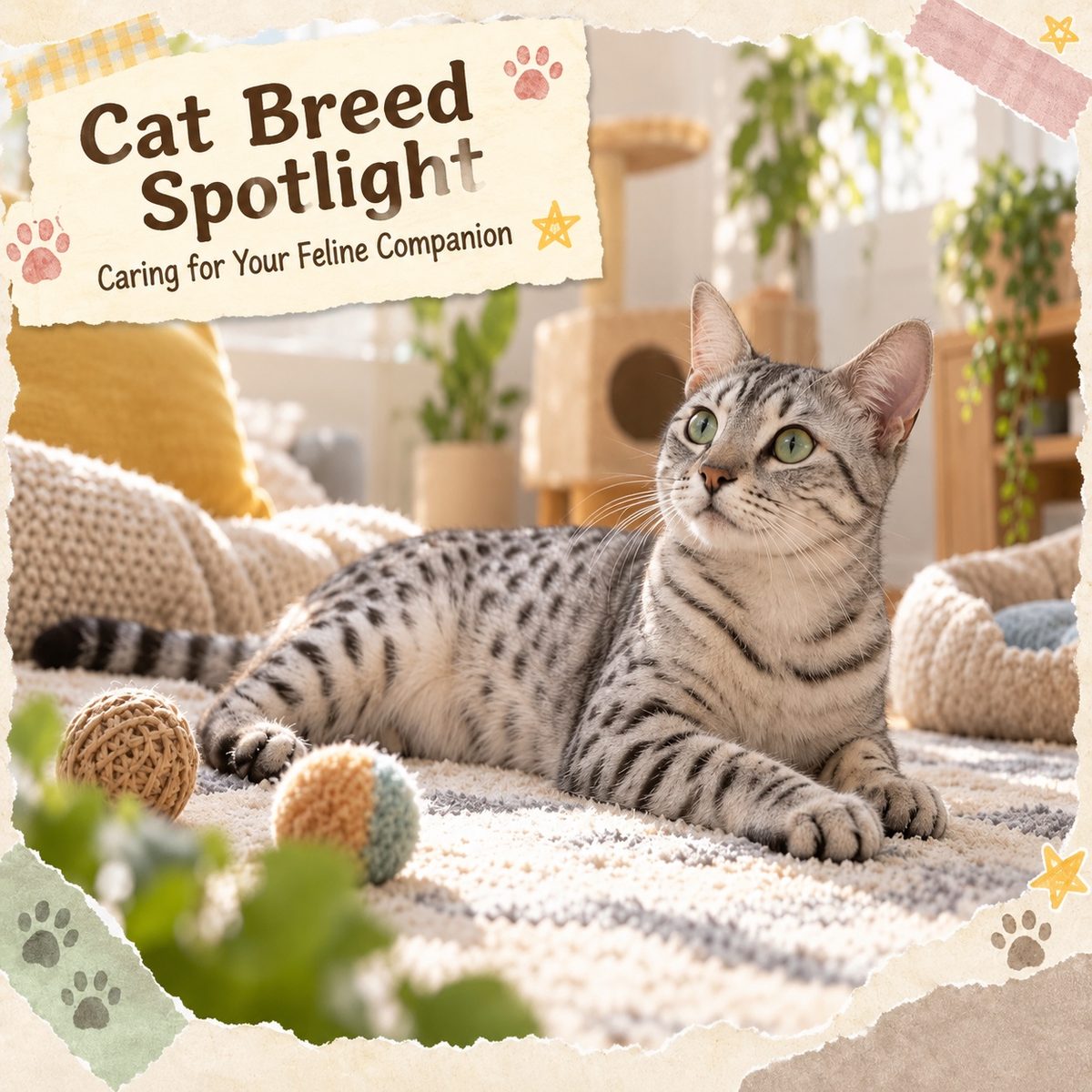
Quick answer: The Egyptian Mau's core disadvantages are not 'difficult to care for' but polarising personality (extremely slow to warm to strangers, overly clingy with the owner), high exercise and interaction needs, skin prone to sunburn, several genetic tendencies that require screening, plus very limited supply and high prices in Hong Kong. Short coat and easy grooming, robust build are its compensations. Below are seven items with coping methods: for families with a regular routine and daily time to play, most of this list can be avoided; for families who go out often and frequently host guests, please read items one and two before deciding.
Want a full picture of the Egyptian Mau? Start with the Egyptian Mau breed profile.
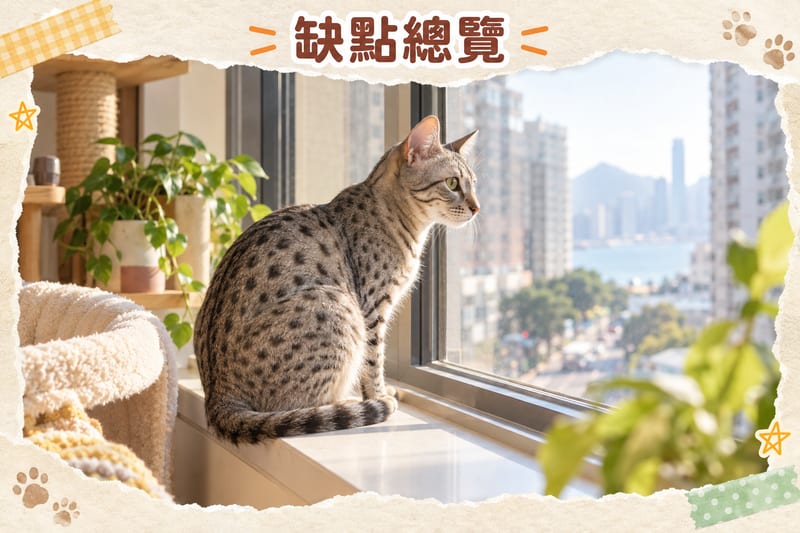
1. Overview of disadvantages: see the whole picture first, then break it down
The most practical step before getting a cat is to put 'cuteness' and 'cost' on the same table. The table below summarises the recognised disadvantages of the Egyptian Mau, with coping methods expanded in the following sections:
| Disadvantage | Severity | Coping direction | Cost direction |
|---|---|---|---|
| Slow to warm to strangers, hides | High (breed baseline) | Acceptance first, provide hiding spots, don't force socialisation | Low |
| Clingy, prone to separation anxiety | Medium-high | Alone-time training, environmental enrichment, consider a companion cat | Medium |
| Extremely high exercise needs, loves jumping high | Medium | Daily interactive play, vertical space, store fragile items | Low–medium |
| Skin prone to sunburn | Medium | Sun-blocking window film, avoid west-sun hours | Low |
| Genetic tendency to urinary stones | Medium | Wet food mainly, water intake management, annual urine test | Medium |
| HCM/PK deficiency screening | Medium | Parents' screening records, regular cardiac ultrasound | Medium–high |
| Very limited supply in Hong Kong, high price | High (market reality) | Pre-order and wait, verify catteries | High |
2. Polarising personality: guarded with the world, devoted to you
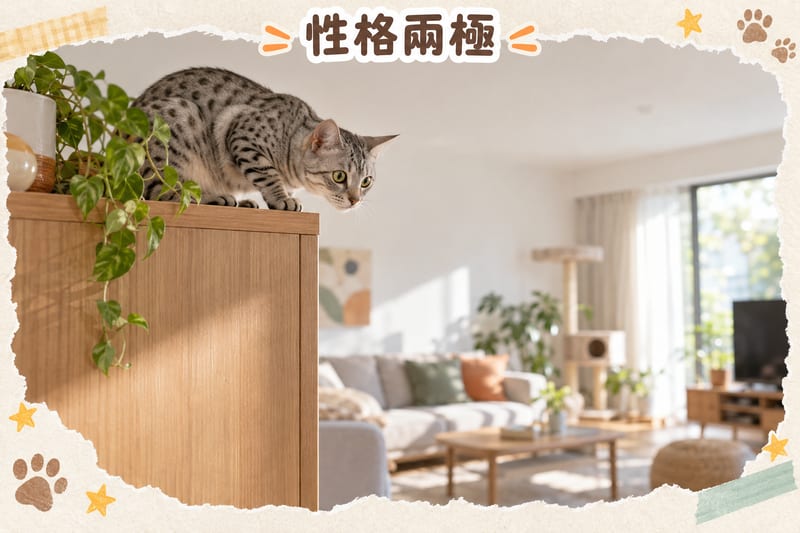
The Egyptian Mau's personality can be summed up in one sentence: it chooses its owner; not just anyone can touch it. Both CFA and TICA breed descriptions state that this breed is reserved with strangers and needs time to build trust; many will automatically disappear when guests are present, or stand on high places watching. This is a vigilance instinct selected over three thousand years of ancestry, not a behavioural problem; training can only help it 'feel more comfortable', not turn it into a social butterfly.
But the other side of the coin is: with the family it has accepted, the Egyptian Mau is loyal almost like a 'dog'—following you from room to room, greeting you at the door, sleeping by your pillow. The problem lies here: this deep attachment can turn into separation anxiety when left alone. Households where no one is home for long periods during the day must face the risk of three types of stress behaviour: inappropriate urination, excessive vocalisation, and refusing food. There are three layers of coping: first, start gradual alone-time training from the first day (begin with a few minutes out, gradually lengthen); second, environmental enrichment—window perch, puzzle feeders, two daily 10–15 minute sessions with a wand toy; third, if working hours are truly long, consider getting a second cat as a companion; once the Egyptian Mau bonds with a playmate, stress behaviours drop noticeably.
3. Exercise monster: the challenge of a small flat
The Egyptian Mau is recognised as the fastest domestic cat breed—literature records sprint speeds exceeding 30 km/h. The anatomy of hind legs longer than front legs gives it amazing jumping ability; fridge tops and bookshelf tops are generally considered not 'off-limits' but 'the floor' for them. The direct impact on Hong Kong's small flats: fragile items, medicines, receipts and documents must all be stored in cabinets; hanging lamps and curtain cords must be checked.
But the more practical disadvantage is boredom. An Egyptian Mau with no outlet for its energy will find its own entertainment: night parkour, shredding paper, opening cabinets (they can open doors and cages; toys with zips are all unsafe). The solution is not discipline but enough exercise: scheduled interactive play daily, a cat wheel (especially effective for this breed), and converting meals to puzzle feeding. An Egyptian Mau with enough exercise is a completely different cat.
4. Skin and appearance care: beauty comes with conditions
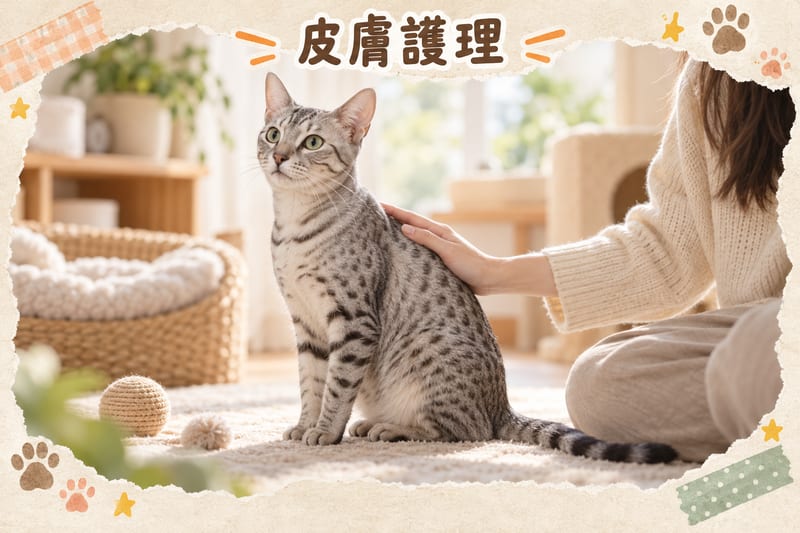
The Egyptian Mau's spots are only on the hair tips; the coat is short and thin, with limited insulation and sun protection. Lighter-coloured individuals napping by a west-facing window can actually get sunburned—red, flaky, itchy skin. Hong Kong's sunlight angle is strong from May to October; it is advisable to apply sun-blocking insulating window film to window areas, or move sleeping spots out of direct sunlight. The opposite problem is cold sensitivity: in winter, in homes without heating, heat pads and beds are essential—this trait is not trivial for a breed with a heavy cardiac load.
Grooming is good news: a rubber brush once a week is enough for the short coat; no matting issues. What really takes effort is oral care—small-muzzled breeds have a higher rate of gingivitis; weekly brushing or dental chews should be established from a young age.
5. Genetic health tendencies: three to screen, all manageable
This is the section prospective owners most need to be clear-headed about. The breed literature records three main tendencies:
- Urate urolithiasis: studies show the Egyptian Mau has a special genetic predisposition to uric acid metabolism; it is one of the few breeds recorded as prone to urate stones. Coping direction: wet food mainly, flowing water fountain to increase water intake, low-purine diet, annual urine test for crystals; diagnosed individuals need veterinary dietary management, and severe cases require surgery to remove stones.
- Hypertrophic cardiomyopathy (HCM): reported in the breed, asymptomatic in early stages. Cardiac ultrasound screening is strongly recommended for breeding cats; obtaining the parents' cardiac ultrasound records before getting the cat is the most cost-effective step. From age three, auscultation once a year to once every two years; ultrasound if any doubt.
- Pyruvate kinase (PK) deficiency: hereditary haemolytic anaemia, a DNA test exists; carrier individuals should not be bred. Anaemia symptoms (pale gums, easy fatigue, poor appetite) are mild and easily missed; a DNA test in kittenhood can give peace of mind for years.
Additionally, some lines have reports of leukodystrophy, rare but something breeders should declare. Mentioning these is not to discourage—the Egyptian Mau is overall still a robust breed with a normal lifespan range; the key is screening should be done before getting the cat, not after symptoms appear.
6. Market reality: very limited supply in Hong Kong, high price, long waits
This is the most 'material' disadvantage. The Egyptian Mau is a rare breed globally; catteries in Hong Kong with pedigree lines and regular breeding are few and far between, usually requiring queuing, and price lists are generally significantly higher than common purebreds (see the detailed price range in the same series' adoption and price guide). The side effect of scarcity is a muddy market: there are many cases sold as 'Egyptian Mau' without pedigree papers or parental screening records. Verification points: CFA/TICA registration numbers, parents' genetic test reports, on-site visits to the cattery, contract health guarantee clauses. Any case that is 'urgent sale' or 'no papers but purebred'—skip it immediately.
7. Stress management: environmental change is the big test for this breed
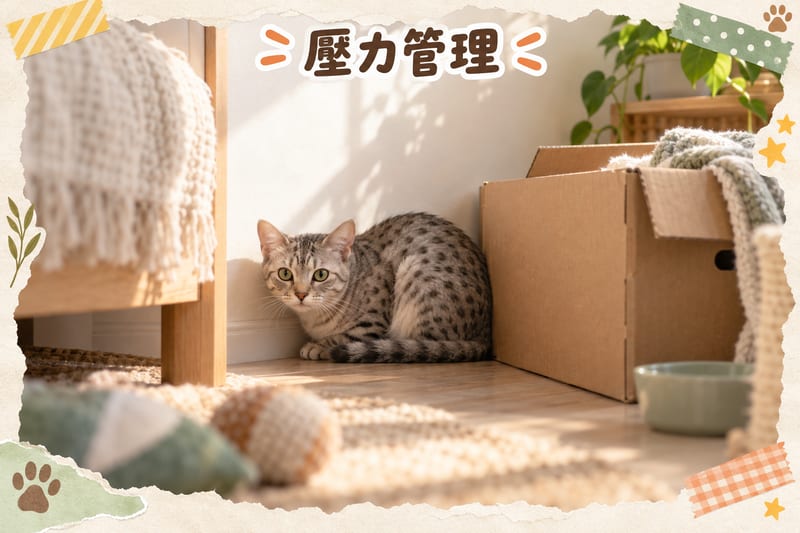
Egyptian Maus are more sensitive to environmental change than average: moving house, a new baby, changing food, even rearranging furniture can trigger stress cystitis (FIC) or short-term food refusal. This overlaps with the urinary tendency in section 5, meaning that for this breed, 'stability' is part of health. Practical advice: use pheromone diffusers before and after major changes, keep items with old scents, open only one small room in the new environment and expand gradually; for two weeks after a change, monitor water intake and litter box records, and see a veterinarian early if anything is abnormal.
Key takeaways
- ✅ Polarising personality is the core disadvantage: guarded with strangers, overly clingy with the owner; neither can be changed, only managed
- ✅ Two daily interactive play sessions are the minimum—a bored Egyptian Mau will find its own entertainment
- ✅ Urinary stones are the most practical health line for this breed: wet food, more water, annual urine test
- ✅ HCM and PK screening records must be obtained before getting the cat, not afterwards
- ✅ Skin fears both west sun and cold: sun-blocking window film + heat pad, both needed in small Hong Kong flats
- ✅ Very limited supply in Hong Kong: wait, verify, don't grab a bargain—the money saved usually goes back to the vet
- ✅ A stable environment is health: stress management even when moving house or changing furniture
Related reading
- Egyptian Mau lifespan and health guide
- Egyptian Mau personality revealed
- Egyptian Mau price and adoption full guide
- Egyptian Mau breed profile
- Puzzle feeders, flowing water fountains, sun-blocking insulating window film: get them all at PetChill pet supplies.
The medical content in this article is general information; breed disease statistics are for reference only. For urinary, cardiac, and behavioural symptoms, please consult a registered veterinarian; early screening is better than anything.



