
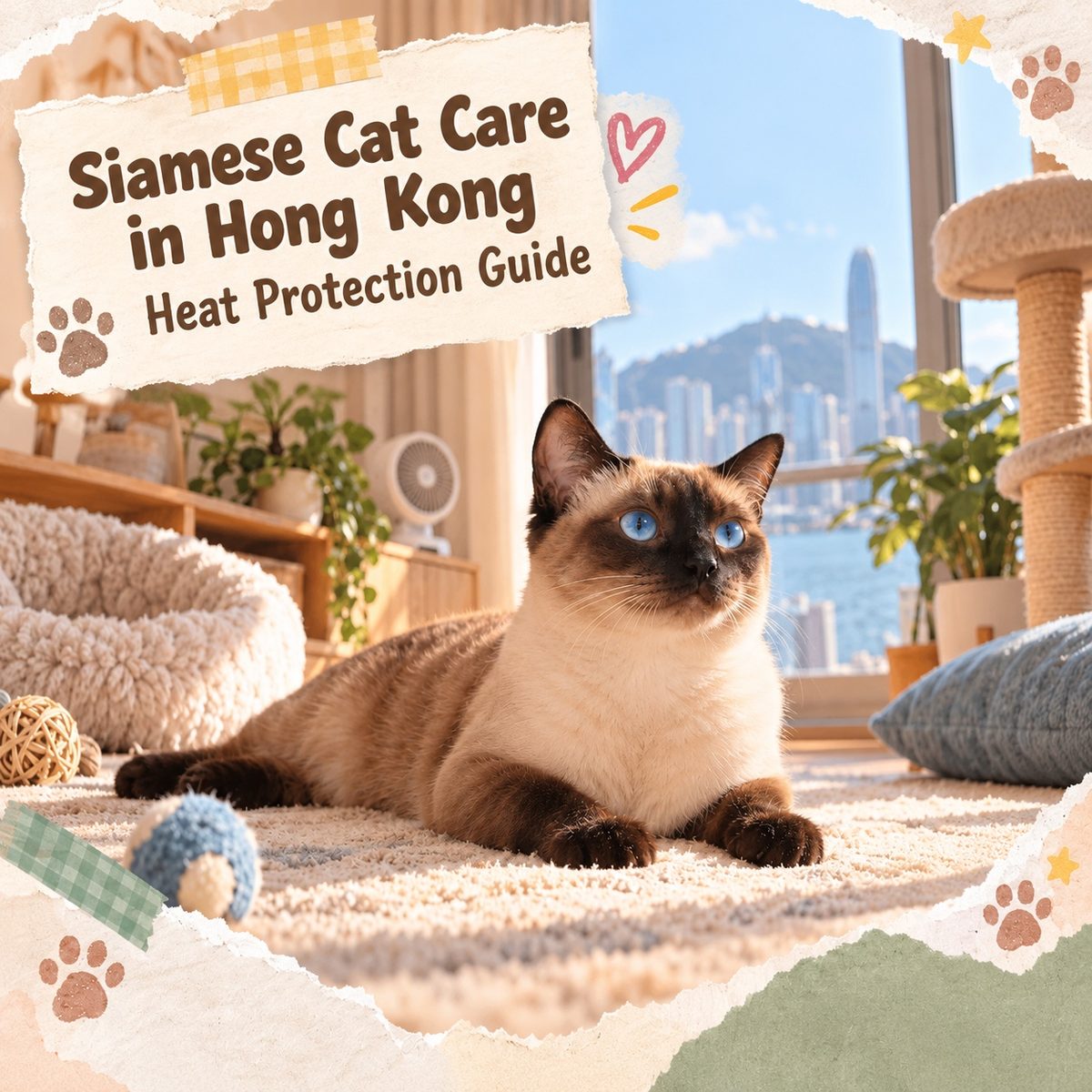
Quick answer: Siamese cats are suitable for Hong Kong: the idea that short hair means they hate heat is a misconception—they are actually more sensitive to cold. The three real priorities, in order, are window safety, companionship time and humidity management. Small flats are solved with vertical space; legally cats need no licence, but you must check tenancy terms. Get these right, and this talkative cat is the happiest, most affectionate roommate in a Hong Kong home—even a small flat cannot contain their personality.
Want to know the Siamese inside out? Start with the Siamese breed profile and the complete Siamese guide.
1. Clearing up the myth: the Siamese is not a heat-sensitive cat
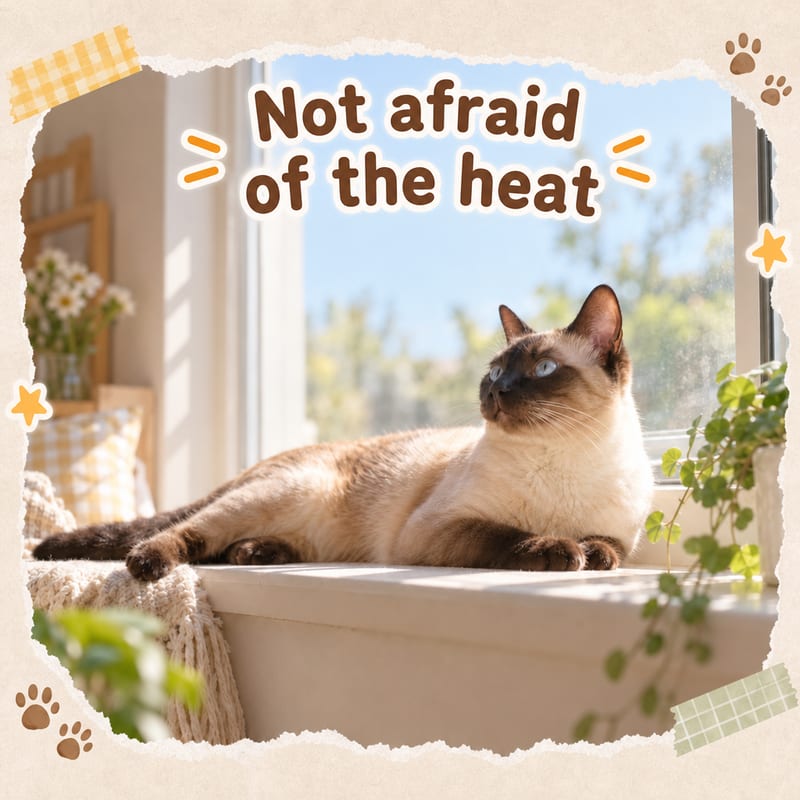
Many prospective owners assume a short-haired cat is perfect for Hong Kong summers, but that is only half right: the Siamese has a thin fat layer and high metabolism, and is a breed that feels the cold and loves warm spots. A Hong Kong air-conditioned home is comfortable for them, and in winter they will claim warm spots and the tops of appliances. What really affects them is humidity: in a year-round high-humidity environment, skin problems and ear infections become more likely, bacteria grow faster in the litter box, and wet food left out spoils and attracts insects—all chronic risks you cannot see. So keeping a Siamese in Hong Kong is not about "cooling" but about three words: "dry", "clean" and "safe".
2. Fall prevention: no compromise here
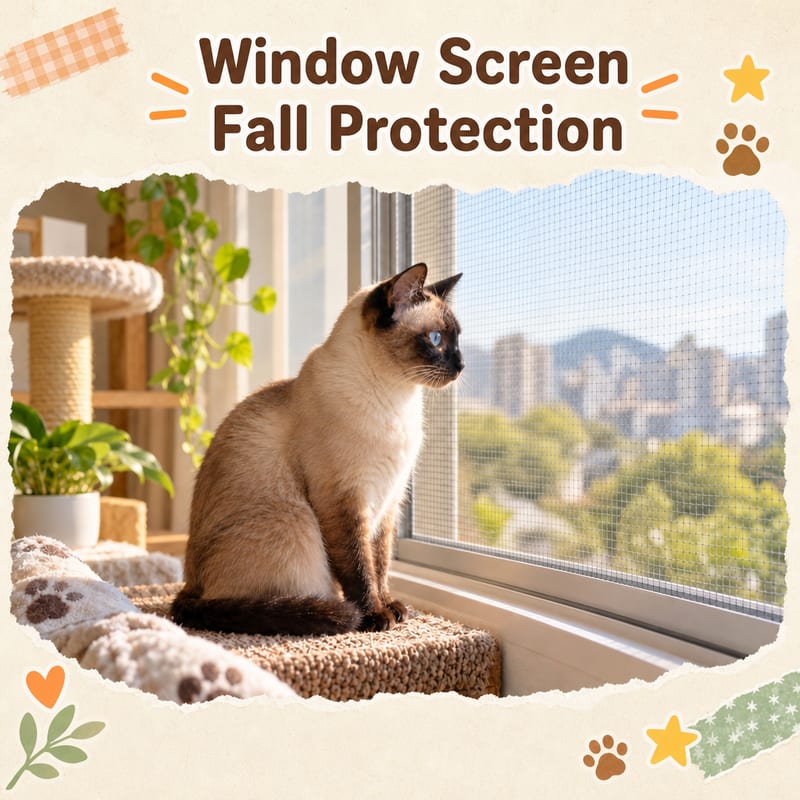
Almost every flat in Hong Kong has windows that open, and cat falls mostly happen at the moment "the window is open for ventilation". The Siamese's curiosity and climbing ability are among the highest in the cat world, so fall prevention is a must-do, not an option: veterinary clinical experience and rescue organisation statistics repeat the same lesson year after year—most fallen cats got out through "a window left slightly open".
| Item | Recommendation |
|---|---|
| Windows | Install cat-proof stainless steel mesh or grilles on all windows; be present when opening windows for ventilation |
| Air-conditioner openings | Add a baffle to window-unit openings; seal gaps around split-unit pipes with boards |
| Balcony gates | Gaps must be smaller than a cat's head; add anti-climb bars to sliding gates |
| Vertical space | Climbing frames, window perches, top-cabinet routes to satisfy the urge to climb |
| Dehumidifying | Keep indoor humidity at 55–65% during the humid season, with extra attention near the litter box |
| Companionship | Two fixed interaction sessions daily, each starting at 15–20 minutes, wand toys first |
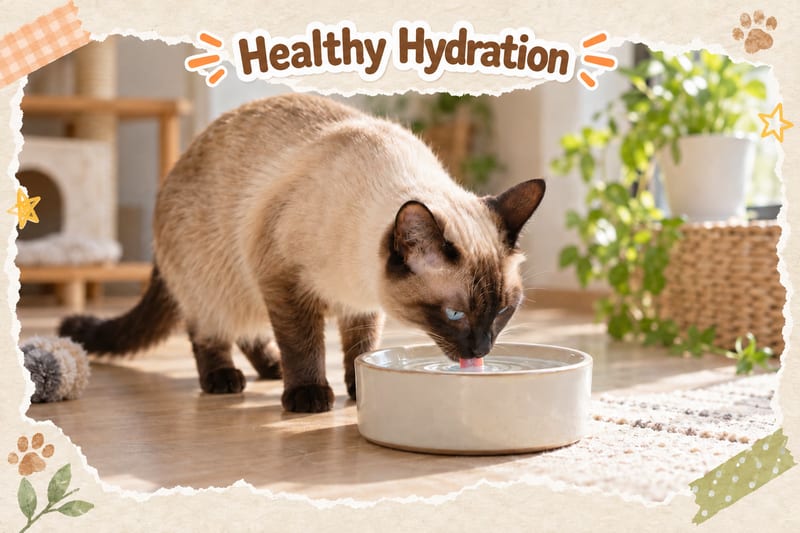
| Water | A flowing water fountain or change water three times a day—the first step in urinary health |
3. Small-flat survival: cats use walls, not floor
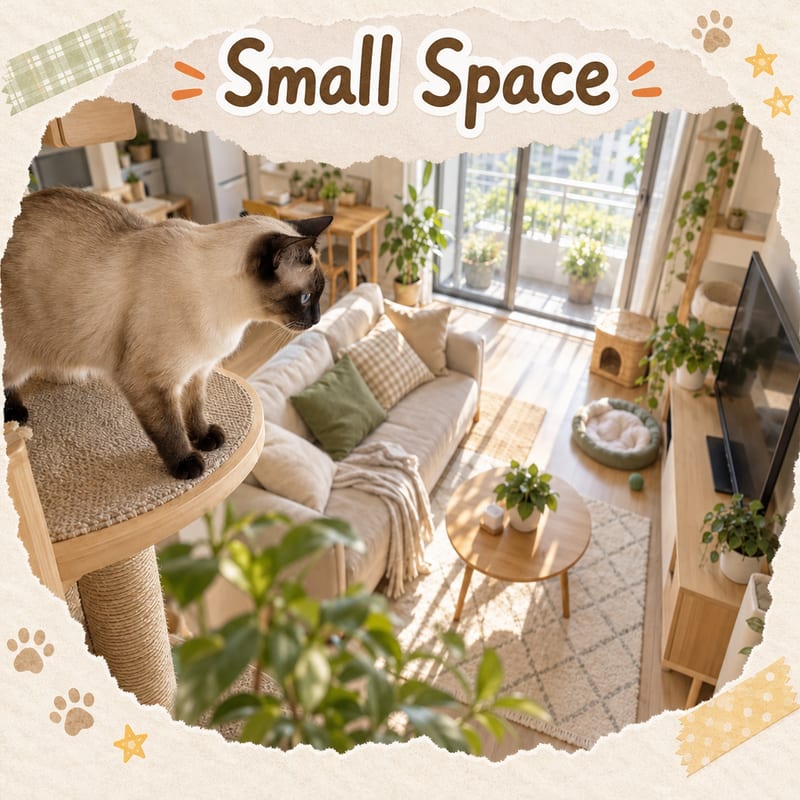
A small Hong Kong flat is not an obstacle to keeping a cat, because a cat's territory is three-dimensional: a wall-mounted climbing system plus a window perch already equals several times the floor activity area. The Siamese is light and agile, perfect for vertical space; what to watch out for is "horizontal boredom"—in a small flat without enough climbing and lookout points, they will find things to do: midnight parkour, shredding tissues, sitting on the keyboard and talking to you. If budget and wall space are limited, a window-side cat tree is a qualified starting setup; a cat tree with a hammock is a Siamese favourite. Also remember to put valuables in closed cabinets—the Siamese's "experimental push" is famous.
4. Companionship: the Siamese's core cost is not money
The CFA breed standard describes the Siamese temperament with keywords like "extremely outgoing, people-oriented". This breed's "talkativeness" is no joke—it is a real need: they follow you from room to room, choose their person, "chat" with you, and will even follow you from the door to the bedroom talking all the way. For households where no one is home during the day, there are three practical options: keep two cats for mutual company (Siamese generally accept feline companions well; kitten with kitten is safest), schedule fixed evening interaction sessions, or accept a more independent mixed-breed cat. Put "two serious sessions a day, forty minutes total" into your schedule—note "serious": ten minutes of scrolling your phone while dangling a toy does not count. This is the real entry ticket to keeping a Siamese.
5. Food and water: urinary health starts with drinking
The Siamese is active and has higher protein needs, but this breed also needs attention to urinary health—cats generally have a weak drinking instinct, and Hong Kong's dry air-conditioned environment speeds up water loss. Practical steps: increase the proportion of wet food, use a flowing water fountain, and place water bowls, food bowls and the litter box as far apart as possible. During the humid season, dry food easily spoils, so switch to sealed containers and small portions topped up frequently; if you notice frequent litter box visits, straining, or blood in the urine, do not wait—see a veterinarian immediately. Urinary blockage in male cats is an emergency measured in hours; go to the emergency clinic even late at night.
6. Law and tenancy: two sets of terms to check
Hong Kong has no licensing system for cats like dogs, but the duty of proper care under the Prevention of Cruelty to Animals Ordinance applies equally to cats; abandonment, failure to provide food and water, and long-term exposure by a window can all constitute elements of an offence. In practice, the most common problems come from contracts: public housing and some private buildings restrict pet keeping, and breaching a no-pet clause in a tenancy can lead to disputes. Before getting a cat, check two things: the building's rules or Housing Department terms, and the pet clause in your tenancy; obtain written consent if needed to avoid later disputes. Adoption organisations' home visits sometimes include a window safety check, so install protection in advance to save yourself trouble.
7. Four seasons at a glance: do the right thing each season
- Spring humid season: dehumidify the whole home, scoop the litter box twice daily, switch dry food to sealed small packs
- Summer typhoon season: top up interaction when windows are closed, check the water fountain works during power cuts, prevent insects entering through mesh gaps
- Autumn shedding season: increase brushing frequency, even for short-haired cats; check for unusual spread of the colour-point boundary
- Winter: they will claim warm spots; watch for burn risks from heaters and electric blankets, and tidy cables or add protective covers
Key takeaways
- ✅ The Siamese is more sensitive to cold than heat; an air-conditioned home is a plus, no cooling mat needed
- ✅ Fall prevention is priority one: install stainless steel mesh on all windows and be present when ventilating
- ✅ Small flats are solved with vertical space: climbing frames, window perches and top-cabinet routes all count
- ✅ Two serious interaction sessions a day are the entry ticket; a bored Siamese will express it vocally
- ✅ Three humidity tasks: dehumidify, clean the litter box, seal dry food
- ✅ Check tenancy and building terms before getting a cat; written consent avoids later disputes
- ✅ Do the right thing each season: dehumidify in spring, top up interaction in typhoon season, brush more in shedding season, prevent burns in winter
Related reading
- Siamese price and adoption guide
- Siamese disadvantages and how to cope
- Siamese personality and intelligence explained
- Cat-proof stainless steel mesh, climbing frames and flowing water fountains: find them all at PetChill pet supplies.
This article's care and legal information is general only; the latest policies are subject to announcements by the relevant authorities. For health issues, consult a registered veterinarian.
 Almo Nature full guide →



