
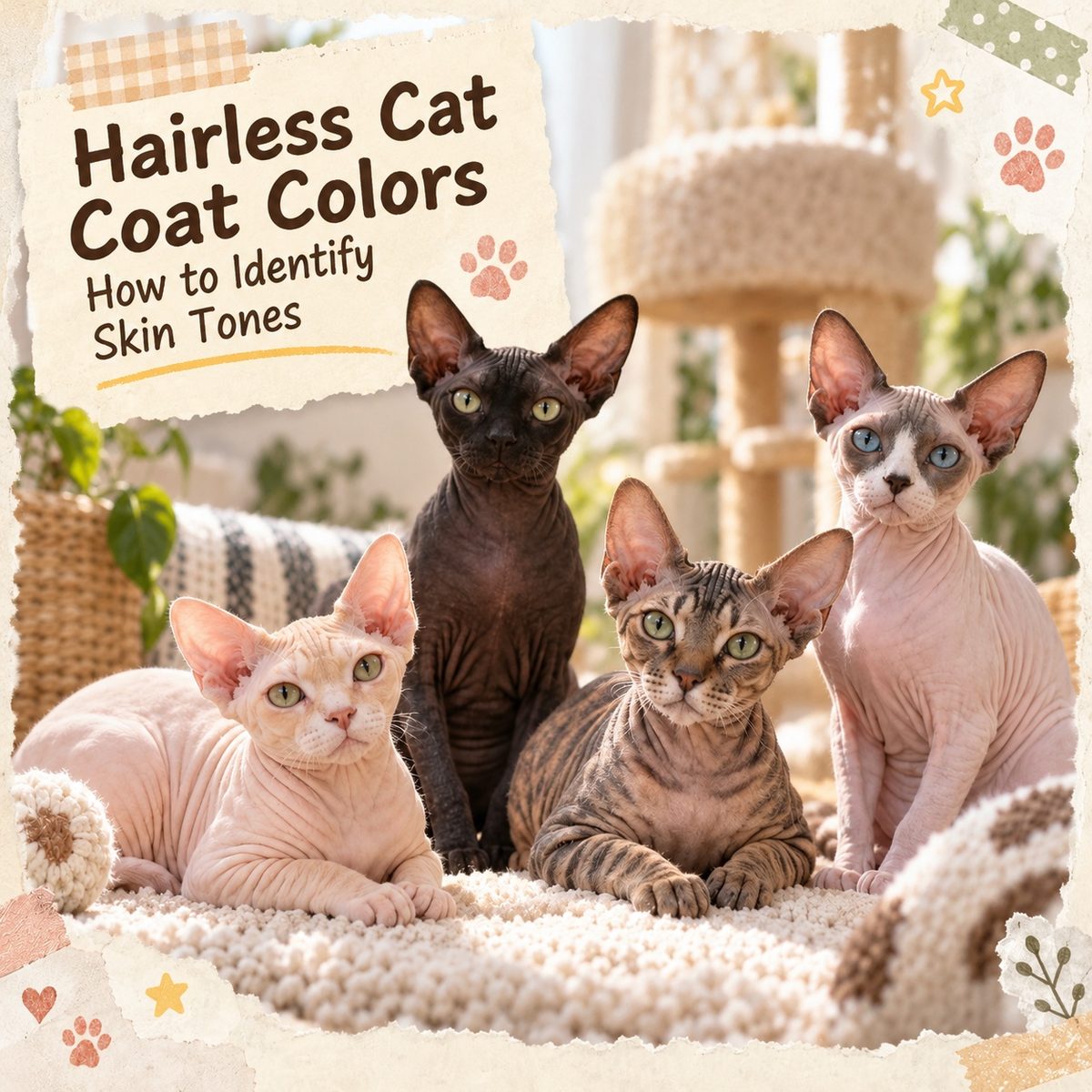
Quick answer: Hairless cats (Sphynx) come in more than one colour — the coat-colour genes are still written on the skin, and CFA recognises all feline colour systems for the breed: solid (black, blue, chocolate, lilac, red, cream), bicolour, tabby and pointed. Light individuals tan and fade; white skin with blue eyes carries a deafness gene risk that should be screened. Before choosing a colour, read this 'skin shade guide'.
Want to know the Sphynx inside out? Start with the Sphynx breed profile and the complete Sphynx guide.
1. First, bust the myth: hairless ≠ pink
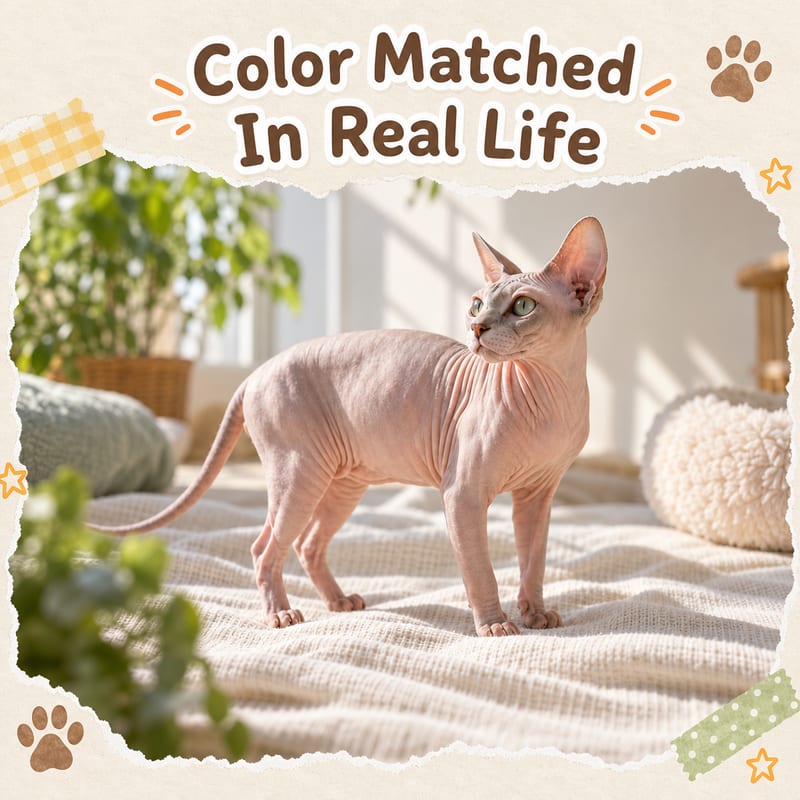
Many Hong Kong people's first image of a hairless cat is 'pink wrinkled skin' — but that is just one of all the colour systems. The Sphynx's coat-colour genes (pigment base, tabby gene, pointed gene) are fully retained; only the carrier of expression changes from hair shaft to skin. The CFA breed standard states plainly: all colours and patterns are equally valid for the breed, and judges score within the same colour framework. So you will see all-black 'Darth Vader' cats, deep blue-grey 'blue cat versions', and 'tattoo cats' with tabby stripes drawn directly on the skin. Choosing a colour when picking a Sphynx is a reasonable need, not fussiness.
2. Seven colour families on skin
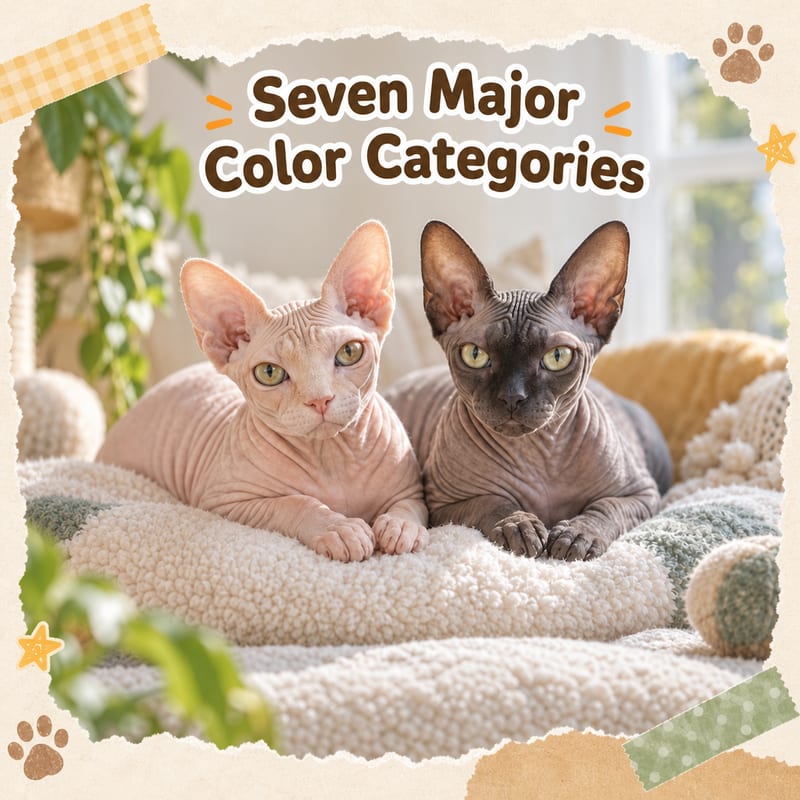
| Colour family | Skin appearance | Commonness | Care note |
|---|---|---|---|
| Solid (black/blue/chocolate/lilac) | Even, no mottling; nose leather and paw pads match | High | Dark skin goes coppery after sun (reversible) |
| Red/cream | Warm orange tone, pink base | Medium | Moderate sun protection needed |
| White/pink-white | Mainly pink flesh, may have faint patches | Medium | Strictest sun protection |
| Tabby (classic/mackerel/patterned) | Stripes and patches directly visible on skin | High | Clear pattern is a plus |
| Bicolour/patched | Symmetrical white blocks plus coloured areas | Medium | Check skin at white patch edges |
| Pointed | Darker nose, ears and extremities; lighter body | Low (sought after) | Temperature-sensitive gene; contrast weakens after sun |
| Rare (cinnamon/fawn) | Warm-toned faint pattern | Low | Similar to red family |
3. Tanning and fading: the cat that changes colour
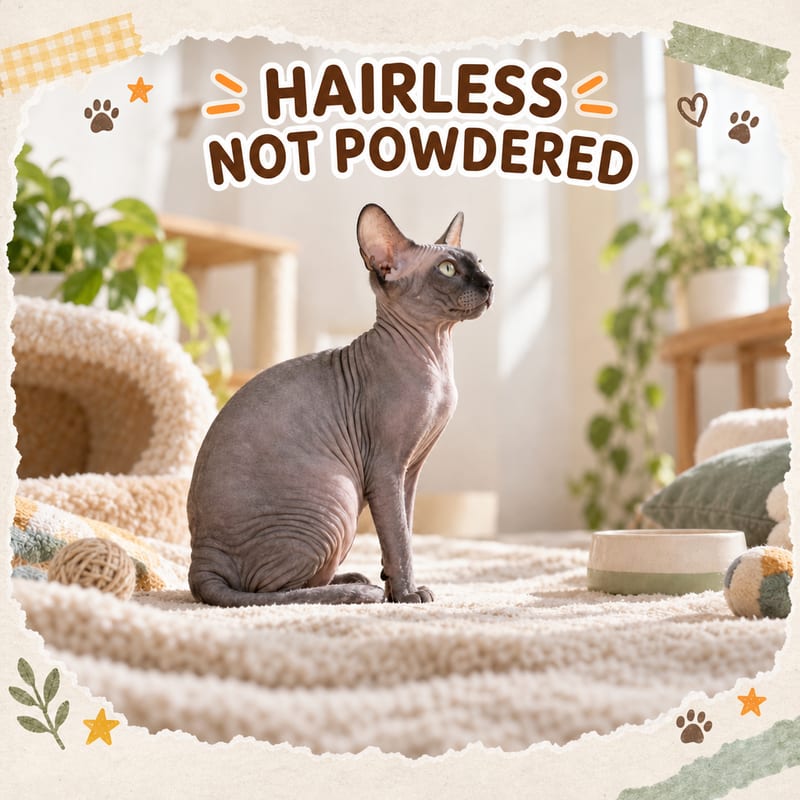
This is the most interesting part of the Sphynx colour discussion. Skin has a melanin response like humans: light individuals that sunbathe by the window in summer shift from cream to coffee, from pink-white to honey; after the season and with shading they slowly fade back. Dark individuals go coppery-brown after sun. Pointed individuals also carry a temperature-sensitive gene — their skin runs warmer than normal, and in extreme heat the 'point' contrast weakens. So: a kitten's colour at purchase does not count (it settles within six months); ask the breeder to see the adult parents; and adopters of adult cats should understand seasonal colour variation and not think the cat has turned into a different one.
4. Light vs dark: sun protection is the only real divide
In care cost, colour really affects just one thing: UV. Melanin is a natural sunscreen; white and light-skinned individuals lack that layer, and direct midday sun can cause burns (redness, flaking, pain), with long-term cumulative risk of skin lesions — the Sphynx is already the breed with the highest sun-protection needs, and light colours double it. What to do: apply heat-insulating film to the windowsill where the cat sleeps, draw a gauze curtain at midday, and use a carrier rather than a leash for outdoor transport. Dark individuals need less worry; coppery after sun is reversible oxidation and does not affect health. Oil management (weekly bathing) is the same for all colours — Sphynx oiliness is unrelated to colour.
5. Two genetic reminders
One: white skin plus blue eyes = deafness risk. The mechanism is the same as in white coated blue-eyed cats (KIT gene related), and the proportion of congenital deafness is clearly higher. It does not mean you cannot keep one — a deaf cat indoors has a normal quality of life — but when buying, ask for a BAER hearing test, and if you know, reassess your budget and training approach. Two: telling 'fake hairless' apart. Breeds such as the Devon Rex, Donskoy and Peterbald are all 'near-hairless', but their genes and skin texture differ; also, malnourished or pathologically hairless cats are sometimes passed off as Sphynx. A proper Sphynx has a 'fine down' texture (peach skin), not a glassy completely smooth surface; a pathologically hairless cat's skin shows signs of inflammation. Tell by touch before buying — this breed's feel cannot be faked.
6. Commonness and budget: how to view colour premiums
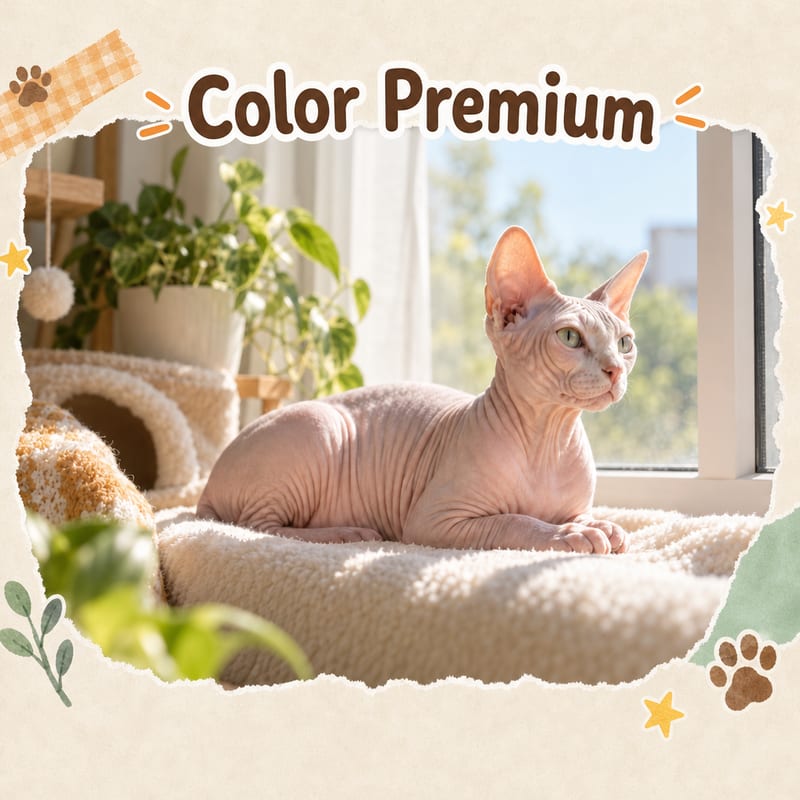
International cat shows do not score higher or lower by colour, but the market does. In Hong Kong today: tabby and basic solids (black, blue, chocolate) have the steadiest supply at standard prices; pure white, blue-eyed pointed and lilac are popular scarce combinations, and catteries usually charge a premium of several tens of percent. Two reminders: one, paying a premium for a 'rare colour' is fine, but the premium should preferably go first to 'parents fully screened' — HCM records are worth more than a scarce shade; two, from an adoption angle you basically cannot choose colour, tabby-based mixed hairless types are most common, and rather than waiting fixated on a shade, wait for an adult cat whose personality matches yours.
7. Practical colour-picking advice
Three sentences to finish: one, choose the health line first (parents' HCM records, skin currently clean and free of oil), colour second; two, choose colour by your living environment — if your home has many windows and the cat loves the windowsill, light colours mean assessing the sun-protection workload; three, follow your own aesthetic freely, but visit the cattery in person, and be aware of colour differences between photos and reality and of post-sun shade changes. A Sphynx's 'colour' is really a living skin canvas: it tans, deepens with age, and patterns stretch with growth — you only know once you live with one, and this breed's beauty-change curve is livelier than any coated cat's.
8. Five steps to judge colour on site: don't be fooled by light
Photo studios and cattery lighting are usually yellowish, and a glance can easily misjudge the shade. Ask to follow these five steps on site:
- Switch to natural light before judging: ask the breeder to bring the cat to a window in natural light for ten minutes — under warm light a 'Darth Vader' looks brown and lilac looks grey; wrong colour temperature misjudges everything.
- Check nose leather and paw pads: in solid individuals the nose leather and paw pads should match the body colour — black cat, black nose; chocolate cat, brown nose; lilac cat, pink-grey nose. Accessory colour is more stable than the main skin colour and does not distort with tanning, making it the most reliable anchor for judging colour.
- Look at the parents' settled photos: a kitten under six months is a cloud — ask to see photos of the adult parents and littermates after six months to see this cat's 'endpoint colour'.
- Feel the down texture: confirm peach-fine down rather than completely smooth (possibly another hairless breed passed off) or rough and shedding (watch for pathological causes).
- Keep the season in mind: the time you view decides which end of its colour range you see — light individuals are palest in winter and deepest in summer; a one-step difference is not a 'bargain' or a 'wrong sample'.
Common on-site misjudgements:
| Misjudgement | Reality |
|---|---|
| 'A black cat's skin going coppery means it's impure' | Dark skin going coppery after sun is reversible oxidation; it naturally darkens again in autumn and winter |
| 'Any pattern means it's mixed' | Skin tabby pattern is a CFA-recognised pattern, not a fault |
| 'Light means white' | White skin with a pink tone may show faint patches; cream is warm-toned — judge against the nose colour |
Key takeaways
- ✅ Hairless cats are not just pink: every feline colour system is written on the skin, and CFA recognises them all equally
- ✅ Shades change: tanning, fading, settling at six months — when buying a kitten, look at the parents, not the birth colour
- ✅ Light colour doubles the sun-protection workload; oil care is unrelated to colour
- ✅ White skin with blue eyes needs a hearing test — the only colour combination with health meaning
- ✅ Spend the premium first on screening records, scarce shades second
- ✅ A proper Sphynx has a fine-down texture; overly smooth or pathologically hairless individuals need verifying
Related reading
- The full list of Sphynx downsides
- Sphynx Hong Kong prices and adoption guide
- Sphynx lifespan and health explained
- Heat-insulating film, warm cat beds, fragrance-free skincare: get them all at PetChill pet supplies.
Colour classifications in this article follow the CFA breed framework; market prices and commonness are general 2026 Hong Kong observations for reference only.
 Fuji One full guide →





