
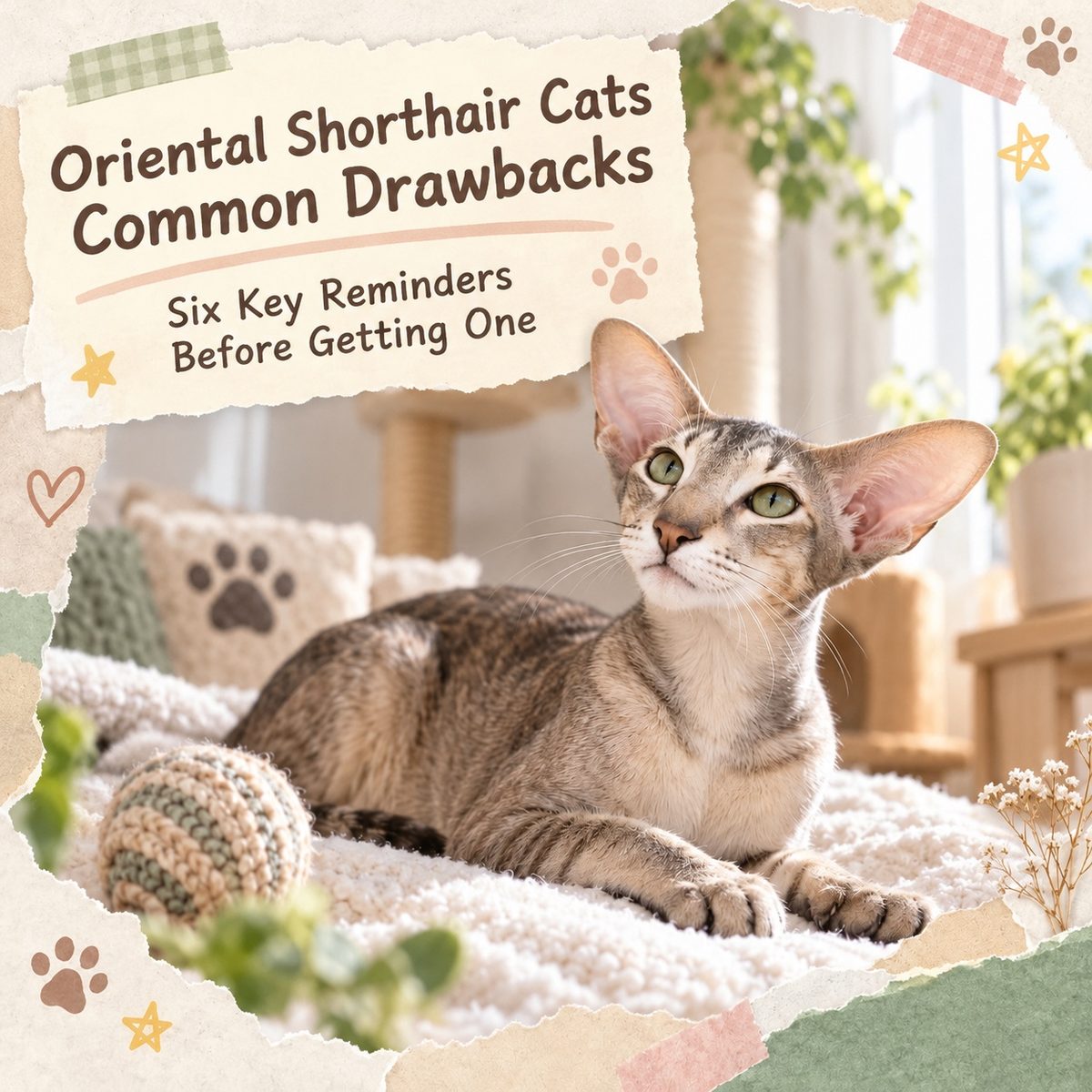
Quick answer: Seven disadvantages of the Oriental Shorthair: extreme clinginess, loud vocalisation, destruction when bored, HCM heart risk, dental problems, sensitive airways, and cold sensitivity. All have coping methods (detailed below), but only if you acknowledge they exist — accept them and you'll have the most loyal cat; don't, and it will make life hard.
Want a full picture of the Oriental Shorthair? Start with the Oriental Shorthair breed profile.
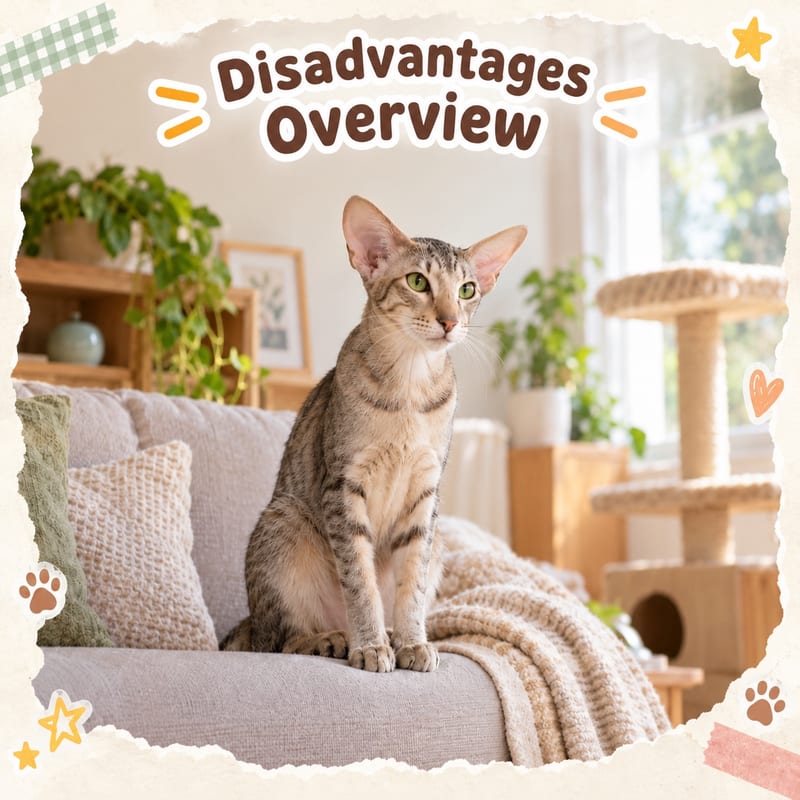
1. Overview of disadvantages
| Disadvantage | Severity | Root cause | Coping | Cost direction |
|---|---|---|---|---|
| Extreme clinginess, separation anxiety | High | Siamese companion genes | Fixed companionship times, consider a companion cat | Mainly time |
| Frequent, high-pitched vocalisation | High | Breed's talkative instinct | Respond only when quiet, drain energy during the day | Medium (neighbour relations) |
| Destruction when bored | Medium-high | High intelligence, low boredom threshold | Puzzle feeders + cat trees + play | $50–$150 per month |
| HCM risk | Medium | Genetic (Siamese lines) | Regular screening from age 3 | $600–$1,500 per year |
| Dental disease | Medium | Small jaw, crowded teeth | Daily brushing, annual scaling | Several thousand per session |
| Sensitive airways | Low-medium | Narrow trachea | Low-dust litter, no smoking or fragrance | Almost zero |
| Cold sensitivity | Low | Short coat, slim body, low body fat | Heat pad, winter room temperature | From $200 |
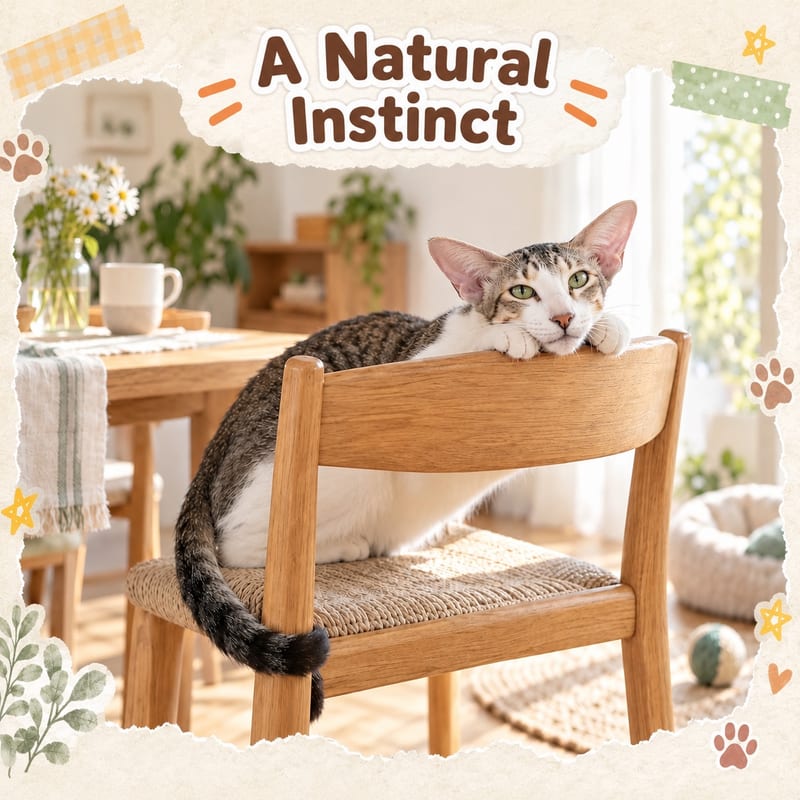
2. 'Clingy to the point of suffocation': the most common reason for regret
When rescue groups take in returned cats, the reasons given for Oriental Shorthairs and Siamese lines are strikingly consistent: 'too clingy, can't stand it'. What does that mean? They paw at the door when you're in the toilet, sit on the keyboard during meetings, stand on your head and call while you sleep. This isn't a training issue; it's genetic — the TICA standard itself states the breed is 'highly dependent on humans'. There's no magic solution, only three tactics: schedule high-quality companionship into your daily routine (see the personality article's timetable), drain energy before leaving (a 15-minute play session), and seriously consider getting two — for working people, a companion cat is the most effective 'separation anxiety vaccine'. Conversely: precisely because they're so invested, singles and families seeking a highly responsive companion cat often find this 'disadvantage' exactly the reason to buy.
3. Noise problem: don't assume all cats are quiet
An ordinary cat's meow is occasional and brief; an Oriental Shorthair's is dialogue plus narration plus concert. The 4 a.m. 'morning greeting song' and the 'daily report' when you get home are normal. Three practical lines: 1) Response discipline — only pet and feed when quiet, ignore when calling; results in two weeks; 2) Blackout and white noise for early mornings; 3) Assess your living environment — thin-walled public housing units, night shifts, households needing daytime sleep should try fostering for two days at a friend's place first. To be fair: their volume isn't generally huge (not the engine-level of a Bengal), the annoyance is frequency and persistence — the same 'dinner' question from the kitchen until the bowl lands, with escalating tone; those who can take it treat it as comedy, those who can't as torture.
4. Boredom is the root of crime: the logic of destruction
'Cats are easy, they don't destroy things' holds for independent cats, not for Oriental Shorthairs. They have three destruction routines: pushing things off tables (testing gravity and your reaction), pulling sheer curtains to climb (dawn/dusk hunting instinct), and opening all tape and drawers (puzzle-solving instinct). The common switch is boredom. The formula = 30 minutes of interactive play daily + two puzzle feeders + a window bird-watching route; Oriental Shorthairs with an energy outlet rarely show destructive behaviour. If destruction persists, rule out medical causes like thyroid or skin disease first, then review environmental adequacy.
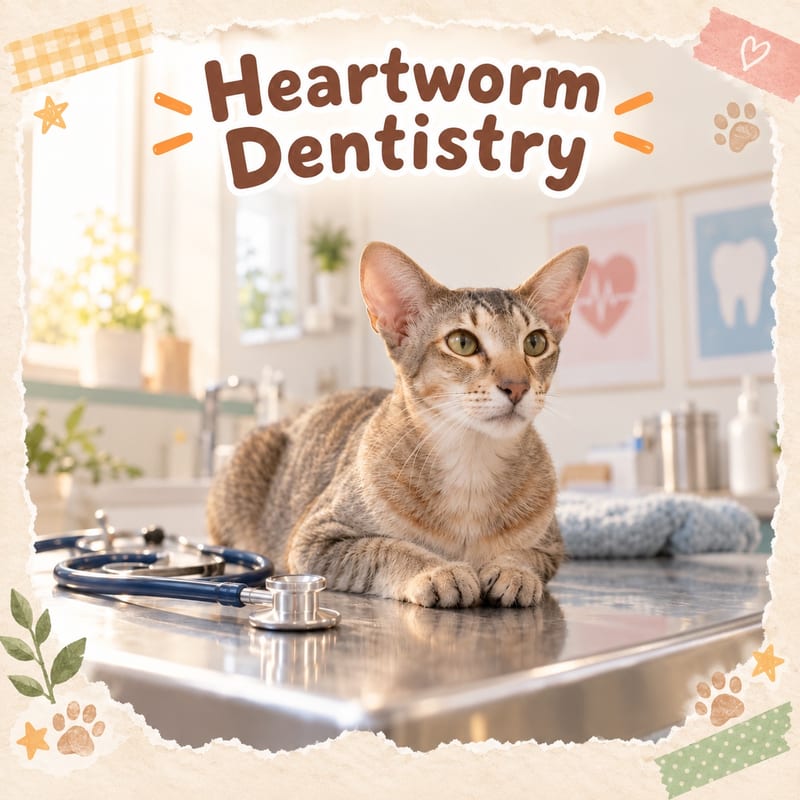
5. Medical side: HCM and dental care, two big mountains
Siamese lines are a risk group for hypertrophic cardiomyopathy (HCM); the cruelty of this disease is 'no symptoms + sudden death', so regular screening is not fussiness but necessity: from age 3, auscultation every 1–2 years, echocardiogram if a murmur is heard; some clinics can screen with blood BNP first. On dental care, a small jaw and crowded teeth bring gingivitis early, and FORL (feline odontoclastic resorptive lesions) is reported at a higher rate in this breed — warning signs are drooling and tilted eating posture; most require extraction under general anaesthesia, several thousand per session. Together, the most practical approach is to save for medical costs from a young age (see the lifespan and cost articles for figures). White, blue-eyed individuals also carry a congenital deafness gene risk; ask for BAER test records when buying. Ultimately, the medical 'disadvantages' are all about 'screening + reserves': screen diligently and this breed's life expectancy and quality are above average; skip screening and they become real disadvantages.
6. Environmental side: cold sensitivity, airways, and 'no dust allowed at home'
Short coat, slim body, low body fat: Oriental Shorthairs tolerate low temperatures worse than round-bodied cats — provide a heat pad in air-conditioned rooms, avoid drafts by windows in winter. A narrow trachea makes them sensitive to dust and fragrance — choose low-dust litter, avoid air fresheners and incense, and avoid mosquito coils and repellents entirely. These are principles good for all cats, just that clinical reactions appear faster and more obviously in Oriental Shorthairs. While breaking a myth: 'short coat = no grooming' is only half true. They don't need dematting, but a weekly rubber brush to remove dead hair, checking the large ear canals for dirt every two to three weeks, and daily brushing (see dental risks above) are still fixed chores — just all small and steady, never suddenly a hairball crisis.
7. Who really shouldn't keep one (and then who should)
A few blunt words to finish: those away from home more than ten hours a day with no companion-cat plan, light sleepers in thin-walled units, and those wanting an 'independent, elegant, low-maintenance' cat — if any of these apply, the Oriental Shorthair is not your best choice, and neither is the Siamese with the same genes. Conversely, if you're looking for a cat that greets you at the door, talks with you all evening, and keeps you company while you work, this breed's return rate is among the highest of all cats. No perfect breed exists, only match or mismatch — the purpose of this disadvantage list is to help you complete that match before getting a cat.
Key takeaways
- ✅ The number one reason for returns is 'too clingy' — assess your daily hours at home before committing
- ✅ You can't reduce the essence of the noise, only its frequency; try fostering first in thin-walled units
- ✅ Destruction = boredom signal; 30 minutes of daily play is a necessity, not a bonus
- ✅ HCM risk group: regular screening from age 3; check parental lineage records
- ✅ Dental care is a long-term major expense; start brushing early and save before illness
- ✅ Cold sensitivity and sensitive airways are environmental fixes: low-dust litter, no fragrance, add heat pads
- ✅ The purpose of this disadvantage list is matching, not deterrence — the right person will find all of the above adorable
Related reading
- Oriental Shorthair lifespan and health
- Oriental Shorthair personality explained
- Oriental Shorthair Hong Kong keeping guide
- Puzzle feeders, cat trees, low-dust cat litter: get everything at PetChill pet supplies.
Medical content in this article is general information; for heart and dental symptoms please consult a registered veterinarian — early screening beats everything.
 Almo Nature full guide →



