PetChill Pet Encyclopedia
Cat Breeds

Calico Cat Lifespan: Key Factors, Common Diseases and Longevity Tips for Hong Kong Owners

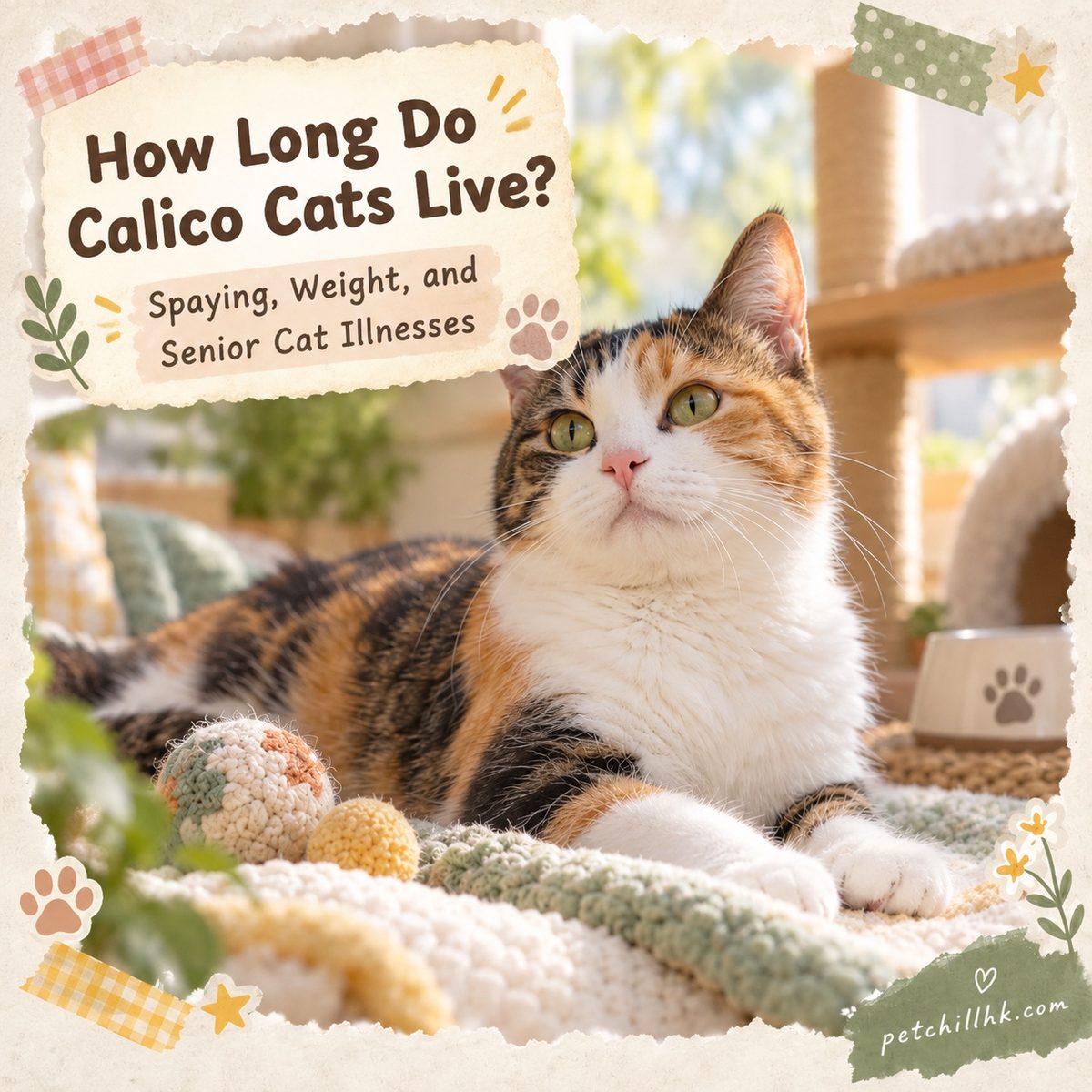
Calico cats typically live 12 to 18 years, and their mixed-breed genetic diversity is an advantage. This article breaks down the factors affecting calico lifespan—neutering, weight, escape risk and common diseases in old age—clarifies the myth that calicos are unhealthy, and includes an age-based check-up schedule and a longevity checklist to help you and your calico share more years together.

Published: 2026-09-23·9 min read·Author: PetChill Editorial
Calico Cat Lifespan: Key Factors, Common Diseases and Longevity Tips for Hong Kong Owners — PetChill

Quick answer: Calico cats are generally thought to live about 12–18 years, and the genetic diversity of mixed-breed descent is an advantage rather than a weakness; the prerequisite is that this advantage can only be realised indoors. The three major variables that determine whether this range is achieved are: strictly indoor living, weight control, and senior screening. Coat colour does not determine lifespan—'calicos get sick easily' is a myth. For medical issues, always rely on your veterinarian's judgement.

Want to know all about calico cats? Start with the Calico Cat Breed Profile.

1. Lifespan range: why calicos generally live long

Search for 'calico lifespan', 'tabby lifespan' or 'calico cat lifespan' and the answers are remarkably consistent: indoor domestic cats have an expected lifespan of about 12 years or more, and with ideal care can reach 17, 18 or even 20 years. Most calicos are of mixed-breed (domestic shorthair) descent, with a broad gene pool and lacking the inherited disease burden common in purebreds (such as polycystic kidney disease in Persians or cardiomyopathy in Maine Coons), so in the 'lifespan race' they are actually top of the class. International feline care guidelines consistently state that the single biggest factor determining a cat's lifespan is 'indoor or outdoor', with the average difference being more than double; for a calico adopted from a back alley, this is the most important number to remember. So the first step in answering 'how can a calico live long?' is not what supplements to feed, but keeping her indoors: mixed-breed calicos have stronger curiosity and escape abilities than most purebreds, so the three-piece anti-escape kit (neutering, reinforced window screens, microchip) is the most practical longevity investment—fitting window screens with limiters costs only around a thousand dollars, and the payoff is a multiplied expected lifespan; statistically, cats with the label 'indoor + neutered + microchipped' have a median lifespan clearly ahead of other combinations.

calico-lifespan-hk knowledge card 1

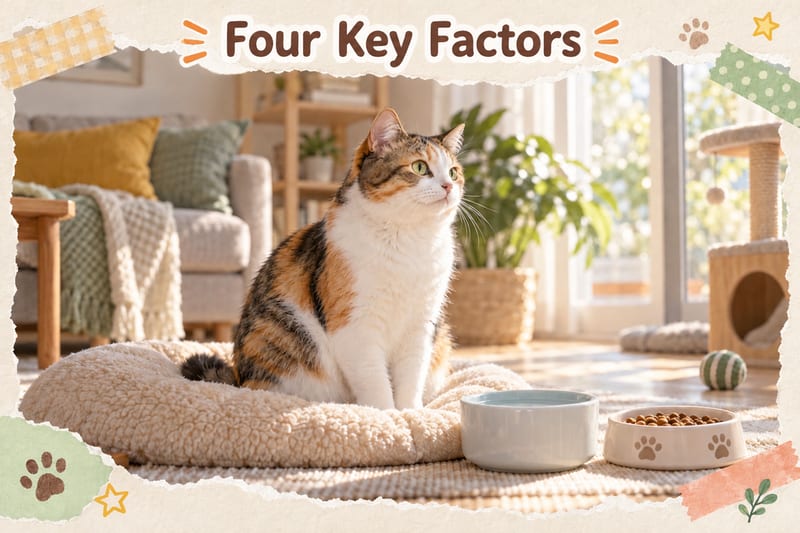
2. The four major switches affecting lifespan

Living environment: Calicos come from street-cat lineages and have strong escape instincts; traffic, poisoning, infectious diseases (feline leukemia virus (FeLV), feline immunodeficiency virus (FIV)) and fight injuries are the top causes of death for outdoor cats. Neutering, reinforced window screens and microchip registration are not luxuries—they are the basics.

Weight management: Obesity is a common risk factor for feline diabetes, joint disease and urinary tract disease, and veterinary nutritionists generally consider 'maintaining ideal body condition' the cheapest longevity medicine. Metabolism drops after neutering in calicos, and free feeding easily leads to overweight.

Access to veterinary care: Vaccines, deworming, dental care and age-based screening turn 'hidden lesions' into 'manageable chronic diseases'—mixed-breed calicos have no breed-specific disease burden, so the veterinary budget can be focused on this kind of general screening. Chronic kidney disease is one of the most common causes of death in cats, but after early to mid-stage diagnosis it can be managed for many years.

Stress and environmental enrichment: Calicos with strong boundaries are sensitive to environmental changes, and long-term stress is associated with lower urinary tract disease. A fixed routine + vertical space + daily play is behavioural healthcare. This is especially important for calicos with strong boundaries: they will not actively seek comfort, so the owner proactively maintaining a routine is the best care you can give.
Veterinarian examining a calico cat with a stethoscope, kidney blood test report on the table, owner taking notes nearby

3. Age-based health check schedule

Stage Check focus Recommended frequency
Kitten (2–12 months) Vaccination schedule, deworming, weight curve, early neutering Every 1–2 months
Adult (1–6 years) Body condition score, teeth, diet questionnaire Once a year
Mature (7–10 years) Add blood biochemistry, urinalysis, blood pressure Once a year
Senior (10+ years) Thyroid, kidneys, joints, weight trend Every 6 months

Discuss items and frequency with your veterinarian according to individual circumstances; the table above is a general framework, not diagnostic advice. A practical tip: record the key numbers from each blood test (kidney values, thyroid hormone, weight) in the same trend table—this is far more useful than a single report. Early signals of feline disease are often 'gradual changes' rather than 'crossing the line', and having a baseline lets you see changes—early signals of feline disease are mostly gradual rather than crossing the line.

4. Senior warning signs: don't dismiss these as 'normal ageing'

Continuous weight loss, noticeably increased drinking and urination, more frequent vomiting, inability to jump to previously accessible high places, sudden changes in appetite or personality—senior cat owners often attribute these to 'old age', but they correspond to kidney disease, hyperthyroidism, joint pain and other equally common and equally treatable problems. Another thing to watch in senior calicos is confirming gradual hearing loss: if individuals with large white patches and blue eyes seem to have 'worsening deafness' later in life, first rule out middle-ear problems and age-related hearing degeneration, then adjust interaction methods (hand signals, vibrating mats to signal meals).
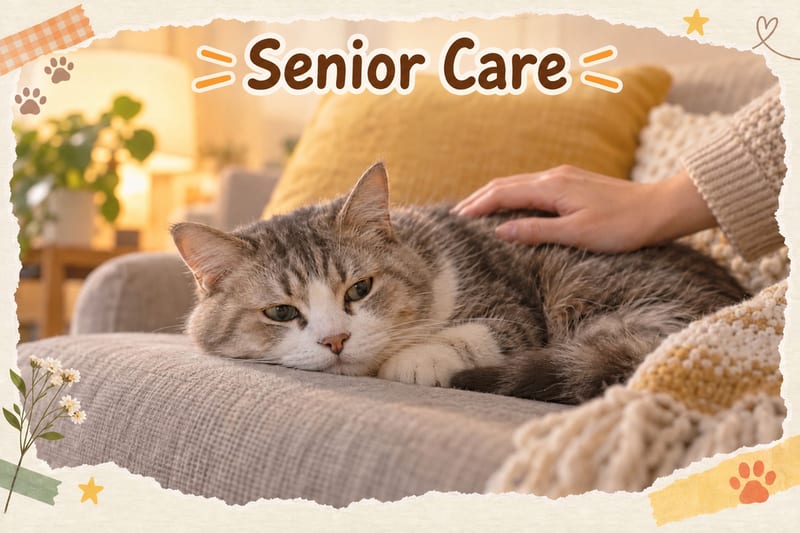
Senior calico cat walking down stairs covered with non-slip mats, low-entry litter box and raised food bowls placed at platform height

5. Longevity checklist: nine things you can do

One, strictly indoor living: don't let your guard down just because 'she was a street cat', and complete the three-piece anti-escape kit (neutering, window screens, microchip) all at once. Two, timed and portioned feeding: weigh quarterly and plot a trend, take a monthly 'top-down body photo'; free feeding is the most common switch for weight gain in mixed-breed cat households—remember to turn it off—the ideal range is ribs easily felt but not prominent. Three, annual blood and urine tests after age 7, more frequent after age 10; record key numbers (kidney values, thyroid hormone, weight) in the same trend table. Four, adequate water intake: multiple water bowls or a flowing water fountain, and moderate wet food to protect the kidneys. Five, dental care: weekly brushing or veterinarian-approved dental chews—dental problems are directly linked to chronic pain and reduced eating, and half of senior quality of life is in the mouth. Six, 10–15 minutes of play daily to maintain muscle mass and mood. Seven, stress management: fixed routine, keep a safe den; boundary-oriented calicos are most sensitive to sudden environmental changes. Eight, observation beats consultation: water intake, litter box visits, willingness to jump—these 'owner monthly reports' often catch signals earlier than annual reports; keep a simple health notebook and bring it to every visit, making veterinary assessment twice as effective. Nine, ask your veterinarian before any medication (including Chinese medicine and supplements); human antipyretics and painkillers can be fatal to cats in small amounts, and this bottom line must be known by the whole family (including children). The longevity checklist ultimately comes down to one sentence: calicos have no breed-specific disease burden, so longevity is about these general basics; do them all, and a 17–18 year range is not a legend.
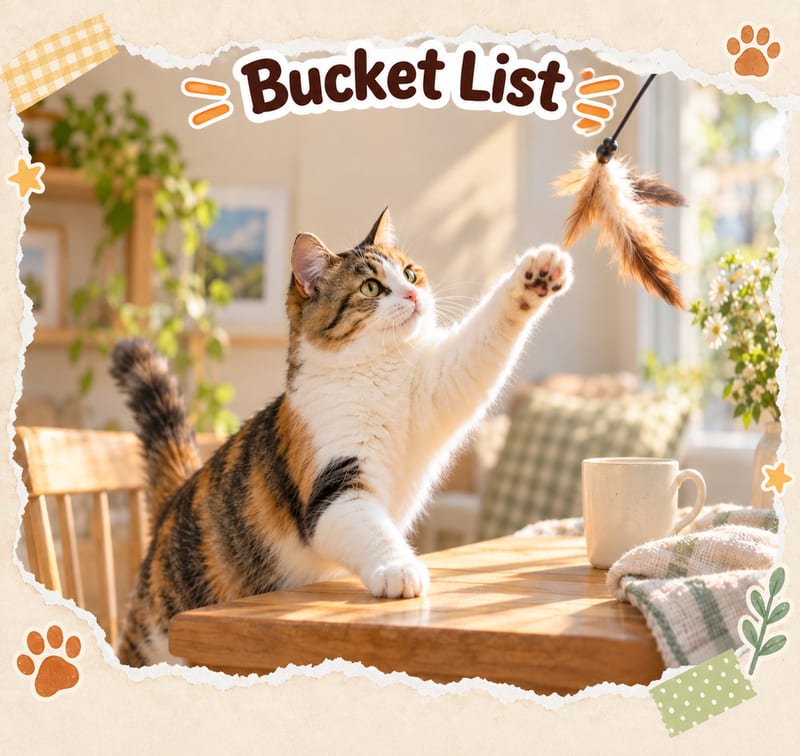
calico-lifespan-hk knowledge card 2

Frequently asked questions

How long do calico cats live? About 12–18 years indoors; coat colour does not matter, the deciding factors are environment, weight and screening.

Are calicos more prone to illness than other cats? No evidence. The genetic diversity of mixed-breed descent is actually an advantage; the 'prone to illness' claim treats rare cases as the norm.

How much shorter is the lifespan of outdoor cats? Veterinary literature generally considers free-roaming cats to have a much shorter lifespan than indoor cats; calicos have strong escape instincts, so secure your windows.

What are the most common problems in old age? Kidney disease, thyroid, teeth, joints. Weight loss, increased drinking, inability to jump up = seek veterinary care early.

Does neutering extend or shorten lifespan? Extending lifespan is the mainstream conclusion, but feeding amounts must be adjusted at the same time to prevent obesity.

Is the lifespan of a white-and-tabby cat special? Nothing special; watch hearing in those with large white patches and blue eyes, and a deaf cat can live just as long with good anti-escape measures.

Key points

  • ✅ Indoor calico lifespan is about 12–18 years; mixed-breed genetic diversity is a longevity advantage
  • ✅ The number one variable is 'indoor or outdoor': neutering + window screens + microchip is life-saving equipment
  • ✅ Obesity is the cheapest preventable killer: timed and portioned feeding, quarterly weighing
  • ✅ Annual blood and urine tests after age 7, every six months after age 10; don't dismiss senior signals as normal ageing
  • ✅ 'Calicos get sick easily' is a myth; the real screening focus is hearing (large white patches and blue eyes) and weight
  • ✅ For medical issues, rely on your veterinarian; this article is for health literacy reference only
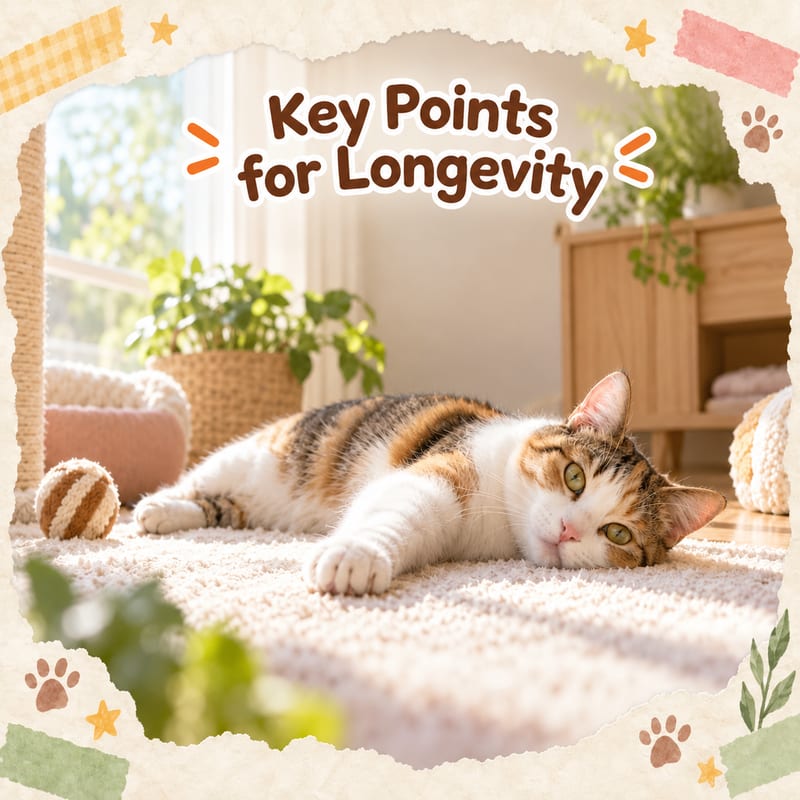
calico-lifespan-hk summary card 3

The medical content in this article is for reference only (mixed-breed calicos have no breed-specific disease burden, and longevity is about general basics) and does not constitute diagnosis or treatment advice; consult a practising veterinarian before any medication, tests or dietary changes.

Brand guides mentioned in this article

These brands appear in this article; their guide pages cover product lines, nutrition ranges and buying tips.

Frequently Asked Questions

📌 Key Takeaways

  • This article covers: 1. Lifespan range: why calicos generally live long, 2. The four major switches affecting lifespan, 3. Age-based health check schedule, 4. Senior warning signs: don't dismiss these as 'normal ageing', 5. Longevity checklist: nine things you can do, and more
  • Jump to any section via the table of contents for the key details
  • If in doubt, consult a registered veterinarian

📚 Cat breeds article index

This article is part of the Cat breeds topic cluster. Explore related articles:

⭐ Pillar guide: Cat breeds complete guideNapoleon Cat (Minuet) Complete Guide | Hong Kong Short-Legged Longhaired Cat Personality, Price and Health Risks→ ReadBirman Cat Disadvantages: 8 Real Costs to Know Before Getting One in Hong Kong→ ReadBirman Cat Lifespan: A Must-Read Longevity Checklist for Hong Kong Owners→ ReadBirman Cat Personality and Intelligence Explained | Hong Kong Owner's Guide→ ReadBirman Cat Prices and Adoption Guide | Hong Kong 2026→ ReadWhat Are the Downsides of a Devon Rex? 7 Things Hong Kong Owners Must Know Before Getting One→ ReadDevon Rex in Hong Kong: Care Guide for the Humid Climate and the Law→ ReadHow Long Do Devon Rex Cats Live? A Hong Kong Guide to Hereditary Diseases and Health→ ReadDevon Rex Personality and Intelligence: What Hong Kong Owners Need to Know→ ReadDevon Rex Price in Hong Kong 2026: Buying vs Adoption Costs Explained→ ReadNorwegian Forest Cat Downsides Explained | 8 Things to Know Before Getting One→ ReadNorwegian Forest Cat in Hong Kong: Home, Climate and Legal Guide→ ReadNorwegian Forest Cat Lifespan and Health | HCM, GSD IV and a Longevity Checklist→ ReadNorwegian Forest Cat Personality and Intelligence: Independent, Gentle, or Clingy?→ ReadNorwegian Forest Cat Prices and Adoption Guide | Hong Kong 2026 Market Breakdown→ ReadHow Big Do Norwegian Forest Cats Get? Weight Growth Chart and Body Condition Score Explained→ ReadSomali Cat Coat Colour Guide: Ticked Multi-Tone Ruddy Gold→ ReadSomali Cat Disadvantages: 7 Things to Know Before Keeping One in Hong Kong→ ReadSomali Cat Hong Kong Care Guide | Home Climate Full Guide→ ReadSomali Cat Lifespan and Health: A Must-Read for Hong Kong Owners→ ReadSomali Cat Personality Revealed | An Active, Playful Companion Cat→ ReadSomali Cat Prices and Adoption Guide | Hong Kong 2026→ ReadSomali Cat Weight and Size: A Full Guide to Growth Curves→ ReadCalico Cat Prices: Hong Kong Adoption Routes, Costs and a Verification Checklist→ ReadCalico Cat Disadvantages: 7 Real Challenges Every Hong Kong Owner Should Know→ ReadAmerican Shorthair Weight Standards and Growth Chart | Essential Hong Kong Cat Weight Guide→ ReadBritish Shorthair Weight Standards: Hong Kong Growth Curve, Male-Female Differences and Weight Chart→ ReadAre Calico Cats Really That Feisty? | Hong Kong Calico Traits × Intelligence Explained→ ReadAmerican Shorthair Personality and Intelligence | Hong Kong Companion-Cat Smarts→ ReadBritish Shorthair Personality & Intelligence: Inside the Mind of Hong Kong's Quiet Cat→ ReadIs a Calico a Breed? Tortoiseshell, Calico Tabby and White-Based Calico Explained (Hong Kong Coat Guide)→ ReadRagdoll Weight Chart: Monthly Standards and Male-Female Differences in Hong Kong→ ReadAmerican Shorthair in Hong Kong: Full Care Guide for Small Flats and Local Climate→ ReadBengal Cat Personality Explained | Hong Kong Bengal IQ, Affection and Male-Female Differences→ ReadHow Long Do British Shorthairs Live? A Hong Kong Owner's Guide to a Longer Life and Disease Risks→ ReadExotic Shorthair Lifespan: How Long Do They Live? A Hong Kong Guide to Longer, Healthier Lives→ ReadRagdoll Colour Patterns Explained: Colourpoint, Mitted, Bicolor, Colours and Prices→ ReadSiamese Cat Lifespan: Hong Kong Genetic Tendencies and a Longevity Checklist→ ReadAmerican Shorthair Lifespan: A Hong Kong Owner's Guide to a Longer Life | Disease Prevention and Health Check Schedule→ ReadHow Long Do Bengal Cats Live? | Hong Kong Bengal Genetic Risks and Longevity Guide→ ReadExotic Shorthair Personality & Intelligence | A Guide to Hong Kong's Quiet, Smart Cat→ ReadRagdoll Intelligence Explained | A Must-Read for Hong Kong Owners: Smart or Just Sweet?→ ReadSiamese Cat Personality | A Must-Read for Hong Kong Pet Owners: The Truth About the Chatterbox, the Clingy and the Highly Intelligent→ ReadAmerican Shorthair Colours & Patterns: With White, Tabby, and Price Guide (2026 Hong Kong)→ ReadBefore You Get a Bengal Cat: 8 Real Downsides and How to Handle Them in Hong Kong→ ReadExotic Shorthair Disadvantages: 8 Honest Points Hong Kong Owners Must Know→ ReadRagdoll Lifespan: Key Factors and a Longevity Checklist for Hong Kong Owners→ ReadHow Many Siamese Cat Colours Are There? Four Key Point Colours Plus Pattern Variants (Hong Kong)→ ReadAmerican Shorthair Disadvantages: 7 Honest Assessments and Solutions for Hong Kong Owners→ ReadBengal Cat Prices and Adoption Guide: Hong Kong Cattery Rates, Adoption Routes and a Pre-Purchase Checklist→ ReadExotic Shorthair Hong Kong Care Guide|Humidity Protection for Flat-Faced Cats & Heat Relief→ Read8 Real Downsides of Ragdoll Cats: At Least HK$1,100 a Month (Hong Kong)→ ReadSiamese Cat Disadvantages: Loud, Clingy, Prone to Separation Anxiety (Hong Kong)→ ReadAbyssinian Cat Colour Guide|Four Main Colours, Prices and Hong Kong Market→ ReadAbyssinian Cat Disadvantages: 7 Things to Know Before Getting One in Hong Kong→ ReadAbyssinian Cat Hong Kong Care Guide: High-Jump Champion in a Small Flat→ ReadAbyssinian Cat Lifespan and Health: A Hong Kong Genetic Screening Guide→ ReadAbyssinian Cat Personality Revealed | Hong Kong Cat Owner Must-Read: How Smart Is the 'Dog of the Cat World'?→ ReadAbyssinian Cat Price: Hong Kong Catteries, Adoption and Verification Guide→ ReadAmerican Shorthair Price and Adoption Guide | Hong Kong 2026→ ReadBengal Cats in Hong Kong: The Complete 2026 Guide to Small Flats, the Law, and Humidity & Heat Protection→ ReadThe Downsides of Domestic Cats: The Truth and How to Handle It Before Getting a Hong Kong Cat→ ReadHow Long Do Domestic Cats Live? A Hong Kong Guide to Health Management and Longer Life→ ReadDecoding the Domestic Cat Personality | Hong Kong Street Cat Blind Box: Why They're So Loved→ ReadAdopting a Domestic Cat in Hong Kong: AFCD & SPCA Fees, Procedures, and Public Housing Rules→ ReadEgyptian Mau Disadvantages: The Truth Hong Kong Owners Must Know Before Getting One→ ReadEgyptian Mau Lifespan: Health Risks and Longevity Guide for Hong Kong→ ReadEgyptian Mau Personality Revealed | Hong Kong Cat Owner Must-Read: The Cat That Acts Like a Dog, Loyal to One Family for Life→ ReadEgyptian Mau in Hong Kong: Price and Adoption Guide 2026 – Market Rates and Verification Checklist→ ReadExotic Shorthair Price & Adoption Guide | Hong Kong Buying Market 2026→ ReadHimalayan Cat Disadvantages: 8 Truths to Know Before Owning One in Hong Kong→ ReadHimalayan Cat Hong Kong Care in Practice: What to Do About the Hot and Humid, Heat-Sensitive Problem|The Complete Longhair Flat-Face Guide→ ReadHow Long Do Himalayan Cats Live? A Must-Read 12–15 Year Health Guide for Hong Kong Owners | PetChill Cat Encyclopedia→ ReadHimalayan Cat Personality: Persian Calm Meets Siamese Spark — Which Suits Hong Kong? | PetChill→ ReadHimalayan Cat Price and Adoption in Hong Kong: 2026 Cattery Guide→ Read7 Disadvantages to Know Before Getting a Munchkin Cat | A Practical Guide to Keeping Short-Legged Cats in Hong Kong→ ReadMunchkin Cat Care in Hong Kong: Daily Management in Small Flats, Heat and Humidity, and Short Legs→ ReadHow Long Do Munchkin Cats Live? Hong Kong Short-Leg Gene Health Risks and a Longevity Checklist→ ReadMunchkin Cat Personality: 5 Traits of Hong Kong's Short-Legged Comedian→ ReadMunchkin Cat Prices and Adoption: Hong Kong Market Rates and Verification Checklist 2026→ ReadPersian Cat Disadvantages: 8 Things Hong Kong Owners Must Know Before Buying (Chinchilla Included)→ ReadPersian Cat Lifespan: How Long Do They Live? Hong Kong Chinchilla Lifespan and Disease Guide | PetChill Cat Encyclopedia→ ReadPersian Cat Personality & Chinchilla Temperament: Intelligence Explained | The Truth About Hong Kong's 'Quiet Aristocrat'→ ReadPersian Cat Prices in Hong Kong: Chinchilla Costs and Adoption Guide | PetChill→ ReadRagdoll Cat Care Essentials in Hong Kong: Climate, Home and Legislation→ ReadThe Downsides of Owning a Russian Blue | 8 Real Costs Every Hong Kong Cat Owner Should Know→ ReadRussian Blue Lifespan: How Many Years? | Hong Kong 15+ Year Longevity Checklist→ ReadRussian Blue Personality: A Hong Kong Cat Owner's Guide to the Loyal, Intelligent Cat Behind the Shy Exterior→ ReadRussian Blue Price and Adoption Guide | Hong Kong 2026→ ReadSiamese Cats in Hong Kong: A Care Guide for Climate, Flats and Company→ ReadSphynx Colour Guide: Every Skin Colour and Pattern Explained for Hong Kong Owners→ ReadSphynx Cat Disadvantages, Personality, Price and Care: A Hong Kong Guide→ ReadHow Long Do Hairless Cats Live? Sphynx Health Risks and Longevity Guide for Hong Kong→ ReadSphynx Cat Personality Revealed | Hong Kong Cat Owner's Must-Read: How Smart Is This Clingy Dog-Like Cat?→ ReadSphynx Cat Price 2026: Hong Kong Cattery and Adoption Guide→ ReadThe Downsides of Keeping a Turkish Angora | 7 Real Costs in Hong Kong→ ReadTurkish Angora Lifespan: How Long Do They Live? | Hong Kong Owner's Guide to Genetic Red Flags and a Longevity Checklist→ ReadTurkish Angora Personality: The Smart, Chatty 'Fox of Cats' | Hong Kong Care Guide→ ReadTurkish Angora price and adoption guide: 2026 Hong Kong market, routes and waiting lists→ ReadSilver Shaded Cats & British Shorthair Colours: Golden Shaded vs Blue & White, Differences and Prices→ ReadBritish Shorthair Disadvantages: Prone to Obesity, Heavy Shedding, Not a Lap Cat | Are They Easy to Keep?→ ReadBritish Shorthair Hong Kong Care Guide|Small Flat Hot & Humid Weather Tips→ ReadBritish Shorthair Cat Price and Adoption Guide|Hong Kong 2026→ ReadMaine Coon Colours Ranked: A Full Guide to 30+ Colours, Patterns and Popular Shades→ Read8 Real Disadvantages of Maine Coons: Space, Grooming, Costs & Solutions→ ReadMaine Coon Genetic Health Screening: HCM, SMA, PKD & GALC→ ReadThe Complete Guide to Keeping a Maine Coon in Hong Kong: Space, Air-Conditioning, Building Regulations→ ReadHow Long Do Maine Coons Live? 5 Key Factors Behind 12–15 Years | Hong Kong Edition→ ReadMaine Coon Personality and Intelligence: What Makes the Gentle Giant Tick | Hong Kong→ ReadMaine Coon Price in Hong Kong 2026: Buying, Adoption & Full Cost Guide→ ReadHow Big Do Maine Coons Get? Males 6-10 kg, Up to 120 cm Nose to Tail→ ReadOriental Shorthair Colour Guide | Hong Kong Picking Guide: How to Choose from 300 Colours→ ReadOriental Shorthair Disadvantages: 7 Things to Know Before Getting One in Hong Kong→ ReadOriental Shorthair in Hong Kong: A Care Guide for Small Flats, Humidity and Public Housing→ ReadOriental Shorthair Lifespan: Health Risks and Longevity Checklist for Hong Kong Owners→ ReadOriental Shorthair Personality Explained | Hong Kong Care Guide: The Clingy, Chatty 'Dog of Cats'→ ReadOriental Shorthair price and adoption in Hong Kong (2026): cattery vs rescue costs→ ReadOriental Shorthair Weight & Growth Curve: What's Normal for Hong Kong Owners→ ReadRagdoll Cat Prices and Adoption Guide | Hong Kong 2026→ ReadSiamese Cat Prices and Adoption Guide (Hong Kong) 2026→ ReadBengal Cat Care Guide in Hong Kong | Personality, Exercise Needs and Health Watch→ ReadBritish Shorthair Care Guide for Hong Kong | Personality, Weight Control and Health Checks→ ReadAdopting a Hong Kong Cat: Personality, Health Advantages and Adoption Steps→ ReadMunchkin Cat Short-Leg Guide | Essential Reading for Hong Kong Cat Owners: Personality, Spinal Risks and Ethical Debate→ ReadPersian Cat Care Guide for Hong Kong | Long-Hair Grooming, Tear Stains and Kidney Screening→ ReadRussian Blue Cat Hong Kong Care Guide | Silver-Blue Coat, Green Eyes and Personality→ ReadSphynx (Hairless Cat) Complete Guide | Skin Care, Personality, Keeping in Hong Kong→ ReadHong Kong Cat Breeds Guide 2026: 12 Breeds Compared by Personality and Price→ ReadMaine Coon Hong Kong Care Guide 2026 | Personality, Price, Space Needs→ ReadRagdoll Cat Complete Guide 2026 | Personality, Price, Care Essentials, Hong Kong Adoption Info→ ReadSiamese Cat | Full Guide to Price, Personality and Colours (Hong Kong 2026)→ Read

Products mentioned in this article

4 items · prices checked 2026-10-21

  • Hills Science Diet Adult 11+ 7lb (1463)

    Hills Science Diet Adult 11+ 7lb (1463)

    HK$318

    About HK$100.16 per kg

    Details

    Price checked 2026-10-21; the store page shows the live price, stock and offers.

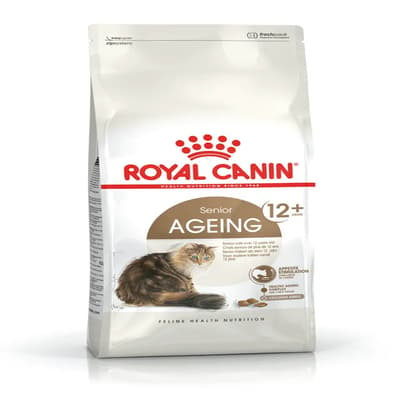
  • Royal Canin FHN Senior Ageing 12+ Cat 50g (2269500)

    Royal Canin FHN Senior Ageing 12+ Cat 50g (2269500)

    HK$88

    About HK$1,760 per kg

    Details

    Price checked 2026-10-21; the store page shows the live price, stock and offers.

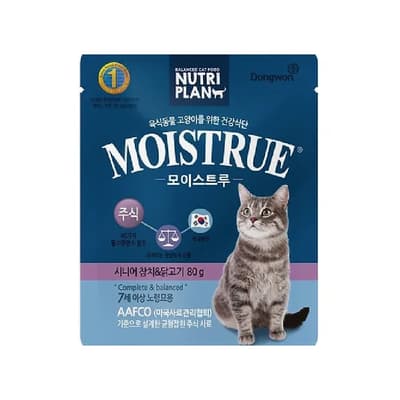
  • Nutriplan AAFCO Cat Wet Food Moistrue Tuna and Chicken Senior Formula 80g (64307)Special offer

    Nutriplan AAFCO Cat Wet Food Moistrue Tuna and Chicken Senior Formula 80g (64307)

    HK$8HK$13

    About HK$100 per kg

    Details

    Price checked 2026-10-21; the store page shows the live price, stock and offers.

  • Bella & Molly's Dutch Berry Royal Selected Cat Food AAFCO Anti-Aging Grain-Free Single Protein Salmon Formula 50g (Limited Time Experience)

    Bella & Molly's Dutch Berry Royal Selected Cat Food AAFCO Anti-Aging Grain-Free Single Protein Salmon Formula 50g (Limited Time Experience)

    HK$10

    About HK$200 per kg

    Details

    Price checked 2026-10-21; the store page shows the live price, stock and offers.

The products above are store items related to this article. Prices are reference prices as of the check date (about HK$424 in total); the store page always shows the live price, stock and offers. This article is not medical advice.

You may also like