Quick answer: Munchkin (Munchkin / short-legged cat) lifespan is generally 12–15 years, with no obvious difference from ordinary domestic cats; with good care they can exceed 17 years. Breed-related risks concentrate in three areas: joint wear, a tendency to lordosis, and the amplifying effect of obesity — all have early screening and management methods. The short-leg gene is not a death sentence; weight and check-ups are the variables that determine the range.
Want to know Munchkins inside out? Start with the Munchkin breed profile and the complete Munchkin guide.
1. Lifespan data: short legs do not mean a short life
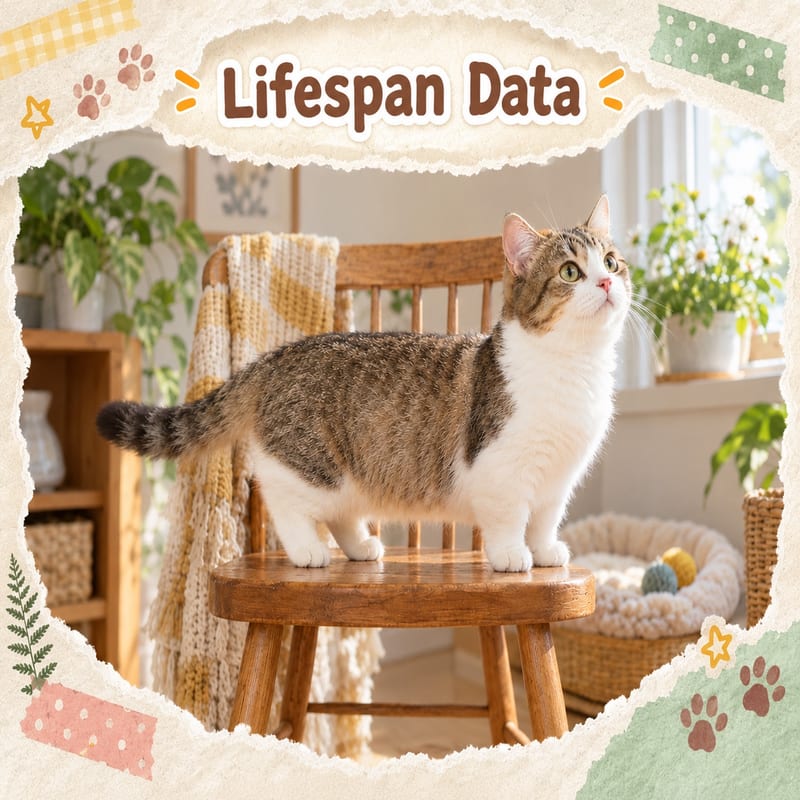
In the absence of complications, Munchkin lifespan falls within the range of ordinary domestic cats. A large-sample study on cat lifespan published by the Royal Veterinary College (RVC) found a median of about 14–15 years; TICA's breed database and pedigree records from many catteries show that Munchkins with good weight control and regular check-ups living past 15 is not news. One common misconception to clear up: short legs are caused by a dominant mutation in a gene related to cartilage development (human medical literature classifies similar mechanisms under chondrodysplasia), which mainly affects the growth plates of the long bones of the limbs, not a switch for whole-body organ degeneration — so 'short-legged cats must die young' has no basis. What really pushes Munchkins toward the lower end of the range are two controllable things: excess weight, and joint or spinal problems not caught early. The same cat, managed differently, can see a lifespan gap of three to four years. Worth noting is the detail of 'leg-type ratio': Munchkin litters contain both short-legged and long-legged offspring (determined by the combination rules of the short-leg gene); long-legged individuals, although free of structural load-bearing problems, still need weight management and routine screening — don't skip orthopaedic checks just because 'the legs are longer'; bloodline risk assessment should look at the parents, not measure the legs.
| Life stage | Age | Health focus |
|---|---|---|
| Kitten | 0–1 year | Complete vaccinations, deworming, avoid high-jump training, confirm family history |
| Young adult | 1–7 years | Weight management, orthopaedic check every 6–12 months, annual dental |
| Mature | 7–10 years | More frequent orthopaedic checks, blood tests (kidney, thyroid), blood pressure |
| Senior | 11+ years | Check every 6 months, joint and muscle monitoring, diet adjustment |
2. The three breed-related risks broken down
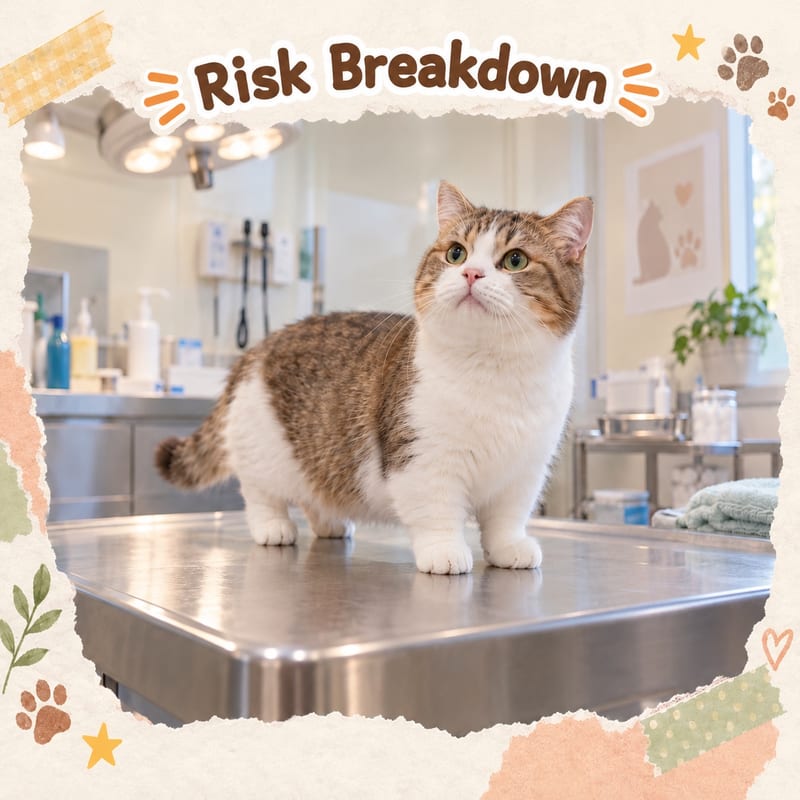
Degenerative joint changes: the short-legged structure changes how load is distributed across the limbs: when starting, braking and turning, the knee and elbow joints bear more torque than in long-legged cats, and wear risk is multiplied by body weight. Clinical signs from mild to severe are: a 'splayed' walk, tiring after brief play, refusing to jump onto the sofa, avoiding touch. The response is not to restrict activity but the trio of non-slip flooring + low cat stairs + weight management (see the Hong Kong keeping article).
Lordosis is a tendency in some Munchkin individuals for excessive downward curvature of the thoracolumbar spine; mild cases are asymptomatic, while severe cases can affect breathing and activity. This is exactly one reason 'look at the parents' records when buying a cat': bloodlines with a family history should be avoided. What to observe: whether the back line is abnormally deeply sunken when lying naturally, and whether there is a 'sagging' look in the lower back and abdomen when walking.
Obesity, urinary and dental problems are not part of the short-leg gene, but their impact on Munchkins is amplified by structure: excess weight is a double pressure on short legs and spine, and a breed naturally less active is more prone to excess calories. Urethral obstruction in male cats and chronic kidney disease in senior cats remain major reasons for cat admissions in Hong Kong; wet food proportion and water intake are the shared defence for all breeds.
3. Seven controllable factors that affect lifespan
- Weight: the number one variable. Weigh monthly on a fixed schedule; the curve matters more than a single number — for Munchkins, preventing obesity is extending life.
- Orthopaedic check frequency: every 6–12 months is a basic setting, not optional; joint problems found early and late have completely different outcomes.
- Non-slip environment: lay mats along polished tile routes, put food and water bowls on the floor, add cat stairs to high furniture, reducing daily cumulative impact.
- Indoor keeping: falls from height, traffic accidents and bites are among the top causes of death in young cats in Hong Kong; short-legged cats are less able to escape threats, so outdoor risk is only higher. Window screens and escape-proofing are standard.
- Diet quality: high protein in appropriate amounts, a high proportion of wet food, protecting both urinary tract and weight.
- Stress management: the companion-type Munchkin is sensitive to long periods alone and sudden environmental changes; psychological stress directly shows in appetite and immunity.
- Toxin avoidance: lilies (even the vase water is fatal), pyrethrin spot-ons, and human painkillers are fatal to cats — never keep them in the house.
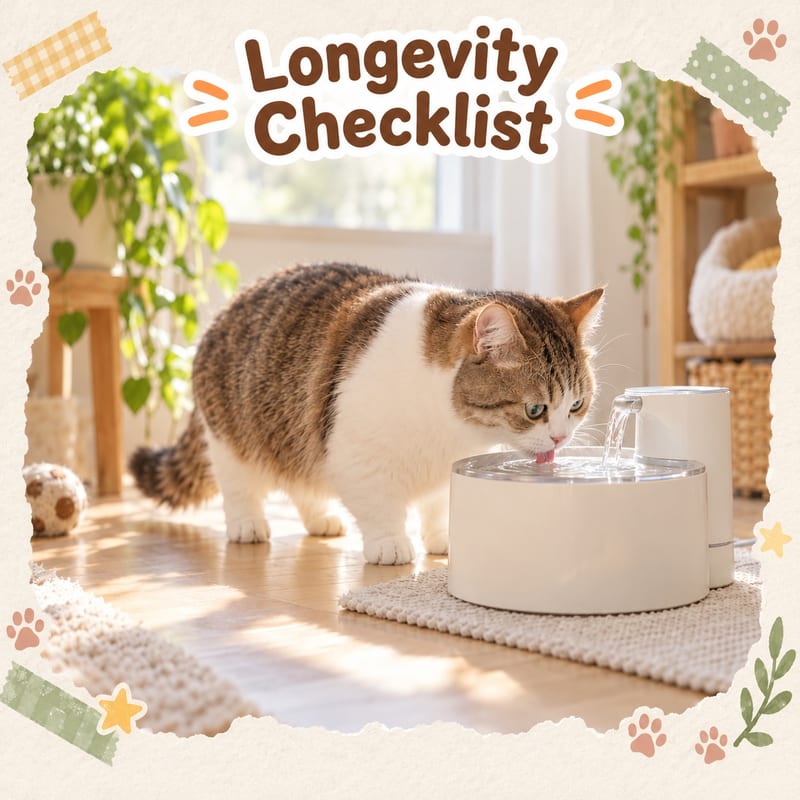
4. Longevity checklist: from today to 17
- ✅ Measure food from the first day; treats no more than 10% of daily calories
- ✅ Orthopaedic check every 6–12 months; from 8 years, every 6 months
- ✅ Weigh monthly on a fixed schedule and record the curve
- ✅ Keep fully indoors, screen windows against escapes, never leave windowsills unprotected
- ✅ Lay non-slip mats on common routes, add cat stairs to high furniture
- ✅ Don't test their jumping; don't set food or water in places that require jumping
- ✅ Two floor-level interactive play sessions daily to maintain muscle mass
- ✅ Wet food as the main diet to maintain water intake, protecting kidneys and urinary tract
- ✅ Brush teeth from a young age, annual dental check
- ✅ From 7 years, annual blood and urine tests plus blood pressure
- ✅ Buy insurance or build a medical reserve before illness
- ✅ See a veterinarian if any abnormal walking posture lasts 48 hours — don't 'wait and see'
5. Caring for the senior Munchkin
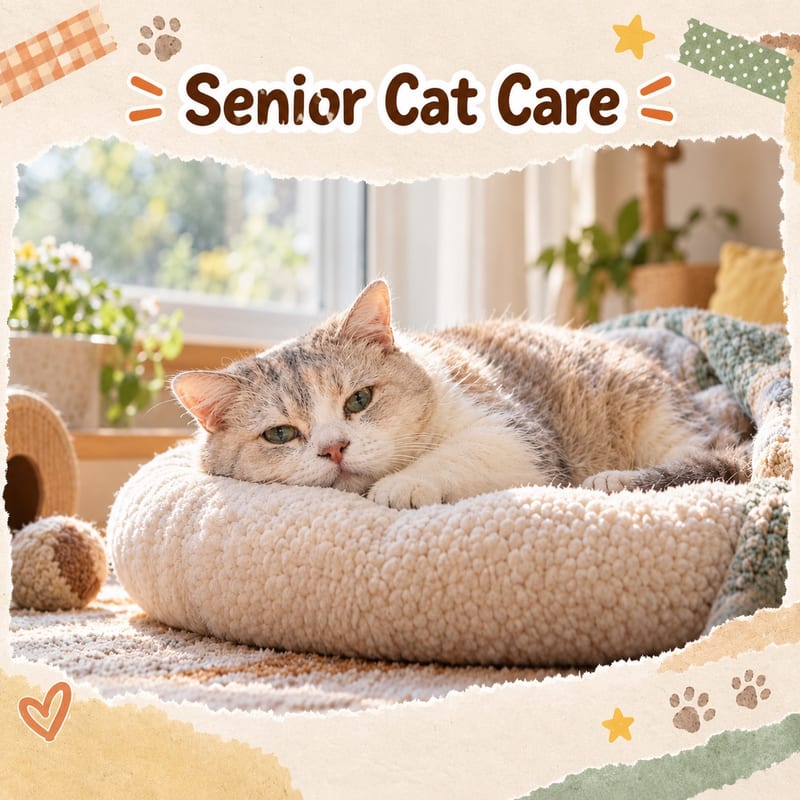
After 11, the 'ageing' of a short-legged cat mainly runs along the joint line: unwilling to use the litter tray (try a low-entry model), taking two minutes to stand before jumping onto the sofa, and the disappearance of 'meerkat' behaviour (often the last signal to be noticed). Diet: switch to highly digestible protein, small frequent meals; environment: add warmth (air-conditioning is unkind to old cats' joints), raise water bowls to a height that avoids stooping. The most important one: a sudden decline in walking ability is not 'just old age' — pain, thrombosis and late-stage kidney disease can all present as acute mobility decline, and warrant same-day veterinary assessment.
Key takeaways
- ✅ Munchkin lifespan is 12–15 years, with no obvious difference from ordinary domestic cats; screening plus weight management can extend it.
- ✅ Three major risks: joint wear (amplified by weight), lordosis tendency, obesity-related syndrome.
- ✅ Orthopaedic checks every 6–12 months are a basic setting, not optional.
- ✅ The environmental trio: non-slip mats, low cat stairs, food and water at floor level.
- ✅ Film a walking baseline video every three months and compare signals frame by frame.
- ✅ A sudden decline in walking ability is an emergency-level signal; see a veterinarian within 48 hours.
- ✅ The mental health of a companion-type cat directly affects appetite and immunity; plenty of company is itself a longevity medicine.
Related reading
- Munchkin disadvantages to know before getting one and how to cope
- Munchkin Hong Kong keeping guide
- Munchkin price and adoption guide
- Weight-management bowls, low-entry litter trays and pet toothbrushes: shop at PetChill pet supplies.
The medical content in this article is general information and cannot replace diagnosis; for abnormalities in walking, posture or appetite, please consult a registered veterinarian.
 Royal Canin full guide →

 Fuji One full guide →