
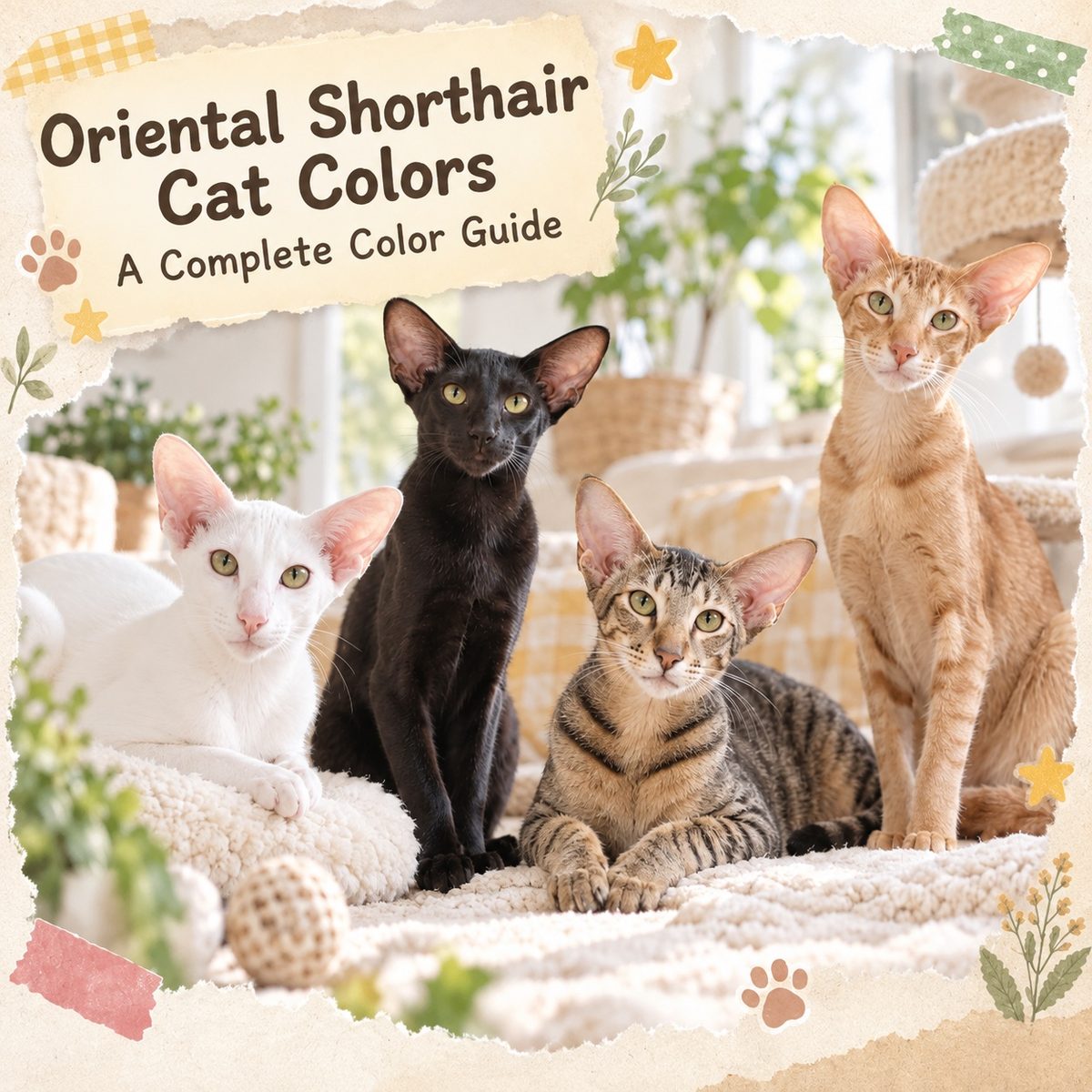
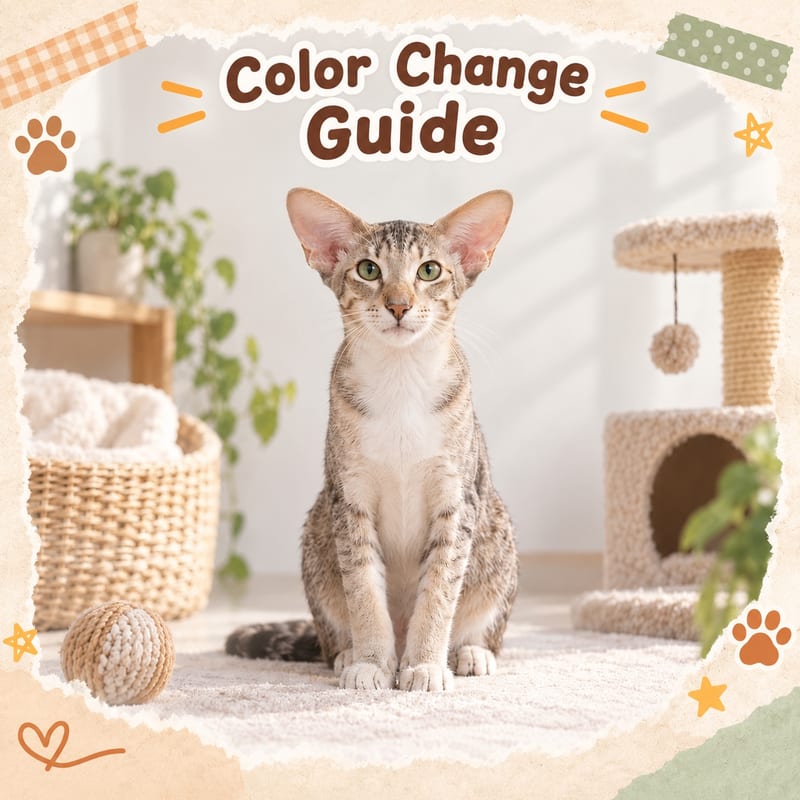
Quick answer: The Oriental Shorthair is the cat breed with the most coat colour choices: CFA recognises over 300 colour and pattern combinations, grouped into seven major categories. In Hong Kong, tabby and solid black/blue are the most common; pure white with blue eyes requires attention to the deafness gene risk, so ask for BAER test records before paying a deposit.
Want to know the Oriental Shorthair inside out? Start with the Oriental Shorthair breed profile.
1. Why one breed can have 300 colours
The story starts with breeding history: in the mid-20th century, British breeders used the Siamese as a base and crossed it with black shorthairs, Russian Blues, Abyssinians and others, aiming to "keep the Siamese body and personality but set no limit on coat colour". This design determined the Oriental Shorthair's uniqueness: cat registries (CFA/TICA) recognise for them all genetically possible combinations of colour and pattern — from solid to tabby, from bicolour to shaded, multiplied by the permutations of dilution, silver and orange genes, that is where the "300+" comes from. Choosing an Oriental Shorthair is, in a way, choosing from the most complete "colour chart" in the cat world.
Once you understand this history, a second practical conclusion emerges: because the Oriental colour chart is a "whole gene pool recombination", the same pair of parents can produce a whole litter of kittens in different colours, and this is normal for the breed — a tabby mother giving birth to a pure white kitten, or a black father producing a lilac daughter, is not unusual and does not mean "mixed blood". This is exactly the opposite of many breeds and is where newcomers most easily misunderstand (see Chapter 5).
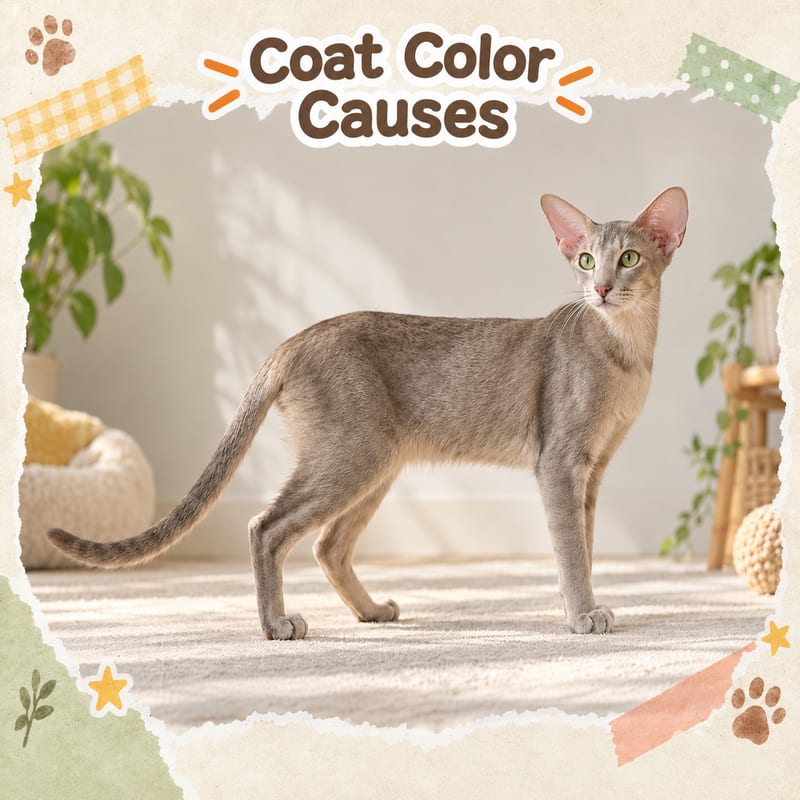
2. Overview of the seven colour groups
| Colour group | Representative colours | Commonness (HK) | Care notes |
|---|---|---|---|
| Solid | Black, white, blue, chocolate, lilac, red, cream | High | White cats: watch tear stains and dander; black cats turn coppery after sun |
| Shaded/smoke | Chinchilla-style silver shaded, smoke black | Medium-low | Undercoat colour change is normal |
| Classic tabby | Marbled (classic) | High | No special notes |
| Mackerel tabby | Fine stripes (mackerel) | Highest | No special notes |
| Spotted tabby | Spot pattern | Medium-low | No special notes |
| Bicolour/tricolour | Black-and-white, blue-and-white, calico-style | Medium | Large white areas: watch ear tips for sunburn |
| Pointed (non-Siamese) | Lynx point etc. | Low | Nose colour darkening with temperature is normal |
The "commonness" in the table is summarised from local cattery quotation frequency and adoption agency occurrence: tabby lines have the most supply due to dominant genes and stable breeding; dilution/rare locus genes such as lilac and cinnamon require both parents to carry the gene to be expressed, making them truly low-production colours, and the premium has a supply-and-demand logic — but remember this premium buys "hard to produce", not "hard to keep"; care difficulty is the same for all colour groups.
3. The four most sought-after colours in Hong Kong
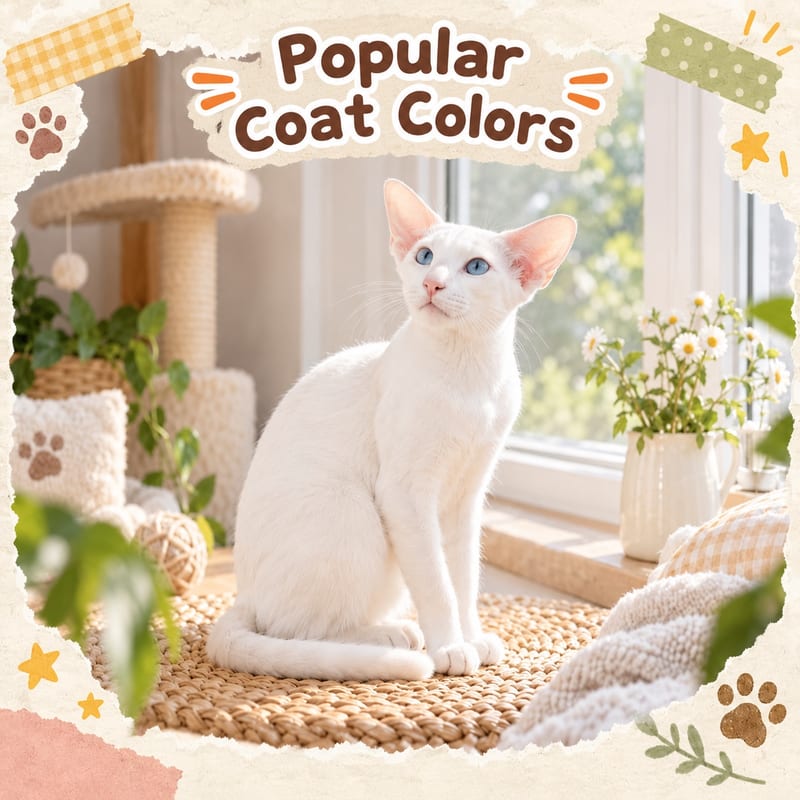
White: One of the highest-priced colour groups, especially sought after with blue eyes. But this combination is exactly the high-risk group for the deafness gene — the white coat gene (W gene) is clearly linked to inner ear cochlear degeneration, and veterinary genetics literature records that white cats (of any breed) have a far higher rate of unilateral or bilateral deafness than coloured cats. So reputable catteries provide BAER testing for white cats, not "see if it reacts"; a "blue-eyed white pearl" at an sky-high price without test records does not stand up in logic or price.
Solid red/cinnamon: A warm ginger-red, a rare gene expression in the Oriental, often priced 20–30% higher than black and blue.
Black (Ebony): The most "easy-care colour" — doesn't show dirt, relatively sun-resistant, and the green eyes with black coat give strong visual impact; the only downside is that it absorbs light in photos, so facial features are unclear in deep shadows.
Blue: A grey-toned premium feel that suits their outline particularly well; it is a dilution gene, easily confused with "silver shaded" when young, and only clear after six months.
4. Kitten coat, sun fading and industry terms
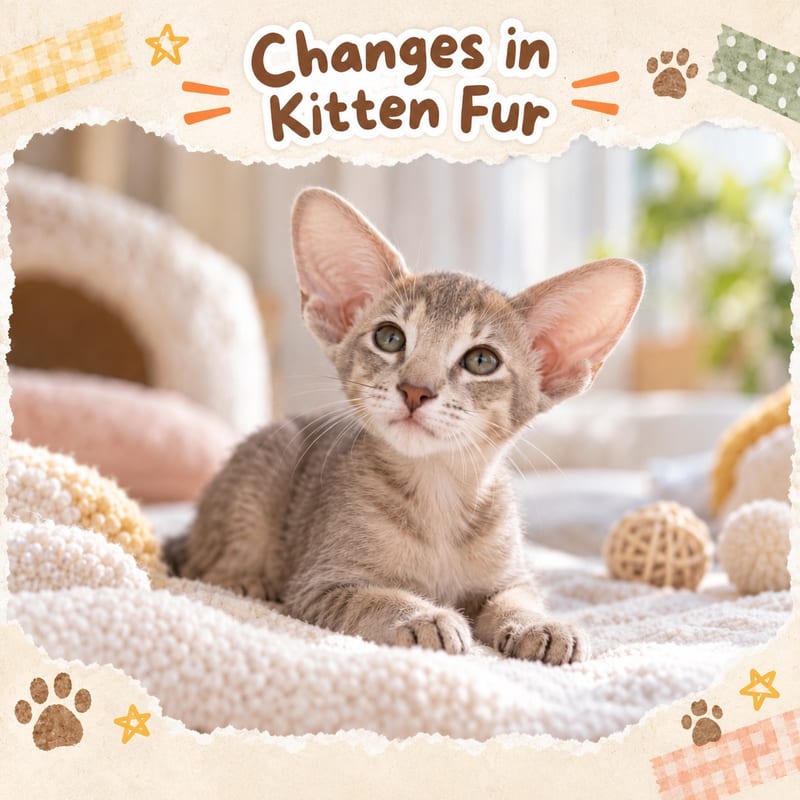
Three points where sellers can easily confuse buyers: first, kitten coat doesn't count: Oriental kittens moult at 3–6 months, tabby patterns may become thicker or thinner, solid colours may deepen by one shade, so look at parents' and grandparents' photos for reliability; second, sun fading is reversible: black and chocolate coats exposed to long-term sunlight turn coppery at the tips (sun fading), which is photo-oxidation rather than deterioration, and naturally reverts in winter — so "it's turned coppery from sun so it's fake black" is a misunderstanding; third, terms are not standard: trendy names like "milk tea" and "lavender" actually correspond to lilac or fawn genes, so ask clearly for the gene name and the registry colour code, and don't pay for a name.
5. Matching eye colour: the other half of the Oriental's good looks
Almost all standard colours of the Oriental Shorthair require green eyes (except white cats, which may have blue eyes or heterochromia), and this is the most obvious visual boundary between them and the Siamese. In practice, the contrast between green eyes and coat colour determines whether they "match": black cat with green eyes is the most classic high-contrast combination; blue (grey) cats with apple green are gentle; lilac has a pale grey-purple tone, and green eyes have low contrast, making photos most likely to be blurry; and pure white with blue eyes, though striking, carries the aforementioned deafness gene, so you need to make a clear trade-off. When looking at cattery albums, remember to check eye colour as well — an individual registered as "Ebony" but with yellowish eyes should be discounted in show grade.
6. Colour decision tree: three questions
- How much care difference can you accept? White cats have the highest visual cost from tear stains and dander, dark cats absorb light in photos, and tabby is the most "maintenance-free".
- Are you choosing a gene or a name? Confirm the standard colour name on the registry certificate, not the adjectives in the sale post.
- Does the white cat have BAER records? Without records, change colour or change source; this is non-negotiable.
A little genetics so you can follow the conversation with catteries: black is dominant, and chocolate and lilac are its dilution series, so lilac requires each parent to contribute one dilution locus — this is the genetic reason lilac kittens are priced higher; the orange gene is on the X chromosome, so the sex distribution of orange and calico cats is highly skewed (calicos are almost all female); and "silver" is not actually a colour but the effect of an inhibitor gene suppressing pigment. The use of this locus knowledge is: when a cattery says "this pairing can produce lilac", you should ask for records of both parents' dilution loci; when someone says "pure white is a rare colour so it's three times the price", you know white is just the expression of the dominant W gene, and besides the price, a BAER hearing report is owed.
One last reminder: in this breed, colour has nothing to do with personality (see the personality article; all colour groups are equally clingy), so don't pay excessive premiums for a "pretty colour" — big ears, sharp eyes, a straight body and a naughty look are the true essence of the Oriental.
Key takeaways
- ✅ The Oriental Shorthair has the most complete colour chart in the cat world: 300+ recognised combinations, seven major colour groups
- ✅ White coat with blue eyes carries a deafness gene risk; BAER records are a must-check document
- ✅ Kitten coat doesn't count: look at parents' photos, and the colour is set after six months
- ✅ Sun fading is reversible, terms are not standard — pay for gene names, not adjectives
- ✅ Black, blue and tabby are the pragmatic choices with the lowest care cost
- ✅ Colour has nothing to do with personality; choosing a colour is purely personal preference, no need to pay a rarity premium
Related reading
- Oriental Shorthair personality full analysis
- Oriental Shorthair price and adoption guide
- Oriental Shorthair weight and growth curve
- Short-haired cat grooming brushes, wipes and sun protection accessories: shop at PetChill pet supplies.
The health content in this article is general information; for deafness screening and skin problems, please consult a registered veterinarian.
 Fuji One full guide →


 Almo Nature full guide →



