
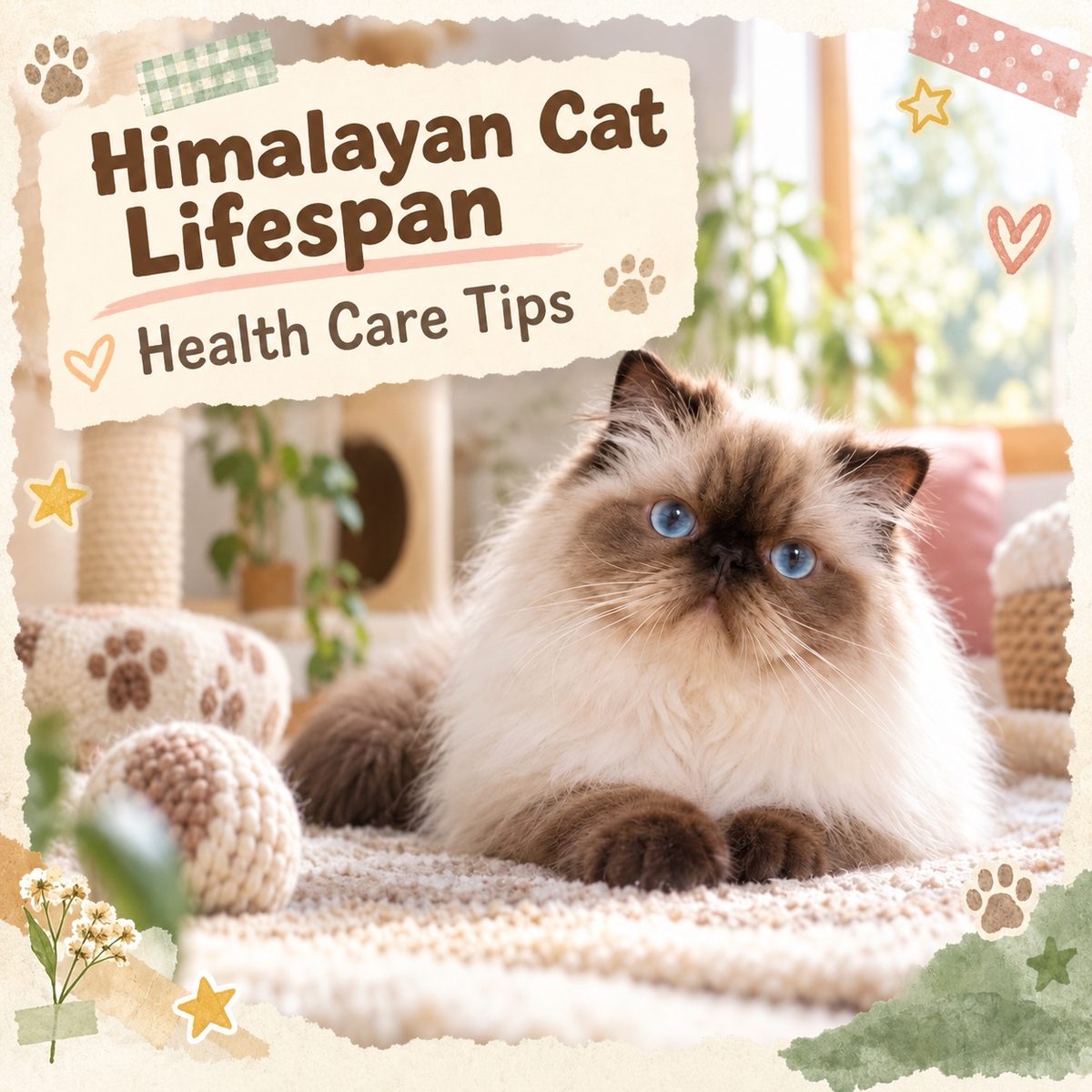
Quick answer: Himalayan cats generally live 12–15 years, and with good care, over 16 years is not uncommon. Three things mainly determine their upper lifespan limit: whether PKD is screened and monitored, whether weight is controlled, and whether flat-face breathing issues are managed in hot weather. The good news for this breed is that all major risks have established monitoring methods; extending life is essentially "trading tests for time".
Want to know the Himalayan cat inside out? Start with the Himalayan cat breed profile.
1. Lifespan range: data points and reality
Breed profiles and cat association data generally list Himalayans as 12–15 years. By comparison: the median for ordinary domestic cats kept indoors can exceed 15 years, while some extreme flat-faced breeds (such as traditional show-grade Persians) have their median pulled down by breathing problems. Himalayans sit in the upper-middle: their flat face is usually milder than show-grade Persians (traditional face type), so breathing burden is lighter; but PKD risk is just as real as in Persian lines. In one sentence: genes set the ceiling, screening and management determine whether you can help them reach it.
2. Five major lifespan factors
| Factor | Direction of impact | Controllability |
|---|---|---|
| PKD / kidney genetics | Largest single risk, chronic kidney failure | Partly controllable (choose line + monitor) |
| Obesity | Diabetes, joints, hepatic lipidosis | Fully controllable |
| Flat-face breathing | Chronic hypoxia, heatstroke risk | Partly controllable (environmental temperature management) |
| Indoor / outdoor | Infection, accidents, falls | Fully controllable |
| Oral and eye health | Periodontal disease, corneal damage → chronic inflammation | Fully controllable (care + checks) |
Obesity deserves elaboration: Himalayans are naturally low-activity, and excess weight is a chronic disease accelerator for any cat, but for flat-faced cats it's a double lifespan shortener—"breathing + joints". Studies show obese cats have significantly shorter average lifespans, and feline obesity is almost 100% a feeding-method problem, not a cat problem.
3. Age-specific health risk map
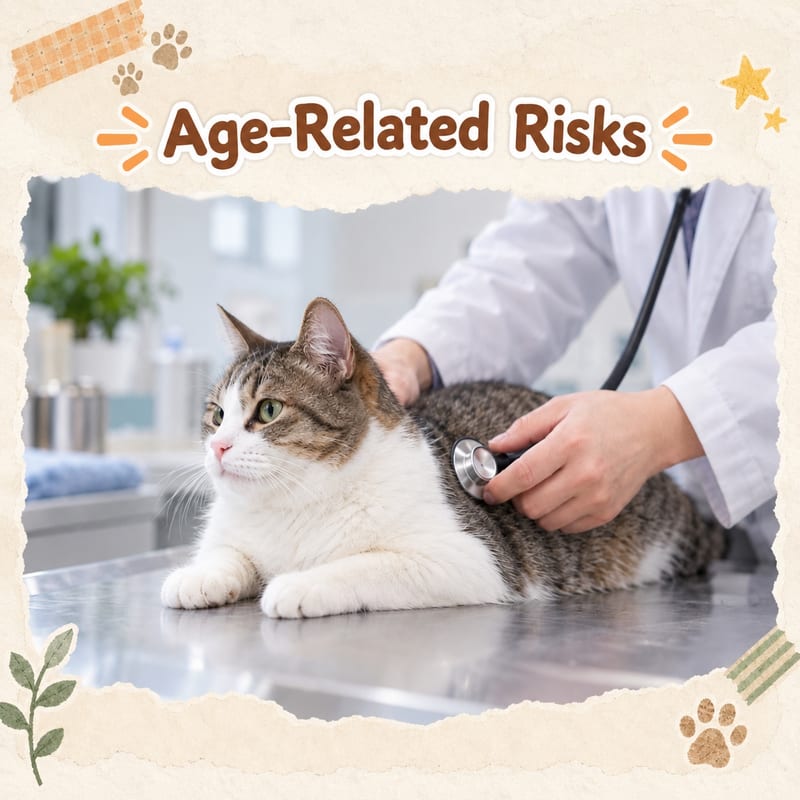
Juvenile (0–2 years): Beyond genetic screening, vaccinations and neutering, watch nasal discharge and weight curve in flat-faced kittens. Adult (3–7 years): A quiet risk period, but PKD cysts can accumulate silently—baseline ultrasound every 1–2 years is advised during this time. Mature (7–10 years): Annual blood tests (kidney values SDMA, thyroid) plus urinalysis become the yearly homework; weight management gets harder, switch to senior formula. Senior (10+ years): Kidney disease, hypertension (linked to kidney disease), arthritis, cognitive decline surface. "Sudden surge in drinking + weight loss" is the most classic early combination of kidney failure—test immediately, don't wait.
4. Life-extension checklist: ten things you can do
- Choose the line: Both parents' PKD1 gene test negative records—a veto item before purchase
- Indoors only: Himalayans are naturally suited to indoor life, conveniently avoiding the three major outdoor killers
- Constant air-conditioning and dehumidifying: Hot days for flat-faced cats = high-risk days; 24–26°C is not a luxury but life-saving
- Measured feeding: Kitchen scale for portions, no free-feeding, maintain body condition score 5/9
- Shallow bowl + raised: Correct eating posture for flat faces, reduces choking risk
- Daily cleaning around eyes and face folds: Chronic eye inflammation is a long attrition battle
- Hairball management: Brushing + hairball products, prevent hairball vomiting and intestinal blockage
- Teeth: Check gums every six months, annual scaling as advised by vet
- From age 7, annual blood tests + ultrasound: Early detection of kidney disease can buy several more years of good-quality life
- Senior environment modifications: Low-edge litter tray, ramps, warm but not stuffy beds
One frequently asked point: does a negative gene test mean once and for all? No. PKD is an autosomal dominant inheritance; offspring of two negative parents have very low risk, but chronic kidney disease itself has non-genetic causes—so even with a "zero-risk line", annual kidney function checks after age 7 should not be skipped. Conversely, a positive gene test is not a death sentence: research tracking shows cats with cysts can remain free of clinical signs for years; the real difference lies in whether monitoring, diet and blood pressure are intervened early. The value of screening is not to scare owners away, but to turn "unknown" into "a plan to follow".
That screening paper is also the dividing line for pricing; for market rates at different levels and adoption opportunities, see Himalayan cat price and adoption guide.
By the way, why the weight line is so critical: the ideal weight band for flat-faced cats is narrow (about 3.5–5 kg), but low activity makes it easy for them to quietly gain 10% within a year—for the kidneys, obesity means increased metabolic waste load and higher glomerular pressure; for the joints, the impact of jumping onto the sofa is multiplied. So the zero-cost habit of "feeding scale + fixed monthly weighing" actually presses down three risk lines at once: kidneys, joints, breathing.
5. Hong Kong specific: humid heat and heatstroke
Flat-faced cat heatstroke cases cluster from June to September, typical triggers being "power outage with no air-conditioning", "left in an unventilated car", "sleeping on a windowsill in direct sunlight". Three red lines: have a backup cooling plan during high-temperature periods at home, never leave the cat in a car under any circumstances, and watch for early signs (rapid open-mouth breathing, drooling, weak staggering)—cool down and rush to the vet immediately; heatstroke is a matter of life and death in minutes. Detailed seasonal management is covered in Himalayan cat Hong Kong care in practice; here we emphasise its direct impact on lifespan.
6. How to plan the medical budget
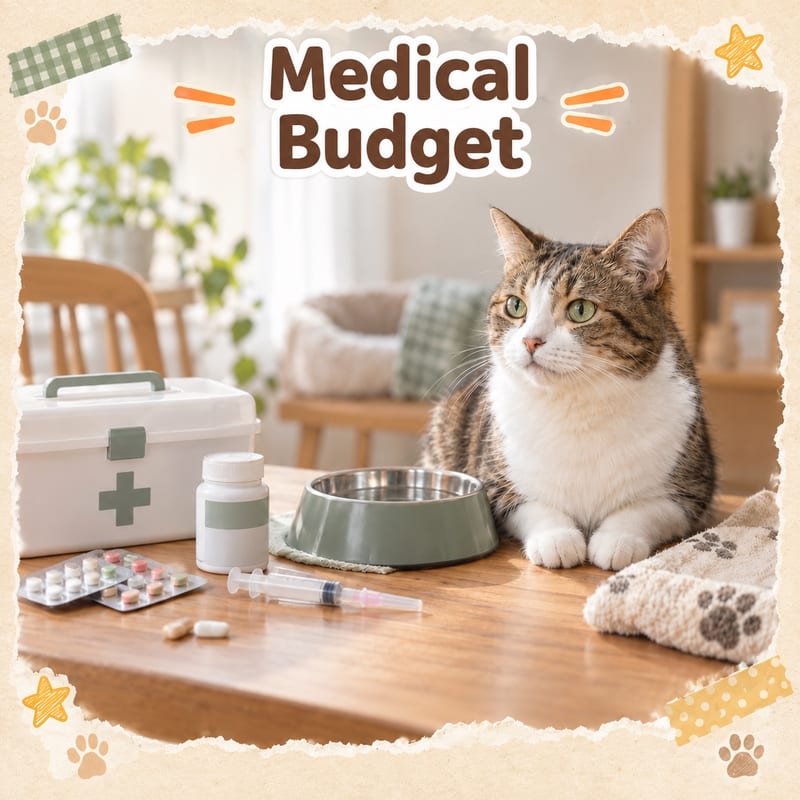
Juvenile one-off: neutering plus vaccinations about $2,000–3,500. Adult routine: annual vaccination and check-up $800–1,500. Middle-age screening: blood tests plus ultrasound $1,500–3,000 per year. The real "life-extension investment" is actually the annual screening from age 7—detecting chronic kidney disease one year earlier makes a difference measured in years of quality life. For renal prescription diets, supplements and low-edge litter trays and other care products, PetChill pet supplies has a one-stop range.
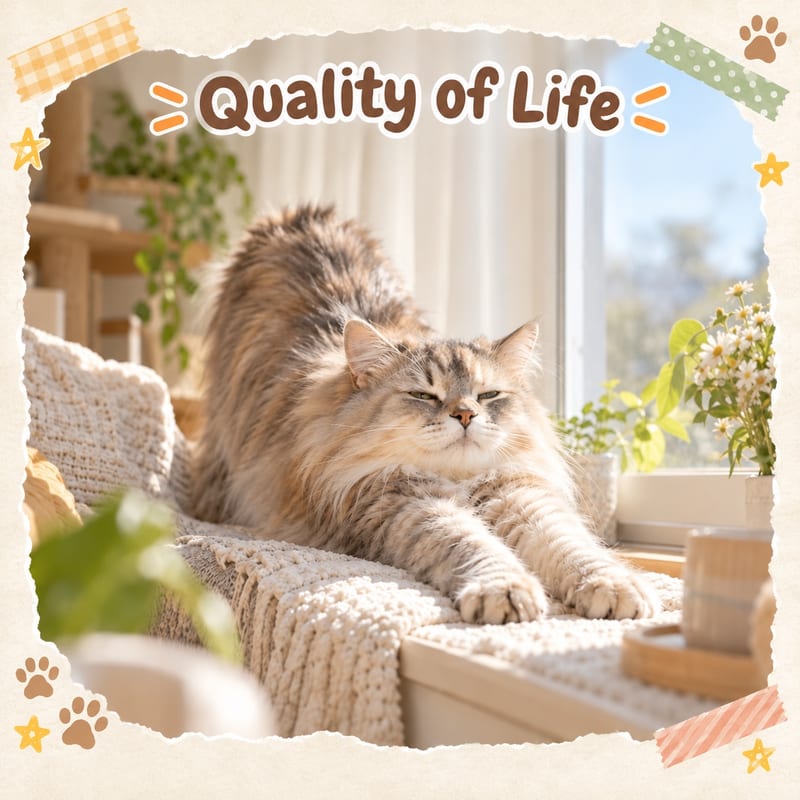
7. Quality-of-life indicators: beyond lifespan, count the "gold content" of the years
Lifespan cannot be counted only as "how many years lived"; feline geriatric medicine considers seven dimensions: eating (voluntarily finishing a meal), drinking (daily water intake stable; a sudden increase is a kidney warning), elimination (no inappropriate urination, no constipation), sleeping (stable sleeping spots, not unable to find a comfortable position due to pain), moving (voluntarily jumping to previous spots), playing (still interested in a wand toy for more than five seconds), coat (gloss and density are an external report of internal health). These seven items are essentially the home version of the veterinary quality-of-life assessment framework—every owner from age seven can keep a "monthly grid" record for their cat; after six months, when the line is laid out, trends are far more reliable than a single memory. Living long and living well—both matter.
Key takeaways
- ✅ Himalayan cats live 12–15 years, longer with good management; genes set the ceiling, screening determines whether they reach it
- ✅ The number one killer is PKD: check parents' genes before buying, annual blood tests plus ultrasound from age 7
- ✅ Obesity is an accelerator of lifespan shortening in flat-faced cats; measured feeding is a zero-cost life extender
- ✅ Heat sensitivity is a life-or-death issue, not a comfort issue: constant air-conditioning, backup for power outages, never leave in a car
- ✅ After age 10, "increased drinking + weight loss" means test kidneys immediately; early detection, early management
- ✅ All ten items on the life-extension checklist are achievable; the most expensive is only the annual screening
Related reading
- Full list of Himalayan cat disadvantages: must-read before getting one
- Himalayan cat Hong Kong care in practice: coping with humid heat and heat sensitivity
- Himalayan cat personality: the calm of a Persian and the cleverness of a Siamese
- Renal prescription diets, feeding scales, low-edge litter trays, senior cat care products: get them all at PetChill pet supplies.
The health information in this article is for general reference only and cannot replace diagnosis; for individual conditions, please consult a licensed veterinarian.
 Fuji One full guide →





