
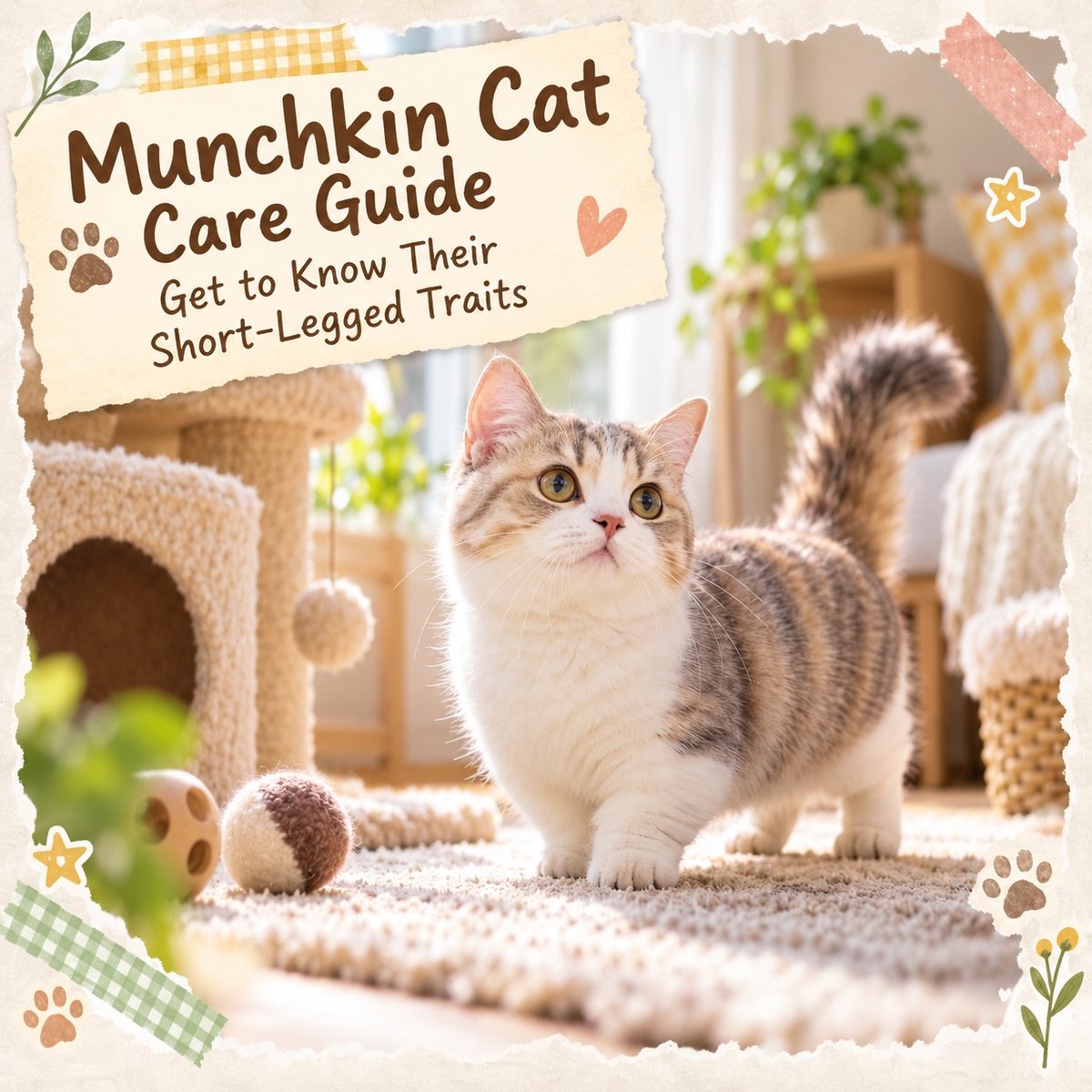
Quick answer: Munchkin cats are lively and affectionate, but the short-leg gene brings joint and spinal risks; before keeping one, you must accept the two long-term tasks of "orthopaedic check-up every six months + strict weight control" and choose a trustworthy source.
The Munchkin is a breed with a short-leg genetic mutation: lively, friendly, like a "feline dachshund". But the short legs come from a dwarfism gene, and joint and spinal health are controversial and risky. Before keeping one, look fairly at both sides of the argument and accept regular check-ups and weight management as two long-term tasks.
Munchkin appearance and body: short legs, normal body
| Item | Information |
|---|---|
| Most obvious feature | Short limbs |
| Body | Normal length |
| Weight | About 2–4 kg |
| Walking posture | Low, quick dashing, especially cute |
The short legs are caused by a dominant genetic mutation—this fact is the root of all the ethical controversy and health concerns that follow.
Munchkin personality: the feline version of a little dachshund
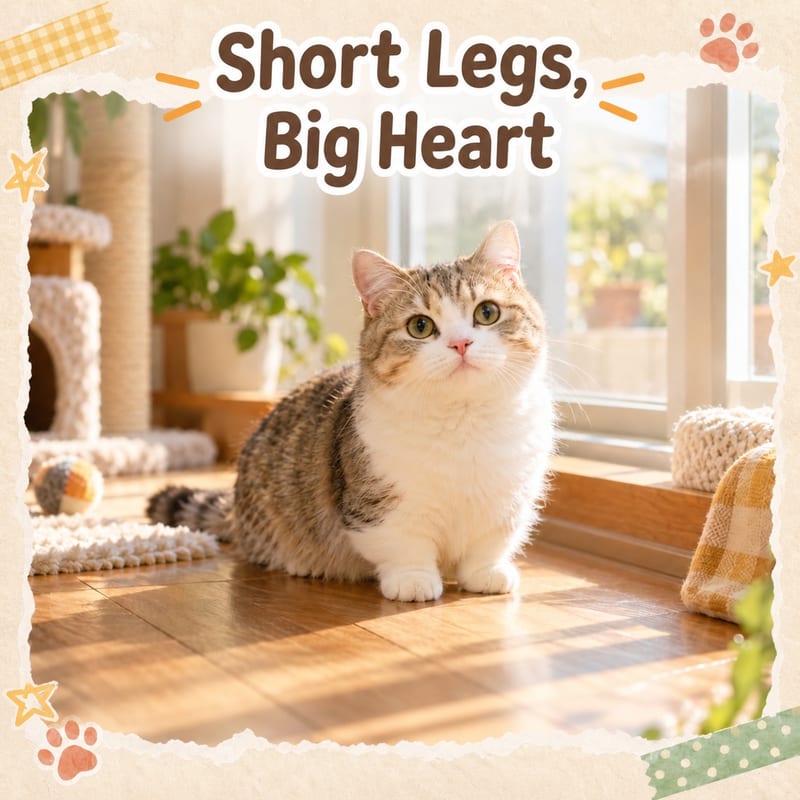
- Lively and friendly: outgoing, loves interacting with people
- Affectionate: very clingy, loves company
- Active: short legs but high spirits, still runs all over the house
- Comic gene: likes to stand up and "beg" for things, a social media favourite
In terms of personality, the Munchkin has almost zero complaints—the problem is not personality, it is the body.
Fair discussion: the ethical controversy of short legs
Core of the controversy: Is it right to breed an appearance gene that carries health risks?
- Concerned side's argument: The dwarfism gene may affect cartilage throughout the body, not just the legs; cat associations in some countries (such as the GCC in the UK) do not register Munchkins, on the grounds of "welfare first".
- Supporters' argument: Under proper pedigree management, many Munchkins are healthy and move normally all their lives; short legs do not equal suffering, and demonising them all is unfair.
- Where the controversy lies: There is no standard answer. As a prospective owner, what you can control is: which source you choose, and whether you can do regular check-ups and weight management after keeping one.
Also worth knowing: The folded-ear gene of the Scottish Fold is directly linked to osteochondrodysplasia, and the controversy is more serious than for the Munchkin; comparing the two helps you build a benchmark for judgement.
Genetic diseases and health risks: when to see a vet
Risks to watch for:
- Joint problems: The short-leg structure changes load-bearing, and the risk of joint wear is amplified by body weight
- Spine: Some individuals have a tendency to lordosis, etc.
- Pectus excavatum: Skeletal abnormalities in a few individuals
When to see a vet:
- Unwilling to jump onto places it usually uses
- Limping, lying down after a couple of steps
- Hunched back, avoiding touch or crying when you touch its back or waist
- Poor appetite, lethargy for more than two days
- Unwilling to use the litter box (possibly pain from the posture of getting into the box)
An orthopaedic check-up every six months to a year is basic equipment for keeping a Munchkin, not optional.
Munchkin care priorities: coat, exercise, diet
Coat: Both short-haired and long-haired varieties exist. Brush short hair 1–2 times a week; the long-haired version needs more frequent brushing to prevent matting.
Exercise:
- Provide low cat trees and stepped platforms so it does not have to jump hard
- Play with a wand toy near the ground—its ground speed and reactions are not slow at all
- Do not test its high jumping, and do not place food or water where it "has to jump to eat"
Diet (most important is preventing obesity):
- Being overweight is a double burden on short legs and spine—weight control is the number one priority for a Munchkin
- Regular meals in fixed amounts, count treats, weigh monthly
- A general high-protein balanced cat food is enough; there are no breed-specific requirements
Hong Kong keeping environment tips: small flats, humid heat
- Good news: The Munchkin has a small activity range, so a small flat is perfectly fine—it does not jump very high anyway.
- Floor: Glossy tiles are slippery; lay anti-slip mats to reduce joint stress.
- Furniture height: Sofas and beds are "high platforms" to it; provide small steps or a cat ladder, and do not make it climb up and down by itself all the time.
- Humid hot summers: Watch water intake and put out more water bowls; joint condition is not directly related to weather, but obesity and inactivity are common problems for indoor cats in Hong Kong.
Adopt or buy?
- Buying: Hong Kong prices are about $12,000–$28,000 (see the cat breed guide). If you decide to buy, you must: choose a registered breeder, see the parents and their previous offspring's health records, ask clearly about genetic testing, and check whether the contract includes health guarantees.
- Adopting: Short-legged mixed cats occasionally appear in adoption groups (many domestic cats have natural "short-leg gene" variations). Adoption also requires regular orthopaedic check-ups.
- Ask yourself honestly: Do you love this cat, or the "short legs" appearance? If the latter, you should read the controversy section of this article before deciding.
What you can do starting today
- If you already have one: start weighing monthly and filming its walking as a baseline from this month.
- Check the height of cat trees at home; add steps to any over half a metre.
- If you do not have one yet: book a vet visit to discuss "the long-term medical budget for keeping a Munchkin" before deciding.
- Whether buying or adopting, observe when you first meet the cat whether it limps when walking or its posture when standing.
To help your short-legged cat choose a non-fattening cat food, see PetChill's cat food reviews and product guides.
This article is for reference only; consult a registered veterinarian for any problems.
Further reading
- Cat breed quick guide →
- British Shorthair guide →
- Persian cat guide →
- Domestic cat (Hong Kong cat) guide →
Practical checklist for keeping a Munchkin in a small Hong Kong flat
1. Home modifications in 30 minutes
- Floor: Lay anti-slip mats on glossy tiles immediately to reduce joint stress; pet shops sell them at $50–$80 each, two pieces are enough for turning areas.
- Furniture height: Place a small stool or an IKEA two-step footstool by the sofa and bed, so the cat can go up and down in two stages instead of jumping all at once.
- Cat tree: Choose models under 60 cm with a ramp to avoid vertical jumping; PetChill has low platforms designed for short legs for reference.
2. Monthly routine check list
- Weight: Use a kitchen electronic scale, weigh on the same day each month before feeding, and record in a phone memo.
- Walking video: Film 10 seconds of straight-line walking each month and save in an album for comparison; if the gait changes, book a vet immediately.
- Bone check by touch: While grooming, feel along the spine and limb joints for swelling or avoidance reactions.
3. When you must see a vet
- Cannot jump onto its favourite windowsill/bed.
- Clearly goes down stairs step by step slowly, or stops midway.
- Gets up immediately after squatting in the litter box, or even urinates beside it.
- Decreased appetite or lethargy for two consecutive days. Hong Kong orthopaedic specialist vets are concentrated in Central and Kowloon Tong, with weekday appointments about $500–$800; for emergency night consultations, go to VESHK or CityU Veterinary Medical Centre.
4. Practical anti-obesity diet
- Timed feeding: Buy an automatic feeder, 3–4 meals a day, no free feeding.
- Treat limit: No more than 10% of total calories per day, measured accurately with an electronic scale.
- Humid hot weather: Put out two more bowls of water, add ice cubes to attract drinking; in summer you can switch 20% to wet food for hydration, but total calories must be reduced.
5. Final checklist before adopting/buying
- See the parents in person and ask the breeder for health records of the past three generations.
- The contract should state that if there is a congenital skeletal problem in the first year, it can be returned or exchanged.
- If adopting, take it to a vet for an X-ray first to confirm there is no obvious spinal abnormality before bringing it home.
Only by completing the above steps are you truly a responsible Hong Kong owner to a Munchkin cat.
📌 Key summary
- ✅ Outgoing and clingy, suitable for small flats
- ✅ Orthopaedic check-up every six months to a year is basic
- ✅ Weight control is the number one priority for short-legged cats
- ❌ Do not place food and water high up and force it to jump
- ❌ Buying without checking parents' health records is high risk
 Wellness Core full guide →



