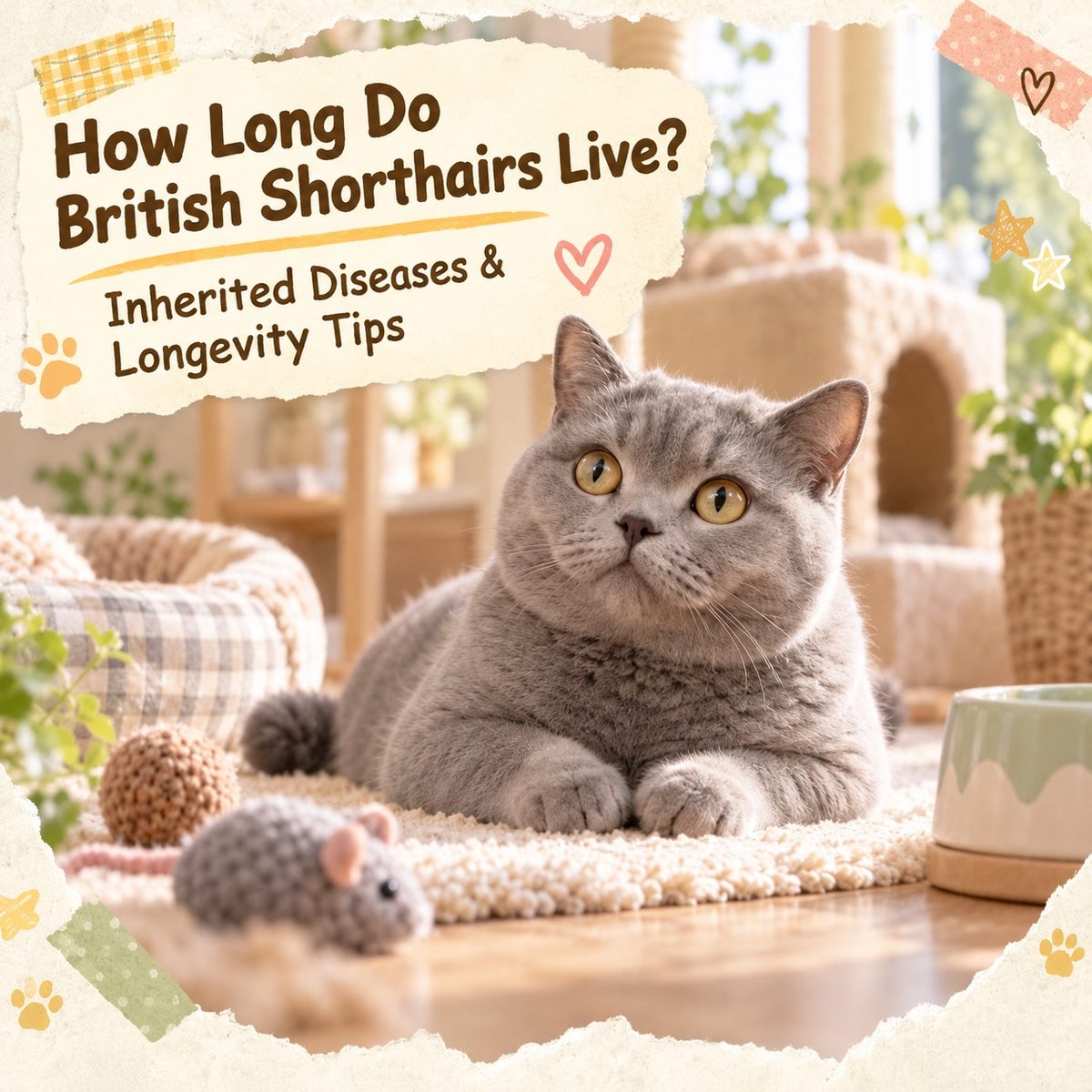
Quick answer: British Shorthairs typically live 12–17 years, a medium-to-long lifespan for the breed. The four biggest variables affecting lifespan, in order, are: weight management, genetic disease screening (PKD, HCM), indoor living environment, and senior medical follow-up. Do all four and it is absolutely not rare for a British Shorthair to stay with you beyond 17 years; neglect any one long-term and the range shifts downward — a pattern repeatedly confirmed in practice and clinical experience.
Want to know British Shorthairs inside out? Start with the British Shorthair breed profile and the Complete British Shorthair Guide.
What does British Shorthair lifespan mean? Key points in 30 seconds
The British Shorthair lifespan range is 12–17 years, medium-to-long among medium-sized short-haired breeds. What determines where in that range your cat falls is not genetic destiny but four owner-controllable variables: weight, screening, environment, and senior medical follow-up. The table below lists the points Hong Kong owners ask about most, with each explained in detail later.
| Item | British Shorthair lifespan key points |
|---|---|
| Average lifespan | 12–17 years (indoor-only, well managed can reach 18+) |
| Ideal adult weight | Male 5–7 kg / Female 4–5.5 kg |
| Top lifespan shortener | Long-term obesity (man-made, completely avoidable) |
| Main genetic risks | Polycystic kidney disease (PKD), hypertrophic cardiomyopathy (HCM) |
| Ageing starting point | Enters maturity at 7; check-up frequency should increase |
| Senior check-up frequency | Every six months after age 7 |
| Annual check-up cost | About HK$1,700–3,300 (check-up + blood test) |
| Most easily overlooked detail | Oral care and water intake |
Three fundamentals you must know:
- The range is not destiny — within the same breed, management differences can create a five-to-seven-year lifespan gap.
- Overweight is an "invisible disease" — British Shorthairs have round faces and sturdy frames; even 2 kg overweight is hard to spot by eye.
- Senior diseases don't appear suddenly — blood test data often gives hints six months to a year before symptoms.
British Shorthair lifespan-related costs (2026 Hong Kong prices)
The real cost of a British Shorthair is not the purchase price but a decade-plus of medical follow-up. The table below is based on typical Hong Kong clinic fees; ask these questions before committing so your budget stays on track.
| Item | Range | Notes |
|---|---|---|
| Registered cattery kitten | HK$10,000–25,000 | Must have parental PKD and heart screening records |
| Adoption | HK$0–2,000 | Usually already neutered and vaccinated |
| Vaccines (first year, three doses) | HK$900–1,500 | Annual booster thereafter |
| Neutering | HK$1,500–3,500 | Cheaper for males, more for females |
| Basic check-up + blood pressure | HK$500–900 per visit | Once a year; every six months after age 7 |
| Blood test incl. kidney values | HK$600–1,200 per test | Essential from age 7 |
| Cardiac ultrasound | HK$2,500–4,500 per scan | Only if murmur or family history |
| Dental cleaning / dental procedure | HK$3,000–8,000 per procedure | Based on examination findings |
| Monthly food | HK$350–700 | Dry and wet mixed |
| Monthly litter + deworming share | HK$200–400 | Clumping or tofu litter |
| Monthly basic total | About HK$600–1,100 | Excludes major medical costs |
The most underestimated period is after age 7: a six-monthly blood test plus check-up already starts at HK$2,000 a year; once chronic kidney disease is diagnosed, monthly medication and follow-up can reach HK$800–1,500. Money spent on early testing is always the cheapest money.
Breed lifespan comparison table (British Shorthair vs 5 other breeds | average lifespan)
When choosing a breed, lifespan is a very practical consideration — not about which is "better", but how many years you are prepared to walk together. Below is a comparison of average lifespans for common breeds (based on large surveys and common clinical ranges, for reference only):
| Breed | Average lifespan | Main lifespan variables |
|---|---|---|
| British Shorthair | 12–17 years | Obesity, PKD, HCM |
| American Shorthair | 15–17 years | Generally robust, fewer variables |
| Persian | 12–15 years | PKD, flat-face-related respiratory and dental issues |
| Ragdoll | 12–15 years | HCM, urinary tract |
| Siamese | 12–15 years | Sensitive digestion, urinary tract |
| Mixed domestic cat | 14–18 years | High genetic diversity, generally longest-lived |
In one sentence: the British Shorthair lifespan is not the longest among breeds, but its lifespan-shortening factors (obesity, screening) are almost all controllable — in other words, the British Shorthair is a breed where "how you care for it determines how long it lives".
Three ways to extend life: blood tests, weight, oral care
All lifespan-extension advice boils down to three things. Do these three and you have covered most lifespan-shortening risks:
- Annual blood test (HK$600–1,200): once a year before age 7, every six months after 7, including kidney values, thyroid and blood glucose. For common senior diseases like kidney disease and hyperthyroidism, catching them one stage earlier can make monthly treatment three to five times cheaper, and the lifespan difference is measured in years.
- Weight management (HK$0): weigh monthly; the weight curve should flatten after adulthood; use body condition scoring to feel the ribs — you should be able to feel them but not see them. Treats should not exceed 10% of daily calories; free-feeding is the British Shorthair's number one enemy.
- Oral care (weekly brushing, tools about HK$100–300): periodontal disease is the most common source of chronic inflammation in cats; bacteria travel through the blood to affect the heart and kidneys. Brush two to three times a week, or at least use dental products; if tartar is found, schedule a dental cleaning — don't wait until the gums recede.
Of the three, two cost almost nothing — extending life is never a money problem, it's a habit problem.
Care priorities at different life stages
The same cat has different tasks at different ages. Follow the timetable and you won't miss key windows:
| Age stage | Care priorities | Approximate cost |
|---|---|---|
| 0–1 year | Three vaccines, deworming, socialisation, establishing feeding routine | HK$2,500–5,000 (first year) |
| 1–2 years | Neutering + pre-neuter blood test, weight stabilisation monitoring | HK$2,000–4,000 |
| 2–6 years | Annual check-up, weight maintenance, start oral care | HK$1,200–2,000 per year |
| 7–10 years | Six-monthly check-up and blood test, switch to mature food, watch water intake | HK$2,400–4,000 per year |
| 11+ years | Six-monthly blood test + blood pressure, joint observation, low-sided litter box, warmth | HK$3,000–6,000 per year |
Who is a British Shorthair suitable for? Three reverse self-checks
| Owner type | Suitability | Reason |
|---|---|---|
| 9-to-6 working family | Suitable | Highly independent, tolerates daytime alone well |
| Work-from-home person | Very suitable | Moderate interaction needs, companionship won't become a burden |
| First-time cat owner | Suitable | Stable temperament, easy grooming, clear medical routine |
| Very tight budget | Needs assessment | Senior medical costs are a long-term commitment |
| Wants a highly interactive cat | Not recommended | British Shorthairs are calm; interaction rewards are lower |
Reverse self-check (three questions):
- Can you accept a medical budget for your cat that grows from a few hundred to a few thousand a year over a decade-plus?
- Can you weigh monthly and refuse the "feed whenever they want" approach?
- After age 7, can your schedule accommodate a vet visit every six months?
If you can't answer "yes" to two of the three, it's not that you can't keep one — it's that you should adjust your budget and schedule before getting one.
Four common British Shorthair lifespan misconceptions
| Misconception | Reality |
|---|---|
| British Shorthairs have big frames, so heavier is normal | Round face and sturdy frame make overweight hard to notice; use body condition scoring to feel ribs, not visual judgement |
| Cats don't need blood tests; see a vet when there's a problem | Kidney disease and thyroid problems are often mid-to-late stage when symptoms appear; blood tests give hints six months to a year earlier |
| Dry food cleans teeth so brushing isn't needed | Dry food's dental cleaning effect is extremely limited; periodontal disease still forms; brushing is the correct solution |
| Older cats getting thinner is normal ageing | Senior cats with normal appetite but weight loss is a typical early sign of kidney disease or hyperthyroidism; blood test immediately |
British Shorthair lifespan and water: the cheapest kidney investment
When talking about extending life, many people first think of supplements, but clinically the most data-supported and cheapest trick is increasing daily total water intake. The kidneys and urinary tract are the two major battlegrounds for senior British Shorthairs, and both are linked to long-term mild dehydration. There are three practical levels, costing from zero to a few hundred dollars:
| Method | Cost | Effect direction |
|---|---|---|
| Place two to three extra water bowls around the home | HK$0–100 | Increases "drink when passing by" opportunities |
| Raise wet food proportion to half of daily intake | Extra HK$200–400 per month | Direct hydration through food, most stable effect |
| Flowing water fountain | HK$150–500 one-off | Some cats clearly drink more |
| Regularly measure litter clump size | HK$0 | Smaller clumps are the earliest dehydration warning |
A simple standard: an adult British Shorthair should produce two to three tennis-ball-sized urine clumps daily. If for several consecutive days there is only one small clump, don't wait for a second symptom — add wet food and water bowls first, and see a vet if no improvement in three days.
British Shorthair lifespan range: how to read the data
Cat lifespan studies from the UK, Belgium and elsewhere (such as the purebred cat lifespan survey published by the Royal Veterinary College, RVC) show that the median lifespan of British Shorthairs falls roughly in the 12–17 year range, close to the overall domestic cat average (some large-sample studies put median cat lifespan at about 14–15 years), but breed-related diseases widen both ends of the distribution: individuals with insufficient screening and long-term overweight may show health decline before age 10; conversely, indoor cats at standard weight with annual check-ups often live beyond 18. The range is not destiny — where your cat falls is determined by daily feeding, check-ups and environment.
| Factor | Effect on lifespan | Controllability |
|---|---|---|
| Obesity | Lowers: joint, urinary, heart burden | Highly controllable |
| Unscreened PKD/HCM | Lowers: earlier onset age | Controllable by pre-purchase screening |
| Indoor living | Raises: prevents falls, traffic accidents, infections | Fully controllable |
| Annual vet check-up | Raises: early detection, early treatment | Fully controllable |
| Dental health management | Raises: affects eating and infection risk | Controllable |
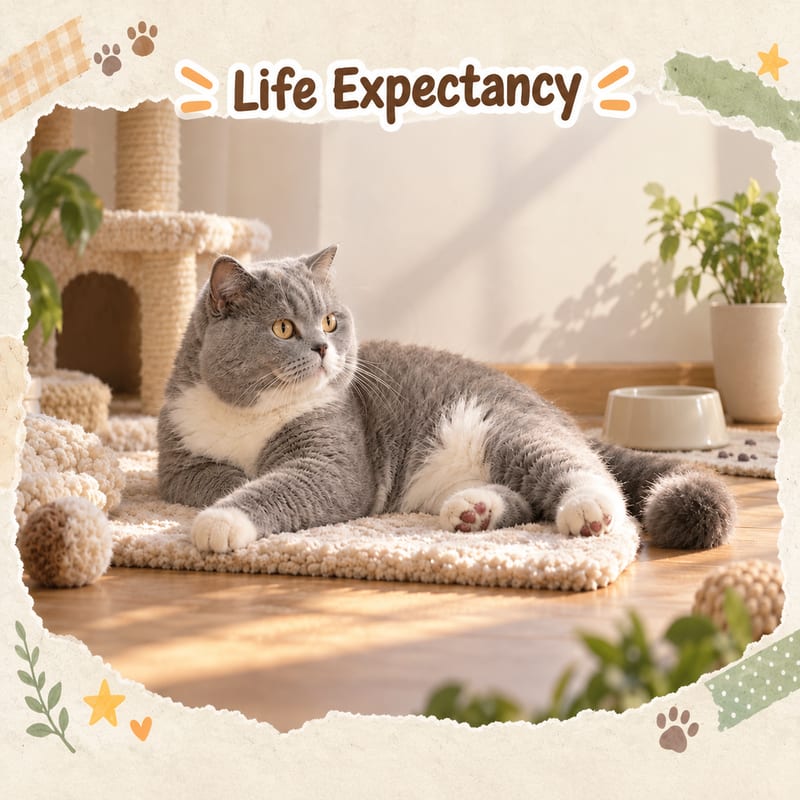
The number one killer is actually obesity
The British Shorthair is recognised as one of the breeds most prone to overweight, and the most common lifespan-shortening "breed disease" in veterinary clinics is often chronic obesity caused by the owner's feeding. Overweight cats have a significantly higher risk of urinary blockage, diabetes and joint disease — exactly the most common reasons for hospital admission in middle-aged and senior British Shorthairs. Weigh monthly, keep the weight curve rising steadily until 18 months then constant — the cheapest life insurance. Studies show overweight cats have a significantly shorter average lifespan than normal-weight individuals, and because British Shorthairs have sturdy frames and round faces, they are easily misjudged as "just right" when actually overweight — use body condition scoring (BCS) to feel the ribs; it's more reliable than looking at the scale alone.

Three major breed health concerns
- Polycystic kidney disease (PKD): autosomal inherited; multiple cysts in the kidneys enlarge with age and affect kidney function. Early ultrasound can detect it; parental screening certificates from reputable catteries can directly rule out most high-risk bloodlines.
- Hypertrophic cardiomyopathy (HCM): thickening of the ventricular wall; may be asymptomatic for years or deteriorate suddenly. Cardiac ultrasound is the gold standard; associations such as the CFA have long recommended regular screening for breeding cats.
- Urinary tract disease: males especially need watching for urethral blockage; insufficient water intake plus overweight are the main triggers; increasing wet food proportion and using a flowing water fountain are practically effective preventive measures. If you notice frequent visits to the litter box, blood in urine, or crying in pain at the toilet, it is an emergency — take the cat to the vet immediately, don't wait until the next day.
Medical content is for reference only; individual differences are large. For any suspected symptoms, rely on a registered veterinarian's diagnosis and do not self-medicate.
Lifespan-extension checklist: seven things you can do
- Portion-controlled feeding, no free-feeding; treats no more than 10% of daily calories;
- Two interactive play sessions daily, 10–15 minutes each, to maintain muscle mass and joint flexibility and prevent middle-age spread;
- Indoor-only living with window screens installed to prevent falls and accidents;
- Annual comprehensive check-up (including blood pressure, blood and urine tests); every six months after age 7;
- Source screening: when buying a cat, check parental PKD and heart screening certificates; for adopted cats, a baseline ultrasound in the first year is recommended for peace of mind;
- Oral care: brush weekly or use dental products; gingivitis and tooth resorption are the most common sources of chronic inflammation in cats;
- Water intake: multiple water bowls, flowing water sources, protect kidneys and urinary tract — especially important for males.
Senior British Shorthair (7+) care priorities
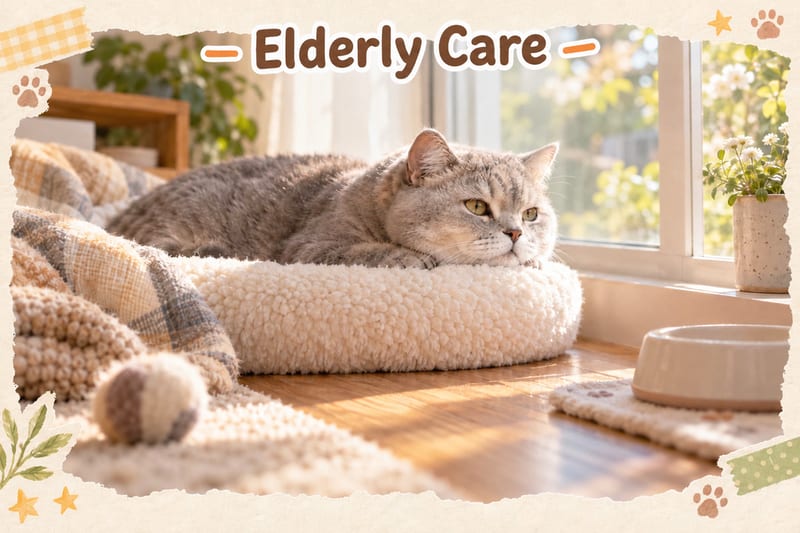
Senior British Shorthairs show three types of signals: behavioural — no longer jumping high, sleeping more, slower response to calls; physical — increased drinking and urination, weight loss despite normal appetite (kidney hint), poorer coat; eating — preference for soft food, difficulty chewing (dental hint). Responses: switch to senior formula food, change to a low-sided litter box for easy access, place warm beds next to activity areas to reduce climbing, and most importantly — increase annual check-ups to every six months (i.e., twice a year); many diseases have completely different outcomes when caught half a step earlier. Changes in kidney function, thyroid and blood pressure in senior cats are often reflected in blood and urine data six months to a year before obvious symptoms.
Beyond lifespan: quality is the point
Talking about lifespan can't be just about years. A 15-year-old cat with daily joint pain and abnormal kidney values versus a 14-year-old lively healthy cat — which one "lives well" is self-evident, and the veterinary profession has long advocated quality-of-life assessment as the basis for medical decisions. The real meaning of extending life is compressing the period of illness and frailty: screening, weight and oral management are all aimed at preserving dignity, appetite and the ability to jump onto the sofa in the final years.
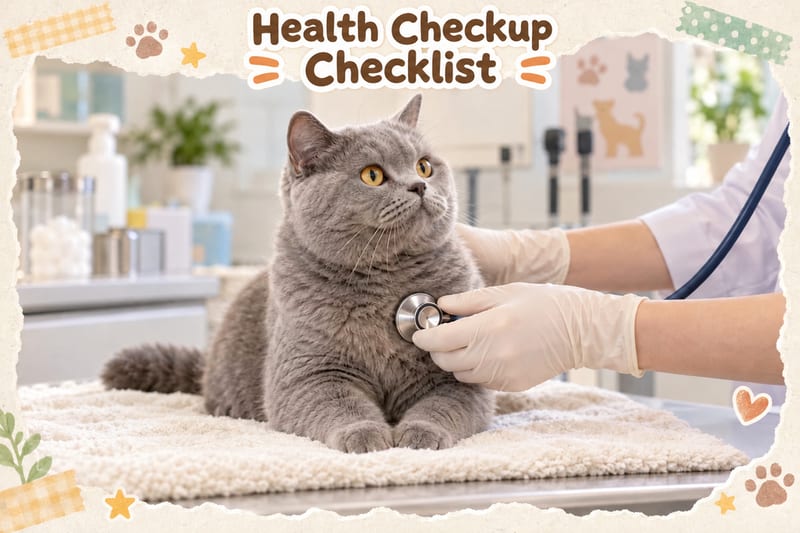
Hong Kong check-up packages: where your money is best spent
Translating these principles into real Hong Kong prices to help you budget (based on typical clinic fees; actual prices subject to clinic quotation at the time):
| Check-up item | Recommended frequency | Reference fee (HKD) | Target |
|---|---|---|---|
| Basic check-up + blood pressure | Annually (every six months after 7) | $500–900 | All ages |
| Blood test incl. kidney values and thyroid | Annually from age 7 | $1,200–2,000 | Mature and above |
| Cardiac ultrasound | If murmur / family history | $2,500–4,500 | HCM risk confirmation |
| Dental procedure (cleaning / extraction) | Based on examination findings | $3,000–8,000 | Tartar or resorption lesions |
| PKD ultrasound screening | Pre-purchase parental check / baseline once after adoption | $1,500–2,500 | Breed routine |
The logic is simple: the later a disease is detected, the more expensive the same condition becomes to manage; monthly costs for stage 3 kidney disease are three to five times those of stage 1 follow-up. For budget-limited families, priority order: weight management ($0) > annual basic check-up > blood tests after age 7 > imaging only when warning signs appear — do the first three and you have covered most lifespan-shortening risks.
Frequently asked questions
Q: How long do British Shorthairs live? A: Typically 12–17 years, medium-to-long. With good weight control, genetic screening, indoor living and regular check-ups, exceeding 18 years is not rare.
Q: Which diseases most commonly shorten a British Shorthair's life? A: PKD, HCM, urinary tract disease and obesity-related conditions. The first three can be delayed or risk-reduced through screening and management; the last is entirely in the owner's hands, decided by daily feeding.
Q: How can I help my British Shorthair live longer? A: Portion-controlled feeding, daily play, indoor-only living, annual check-ups (every six months when senior), source screening, oral care, adequate water — these seven things together are the most practical lifespan-extension plan.
Q: Do indoor cats live longer than outdoor cats? A: Research and clinical consensus agree: indoor cats have a significantly longer average lifespan. In Hong Kong's building environment, outdoor feeding risks are only higher.
Q: What are the key care points for a senior British Shorthair? A: Six-monthly check-ups, senior formula food, monitoring changes in drinking and weight, low-sided litter box and warm bed; see a vet proactively if joints are uncomfortable.
Q: Is there a link between British Shorthair lifespan and coat colour? A: Coat colour does not directly determine lifespan; individuals bred closely for colour may carry a heavier genetic burden, so checking parental screening certificates is the right approach.
Key summary
- ✅ British Shorthair lifespan range is 12–17 years; four major variables: weight, screening, environment, senior medical care.
- ✅ Obesity is the most common "man-made killer": monthly weighing and refusing free-feeding are the bottom line.
- ✅ PKD and cardiac ultrasound screening are must-checks before buying a cat, not an after-sales bonus.
- ✅ Watch for urinary blockage in males: wet food proportion and water intake are key to prevention.
- ✅ After age 7, check-ups every six months; early detection is the only way to treat.
- ✅ The real goal of extending life is compressing the period of illness and frailty: quality of life counts as much as years, and done right, both can improve together.
Related reading
- British Shorthair disadvantages and how to cope
- British Shorthair weight and growth curve
- British Shorthair Hong Kong keeping guide
- For weight management and senior cat supplies: choose weight-management food, low-sided litter boxes and senior cat warm beds at PetChill pet supplies.
The diseases and screening arrangements mentioned in this article are general information only; for individual diagnosis and treatment, please consult a registered veterinarian.
 Royal Canin full guide →