
💡 Quick Answers
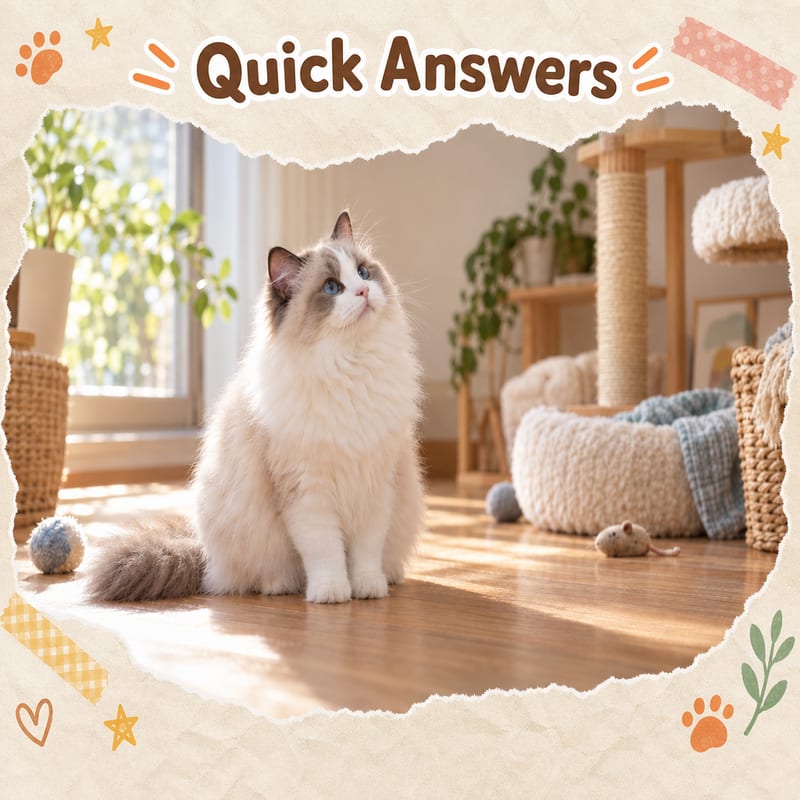
Ragdolls are known for their gentle personality and beautiful appearance, earning them the nickname "fairy of cats". They are large, blue-eyed, with long silky soft coats, and extremely gentle — when held they relax like a rag doll. Keeping a Ragdoll in Hong Kong requires attention to: regular grooming for the long coat, heat precautions in summer, and a relatively high price ($15,000-40,000). They suit families with patience who like quiet cats.
This article is part of the Hong Kong Cat Breeds Guide series.
Ragdoll Basic Information
| Item | Details |
|---|---|
| Size | Large (4.5-9 kg) |
| Lifespan | 12-17 years |
| Coat colours | Colourpoint, bicolour, mitted |
| Coat length | Long-haired |
| Personality | Gentle, quiet, affectionate, adaptable |
| Suits | Families who like quiet cats, owners with patience for grooming |
| Does not suit | People with no time for grooming, those wanting an active cat |
Ragdoll Personality Traits
Why "Fairy of Cats"?
The Ragdoll's personality is unique among cats:
- Extremely gentle: They almost never attack proactively and are very friendly to humans and other animals
- Relaxed like a rag doll: When held they relax completely, flopping like a rag doll (hence the name)
- Quiet and seldom vocal: Soft meows, not frequent callers
- Loyal and affectionate: They like to follow their owners but are not as clingy as Siamese
- Highly adaptable: They adapt to various home environments, including those with children and other pets
Ragdoll Colour Patterns
| Pattern | Features | Price |
|---|---|---|
| Colourpoint | Dark extremities, lighter body | More affordable |
| Bicolour | White inverted V on the face | Mid-high |
| Mitted | White "mittens" on all four paws | Higher |
| Lynx | With tabby markings | Mid-high |
The table lists only the main categories; each has various body colours and tabby combinations. For the full range, see the Ragdoll Colour Guide.
Ragdoll Care Essentials in Hong Kong
Coat Care (Most Important!)
Ragdolls are long-haired cats, so coat care is the priority:
- Daily grooming: At least once a day to prevent mats and hairballs
- Extra during shedding season: Groom twice daily during spring and autumn shedding
- Regular bathing: Every 1-2 months with cat-specific shampoo
- Hairball prevention: Give hairball gel or cat grass regularly
Living Environment
Ragdolls are large and need more space:
- A living area of 500 sq ft or more is recommended
- A sturdy cat tree is needed (Ragdolls are heavier)
- Provide a comfortable cat bed (long-haired cats love soft places)
Diet Advice
Ragdolls are large and need ample nutrition:
- Quality cat food with protein content ≥ 36%
- Watch portion sizes; Ragdolls are prone to obesity
- Moderate wet food to supplement water intake
- See the Complete Cat Food Guide for choosing suitable brands
Common Health Issues
Ragdolls are generally healthy, but watch for:
- Hypertrophic cardiomyopathy (HCM): Ragdolls have a genetic risk; always ask the breeder for health test reports before buying
- Polycystic kidney disease (PKD): Some lines have a genetic risk
- Hairball problems: Long-haired cats need regular prevention
- Obesity: Control diet and exercise
For more health information, see the Pet Health Guide.
Ragdoll vs Other Popular Breeds
| Comparison | Ragdoll | Siamese | British Shorthair |
|---|---|---|---|
| Clinginess | ★★★★☆ | ★★★★★ | ★★★☆☆ |
| Activity level | ★★☆☆☆ | ★★★★★ | ★★☆☆☆ |
| Grooming needs | ★★☆☆☆ | ★★★★★ | ★★★★☆ |
| Beginner-friendly | ★★★★★ | ★★★☆☆ | ★★★★★ |
| Size | Large | Medium | Medium |
For more breed comparisons, browse the Cat Breeds Guide.
Buying and Adoption Channels in Hong Kong
Buying
- Registered breeders: $20,000-40,000 (with pedigree certificate and health test reports)
- Pet shops: $15,000-30,000 (confirm the source)
- Always ask to see HCM and PKD genetic test reports before buying
Adoption
- SPCA
- Hong Kong animal adoption centres
- Ragdoll-specific adoption groups on social media
- Adoption fees around $2,000-5,000
For more adoption information, see the New Pet Owner Guide.
Practical Checklist for Keeping a Ragdoll in a Small Hong Kong Flat
Space Planning
- Vertical space: In a 300–400 sq ft flat, convert an IKEA IVAR shelving unit into a cat climbing frame, add a hammock on a curtain rod — space-saving and sturdy.
- Grooming station: Put a small stool and storage box by the front door; groom as soon as you come in so fur doesn't blow everywhere.
Heatstroke Prevention Schedule
- 8:00 am: Turn on the air-conditioning at 26°C, place two stainless steel water bowls (kitchen + living room).
- 7:00 pm: Feel the cat's ears and paw pads first; if too hot, turn on a fan for air circulation, then feed a small amount of wet food for hydration.
- 11:00 pm: Check the cooling mat for leaks, and do a five-minute grooming session to reduce overnight shedding.
Mat First Aid
- Minor mats: Use a dematting comb to tease them out little by little, giving treats to distract.
- Severe mats: Book a Wan Chai or Mong Kok veterinary clinic immediately to clip the mats; do not cut them yourself — cutting the skin can cause inflammation.
Medical Cost Budget
- Annual check-up: $800–1,200 (including basic blood tests + cardiac ultrasound)
- HCM genetic test: $600–800 (ask the breeder for it before buying; you shouldn't pay yourself)
- Hairball clinic visit: $400–600 (only when vomiting or constipated)
Weekend Outings
- Pet-friendly malls: K11 Musea and The Mills have air-conditioning; take a cat stroller for a half-hour walk so they can watch the street and relax.
- Home corridor: If there are no dogs on the same floor, set up a temporary pen for them to walk around, but bring a towel to wipe paws to avoid sweat marks.
When and How to See a Veterinarian for a Hong Kong Ragdoll
1. When must you go to the vet?
- Rapid breathing / open-mouth panting: Ragdolls have a genetic risk of HCM; if you see them panting even at rest, go to a 24-hour emergency clinic immediately (available in Kowloon City and North Point).
- Refusing food for two consecutive meals: An adult cat not eating for over 24 hours can trigger fatty liver, especially in overweight cats — see a vet quickly.
- Vomiting more than 3 times a day or with blood: May be hairball blockage or gastroenteritis; delay can cause dehydration.
- Abnormal bowel movements: No stool for over two days, or stool with blood/mucus — book a clinic immediately.
2. Booking Process Made Easy
- Weekday consultations: WhatsApp mainstream clinics in Mong Kok, Causeway Bay and Sha Tin with your name, symptoms and preferred time; usually same-day or next-day appointments.
- Emergency: Google "24-hour vet", call first to describe symptoms; they will tell you whether to come immediately, saving a wasted trip.
- What to bring: Vaccination card, previous medical records (if any), and the packaging of their regular food so the vet can estimate weight and dosage.
3. Follow-up After the Visit
- Medication: Pills can be put into empty capsules and mixed with wet food to reduce bitterness; liquid medicine can be given with a syringe, dripping slowly into the side of the mouth.
- Rechecks: Heart problems usually need an ultrasound every 3–6 months; ordinary gastroenteritis recheck after 3–5 days.
- Keep receipts: Some insurance policies allow claims; remember to get official receipts and medical reports.
4. Money-Saving Tips
- Non-urgent: You can book SPCA Wan Chai headquarters or non-profit clinics; fees are 20–30% cheaper than private, but waiting times are longer.
- Vaccine packages: Buy the 3-in-1 + rabies + deworming together; cheaper than paying per visit.
- Group ultrasound days: Watch clinic Facebook pages; they occasionally offer "cardiac ultrasound days" for $500–600, compared with over $800 normally.



