

Quick answer: Birman drawbacks center on eight points: long fur needs daily brushing, heavy shedding in coat-change seasons, being overly clingy, a curious nature that messes up the home, heat and humidity sensitivity, HCM genetic risk, limited supply in Hong Kong meaning a wait, and white gloves that depend on luck. Each has a solution, provided you are informed and willing to do the work.
Want to know more about Birmans? Keep reading the series below.
Why people searching for "Birman disadvantages" should read this
People who search for "Birman disadvantages" or "Birman regret" are usually already captivated by their looks: a cream-colored body, dark mask and ears, four clean white gloves, and a pair of sapphire eyes. That's the right order — first attracted by appearance, then rationally assessing the cost. The Birman (also translated as Sacred Cat of Burma) is defined in the breed standards of the Cat Fanciers' Association (CFA) and The International Cat Association (TICA) as a medium-sized, silky semi-longhaired, blue-eyed colorpoint cat, with white gloves on all four paws as the breed's hallmark. In temperament, both associations' descriptions are highly consistent: gentle, social, and affectionate. But under the "dream breed" label, the eight real costs are rarely fully explained.
The eight drawbacks one by one: and how to handle each
1. Silky semi-long fur needs daily grooming. The Birman's coat is silky with a thinner undercoat, so it mats less than a Persian's, but behind the ears, under the armpits, on the belly, and inside the hind legs are trouble spots. Solution: 5–10 minutes with a slicker brush daily, double in humid seasons; for mats, loosen with fingers first, then comb.
2. Noticeable shedding in coat-change seasons. During the two coat-change periods in spring and autumn, it's normal for clothes, sofas, and bedsheets to be covered. Solution: brush at fixed times to trap loose fur in the comb, use a vacuum and air purifier, and ensure high-quality protein in the diet.
3. Overly clingy, prone to anxiety when alone. Birmans are famous for following people, going into the kitchen with you, and waiting at the door for you to return. Long periods alone may lead to excessive grooming, inappropriate urination, or frequent vocalization. Solution: two 15-minute interactive sessions daily, leave puzzle feeders before going out; if behavior persists, consult a veterinarian or behavior expert.
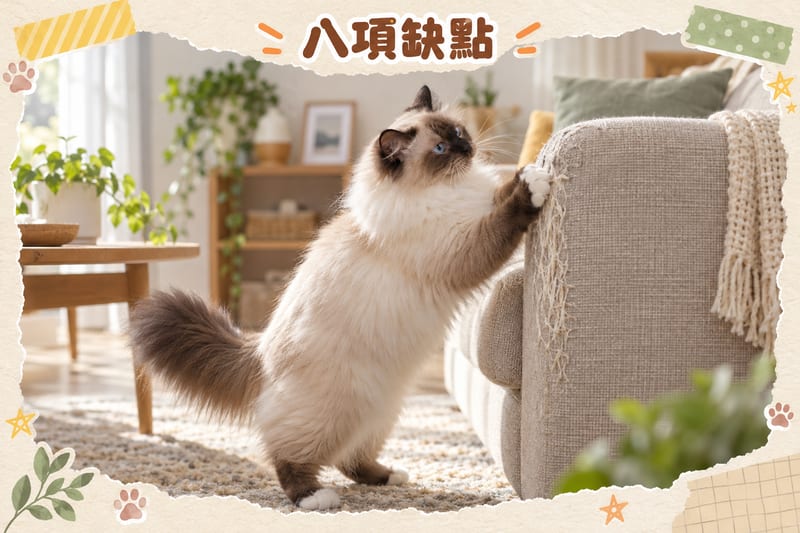
4. Curious and intelligent = destructive power. High intelligence plus curiosity means they will open cabinets, climb high, and play with wires. Solution: tidy wires and small objects, use cat trees instead of curtains, and provide puzzle feeders to burn energy.
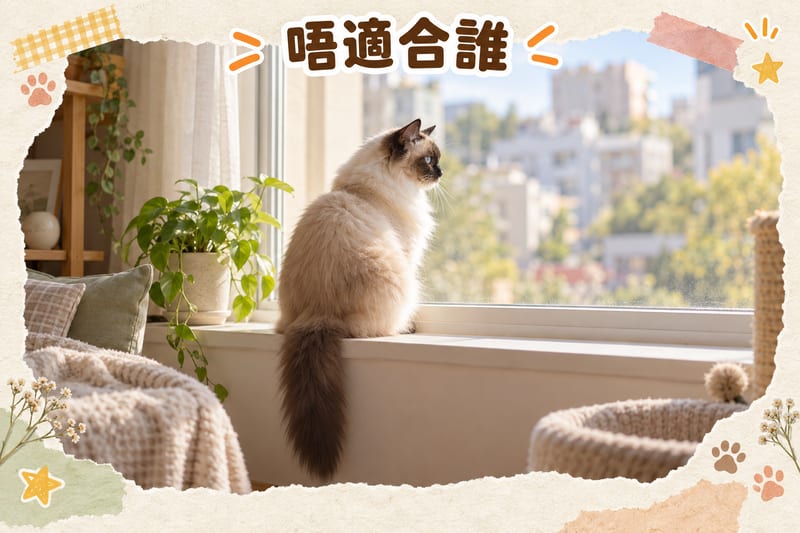
5. Sensitive to heat and humidity. A thick coat plus low activity makes Hong Kong's hot, humid summers a challenge, raising the risk of skin problems and decreased appetite. Solution: set air-conditioning on a timer, place multiple water stations, avoid direct sun at noon, and regularly check skin and ears.
6. Genetic disease screening must be taken seriously. The main concern for Birmans is hypertrophic cardiomyopathy (HCM), and they are one of the known susceptible breeds; polycystic kidney disease (PKD) also appears in some lines. Solution: choose catteries with ultrasound screening records for breeding cats, and arrange annual heart checks as advised by a veterinarian once adult. Medical judgment should be based on a registered veterinarian; this article does not diagnose.
7. Limited supply in Hong Kong, high prices, and waiting. Birmans are relatively niche locally, with limited registered cattery options, and waiting periods can range from several months to a year. Solution: plan early, accept the wait, and don't compromise on health certificates just because a kitten is "available now."
8. White gloves meeting the standard involves luck. The extent and symmetry of the white on all four gloves is a key point in assessing a Birman's appearance, but even if the parents meet the standard, the offspring's gloves may not be perfect. Solution: focus on health and temperament, and treat appearance as a bonus.
Drawback × Solution × Cost direction: all in one table
| Drawback | Solution | Cost or time direction |
|---|---|---|
| Long fur matting | Daily slicker brushing, regular professional grooming | About HK$100–300 per month on tools or grooming |
| Heavy shedding | Brush beforehand, keep a vacuum handy | One-off equipment investment |
| Overly clingy | Fixed companionship time + puzzle toys | 30 minutes of time cost per day |
| Curious nature | Tidy wires, cat trees, puzzle feeders | Cat tree one-off several hundred to over a thousand dollars |
| Heat and humidity sensitivity | Air-conditioning on timer, dehumidifier, cooling mats | Summer electricity and dehumidifier consumables |
| HCM/PKD risk | Parental screening + annual heart checks | Reserve several hundred to over a thousand dollars per year for checks |
| Limited supply, high price | Wait early, insist on verification | Waiting period several months to a year |
| Gloves depend on luck | Prioritize health over appearance | Mental attitude cost |
The honest answer to "Is a Birman easy to keep?"
In terms of personality, the Birman is recognized as one of the easiest breeds to get along with: gentle, social, highly tolerant of children and other pets, and not as sensitive or nervous as some breeds, so it has long been described as a cat suitable for beginners. But "easy to keep" and "low maintenance" are two different things — they trade the sweetness of their personality for your daily brushing time, higher care expenses, and being tied to arranging cat sitters when you go out. If you can accept these three, the Birman's return rate is among the highest of all breeds.
Who should not keep a Birman
- People who realistically can't brush daily (a few weeks without grooming and mats start to form).
- Office workers who leave early and return late, with almost no time at home.
- Those whose budget only covers "cute photos" and have no medical reserve.
- People who want an aloof, independent cat that entertains itself — Birmans are the exact opposite.
Five real scenarios: what the drawbacks look like in daily life
Using concrete scenarios to illustrate the eight points above is fairer:
- Before leaving in the morning: you put on dark clothes and have to spend an extra three minutes picking off fur — shedding is a daily routine.
- Opening the door when you get home: an adult cat waits at the door, then follows you into the kitchen and the bathroom — clinginess is the literal version of a sweet burden.
- Suddenly needing a three-day business trip: a short-haired cat might be fine with food and water; a Birman needs arranged visits, because a cat with separation anxiety really can lose its appetite.
- Brushing day becomes bonding day: most enjoy being brushed, but they resist when mats form behind the ears and under the armpits; beginners need to learn the technique of "hold the base of the mat first, then comb the tips."
- Hong Kong's humid summer: floors sweat, mats form faster, and both the dehumidifier and brushing frequency need to be upgraded.
These scenarios aren't scary, but they illustrate the same point: a Birman's drawbacks don't mean "you can't keep one," but "you need to know in advance." Well-informed owners naturally have a lower regret rate.
Key takeaways
- ✅ Eight drawbacks: matting, shedding, clinginess, curious destruction, heat sensitivity, genetic risk, limited supply, gloves depending on luck — all have corresponding solutions.
- ✅ Personality is recognized as easy-going, but "easy to keep" doesn't mean "low maintenance"; daily brushing is a must.
- ✅ HCM/PKD parental screening + annual heart checks are top priorities before and after getting a cat.
- ✅ Curiosity plus high intelligence = basic home-proofing is essential; don't skimp on wires and windows.
- ✅ Limited supply in Hong Kong: planning early and insisting on health certificates is more important than "available now."
- ✅ Regret mostly comes from insufficient information; decide after reading this article and you won't.
Related reading
- Birman price and adoption full guide
- Birman lifespan and longevity guide
- Birman personality and intelligence analysis
- One-stop shop for brushes, deshedding tools, and puzzle toys: visit PetChill pet supplies to see the long-haired cat slicker brush series and puzzle feeders.
For the genetic diseases and medical arrangements mentioned in this article, please consult a registered veterinarian for actual judgment; if behavioral problems persist, seek professional veterinary or cat behavior support.
 Fuji One full guide →





