
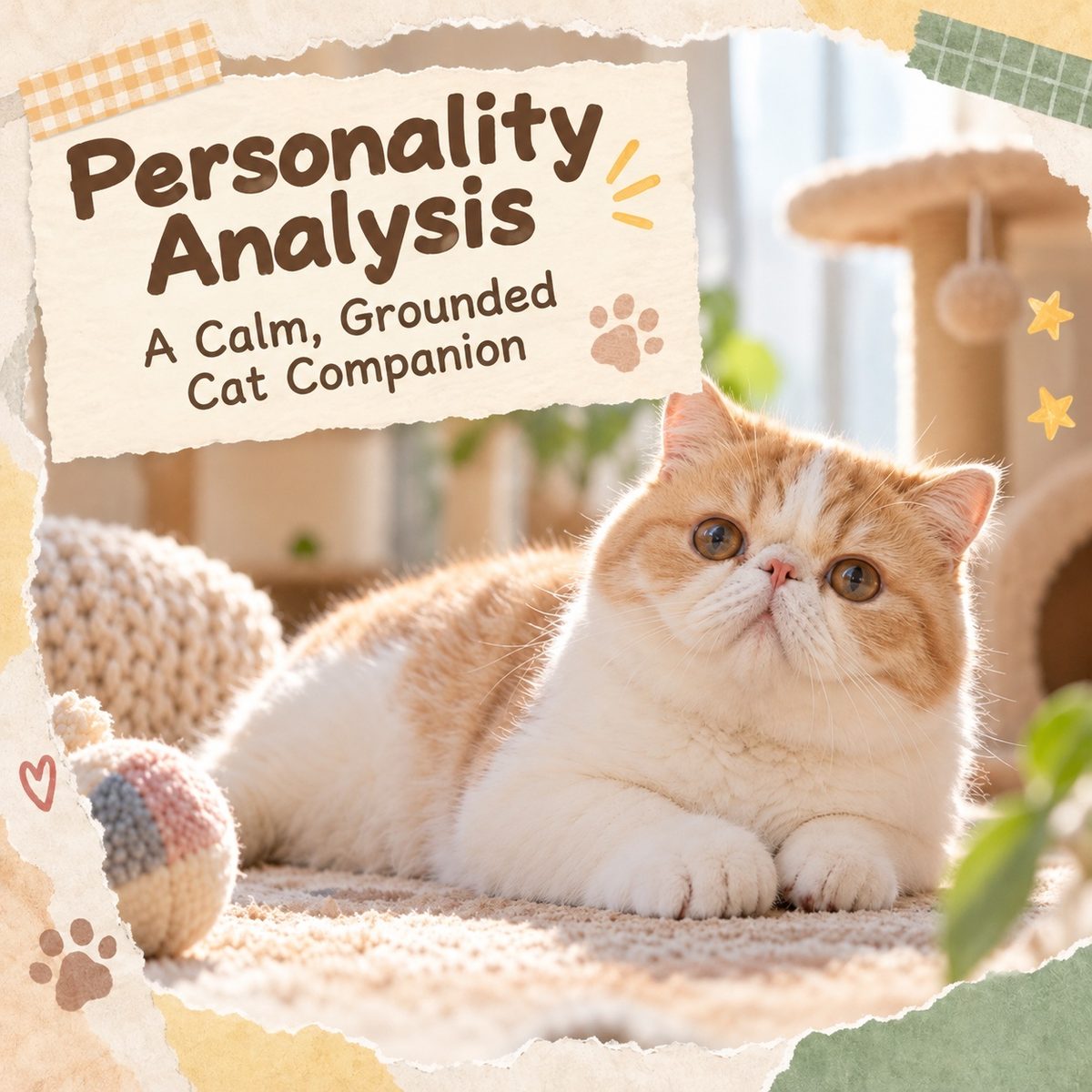
Quick answer: The Exotic Shorthair is quiet, gentle, and attached to its owner—a classic 'companion' cat. In intelligence, they are social observers: they read people well and use behaviour to get what they want, but have little interest in command-style performances. For those searching 'cat intelligence ranking' or 'the least intelligent cat', the answer is: rankings are not rigorous, and the Exotic Shorthair is absolutely not outside the definition of 'smart'.
Want to know the Exotic Shorthair inside out? Start with the Exotic Shorthair breed profile.
What is an Exotic Shorthair? 30-second summary
The Exotic Shorthair was developed in the 1960s from the Persian and short-haired cats—think of it as a 'short-haired Persian': the same flat face and round eyes, but short, easy-care coat. The table below covers the specs Hong Kong owners ask about most:
| Item | Exotic Shorthair |
|---|---|
| Origin | USA (developed in the 1960s) |
| Average lifespan | 12–15 years |
| Weight | 3.5–6 kg |
| Coat | Short, dense, plush-like |
| Personality | Quiet, gentle, attached but not clingy |
| Breed concerns | Tear stains, respiratory tract, PKD (from Persian lineage) |
| Hong Kong price | About HK$12,000–25,000 |
| Monthly basic expenses | About HK$750–1,500 |
Three things you must know:
- Quietness is a breed trait — they barely meow a few times a day, extremely friendly for Hong Kong's small flats with average soundproofing.
- The flat face comes at a cost — tear stains need daily wiping, and breathing needs watching in summer; this is routine, not illness.
- Intelligence is not an issue — they are socially observant: they read people but have little interest in command performances.
Exotic Shorthair price and monthly expenses (2026 Hong Kong market)
| Item | Range | Notes |
|---|---|---|
| Registered cattery | HK$12,000–25,000 | With pedigree certificate and parental PKD screening |
| Licensed pet shop | HK$8,000–18,000 | Coat colour and face shape affect price |
| Adoption | HK$0–2,500 | Most already neutered and vaccinated |
| First-year vaccines (three doses) | HK$900–1,500 | Annual booster thereafter |
| Neutering | HK$1,500–3,500 | Cheaper for males, more for females |
| Monthly food | HK$350–700 | Flat-faced cats should be fed from shallow dishes |
| Monthly cat litter | HK$120–250 | Clumping or tofu litter |
| Monthly grooming (amortised) | HK$50–150 | Tear-stain solution, grooming tools |
| Medical reserve (recommended) | HK$200–400 | Respiratory and kidney |
| Monthly total | About HK$750–1,500 | Excludes major medical costs |
The most overlooked cost for Hong Kong owners is tear-stain care time: 2–3 minutes of wiping daily adds up to over ten hours a year. Behind the Exotic Shorthair's 'quietness' is a small daily task the owner cannot skip.
Who is the Exotic Shorthair suitable for?
| Owner type | Suitability | Reason |
|---|---|---|
| Small-flat residents | Very suitable | Very few vocalisations, low activity needs |
| First-time owners | Suitable | Stable temperament, doesn't bite or scratch, high tolerance for mistakes |
| Families with children | Suitable | High tolerance, rarely scratches |
| People wanting a highly interactive cat | Not recommended | Their companionship style is 'same room, different activity' |
| People with no time for grooming | Not recommended | Tear stains and brushing are daily tasks |
Reverse self-check (three questions):
- Are you willing to spend 3 minutes a day wiping its eyes?
- Can you accept a cat that won't follow you around while you do things?
- Do you have a monthly medical reserve of HK$200–400?
If you can't answer 'yes' to two of the three, an Exotic Shorthair may not be your cup of tea.
Exotic Shorthair compared with other breeds
| Breed | Vocalisation | Grooming difficulty | Monthly basic expenses | Suitable for beginners |
|---|---|---|---|---|
| Exotic Shorthair | Very low | Medium (tear stains) | HK$750–1,500 | Yes |
| Persian | Very low | High (long coat + tear stains) | HK$800–1,500 | Only with patience |
| British Shorthair | Low | Low | HK$600–1,200 | Yes |
| American Shorthair | Low | Low | HK$600–1,200 | Yes |
| Ragdoll | Low | Medium (long coat) | HK$900–1,800 | Yes |
In one sentence: if you want the Persian look without brushing a long coat, the Exotic Shorthair is the direct answer; if you want zero grooming, the British Shorthair saves more time.
Exotic Shorthair care schedule: what to do when
| Frequency | Task | Approximate cost |
|---|---|---|
| Daily | Wipe tear stains, check eyes and nose | Tear-stain solution HK$50–150 per month |
| Weekly | Brush 2–3 times | HK$0 (DIY) |
| Monthly | Trim nails, weigh | HK$0–100 |
| Yearly | Health check + vaccine booster | HK$500–900 |
| From age 7 | Health check every six months + blood tests + kidney function | HK$1,200–2,000 per visit |
Three daily observations:
- Breathing sounds: a little snoring is normal for flat-faced cats, but panting or open-mouth breathing is a warning sign.
- Appetite: Exotic Shorthairs gain weight easily; keep weight at 3.5–6 kg and weigh monthly.
- Eyes: a sudden increase or change in tear stains may indicate inflammation—do not use eye drops on your own.
Exotic Shorthair: three budget plans
| Item | Budget | Standard | Secure |
|---|---|---|---|
| Food | HK$350/month | HK$500/month | HK$700/month |
| Cat litter | HK$120/month | HK$180/month | HK$250/month |
| Grooming supplies | HK$50/month | HK$100/month | HK$150/month |
| Medical reserve | HK$0 | HK$200/month | HK$400/month |
| Monthly total | About HK$520 | About HK$980 | About HK$1,500 |
How to choose: The 'budget' plan is only suitable for owners with HK$10,000+ emergency cash; flat-faced cats can incur significant respiratory and kidney costs, so most families are safest on the 'standard' plan.
Exotic Shorthair: adopt or buy? The actual Hong Kong process
Adoption routes: SPCA and various cattery volunteer groups occasionally have Exotic Shorthairs or Exotic Shorthair mixes. The process is form → home visit → trial period → formal adoption, taking 1–4 weeks, cost HK$0–2,500, most already neutered and vaccinated.
Purchase routes: Registered catteries first (with parental PKD screening reports), licensed pet shops second. Ask three things clearly: ① parental PKD reports; ② the cat's vaccination count and deworming records; ③ daily condition of eyes and nose (severity of tear stains, breathing sounds).
The first thing to do either way: a baseline health check within two weeks of bringing the cat home (about HK$500–900)—don't wait for problems before visiting the clinic.
For the price gap and verification points of both routes, see the Exotic Shorthair price and adoption guide.
Exotic Shorthair home environment checklist
| Item | Recommendation | Reference price |
|---|---|---|
| Shallow food bowl | Deep bowls make flat-faced cats scrape their face; shallow dishes are friendlier | HK$50–150 |
| Ceramic/stainless steel bowls | Reduce chin acne | HK$50–150 |
| Litter box | Medium size, low entry for easy access | HK$100–400 |
| Grooming tools | One rubber brush and one comb | HK$50–200 |
| Cooling mat | For summer; flat-faced cats dissipate heat poorly | HK$50–200 |
Exotic Shorthairs have poorer heat dissipation than most cats; keeping indoor temperatures at 24–26°C in Hong Kong summer (fan or air-conditioning) is not a luxury—it's basic.
Four common misconceptions about the Exotic Shorthair
| Misconception | Reality |
|---|---|
| The Exotic Shorthair is the least intelligent cat | So-called intelligence rankings are not scientific measurements; Exotic Shorthairs are socially smart and can learn commands with food rewards |
| Short hair means no grooming | The coat is short but dense; brush 2–3 times a week, and tear stains need daily wiping |
| Flat-faced cats are always sickly | Breed concerns are tear stains and respiratory tract; with good daily care, most Exotic Shorthairs live healthily for 12–15 years |
| Exotic Shorthairs are not affectionate | They are attached but express it subtly: sitting beside you rather than on your lap is 'same-frame' companionship |
Three keywords for the Exotic Shorthair personality
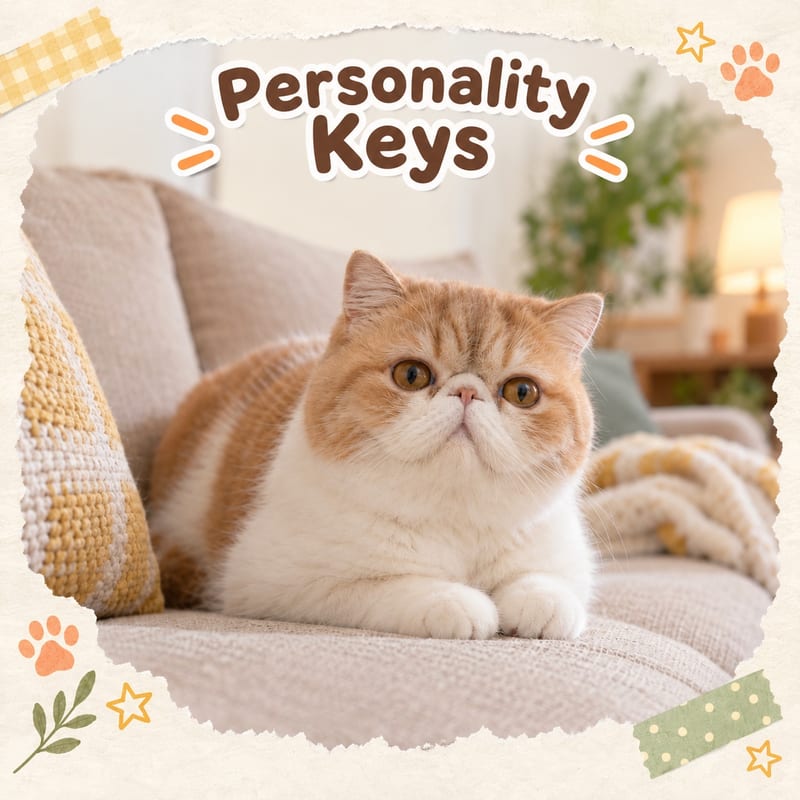
The Exotic Shorthair was developed in the USA in the 1960s from the Persian and short-haired lines, and its personality sits right between the two: quiet, gentle, close.
- Quiet: soft, rare vocalisations—many Exotic Shorthairs barely meow a few times a day, extremely friendly for Hong Kong's small flats with average soundproofing.
- Gentle: not a nervous breed; when startled they tend to freeze rather than attack; generally cooperative with nail trimming and wiping.
- Close: they recognise when you come home and pick a 'favourite' family member, but won't cling to you while you do things—their companionship is 'same room, different activity'.
Cat intelligence rankings: how to read them without being misled
Most 'cat intelligence rankings' circulating online come from hobbyist communities ranking 'trainability', putting outgoing, obedient breeds like the Burmese and Siamese at the top, with Exotic Shorthairs and Persians often at the bottom. The problem is not whether the ranking is right, but that it measures 'obedience to humans', not overall cat ability. Animal behaviour research, including that from Cornell University's Feline Health Center, generally breaks cat cognition into several layers: object permanence (knowing something still exists when hidden), means-end reasoning, reading social cues, and observational learning. In none of these has the flat-faced cat been shown to lag; they are simply passive in obedience tests like 'repeat an action for a treat'.
As for the search 'what is a cat's intelligence equivalent to in human years'—the commonly cited claim is that a domestic cat's cognition is roughly equivalent to a 2–3-year-old child, but such analogies are popular-science simplifications and should not be taken too seriously.
Exotic Shorthair intelligence in practice: five daily observations
| Ability layer | Typical Exotic Shorthair behaviour | Owner response |
|---|---|---|
| Reading human emotions | High: senses when the owner is down and comes close | This is their most outstanding 'smart' trait |
| Problem solving | Medium: can open doors, find hidden treats | Puzzle feeders won't bore them |
| Obedience training | Low to medium: can do it but lacks motivation | Use hunger windows plus small treats, sessions under 5 minutes |
| Environmental memory | High: remembers food locations, your routine | A stable routine reduces anxiety behaviours |
| Social learning | Medium: observes household 'cat rules' | Let them observe a new cat through a closed door first |
Living with children and other pets
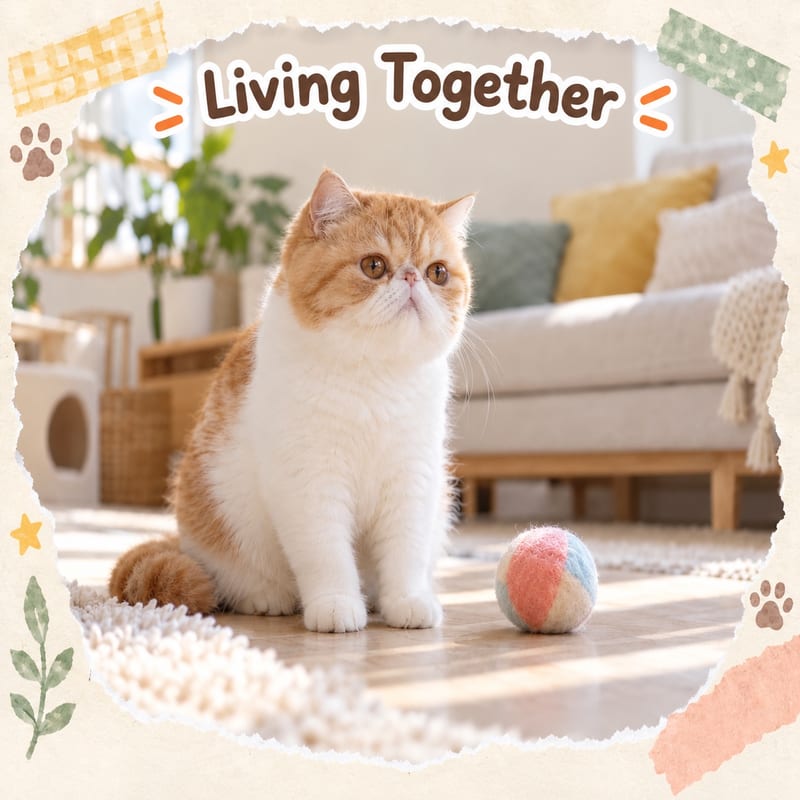
Exotic Shorthairs have a good reputation for 'surviving boisterous kids': generally good pain tolerance, reluctant to scratch, and when pestered too long they usually just walk away. But remember three bottom lines: children under six must never be alone with any cat without an adult present; teach children 'stroke the back, not the belly; no tail-pulling, no ear-tugging'; give the cat an escape route children cannot reach (high spot or room). For living with other cats and dogs, Exotic Shorthairs are low-aggression and conflict-avoidant; a gradual, separate-room introduction usually succeeds. What to watch out for is the opposite—a too-submissive Exotic Shorthair may have food and litter box taken by a dominant housemate cat; feeding in separate locations is a simple, effective safeguard.
Male vs female differences: a balanced view
In neutered Exotic Shorthairs, personality differences between males and females are smaller than many articles suggest. Males are generally thought to be a little more relaxed and playful, females a little more independent and meticulous, but individual differences far outweigh sex differences—to predict personality, the most effective method is to observe the cat's parents (especially the mother) and see how the cat reacts to people in person, rather than betting on sex.
Interaction tips: how to play with an Exotic Shorthair
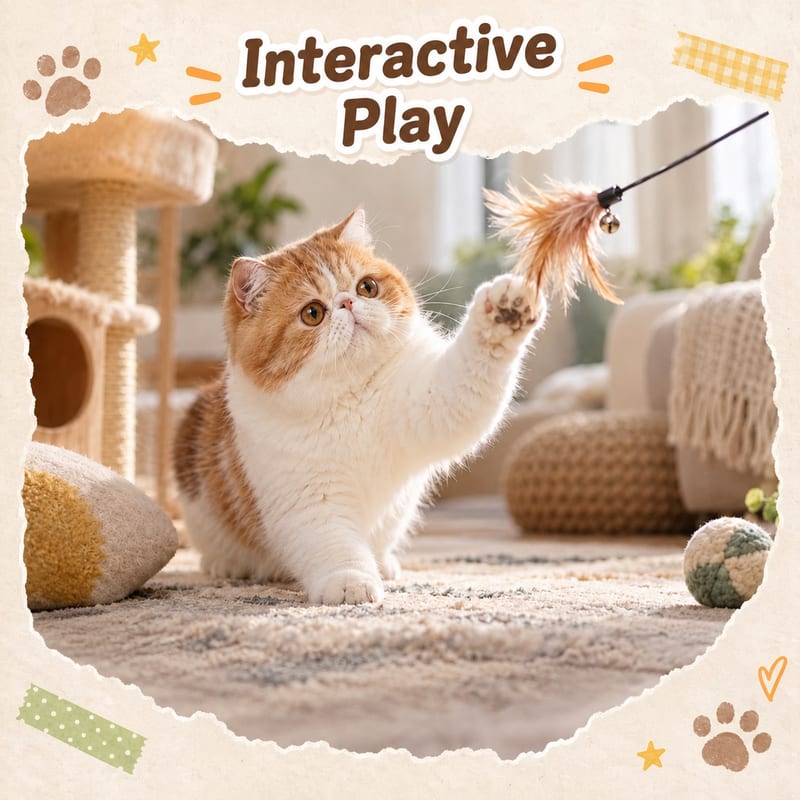
Exotic Shorthairs are not 'chase the laser for half an hour' athletes; they prefer short, frequent interactions: two or three times a day, five to ten minutes of wand toy play (mimicking prey: move slowly, hide, let them catch), followed by a small treat, closing the natural behaviour cycle of 'hunt—eat—groom—sleep'. Puzzle mats and food-hiding games suit flat-faced cats better than high-intensity exercise—vigorous exercise is itself a burden on their respiratory tract.
British Shorthair intelligence comparison: which round-faced cat knows how to play
People searching 'British Shorthair intelligence' or 'Oriental Shorthair personality' often ask: of the three round-faced cats, which is smartest? Honestly: all three are 'socially smart, obediently zen' types, and there is no evidence that any breed is clearly more cognitively advanced; the difference is style—British Shorthairs are calmer and more independent, Exotic Shorthairs more clingy and quiet, Oriental Shorthairs much more outgoing and curious. Choosing between them is really choosing how much clinginess you want in a companion.
Beyond intelligence: assessing the Exotic Shorthair's 'emotional intelligence'
Many owners search 'cat intelligence human equivalent' hoping for a comparable number, but for Exotic Shorthairs, what better predicts quality of life is emotional regulation: they adapt slowly to new environments, but once they deem a range safe, they show a stability rare among cats—not prone to outbursts, not easily over-frightened, and mild in reaction to changes in household routine. This trait makes Exotic Shorthairs especially suitable for elderly households, remote workers, and first-time cat owners. Conversely, if you expect a cat that actively invites play and excitedly explores any environmental change, an outgoing breed may suit you better. Personality match, always more than intelligence, determines the quality of your ten years together with a cat.
Book a 'meeting' before adopting: a ten-minute personality check
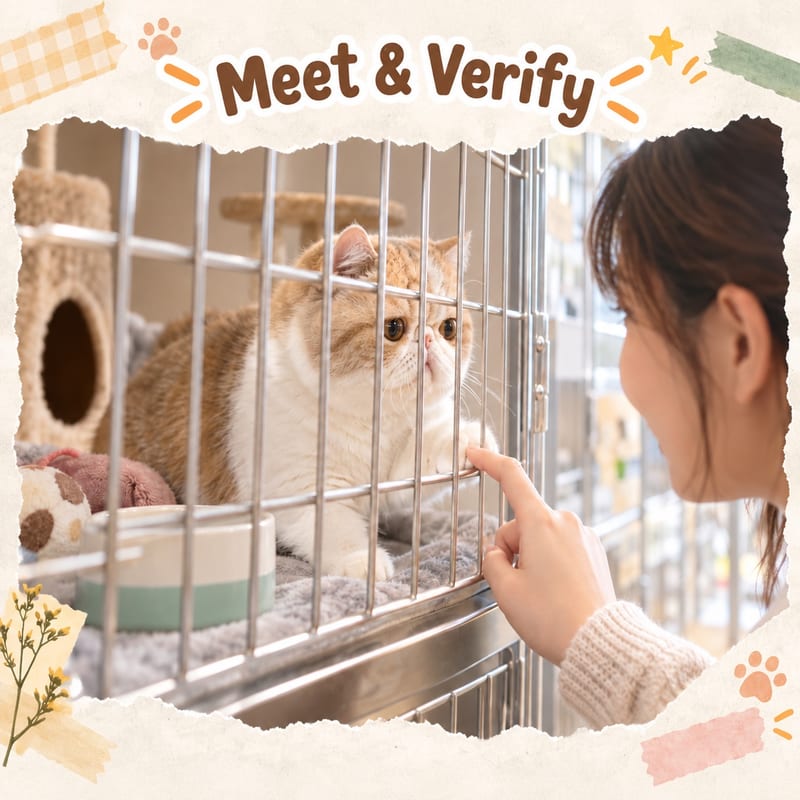
Words can never replace in-person observation. Whether at a cattery or adoption centre, before formally taking a cat home, book a one-on-one meeting and use ten minutes to do three things: first, sit down and don't actively coax—wait for the cat to approach you; coming over or rubbing against your hand is direct evidence of an attached personality. Second, gently lift from under the armpits for ten seconds and see whether it struggles or stays soft and cooperative—this reflects future cooperation with grooming and vet visits. Third, wave a wand toy in front of it and see if there is a complete hunting sequence of staring, butt-wiggling, and pouncing—if there is no reaction at all, ask clearly about its health. Pass these three and you can basically confirm this Exotic Shorthair's personality matches your expected 'quiet and affectionate' script.
Key takeaways
- ✅ Three keywords for the Exotic Shorthair personality: quiet, gentle, close—suitable for small flats and elderly households.
- ✅ 'Cat intelligence rankings' measure obedience, not overall cognition; the Exotic Shorthair is socially smart.
- ✅ Train with positive food rewards, short sessions, and practical behaviours as goals.
- ✅ High tolerance with children, but adult supervision and escape routes are non-negotiable.
- ✅ Male-female differences are small; judge the individual, don't bet on sex.
Related reading
- Exotic Shorthair disadvantages and how to cope
- Key points for keeping an Exotic Shorthair in Hong Kong
- Exotic Shorthair lifespan and longevity guide
- Wand toys, puzzle feeders, and cat beds: see the interactive toy range at PetChill pet supplies.
The behaviour descriptions in this article are general breed tendencies; individual cat behaviour is influenced by socialisation, health, and experience. If you have abnormal behaviour or aggression issues, consult a veterinarian or an accredited behaviour consultant.
Further reading
- Hong Kong owners must read: intelligence and getting along guide →
- Hong Kong owners must read: the true face of a loyal police dog →
- Golden Retriever personality and intelligence full analysis (Hong Kong) →
- Comparison of 12 cat breeds: personality and price →
- Common diseases, preventive care, veterinary information →
 Feline Natural full guide →
 Fuji One full guide →





