
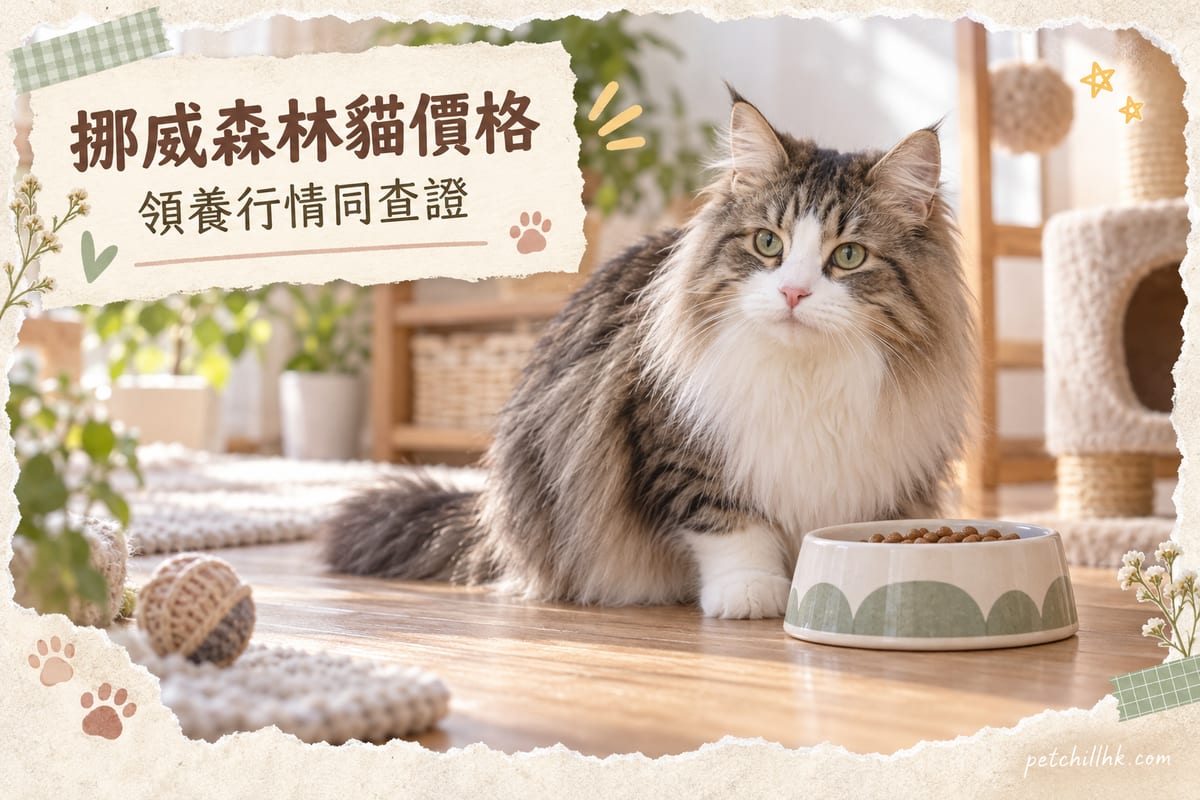
Quick answer: There is no 'standard price' for a Norwegian Forest Cat — prices fluctuate widely with pedigree, coat colour, age and source, and online listed prices are only a directional reference. What matters more is verifying the parents' screening documents and the reliability of the source. Adoption opportunities exist but are not many, and require patience. This article helps you distinguish between a 'listed price' and the 'real cost'.
Want to learn more about the Norwegian Forest Cat? Continue reading the series below.
How Norwegian Forest Cat prices are calculated
Norwegian Forest Cat prices are not set at random; they are built up from several factors that can be broken down. Understanding these factors is what gives you the ability to judge whether a quote is reasonable or unrealistic.
First, pedigree. Individuals with registered pedigrees and parents with show or champion backgrounds naturally command higher prices. Second, coat colour. The Norwegian Forest Cat's classic look is brown tabby; special colours such as silver, red or bicolour are generally more expensive on the market because they are less common. Third, age. Kittens are generally priced higher than adult cats, but 'younger is more expensive' does not mean better — kittens separated from their mother too young carry higher health and socialisation risks. Fourth, source costs. Local breeding and overseas import involve quarantine, transport and paperwork, and these costs are reflected in the listed price.
One key concept to note: the listed price is only the entry fee, not the total cost. Breed-related heart, joint and genetic disease screening, neutering, vaccinations and daily diet are all subsequent expenses. Calculated over a three-year period, this often reflects reality better than the listed price itself.
Hong Kong price ranges and source methods
The table below lists only channel categories and the source methods for price ranges; it does not name any merchant and does not set prices for adoption.
| Channel category | Price range | Source method for price range |
|---|---|---|
| Local registered catteries | Medium to high | Request written quotes from several, compare parents' screening and health guarantee terms |
| Overseas import (including quarantine and shipping) | High | Check overseas breeders' published prices, add estimates for quarantine, transport and agency fees |
| Pet shops | Medium to high, varies widely | Ask for source documents and veterinary records; do not just look at the price tag at the door |
| Private rehoming | Highly variable | Forum and community quotes are for reference only; you must inspect the cat in person and check health records |
| Animal welfare organisation adoption | — (adoption, no sale price) | Follow the organisation's published procedures; fees usually cover only neutering and basic medical care |
Methodology reminder: Any numbers from forums or communities may be old posts, regional differences or seller rumours, and can only be treated as a 'possible range', not a benchmark price. The most reliable approach is to request information from three or more channels at the same time and cross-compare.
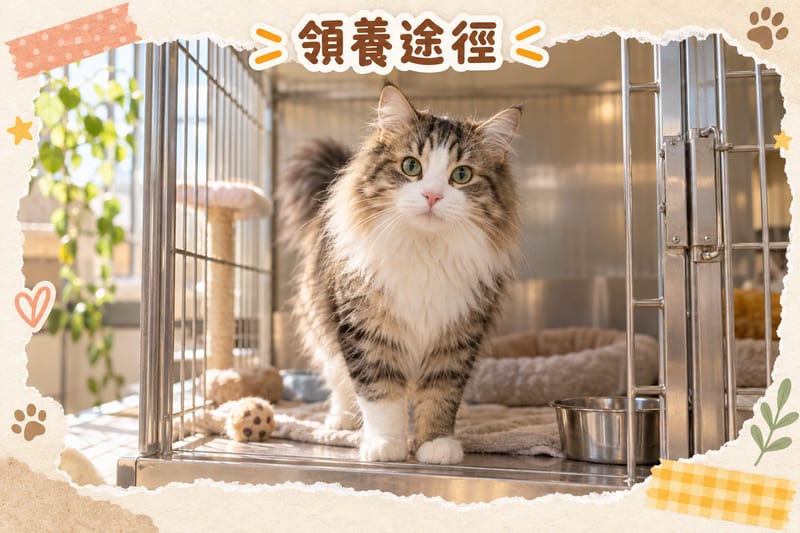
Adoption routes: there are actually several paths
- Local animal welfare organisations: They regularly publish waiting lists. Purebred Norwegian Forest Cats do not appear often, but mixed-breed large long-haired cats are common and can have very similar personalities.
- Veterinary clinic referrals: Some veterinarians receive cases where owners can no longer care for a cat and need to rehome it; reliability is relatively high.
- Community matching: Online adoption groups; you need to verify the other party's identity and the cat's health status yourself.
- Patient waiting: If you want to focus on a purebred individual, be prepared to wait several months or even longer.
The greatest value of adoption is health transparency and controllable costs: organisations generally have already done basic checks, neutering and vaccinations, and will not use 'rare' as a reason to raise the price. The downside is less choice; you have to accept that the cat's age and appearance may not match your ideal.
Pre-purchase verification checklist
Follow this checklist and you can avoid most cases of 'buying a sick cat':
- Parents' genetic disease screening records: At minimum include heart (HCM) assessment and genetic testing information for glycogen storage disease (GSD IV) relevant to the Norwegian Forest Cat.
- Veterinary records: Vaccinations, deworming, age verification. Kittens should have at least basic vaccination records before leaving their mother.
- On-site observation: Ask to meet in the cat's actual living environment; look at eyes, nasal discharge, area around the anus and activity level.
- Contract terms: Clearly state the health guarantee period, how genetic diseases are handled and return arrangements.
- Refuse pressure: Any 'if you don't put down a deposit today it's gone' sales talk is a reason to calmly walk away.
- Traceable source: They can clearly explain where the parents came from and whether they are registered, rather than being vague.
Monthly expense estimate table
| Expense item | Monthly direction | Notes |
|---|---|---|
| Staple food | Medium to high | Large cats eat more than ordinary domestic cats |
| Wet food / fresh food supplement | Low to medium | Increases water intake, friendly to urinary and kidney health |
| Cat litter | Medium | Large litter boxes and daily scooping mean higher usage |
| Care supplies | Low | Long-haired grooming comb, nail clippers, ear cleaning |
| Medical reserve | Medium to high | Recommend setting aside a fixed amount each month for screening and annual check-ups |
| Insurance or fund | Depends on choice | Planning ahead beats raising money in an emergency |
The point of the estimate is not to chase precise numbers but to ensure a fixed monthly allocation. The Norwegian Forest Cat is a large breed; if something goes wrong with either medical care or diet, the amounts will be noticeably higher than keeping a small cat.
Norwegian Forest Cat vs Maine Coon: differences in price and adoption
Both are large long-haired cats, and their market price ranges overlap, but the details differ. Because the Maine Coon is more famous, there are more communities and information, and price transparency is relatively higher; the Norwegian Forest Cat is less common, quotes may vary more widely, and the cost of verification is actually higher. For adoption, both are 'a matter of chance', and the opportunity for mixed-breed large long-haired cats is far higher than for purebreds. If your core need is 'large, steady, independent' and you do not insist on purebred, the adoption route is worth prioritising.
Frequently asked questions
Q: Roughly how much does a Norwegian Forest Cat cost? A: Prices in the Hong Kong market vary with pedigree, coat colour, age and source, so forum or cattery listed prices are only a reference direction and should not be treated as a standard. What you really need to do is compare multiple channels at the same time and ask to see the parents' health screening documents, rather than just comparing numbers.
Q: Is there any chance of adopting a Norwegian Forest Cat in Hong Kong? A: Yes, but the Norwegian Forest Cat is a relatively uncommon breed, and purebred individuals do not appear often on adoption platforms. You can regularly check the waiting lists of local animal welfare organisations, and also widen your search to mixed-breed large long-haired cats, which have similar personalities and are easier to match.
Q: How can you tell if a Norwegian Forest Cat seller is reliable? A: Look at three things: whether they can provide the parents' genetic disease screening records, whether they let you see the cat's living environment, and whether the contract clearly states the health guarantee and return arrangements. If the other party pushes you to put down a deposit immediately and refuses to show documents, that is a high-risk signal.
Q: What are the risks of a cheap Norwegian Forest Cat? A: An unusually low listed price usually reflects an unknown source, parents that have not been screened, or a kitten sold at too young an age. Long-term medical costs may far exceed the price difference, so 'cheap' is often not saving money but deferring payment.
Q: How much does it cost per month to keep a Norwegian Forest Cat? A: Main expenses fall into four categories: staple food, cat litter, medical reserve and care supplies. Large cats have higher food intake and litter use, and the medical reserve needs to be sufficient because the breed has heart and joint related health concerns. Actual amounts vary with brand and living standards.
Q: Adoption or purchase, which is more suitable for beginners? A: For beginners who value health transparency and cost, adoption is a route worth prioritising; if you specifically want the appearance and pedigree of a purebred Norwegian Forest Cat, you need to do thorough verification. Both routes require understanding the breed's characteristics and long-term expenses beforehand.
Key takeaways
- ✅ There is no standard price for a Norwegian Forest Cat; the price is built from four factors: pedigree, coat colour, age and source.
- ✅ The listed price is only the entry fee; the three-year total cost better reflects reality.
- ✅ Adoption routes exist but opportunities are limited; mixed-breed large long-haired cats are a practical alternative.
- ✅ Core of the verification checklist: parents' screening documents, veterinary records, on-site observation, written contract.
- ✅ Any seller who pressures you to put down a deposit or refuses to show documents should be ruled out immediately.
- ✅ The key to monthly expenses is a fixed medical allocation; do not wait for an emergency to raise money.
Related reading
- Norwegian Forest Cat lifespan and health key points
- Key points for keeping a Norwegian Forest Cat in Hong Kong
- Norwegian Forest Cat pros and cons explained
- Norwegian Forest Cat growth and weight tracking
- Preparing for a new cat at home: visit PetChill pet supplies for large litter boxes, measuring food bowls and long-haired grooming supplies.
This article provides general cat selection and expense reference only and does not constitute any merchant recommendation or veterinary advice; for individual cases please consult a registered veterinarian.
 Wellness Core full guide →
 Fuji One full guide →





