
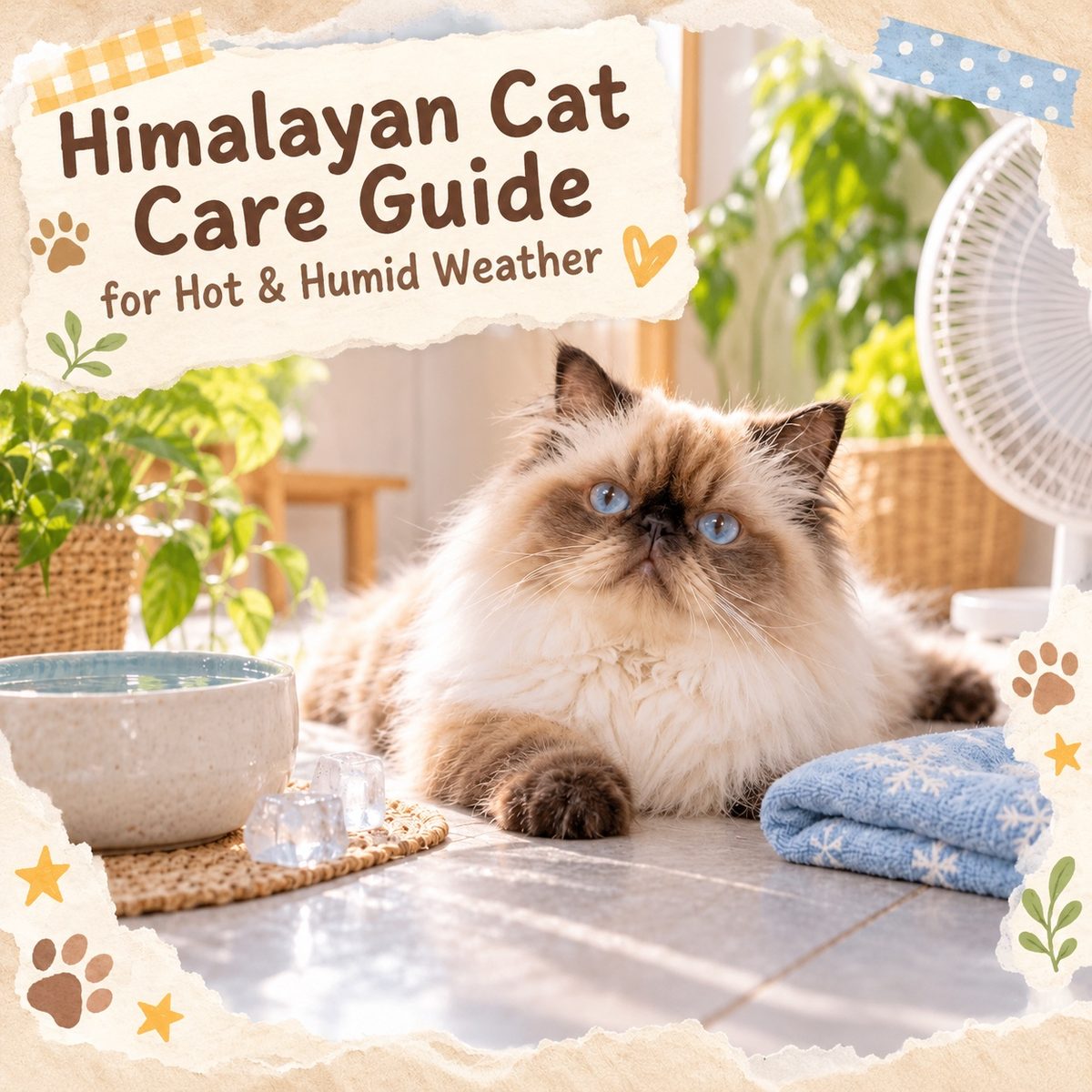
Quick answer: The Himalayan is "a Persian's body with a Siamese's colour." In Hong Kong, the core challenges come down to two things: heat intolerance (flat face + double long coat) and high maintenance (daily brushing and tear-stain cleaning). As long as you provide air-conditioning and dehumidification, spend 20–30 minutes on grooming each day, and confirm that the deed of mutual covenant and tenancy permit it, this quiet, blue-eyed long-haired cat can stay healthy even in a small flat. This article is a care and four-season management checklist tailored to Hong Kong's environment.
Want to know the Himalayan inside out? Start with the Himalayan breed profile.
1. First, understand its "Hong Kong suitability": three innate traits
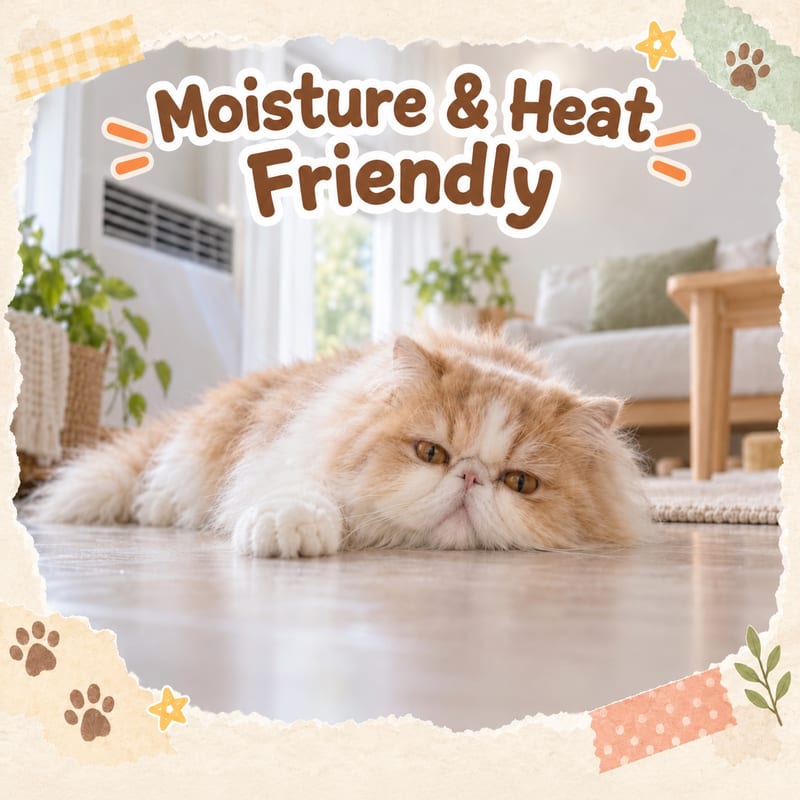
Before getting one, you need to understand how this breed's physical design clashes with Hong Kong's environment. First, the flat face: short nasal passages mean poor efficiency at dissipating heat by panting, and narrow airways put it in the high-risk group for heatstroke — studies show flat-faced cats have a markedly higher rate of respiratory disease than ordinary cats. Second, the extra-long double coat: the fluffy coat inherited from the Persian is extremely insulating, and Hong Kong's summers with humidity often at 90% are torture for it; moisture trapped at the base of the coat is a breeding ground for skin disease. Third, low activity level: the good news — they naturally like to lie still in cool spots, so as long as the environment is right, this breed's habits fit "air-conditioned indoor cat" perfectly. In one sentence: the Himalayan isn't unsuitable for Hong Kong; it's suited to a Hong Kong with the air-conditioning turned on for it.
2. Air-conditioning, humidity, environment setup: this breed's "lifeline"
| Item | Recommended setting | Why it matters |
|---|---|---|
| Temperature | Constant 24–26°C in summer, avoid prolonged periods above 28°C | Poor heat dissipation with a flat face; high temperatures directly risk heatstroke |
| Humidity | 40–60%; dehumidifier essential during the humid spring spell | Damp coat against the skin = skin disease; high humidity worsens breathing effort |
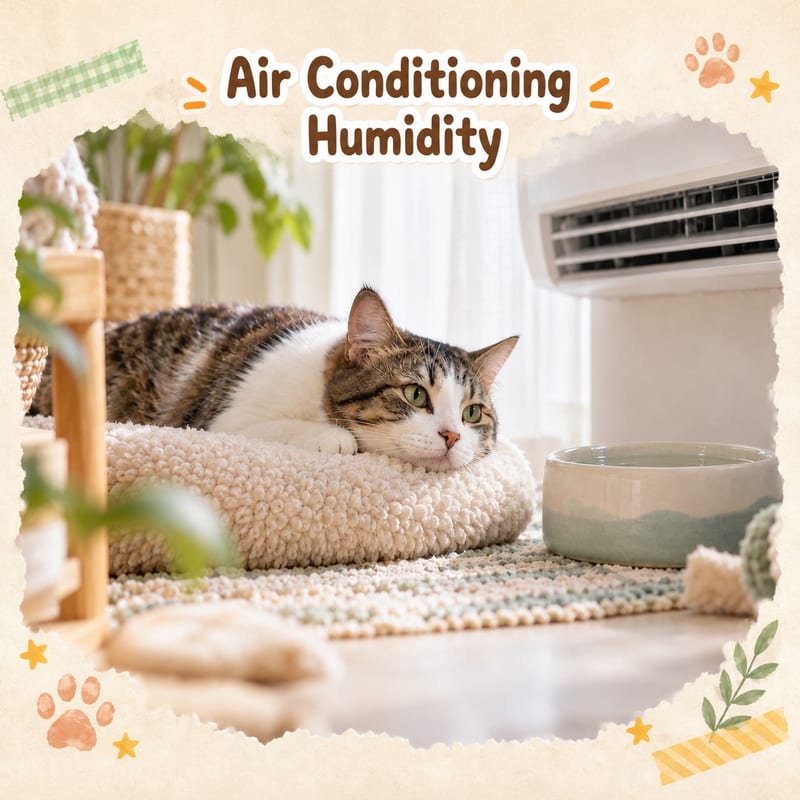
| Airflow | Keep the cat bed out of direct air-conditioning draught | Long-haired cats lying in a draught easily get dry eyes and sneeze |
| Flooring | Tiles/stone-pattern mats are friendlier than carpet | Fur + carpet is a combined disaster of dust mites and heat |
| Water bowl | Shallow and wide, placed in several spots; consider a flowing water fountain | Flat-faced cats struggle to eat and drink; kidney health depends on water intake |
| Food bowl height | Slightly raised so it doesn't have to lower its head fully | The posture burden of a flat-faced cat eating with its head down |
Two Hong Kong-specific details: have a plan for the humid spring spell (February–March) and typhoon power-outage season — a two-to-three-hour outage means nothing to a short-haired cat, but a long-haired flat-faced cat may already be stressed from the heat; keep ice mats and a ventilation plan at home, and don't leave it alone in a non-air-conditioned environment during long holiday trips.
3. Daily care routine: 20 minutes done right
Brushing (10–15 minutes): the order is "spray grooming water to dampen → use a comb to work through layer by layer down to the undercoat → focus on behind the ears, armpits, the ruff (the ring of long fur around the neck), under the tail and the groin." These five spots are the knot hotspots; brushing here daily is far more useful than a whole-body stroking-style brush. After brushing you must be able to see the skin; if the comb only glides over the surface, matting is still forming underneath.
Cleaning tear stains and facial folds (3–5 minutes): flat-faced cats have short, curved tear ducts, so tears overflowing onto the face is normal and not a sign of illness — but left unchecked it becomes reddish-brown staining and fold dermatitis. Daily, wipe the eye corners with a cotton pad soaked in saline, then dry the facial folds with dry cotton to keep them dry. If discharge turns yellow-green or the area around the eyes becomes red and swollen, see a vet rather than scrubbing harder.
Weekly checks: ears (flat-faced cats have small ear openings that trap dirt), teeth (crowded teeth in flat-faced cats mean gum problems are common), fur around the anus (covered by long hair; check and clean after toileting), paw pads (hot floors are a summer hazard — though this breed doesn't get walks, underfloor heating at home warrants the same care).
Monthly bathing? Once every 1–2 months is fine, but after bathing it must be thoroughly dried — a damp undercoat is the fastest route to skin disease. If you can't manage it yourself or mats have already formed, hand it to a professional cat groomer; never cut out mats with scissors yourself — cases of scissor tips injuring the skin happen every month.
4. Legislation, deeds of mutual covenant and housing restrictions
Public housing: the Housing Authority's pet improvement arrangements mainly regulate dogs; cats are not on the prohibited list, but are still subject to nuisance-prevention clauses (odours, noise, defecation in common areas). Private buildings: the key is the deed of mutual covenant (DMC) — some older buildings' DMCs explicitly prohibit keeping livestock and pets, and court precedents support management offices in enforcement. For rented flats, obtain written permission to keep pets before signing the tenancy; a verbal yes followed by a complaint after moving in is awkward. Keeping a quiet indoor cat like the Himalayan carries low complaint risk in itself, but the paperwork must be done properly.
5. Four-season management calendar (Hong Kong edition)
| Season | Focus | Actions |
|---|---|---|
| Spring (Mar–May) | Start of peak shedding | Increase brushing to twice daily; add hairball paste/cat grass |
| Summer (Jun–Sep) | Heat and humidity prevention | Constant air-conditioning, cooling mats, shave paw fur and belly undercoat (don't shave the body) |
| Autumn (Oct–Nov) | Second shed | Keep up coat care; check skin condition |
| Winter (Dec–Feb) | Extremes of dry and damp | Safe distance from heaters; stock up on dehumidifying supplies before the humid spring spell |
6. Time and money: ask yourself honestly before getting one
A fixed 20–30 minutes of grooming every day is non-negotiable — "didn't expect grooming to take so long" tops the list of reasons this breed gets surrendered. Monthly cost reference: quality cat food $350–600, cat litter $150–250, grooming supplies (grooming water, comb, cotton pads) $100–150, medical reserve $200–400; if outsourcing grooming, add $400–700 per session. Hong Kong-suitable items such as grooming tools, tear-stain products, hairball-control formula food and cooling mats can all be found in one place at PetChill pet supplies.
That's roughly the monthly cost; for the upfront cattery price and a verification checklist, see Himalayan price breakdown.
7. Five mistakes beginners most easily make
Mistake one: "Shaving makes it cooler." Shaving a Persian-type long-haired cat bald not only fails to solve the flat-face heat dissipation problem, it also destroys the coat's insulating and sun-protective functions, and the regrown undercoat is scruffier and more prone to matting; the correct approach is to shave only the paw pad fur and belly undercoat. Mistake two: "Tear stains are dirt; just wipe a few more times." Over-wiping irritates the skin around the eyes; a gentle wipe once a day with saline plus thorough drying is enough — only see a vet if the discharge changes colour. Mistake three: "Cats clean themselves; brushing is unnecessary." A long-haired cat's barbed tongue can't reach matted undercoat, and the price of hairballs only shows up later when it's vomiting them. Mistake four: "If the DMC doesn't say so, it means I can keep one." Some older buildings' DMCs prohibit pets via ancillary clauses; check the documents first, then ask the management office, and keep a written record — all three steps are essential. Mistake five: "It's not crying, so there's no problem." Quiet breeds mostly express pain and stress through "reduced behaviour" — not eating, not jumping, not leaving the room; any "less" is a warning sign.
Key summary
- ✅ Himalayan cat = heat-sensitive constitution + high grooming needs; keeping air-conditioning and dehumidification constant is a prerequisite for keeping one in Hong Kong
- ✅ Daily combing down to the undercoat + cleaning tear stains are essential; five knot-prone spots: behind the ears, armpits, ruff area, base of tail, groin
- ✅ Do not shave the body coat in summer; shaving paw fur and belly fur is enough; must dry thoroughly after bathing
- ✅ Public housing does not prohibit keeping cats, but for private buildings check the deed of mutual covenant; for rented flats obtain written permission
- ✅ Seasonal tasks: comb more frequently in spring and autumn to prevent hairballs, prevent heatstroke and dampness in summer, prepare for the return of humid weather in winter
- ✅ Monthly expenses are medium-high, grooming time 20–30 minutes per day — honestly assess your lifestyle rhythm before getting one
Related Reading
- Full list of Himalayan cat disadvantages: must-read before getting one
- Himalayan cat lifespan and health full analysis
- Himalayan cat personality: the calm of the Persian and the spirit of the Siamese
- Grooming tools, tear-stain removers, hairball-control food, cooling mats: get them all at PetChill pet supplies.
The care advice in this article is a general guideline for the breed; for individual health conditions, please rely on examination by a licensed veterinarian.



