
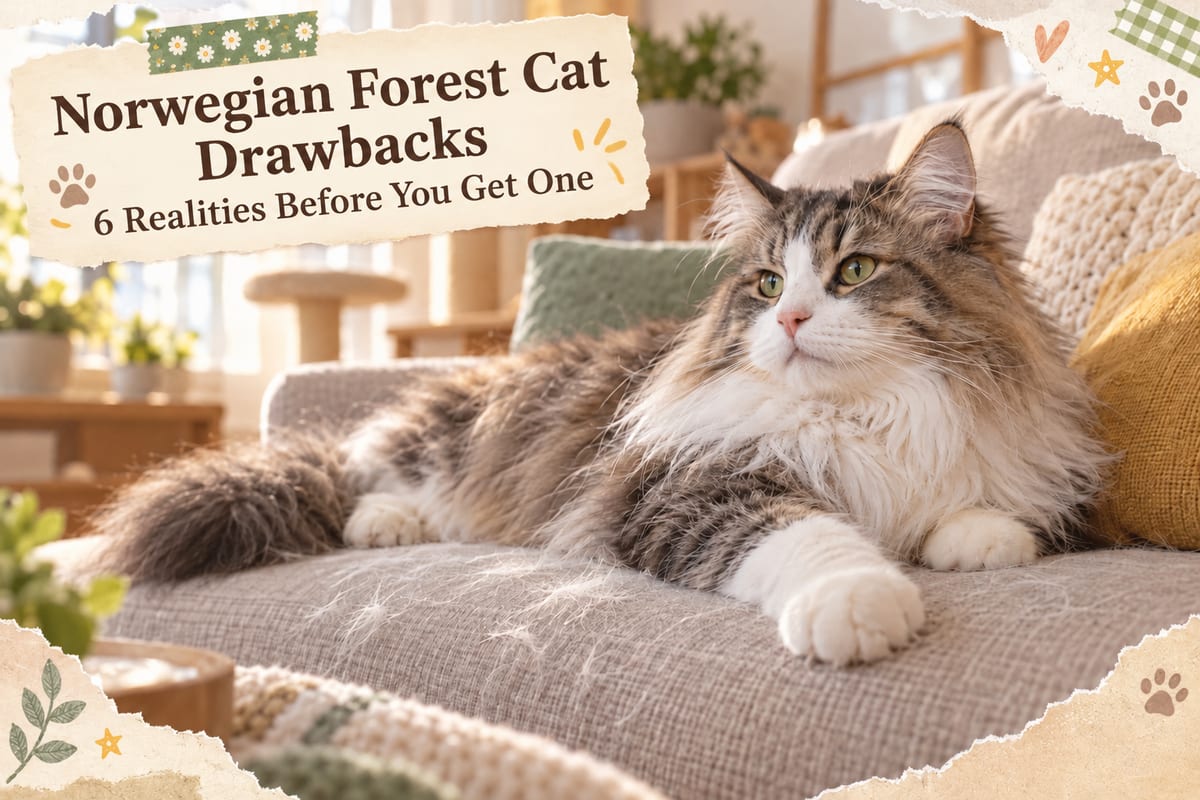
Quick answer: The Norwegian Forest Cat isn't hard to keep, but there are several practical challenges: a thick coat and lots of shedding, high costs due to its large size, heat sensitivity in summer, slow maturity leading to a long adolescence, and health concerns around the heart and joints. Each has a response, and the key is to know beforehand rather than remedy afterwards.
Want to learn more about the Norwegian Forest Cat? Continue with the series below.
Is the Norwegian Forest Cat hard to keep?
The conclusion first: the Norwegian Forest Cat isn't 'difficult to keep', but 'you need to know clearly what you're committing to'. It's a large long-haired cat with obvious strengths—steady, independent, striking looks, gentle nature—but the downsides are equally concrete, and most are breed traits that won't disappear by 'training well' or 'buying the right one'.
Most breed introductions focus on the positives, leading prospective owners to underestimate daily costs. This article does the opposite: it lays out the downsides first, then gives a response and cost direction for each. If after reading you still feel 'I can accept this', then it's very likely a good fit; if any point makes you frown, seriously consider another breed or adopting a smaller cat.
The eight downsides and responses
| Downside | Response | Cost direction |
|---|---|---|
| Thick coat, heavy shedding | Daily grooming, more frequent in shedding season, plus dehumidification and cleaning | Low (high time cost) |
| Large size, high food and litter use | Measured feeding, large litter box, bulk purchasing | Medium to high |
| Heat sensitivity in summer | Room temperature below 26°C, cooling mats, no shaving—groom only | Medium (air-conditioning electricity) |
| Slow maturity, long adolescence | Accept that it matures at 3–5 years; increase interaction to burn energy during adolescence | Low |
| Needs vertical space | Cat tree, shelves, window screens; continuous climbing routes | Medium |
| Heart and joint health concerns | Parent screening documents, regular check-ups after adulthood, weight control | Medium to high |
| Independent, not necessarily clingy | Adjust expectations, respect its need for distance, build bond through play | Zero |
| Hong Kong space and regulatory limits | Check public housing policy and building deed beforehand, calculate unit area | Zero |
Item-by-item details
Shedding and coat. This is the most underestimated. The Norwegian Forest Cat has a double coat with a thick undercoat; in shedding season your sofa can turn into a 'sea of fur'. It's not that you can't keep one in Hong Kong, but you must accept that daily grooming is a ritual, not an extra chore.
Costs. A large cat eats more, uses more litter, and medical check-ups and reserves must be scaled up accordingly. These are structural expenses, not something you can 'save on'.
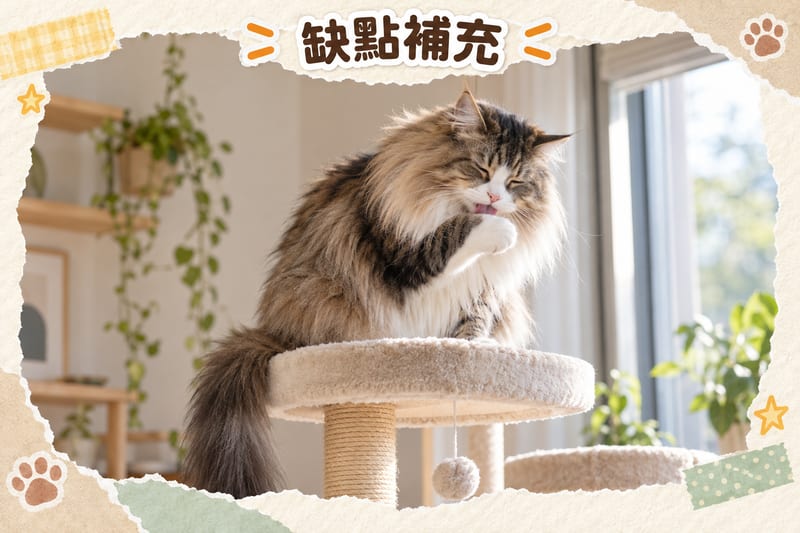
Heat sensitivity in summer. Its thick coat is designed for cold, and Hong Kong's humid heat is stressful for it. The solution is low room temperature plus cooling spots; shaving is not recommended, because the thick coat itself has an insulating effect.
Health concerns. Hypertrophic cardiomyopathy (HCM), glycogen storage disease (GSD IV), and hip dysplasia are items to watch for in this breed; see the lifespan article in this series for details. The key point: these risks can be managed, but only if you're willing to do screening and regular check-ups.
Personality. It's independent and opinionated, and won't want to be held all the time. This is both a strength and a 'downside'—depending on your expectations.
Space and regulations. These are hard thresholds unique to Hong Kong. The Norwegian Forest Cat is a large cat needing vertical activity space; if the unit is already small, even if you buy a cat tree, the actual usable area is limited. Also, public housing generally prohibits cats and dogs, and private buildings require checking the deed of mutual covenant—these are not 'figure it out after getting the cat' matters, but prerequisites that determine whether you can keep one at all. It's advisable to confirm your living conditions are compliant before even considering the breed.
So why do so many people still want one?
Having covered the downsides, we should also explain why the breed remains popular. The Norwegian Forest Cat's strengths correspond exactly to the 'costs' in the previous section. The thick coat brings shedding, but also a highly recognisable appearance; the large size brings expense, but also a steady sense of companionship; independence brings distance, but also a stable personality less prone to separation anxiety.
For Hongkongers with long working hours who don't want a cat that constantly demands attention but still want a 'calm family member' at home, the Norwegian Forest Cat's personality actually fits quite well. It won't rush up enthusiastically, but will sleep in the living room while you're at work and only slowly come over when you get home. Not everyone wants this kind of companionship, but those who like it will really like it.
Norwegian Forest Cat vs Maine Coon: overlapping downsides and differences
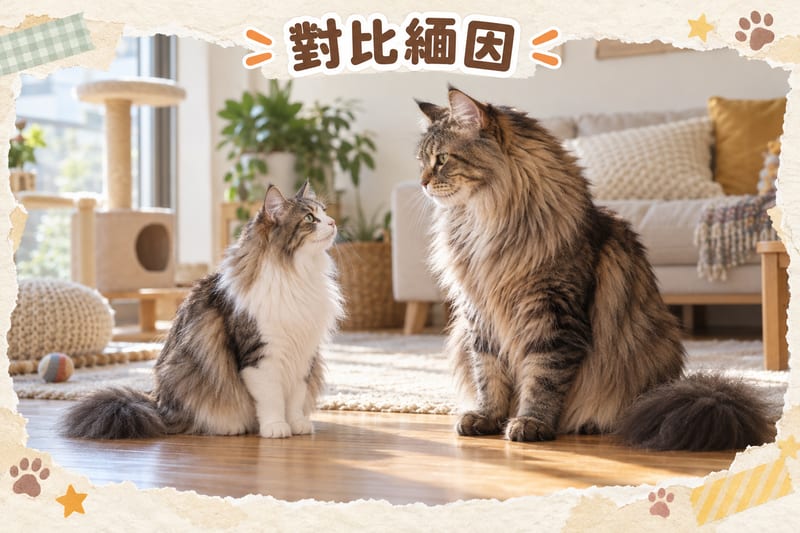
Both are large long-haired cats, so 'heavy shedding, high costs, heat sensitivity, space needs, health concerns' almost completely overlap. The difference lies in degree and personality: Maine Coons are generally larger and heavier, with costs and space requirements a notch higher, but most are more outgoing and affectionate; Norwegian Forest Cats are slightly smaller, more independent, and more accepting of being alone. If your main concerns are a small Hong Kong unit and often no one at home, the Norwegian Forest Cat is usually the easier balance. Conversely, if you have a big home, someone around for long periods, and want a very clingy giant cat, a Maine Coon may suit better.
Frequently asked questions
Q: Is the Norwegian Forest Cat easy to keep? A: Not difficult, but not zero effort. The main challenges are coat and shedding, higher costs, heat sensitivity in summer, and early attention to heart and joint health. If you're willing to spend time grooming, manage health, and have a legal living environment, it's a very comfortable companion cat.
Q: Does the Norwegian Forest Cat shed a lot? A: Yes, it's a large long-haired cat with a thick undercoat, and shedding is especially noticeable during seasonal changes (spring and autumn). This is not a disease but a breed trait; it can only be managed with daily grooming, dehumidification, and regular home cleaning—there's no 'non-shedding' solution.
Q: Is the Norwegian Forest Cat very sensitive to heat? A: More so than other domestic cats. Its thick coat and undercoat are designed for cold climates, so heat dissipation is less efficient. In Hong Kong summers, keep room temperature below 26°C and provide cooling spots; shaving is not recommended.
Q: Is the Norwegian Forest Cat not affectionate? A: It's independent but loyal—it will follow you around but may not want to be held all the time. If you expect a cat that constantly climbs on you and clings, you may be disappointed; if you like companionship with some distance, it'll feel just right.
Q: Are the costs of keeping a Norwegian Forest Cat especially high? A: Higher than a typical domestic cat. Food intake, cat litter usage, and medical reserves all scale with body size, and long-haired grooming adds extra expense. The key is to set aside a fixed monthly budget early, rather than scrambling for money when an accident happens.
Q: What is the biggest restriction for keeping a Norwegian Forest Cat in Hong Kong? A: Space and regulations. It's a large cat needing vertical activity space; also, public housing generally prohibits cats and dogs, and private buildings require checking the deed of mutual covenant. These are hard conditions to screen for beforehand, not something to figure out after getting the cat.
Key takeaways
- ✅ The Norwegian Forest Cat isn't hard to keep, but you need to know clearly what you're committing to beforehand.
- ✅ The biggest daily cost is grooming time; shedding is especially noticeable in shedding season.
- ✅ Its large size means food, litter, and medical reserves are all higher than a typical cat.
- ✅ It's heat-sensitive in summer; rely on low room temperature and cooling spots, and don't shave.
- ✅ HCM, GSD IV, and hip joints are breed health concerns, managed through screening and weight control.
- ✅ Its independent personality is a double-edged sword—depending on whether you expect 'clingy' or 'with distance'.
Related reading
- Norwegian Forest Cat lifespan and health highlights
- Key points for keeping a Norwegian Forest Cat in Hong Kong
- Norwegian Forest Cat personality and intelligence
- Norwegian Forest Cat growth and weight tracking
- Prepare grooming gear for long-haired cats: visit PetChill pet supplies for long-haired cat combs, dehumidifying products, and large litter boxes.
This article is for general pet-care reference only and does not constitute diagnosis or treatment advice; consult a registered veterinarian for individual conditions.



