
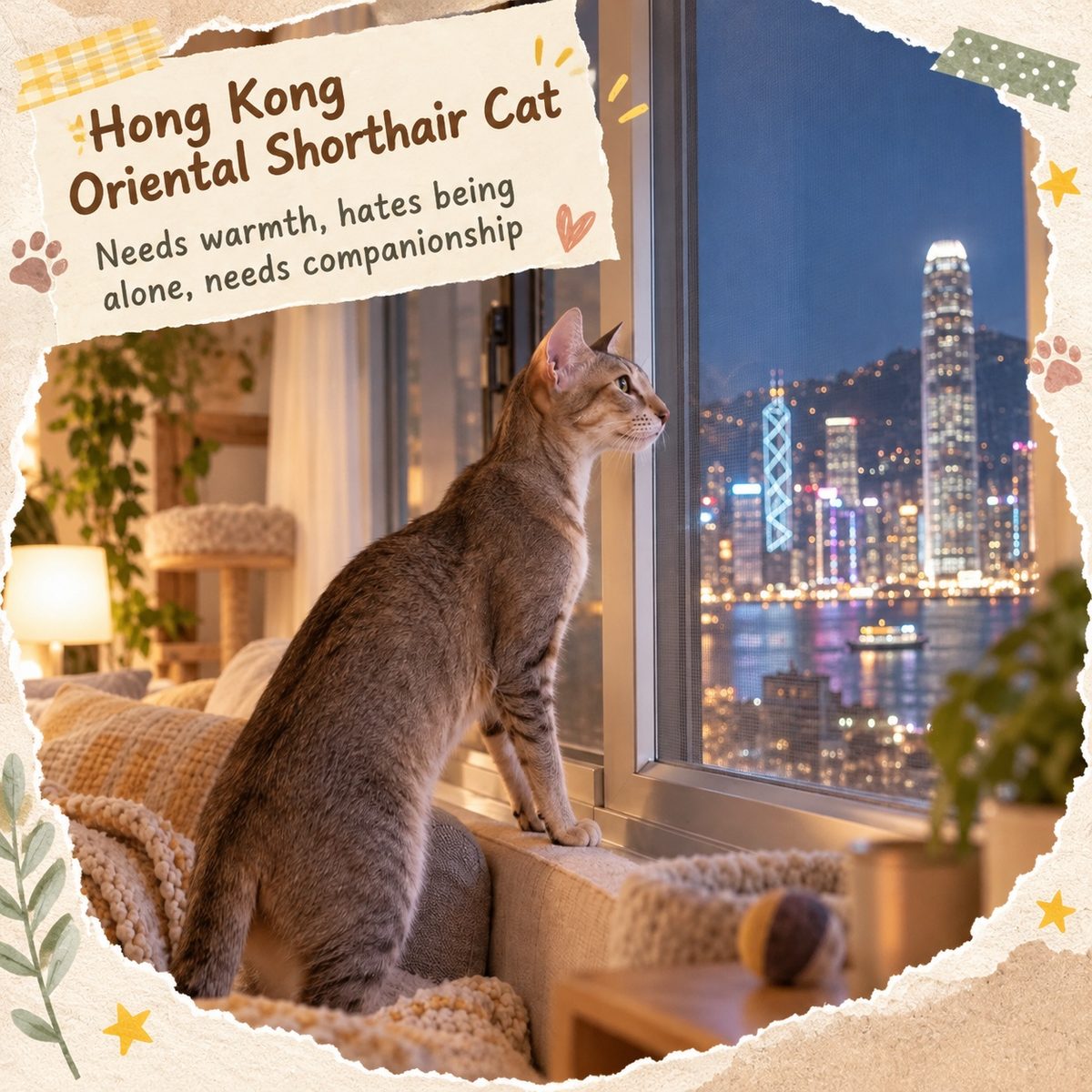
Quick answer: The Oriental Shorthair is essentially an urban indoor cat: a small flat is enough, and no garden is needed. Three key points for keeping one in Hong Kong: escape-proof window screens (they can solve puzzles and open windows), humidity management (the short coat and skin suffer in the returning-south spell), and company arrangements (long working hours mean a companion cat). Check the deed of mutual covenant and the law before you adopt.
Want to know the Oriental Shorthair inside out? Start with the Oriental Shorthair breed profile.
1. Overview of suitability for Hong Kong living
| Item | Recommended set-up | Oriental Shorthair-specific note |
|---|---|---|
| Flat size | 300 sq ft or more is enough | Vertical space matters more than floor area (tall cat tree) |
| Window screens | Full metal mesh coverage | Window catches must be cat-proof |
| Room temperature | 24–26°C | Direct air-conditioning is the number one cause of airway sensitivity |
| Humidity | 50–65%, dehumidifier part of daily routine | Tumble-dry the cat bed daily during the returning-south spell |
| Litter trays | Number = cats + 1 | Slim cats do better with low-sided trays; extra care with seniors |
| Food and water | Flowing water fountain | High activity level, so keep an eye on water intake |
| Company | 60–90 minutes of interaction daily | Two cats strongly recommended for long-working households |
| Travel | Rigid airline crate | Clever cats can undo clips, so use double locks |
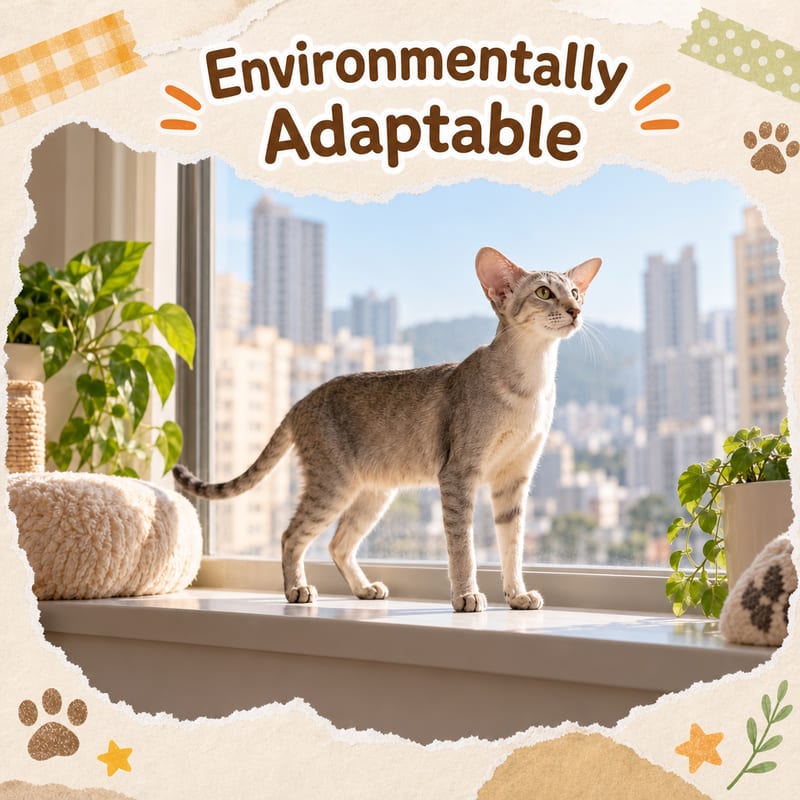
2. Small-flat set-up: not enough floor space? Go vertical
The Oriental Shorthair is small and its activity pattern is 'explosive sprints plus high-level watching', which makes it perfect for a small flat: a route from the cat tree to the top of a cabinet, a 30 cm standing spot by the window, and a tunnel under the bed already make up its complete territory. Three set-up principles: connected high points (stepping spots between the cat tree and cabinet tops), a bird-watching window sill (a window facing the street is free television, especially important in a small flat), and separate active and rest zones (don't put food and water in the same corner as the sleeping spot). This breed especially loves sleeping on people's pillows and on piles of clothes; designate a sofa chair for it in advance to reduce pillow battles.
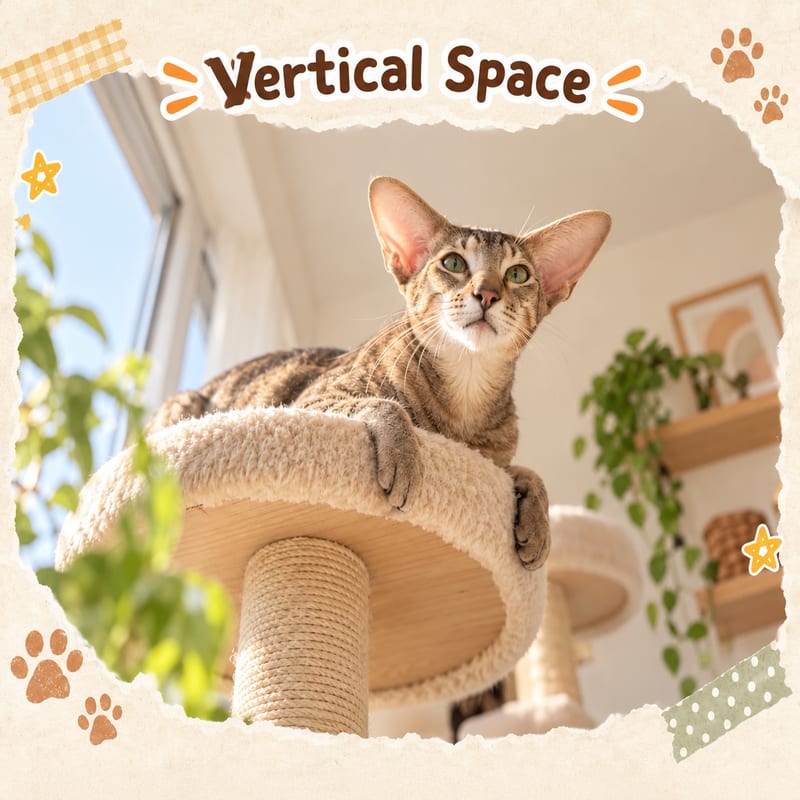
On 'is there enough space', a common misconception is that a small flat means it is unsuitable for a cat. In fact, a cat's sense of territory is measured by the total length of usable paths, not by square metres: a route from the floor to a 2.5-metre cat tree, across the top of the sofa and the top of the bookshelf, is already longer than 500 sq ft of flat ground. Because Oriental Shorthairs are light and long-legged, they use this 'aerial corridor' more than any round-bodied breed, so a small flat is actually their home ground.
3. Humidity and air-conditioning: Hong Kong's two-season battle
During the returning-south spell and early spring, humidity stays above 85% for long periods, which is the peak season for local veterinary dermatology clinics: a short coat has no undercoat buffer, so fungi and bacterial folliculitis come into direct contact with the skin. Practical combination: run the dehumidifier daily (target 50–65%), wash cat beds and mats weekly in water above 60°C and tumble-dry, and use a disinfectant mat at the door to reduce tracked-in fungal spores. Watch behind the ears, under the chin and on the belly — if you see round bald patches, see a veterinarian immediately; treating ringworm two weeks earlier costs ten times less, and it can spread to people.
Summer is the opposite: the dry cold air of an air-conditioned room is a common trigger for sneezing and airway sensitivity. The principle is 'the cat can adjust its own temperature': don't air-condition the whole flat all day, leave an uncooled corridor for it to choose; keep the bed at least two metres from the vent; set the temperature two degrees higher at night. Oriental Shorthairs express cold very directly — it will stand by your bedside staring at you, and that look is the thermostat.
4. Escape-proofing: designed for 'a cat that solves puzzles'
The Oriental Shorthair's cleverness is bad news for escape-proofing: window catches, door handles and suitcase zips that ordinary cats cannot learn, they master within two weeks. The escape-proof checklist, ordered by vulnerability: metal mesh screens on windows plus iron grilles on fan openings; limiters on sliding windows (opening less than 10 cm); stainless steel mesh sealing gaps at air-conditioner units and planters; a gate in the entrance or a habit of opening the door only after entering. Also a reminder for rooftop and podium flat residents: even with a 'private' open-air area, don't assume the cat will find its way back — a companion cat that follows people so closely is actually the most likely to slip out when someone leaves.
5. Entry points for invaders: mosquitoes, ants and window gaps
Keeping a cat in Hong Kong, you don't need to worry about stray dogs or cats (being fully indoors already separates them); the real entry-level risks are four small things: first, mosquito-borne heartworm — Oriental Shorthairs are small, and the dose effect after infection is more obvious than in larger cats, so mosquito screens and monthly deworming confirmed by a veterinarian must be done; second, contact dermatitis triggered by ants and cockroaches — wash food and water bowls daily and put dry food away before bed; third, musty rain smell coming through window gaps — close windows on rainy days as well as during the returning-south spell; fourth, small decorative items — needles and thread, rubber bands, paper-towel rolls are all toys and foreign-body obstruction risks for a puzzle-solving cat, so storage boxes are a cat owner's best friend.
6. Law and neighbours: do your homework before adopting
Three levels of checks: first, public housing tenants are bound by the tenancy terms, and keeping an animal without approval is a breach, at your own risk; second, private flat residents should check whether the building's deed of mutual covenant has a no-animals clause, and management has enforcement power; third, whatever the housing type, keeping the cat only inside the flat is the foundation for avoiding complaints (and for an Oriental Shorthair this is the correct way to keep one anyway). Take the cat to the veterinarian in a crate, not on a lead; bag cat litter before putting it in the bin — these details determine the quality of your relationship with management and neighbours.
7. Daily routine: designed around its social nature
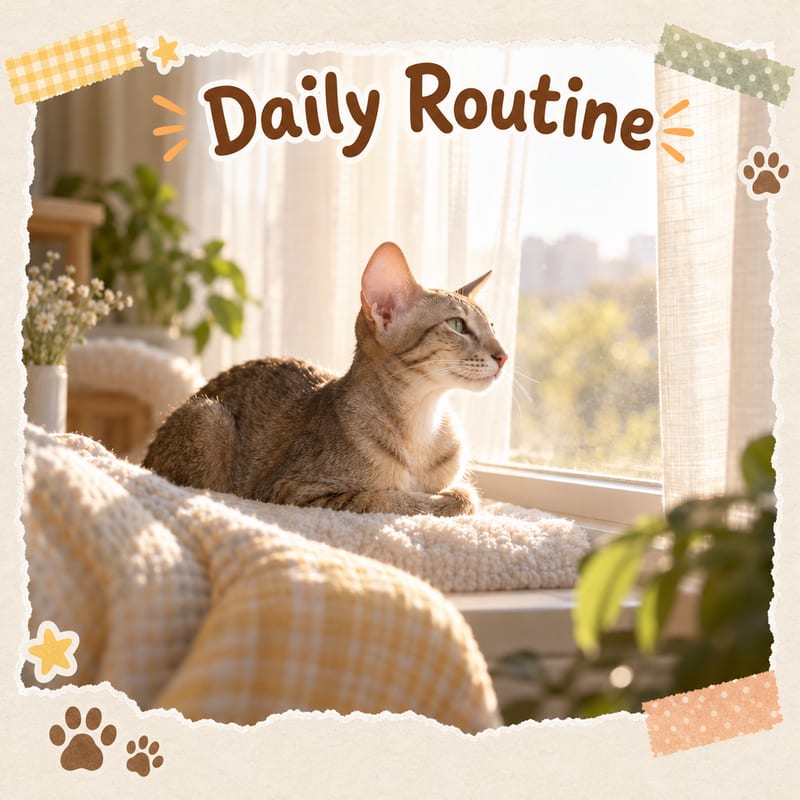
A day for an Oriental Shorthair in a Hong Kong working household could look like this: 15 minutes of play before leaving for work to burn energy, a timed feeder for the afternoon snack, an hour of floor interaction after dusk (along with tooth brushing and ear checks), and the main meal before bed. If working hours are really long, the two-cat solution is proven for this breed: videos of two similar cats grooming each other and taking turns on guard are easy to find in rescue circles. One last point: big changes such as moving house, renovation or a new family member cause more stress in a companion cat than in ordinary cats; starting two weeks ahead with a pheromone diffuser and familiar smells in the new space can save you a stress-related urinary problem.
Key points
- ✅ The Oriental Shorthair is essentially an urban indoor cat: 300 sq ft plus vertical routes is enough
- ✅ Escape-proofing must meet the standard of 'a cat that solves puzzles and opens windows': metal mesh, limiters, entrance gate
- ✅ The returning-south spell is mainly a skin battle: dehumidify to 50–65%, tumble-dry the cat bed, see a vet early for bald patches
- ✅ Leave an uncooled area in air-conditioned rooms; they feel the cold by genetics, not fussiness
- ✅ Public housing: check the tenancy; private flats: check the deed of mutual covenant; a cat that stays indoors causes no complaints
- ✅ Long-working-hours solution: two cats plus automatic feeder plus fixed interaction times
- ✅ Start pheromones and familiar smells two weeks before moving or renovating
Related reading
- Oriental Shorthair personality explained
- Oriental Shorthair disadvantages and how to cope
- Oriental Shorthair price and adoption guide
- Dehumidifiers, cat pheromones, escape-proof window screens and tall cat trees: get them all in one place at PetChill pet supplies.
This article is general care information; regulations are subject to the Housing Department, the Buildings Department and the deed of mutual covenant of the building concerned, and for skin symptoms please consult a registered veterinarian.
 Fuji One full guide →





