
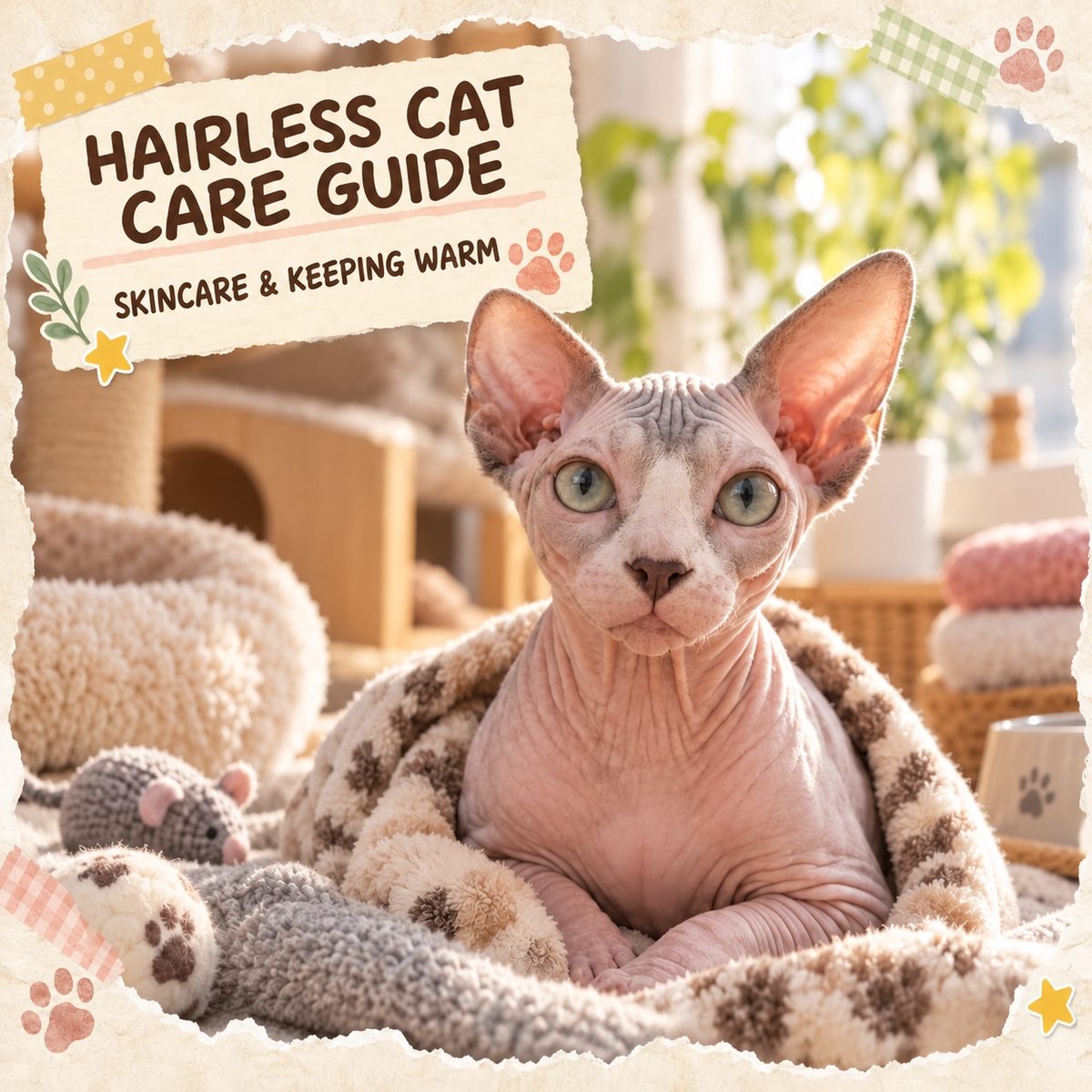
Quick answer: The Sphynx hairless cat is clingy and lively, but without hair to protect its skin it needs weekly baths to remove oil, warmth in winter and sun protection in summer. It eats more and needs regular heart checks, so it suits owners willing to spend time on care.
Answer first: The Sphynx hairless cat (Sphynx) has no topcoat due to a genetic mutation, leaving only a little fine down; its skin is smooth with obvious wrinkles. They are super clingy, lively and smart, but the price is regular skin care: bathe about once a week to remove oil, keep warm in winter and protect from sun in summer. People who love them love them deeply; if you dislike hassle, choose a coated breed.
This is one of the Hong Kong cat breed guide series.
Sphynx basic facts
| Item | Details |
|---|---|
| Size | Medium, muscular (3-5.5 kg) |
| Lifespan | About 10-15 years |
| Coat | No topcoat, only fine down (like a peach) |
| Appearance | Large ears and eyes, many wrinkles, skin colour visible |
| Personality | Clingy, lively, playful, smart |
| Care intensity | High—skin care is a daily task |
| Suits | People willing to spend time and wanting a close companion |
Personality: unusual looks, top-notch personality
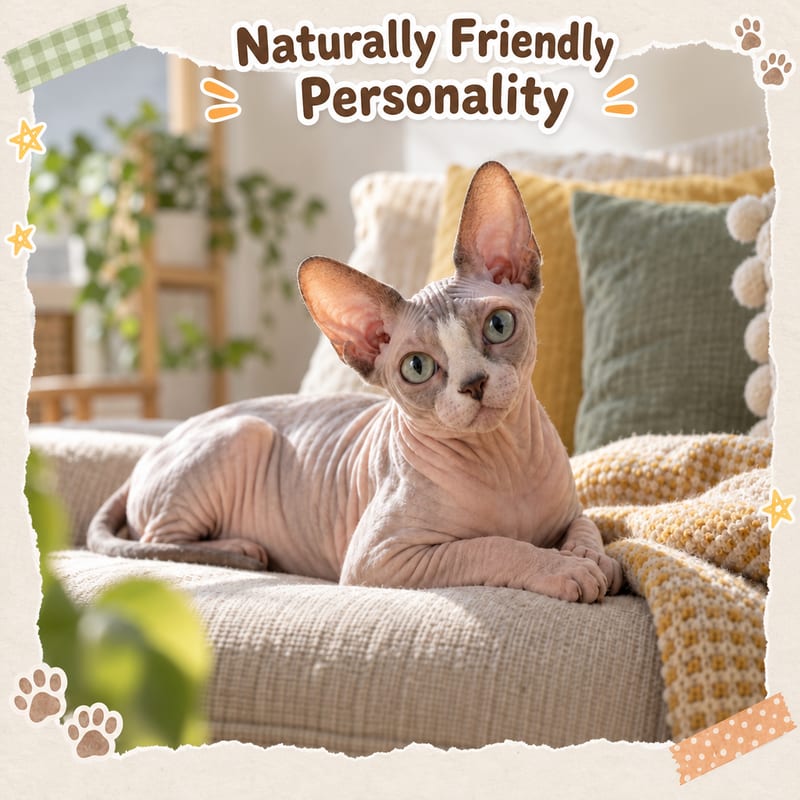
The Sphynx's personality is the "instantly friendly" type in the cat world:
- Lively and clingy—always stuck to you, sleeps on you, full of warmth (they feel especially warm)
- Playful—energetic, will play with wand toys and balls non-stop
- Gentle and easy-going—friendly to people and cats, not aggressive
- Smart—can open doors, express needs, quite trainable
The Sphynx's appearance is controversial: some find it odd, some find it stunning—but those who have lived with one almost unanimously agree: the personality is top-tier. Because they have no hair to hide behind, they express emotions very directly: happy means snuggling up, cold means burrowing under the duvet, unhappy means standing up and staring at you. If you want a cat with "unique looks and top personality", the Sphynx is a good choice, as long as you are willing to take on the skin care.
Skin care: the top priority for a Sphynx
Without hair, the skin must take on all the jobs of insulation, sun protection and dirt protection. Four things must be done:
1. Regular baths to remove oil (most important) Sphynx skin produces oil; without hair to absorb it, it builds up on the surface—if not washed, it becomes sticky, clogs pores and can even cause folliculitis and dandruff. About once a week, wash with a mild, non-irritating cat shampoo, lukewarm water, and dry immediately after. Pay special attention to oily hotspots like ears, chin and tail base.
2. Keep warm (cold-sensitive) No hair = no insulating layer. In Hong Kong's damp winter without heating, put on cat clothes, prepare a warm mat or a thicker cat bed; in summer, don't let them sit in direct air-conditioning for long periods.
3. Sun protection (no hair protection) Summer UV can burn the skin directly—pull the curtains where the sun blazes through windows, and avoid midday when walking outside. Light-skinned individuals are especially prone to sunburn.
4. Skin checks Check the whole body once a week: any redness, swelling, scratch marks from itching, black oily build-up, dandruff. Early skin problems can be solved by adjusting washing frequency; if left too long, see a vet.
Five steps to bathing
- Prepare beforehand: cat shampoo, two towels, hairdryer (warm, low speed) or warm room
- Test water temperature with your hand—lukewarm; wet from neck down slowly, avoiding ears and eyes
- Gently rub oily areas (behind ears, chin, armpits, tail base), rinse until no residue
- Wrap in a towel to absorb water, don't rub hard
- Immediately take to a warm room or dry with warm air; check ears for water
Before a new cat's first bath, trim nails and ask an assistant to help; the faster the less stress. Give treats after the bath to build positive associations, and next time will be easier.
Diet: eating a lot is normal
The Sphynx uses more energy to maintain body temperature, so generally eats more than cats of the same size and has a fast metabolism. Choose high-protein quality cat food, feed at set times and amounts but don't be too strict; wet food helps both skin and urinary health—for specific formulas see the complete cat food guide. Note that obesity can also occur in Sphynx: without hair you can't see fat, so feel the ribs to confirm body condition; if the belly sags and you can't feel ribs, reduce portions.
Health risks and when to see a vet
- Hypertrophic cardiomyopathy (HCM)—Sphynx has a genetic predisposition; regular heart ultrasound checks are recommended
- Skin diseases—oil build-up causing folliculitis, Malassezia dermatitis; if recurrent, see a vet
- Teeth—some individuals have more gum problems; watch for bad breath and drooling
When to see a vet: large areas of red swollen skin, oozing, persistent itching and scratching; sudden loss of appetite, rapid breathing (watch for heart); poor energy on waking, reluctance to move, sharp drop in appetite. In these cases do not apply medication yourself; book a registered veterinarian as soon as possible.
No brushing = no grooming?
Many prospective owners mistakenly think a Sphynx is "low maintenance because it has no hair". The truth is the opposite: a coated cat's hair is its skin's protective layer; the Sphynx lacks this layer, so the owner must take over all the hair's jobs—oil control, insulation, damage protection and sun protection all done manually. Grooming time is no less than for a long-haired cat, just spent differently. This misconception is the number one reason Sphynx are rehomed; be clear before getting one.
Hong Kong four-season care rhythm
| Season | Key points |
|---|---|
| Spring humid season | Damp→skin prone to bacteria; keep dry, dry the bed often |
| Summer | Sun protection with curtains, avoid direct air-conditioning, adjust bath frequency to oiliness |
| Autumn | Seasonal dryness, watch for dandruff, can reduce bath frequency |
| Winter | Cat clothes + warm mat; catching cold can cause digestive upset |
Adoption and purchase
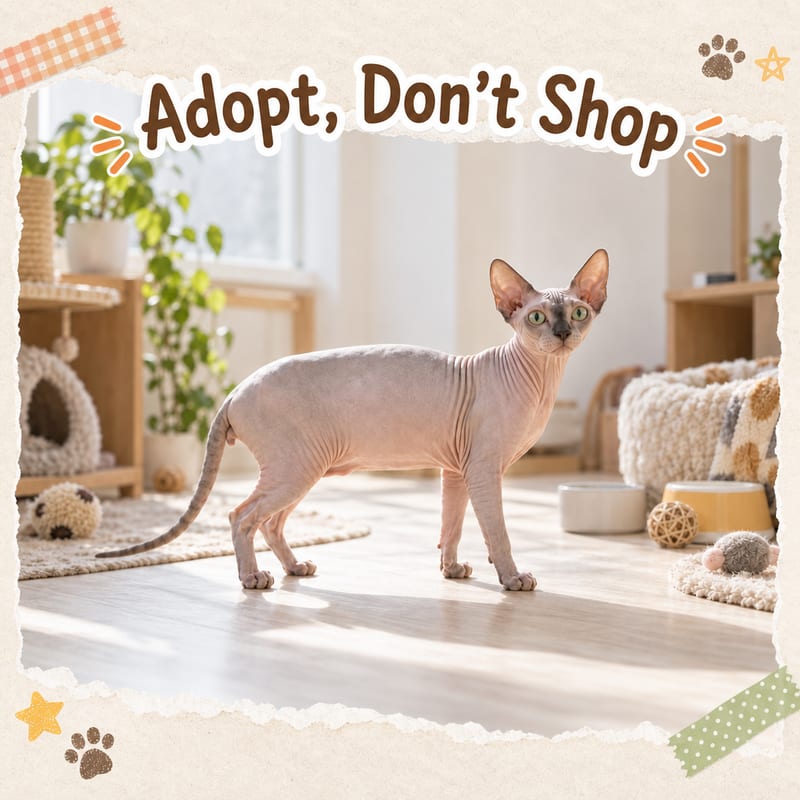
The Sphynx is a niche breed in Hong Kong; purchase is mainly through registered breeders, at a higher price than ordinary cats, and you must check the parents' HCM screening reports. For adoption, SPCA and local cat organisations occasionally have Sphynx or Sphynx mixes waiting for homes; there are also volunteer groups specialising in rescuing cats with skin care needs. Adoption fees are generally $1,000-3,000, usually including neutering and vaccinations. Before getting one, spend half a day with a Sphynx to make sure you can accept the feel of oily skin and the grooming workload. Also budget for daily expenses: shampoo, cat clothes, higher food intake and skin check costs; monthly expenses are noticeably higher than for an ordinary short-haired cat. For more steps see the new pet owner guide.
What you can do starting today
- Prepare a mild cat shampoo and schedule a weekly bath day
- Check windows at home: are there curtains or blinds where sunlight hits directly, to avoid midday sun
- Prepare two large dry towels so the bath routine can be finished within ten minutes
- In winter, decide cat clothes size and warm mat position (away from draughts)
- Book a vet for a basic check-up and ask about HCM screening and vaccination schedule
Which skin care products and warm beds for a Sphynx? PetChill's product guide has hands-on comparisons. When comparing with cold-sensitive breeds that need care, remember to include monthly grooming time. For more breed introductions see the cat breed quick guide, British Shorthair guide and Persian cat guide. This article is for reference only; consult a registered veterinarian for any concerns.
📌 Key summary
- ✅ Bathe once a week, focusing on behind ears, chin and tail base
- ✅ Cat clothes and warm mat in winter, curtains for sun protection in summer
- ✅ High-protein diet, eats more than cats of the same size
- ❌ Hairless ≠ no grooming; grooming time is no less than for long-haired cats
- ❌ Allergens are saliva and dander; Sphynx can still cause allergies



