
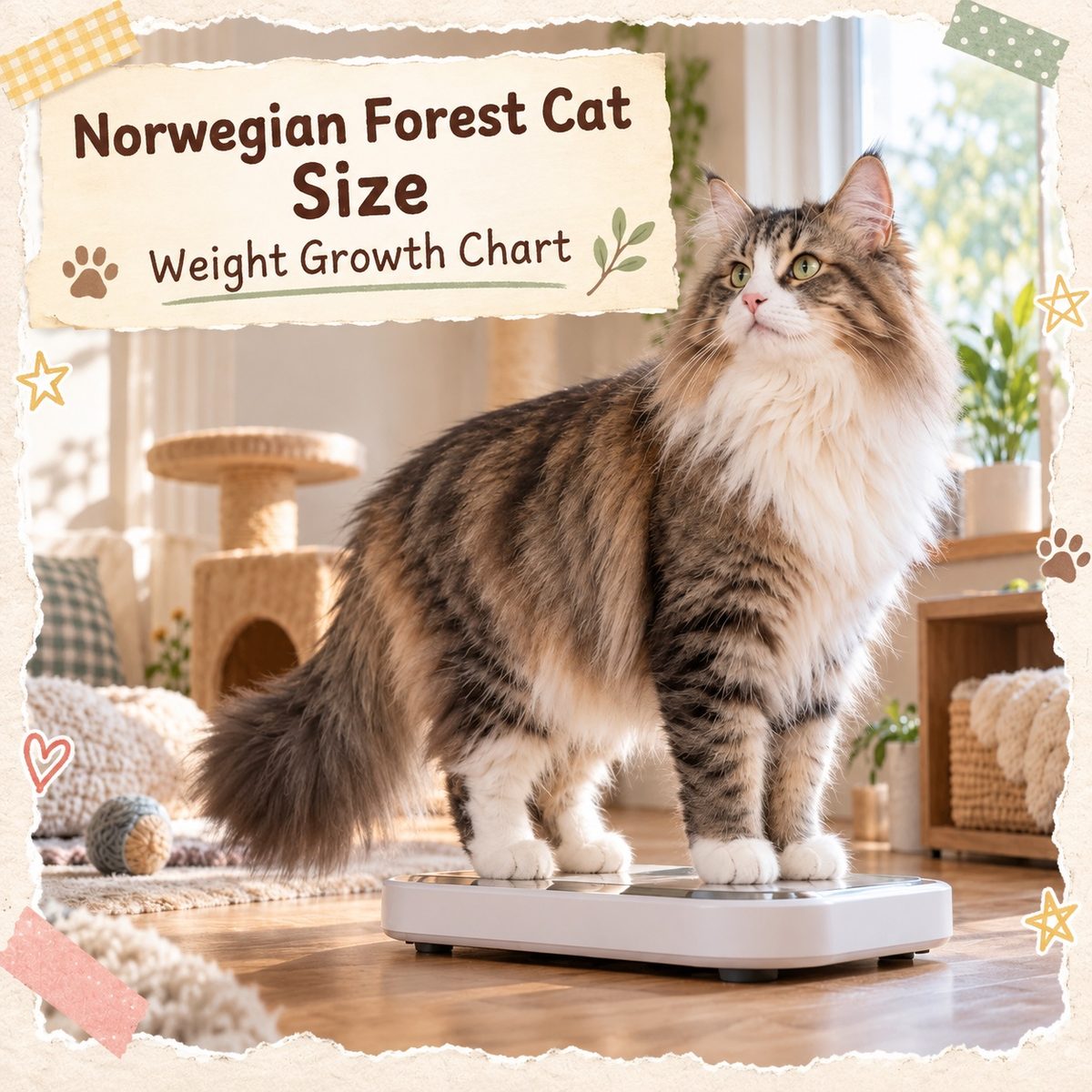
Quick answer: Adult Norwegian Forest Cats typically weigh 5 to 9 kg for males and 4 to 6.5 kg for females, making them large cats. They are a slow-maturing breed, only fully settling by about three to five years of age. To judge health, don't just look at the number on the scale; consider body condition score (BCS), waistline, and how the ribs feel.
Want to learn more about Norwegian Forest Cats? Continue reading our series below.
How Big Are Norwegian Forest Cats: Adult Weight and Build
Norwegian Forest Cats are truly large cats: adult males typically weigh 5 to 9 kg, females about 4 to 6.5 kg, with a noticeable difference between the sexes. Besides weight, their body length including the tail is considerable, and with a thick undercoat they look even bigger than their actual weight. Skeletal features include longer hind legs and large, round paws—these are native designs for moving in Nordic snow.
Beware a common misconception: "big" does not mean "fat". The ideal Norwegian Forest Cat shape is slender yet muscular, feeling firm to the touch, not soft and barrel-like. If an adult cat looks "solid" but you can't feel the ribs, it's likely overweight rather than naturally big. For large cats, excess weight directly burdens the heart and joints, making it one of the most important issues to watch.
Body size has practical implications for living arrangements: litter boxes need to be large enough, cat trees stable enough, food bowls low and wide enough, and even carriers should be large-sized. If you buy these according to small-cat standards, you'll soon have to replace them.
Growth Period: Timeline from Kitten to Adult
The table below summarizes the approximate development pace by age in months; the numbers are general directions, and individual variation can be large.
| Stage | Age (months) | Weight trend | Key points |
|---|---|---|---|
| Nursing | 0–2 months | About 100 g at birth, noticeable weekly gain | Mother's milk or kitten milk replacer, learn social skills from mother |
| Rapid growth | 3–6 months | Significant monthly increase, skeleton lengthens | Kitten formula, meal feeding, vaccinations and deworming |
| Steady growth | 6–12 months | Growth slows, body shape takes form | Switch to adult food around one year |
| Filling out | 1–3 years | Slight weight gain, muscle and chest fill out | Measured feeding, watch waistline |
| Fully mature | 3–5 years | Reach adult weight and physique | Transition to maintenance diet and regular check-ups |
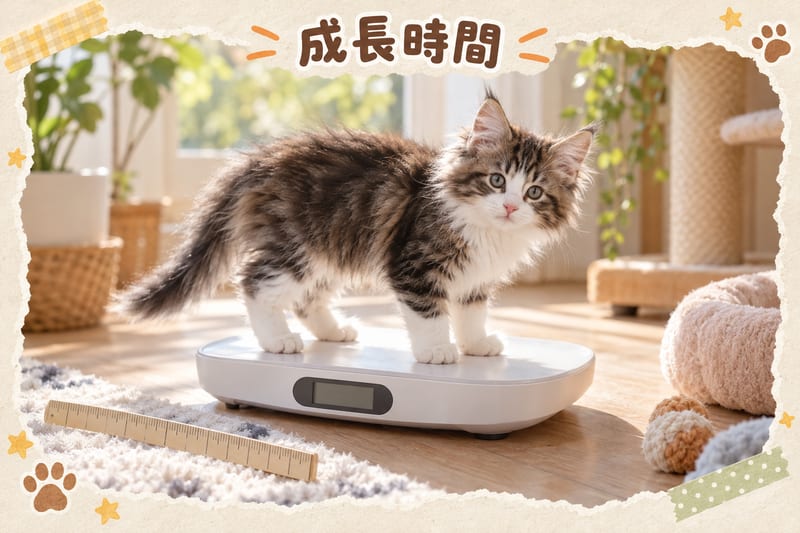
Slow maturation is the keyword for Norwegian Forest Cats. Typical domestic cats are roughly fully grown by about one year, but this breed may not finish developing until three to five years. The upside is a solid skeleton and mature physique; the cost is a prolonged "junior" period, with energy and jumping needs lasting longer than expected.
How to Measure and Assess Body Condition Score
Weight is just a number; body condition score (BCS) is the standard tool for judging fat versus thin. A common method is a 1 to 9 scale, with 5 being ideal. You can do a preliminary assessment at home with these four steps:
- Feel the ribs: Gently press both sides of the chest. Feeling the ribs without them feeling sharp = ideal; having to press hard to feel them = overweight; bones clearly visible = underweight.
- Look at the waist: From above, there should be a slight narrowing behind the ribs. No waist at all = overweight.
- Look at the abdomen from the side: The abdomen should tuck up slightly. A noticeable sag (especially in neutered cats) is a sign of excess weight.
- Feel the spine and hip bones: Too prominent means too thin; unable to feel means too much fat.
For measurement, it's recommended to weigh on a fixed day each month, using the same scale, before meals, and record the trend. A single number is meaningless; the direction over several consecutive months is what matters. If you find a steady monthly increase, reduce portions and increase interactive play.
Also note that a cat's weight can be affected by season, coat volume, and water intake, so rather than obsessing over decimal places, look at the half-year trend. If weight rises steadily for two or three months, even if not yet obese, it's worth adjusting portions first, because once a large cat's weight goes up, it's harder to bring down than for a small cat.
Diet and Feeding Direction During Growth
Large-breed kittens grow fast, but free-feeding can easily create a "heavy base". Here are some sound directions:
- Use kitten formula before one year, then gradually switch to adult food after one year, transitioning over two weeks.
- Feed in meals rather than free-feeding long-term, making it easier to observe changes in appetite and catch abnormalities early.
- Prioritize protein while ensuring sufficient water; a mix of wet and dry is friendlier to the urinary and kidney health of large cats.
- Calcium, phosphorus, and joint-related nutrients should follow veterinarian or packaging guidelines; do not add supplements on your own.
- Adjust portions after neutering, because neutered cats have lower metabolism and often better appetite, making it a high-risk period for weight gain.
Remember one principle: ideal weight in kittenhood is the best insurance for adult joint health. This is especially true for large cats.
Norwegian Forest Cat vs Maine Coon: Which Is Bigger
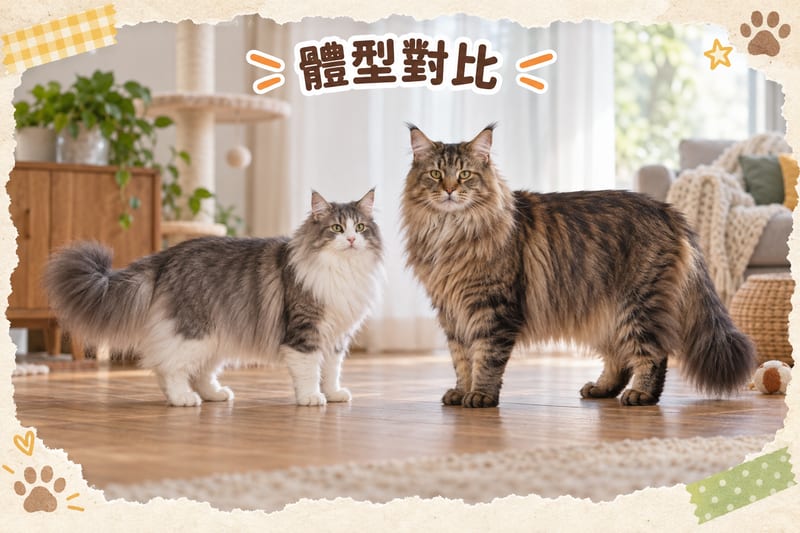
Readers searching "how big do Maine Coons get" are often choosing between the two. Direct comparison: Maine Coons are generally larger and heavier, with some males reaching over 10 kg and a bulkier build; Norwegian Forest Cats are slightly smaller but still large cats, with males commonly 5 to 9 kg. Both are long-haired and slow-maturing, with long development periods. For Hong Kong owners, the practical difference lies in space and expenses: Maine Coons typically require a higher tier of litter box size, food intake, and medical costs. If your flat isn't large, the Norwegian Forest Cat's size is easier to accommodate.
Related Reading
- Norwegian Forest Cat Lifespan and Health Key Points
- Key Points for Keeping Norwegian Forest Cats in Hong Kong
- Norwegian Forest Cat Personality and Intelligence
- Norwegian Forest Cat Pros and Cons Explained
- For help with weight and feeding management: visit PetChill pet supplies to see pet scales, measuring bowls, and large litter boxes.
The numbers in this article are general reference ranges; for individual cat development, please rely on veterinarian assessment.



