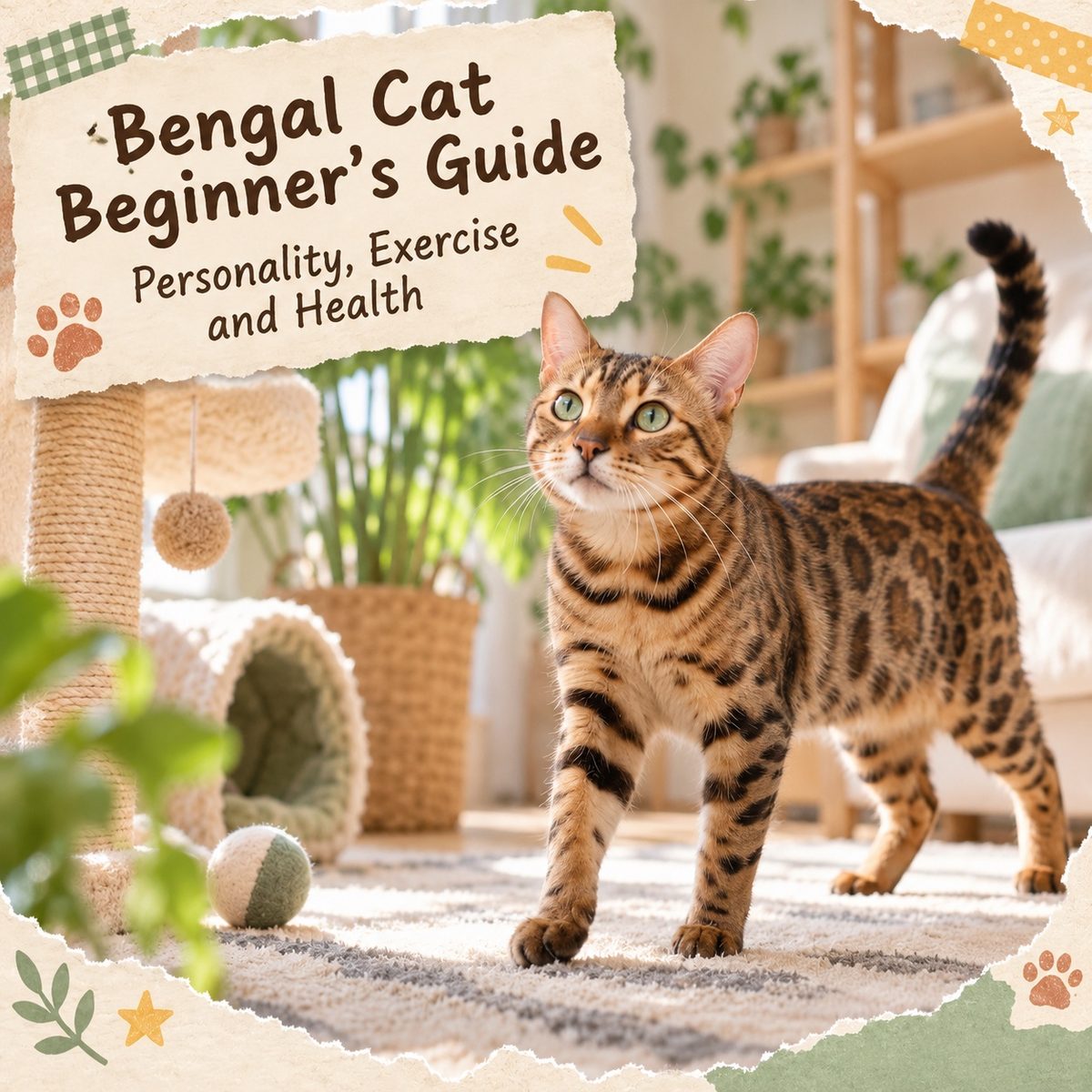
Quick answer: The Bengal cat is a spotted, muscular cat with explosive energy. In Hong Kong, you need to provide vertical space and two interactive play sessions daily, and watch for skin and digestive sensitivities. If you are out all day or live in a small flat with no wall space, it is not the right fit.
The Bengal is a breed created by crossing the Asian leopard cat with domestic cats, known for its leopard-like coat and explosive energy. In one sentence: it suits owners who have time to play, have vertical space at home, and enjoy interacting with their cat; if you are out all day and just want a quiet cat for company, think twice.
Bengal Cat Appearance and Build: Spotted Short Coat, Muscular
| Item | Details |
|---|---|
| Origin | Asian leopard cat × domestic cat cross |
| Pattern | Leopard spots / rosettes |
| Base colours | Golden, bronze tones |
| Coat | Short, close-lying and glossy |
| Build | Muscular and solid |
| Weight | About 5–7 kg |
Rosettes are the Bengal's biggest identifying feature; when it walks, its muscle lines are obvious, and from a distance it looks like a small leopard. The short coat is easy to manage, but behind that beauty lies extremely high exercise and interaction needs, explained in the next section.
Bengal Cat Personality: The Energy King Among Cats
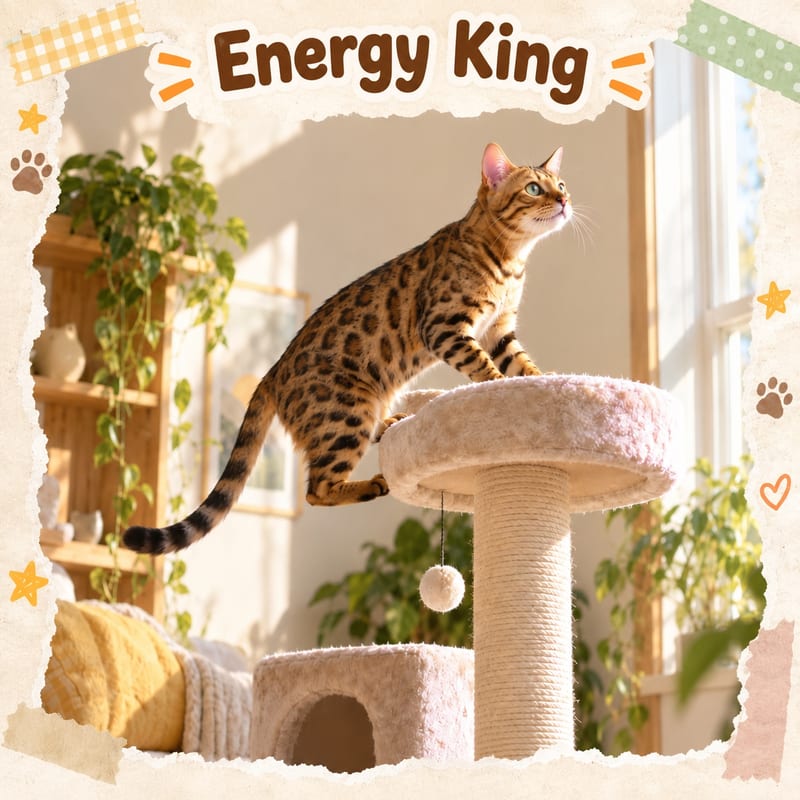
- Lively and active: Full of energy, every high place at home is its playground.
- Curious and smart: Learns quickly, can open cabinets and press doors, and never tires of puzzle toys.
- Rarely fond of water: Many Bengals like to splash water bowls, play with taps, and even follow owners into the bathroom — an oddity among cats.
- Affectionate but opinionated: More clingy than aloof with family, but not the obedient type.
It is not a "display cat": Bengals need to play, jump and have company. Energy not burned off during the day will find its own outlet — such as midnight zoomies, shredding paper, or knocking things off shelves.
Bengal Cat Care Essentials: Coat, Exercise, Diet
Coat (easy): Brush 1–2 times a week for the short coat; a little more during shedding season. No professional grooming needed.
Exercise (most important):
- At least two interactive play sessions daily, using a wand toy to mimic hunting, playing until it lies down.
- Provide a tall cat tree and wall-mounted jumping platforms: Bengals are powerful jumpers, and the higher the better.
- Rotate puzzle toys: treat balls, snuffle mats, to keep its brain busy.
- A Bengal that does not get enough play will get bored and "demolish the house" — this is the first lesson of keeping one.
Diet:
- With lots of muscle and heavy body weight, they need high-protein balanced nutrition, with portions adjusted to weight and activity level.
- On days with less activity (e.g. stuck indoors during heavy rain), watch calorie intake to avoid obesity.
- Some individuals have sensitive stomachs, so transition food gradually.
Genetic Health Issues and Medical Attention: When to See a Vet
Bengals are generally robust, but watch for two tendencies:
- Skin problems: Some individuals have skin sensitivities; repeated itching and hair loss should be addressed.
- Colon/intestinal issues: A tendency to sensitive digestion; long-term soft stools should be followed up with a vet.
When to see a vet:
- Persistent soft stools or diarrhoea for more than a day
- Significant weight loss
- Repeated skin sensitivity, itching to the point of hair loss
- Sudden lethargy, poor appetite for more than two days
- Abnormal walking posture, unwilling to jump to usual spots
Hong Kong Environment Tips: Small Flats, Hot and Humid Summers
- Use walls, not floor, in small flats: Install two levels of cat shelves on one wall plus a tall cat tree, and the activity area doubles instantly; the top of bookshelves and the fridge are its observation decks.
- Hot and humid summers: Keep the indoor environment dry and well-ventilated, and monitor skin condition; place several water bowls in different spots and change the water daily.
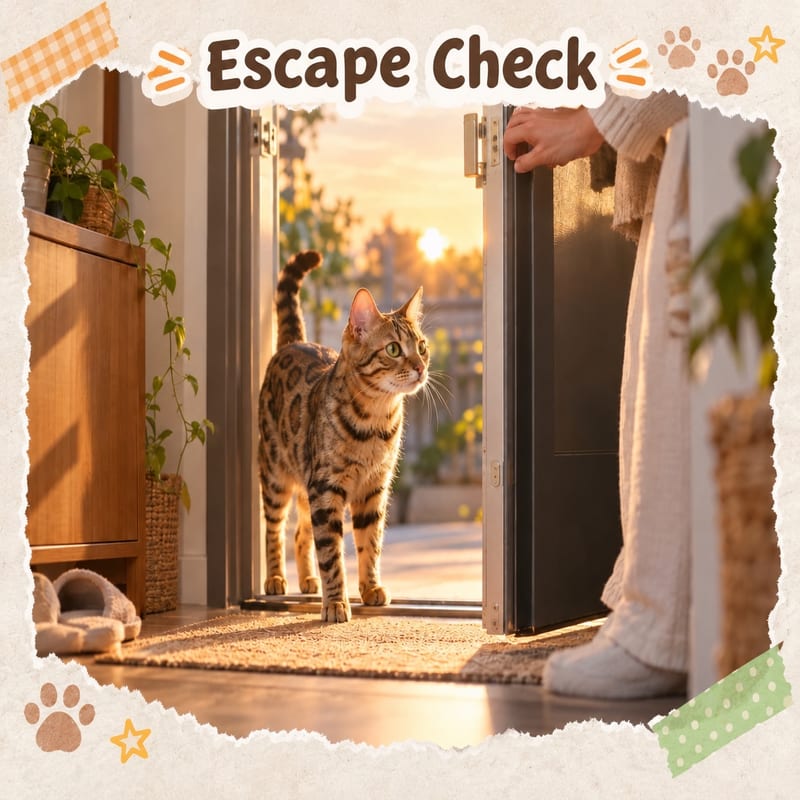
- Escape-proofing: Bengals are smart and love to explore, so check window screens and screen doors are secure, and watch it when opening the door in case it follows you out.
- Neighbour relations: Midnight zoomies are a big issue in small flats — a play session before bed to burn off energy can significantly reduce disturbance.
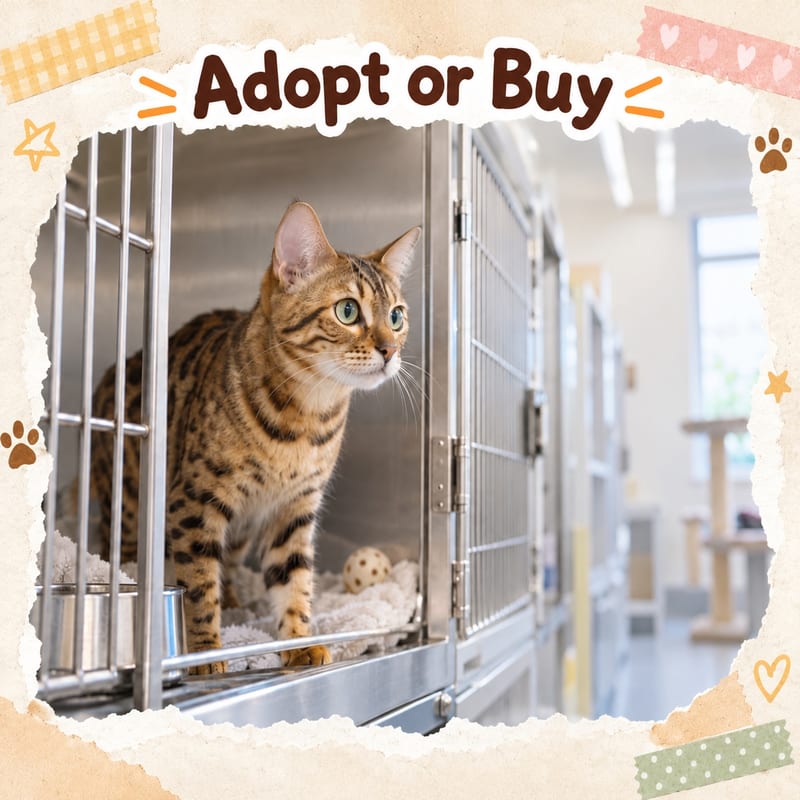
Adopt or Buy?
- Buy: Hong Kong price is about $15,000–$35,000 (see cat breed guide). Choose a registered breeder and ask to see the parents' health certificates; buying cheaply from unknown sources often ends up costing more in vet bills.
- Adopt: Purebred Bengals are rare, but spotted mixed-breed cats occasionally appear in adoption groups and rescue organisations. If you are not set on a purebred, domestic cats are just as smart and active.
- Common prerequisite: The space and playtime you can offer matter more than a pedigree certificate.
What You Can Do Starting Today
- Look at which wall at home can take cat shelves, and measure the height.
- Prepare a wand toy and treat-dispensing toys, and start a fixed playtime tonight.
- Check all window screens and screen doors for gaps.
- Start recording your cat's daily food intake and energy levels, to help spot abnormalities early.
To learn how to choose cat food and how much to feed daily, see PetChill's cat food reviews and product guides.
This article is for reference only; consult a registered veterinarian if in doubt.
Further Reading
- Cat Breeds at a Glance →
- British Shorthair Guide →
- Domestic Cat (Hong Kong Cat) Guide →
- Maine Coon Guide →
Practical Checklist for Small Hong Kong Flats: Get It Done Tonight
1. 15-Minute Wall Space Quick Plan
- Choose a wall at least 1.2 m wide (living room TV wall or corridor wall), and measure from floor to ceiling.
- Buy two 60 cm L-shaped shelves and four triangular brackets from Taobao/IKEA, and fix them at 1.2 m and 1.8 m above the floor — that already gives you two levels of jumping platforms.
- Stick anti-collision strips on the shelf edges to prevent falls and scratches on the wallpaper.
2. Tall Cat Tree Placement Tips
- No corner in a small flat? Place the cat tree by the window so the cat can jump and watch the street view, satisfying its curiosity.
- Base the cat tree against the wall and secure the top to the wall with L-shaped metal brackets to prevent wobbling.
3. Daily Play Schedule (with Alarm Reminders)
- 10 minutes before leaving in the morning: quick wand-toy hunting, play before feeding to mimic the "hunt → eat" cycle.
- 9 pm: second session after the owner showers, hide 1/3 of dinner in a treat ball so it plays and eats, burning off remaining energy.
- Set phone alarms and keep it up for seven days to build the habit; the cat will naturally stop running marathons at midnight.
4. Hot and Humid Summer Emergency Kit
- Water bowls + ice cubes: put out two bowls of water before leaving in the morning, add 3-4 ice cubes to one for cooling and fun.
- Use a dehumidifier: run it for 2 hours every morning, keep humidity below 60% to reduce skin sensitivity.
- Check behind the ears and belly weekly; if you see red spots, bathe and dry immediately to prevent eczema.
5. Escape-Proofing Checklist (10 Seconds Before Opening the Door)
- Window screens: push with your hand to confirm they are secure; add magnetic strips to the bottom of screen doors to stop the cat pushing them open.
- Before opening the door, lure the cat into a room, or use the sound of an automatic feeder to distract it.
Follow this tonight, and tomorrow morning you will see your cat lounging high up, no longer doing parkour at midnight.