
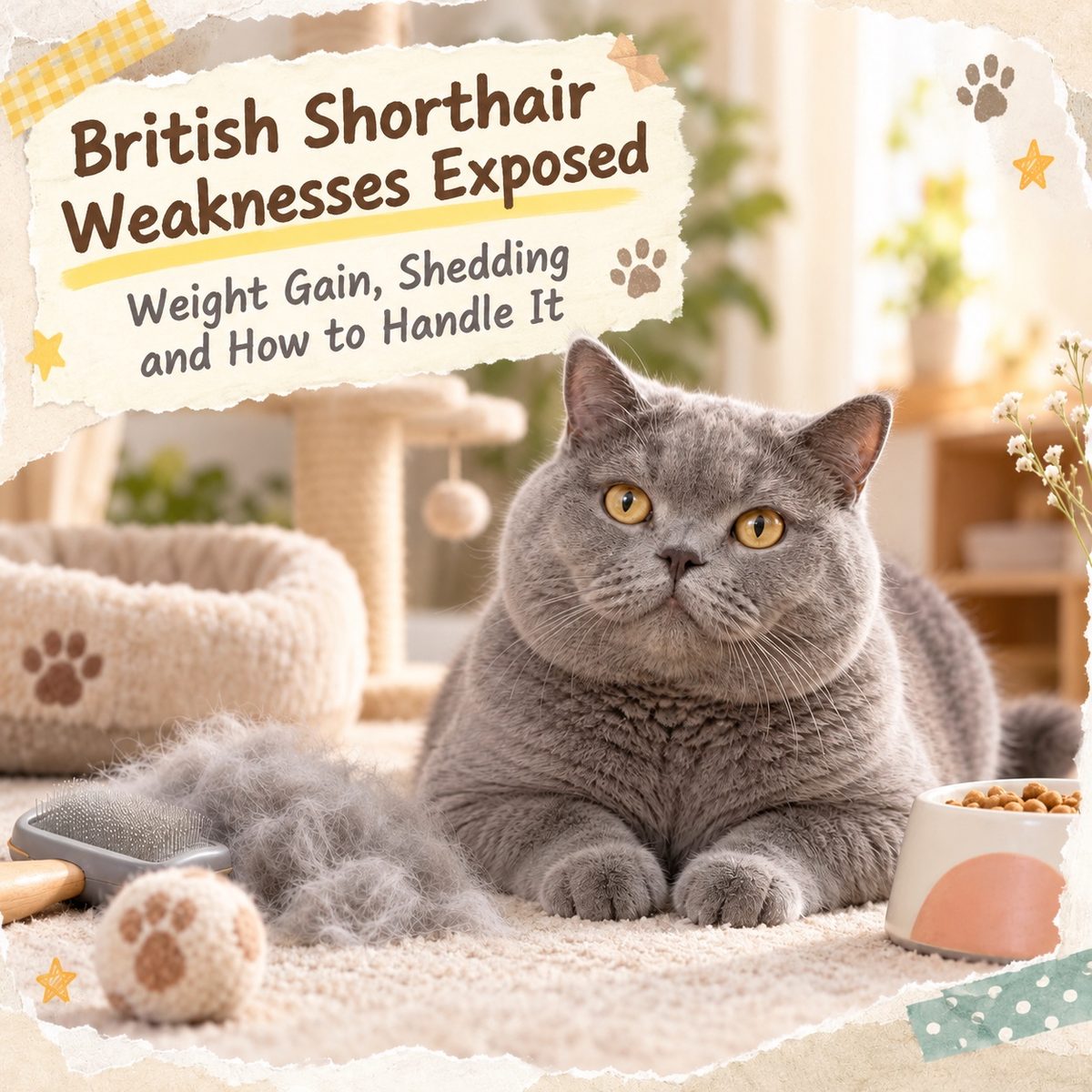
Quick answer: The main disadvantages of the British Shorthair are: easy weight gain, heavy shedding in coat-change seasons, an independent nature that dislikes being held, low activity levels, the need for genetic disease screening (PKD and heart), and long-term keeping costs. All of these have clear management methods. If you can accept them, the British Shorthair is a companion cat very well suited to small urban flats and office workers in Hong Kong; if you can't, knowing now is better than finding out after bringing the cat home.
Want to know the British Shorthair inside out? Start with the British Shorthair breed profile and the complete British Shorthair guide.
British Shorthair disadvantages at a glance: which are most common and how to respond
| Disadvantage | When most obvious | Immediate response | Related cost |
|---|---|---|---|
| Easy weight gain | Continues after adulthood; check every month | Scheduled, portioned feeding; no free-feeding; two daily play sessions; weigh once a month; if monthly gain exceeds 5%, reduce portions | Calorie-controlled formula (monthly food HK$300–600) |
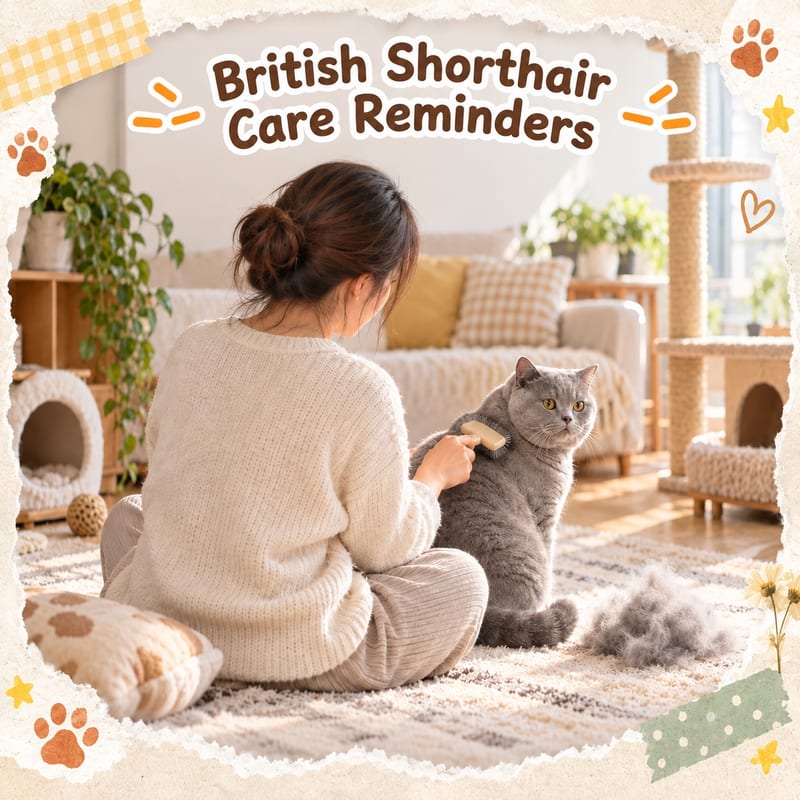
| Heavy shedding | Worst in spring and autumn coat-change seasons | Brush 2–3 times a week, more often in coat-change season, plus a vacuuming habit | Grooming tools one-off purchase |
| Dislikes being held | Any age | Accept the breed's nature; switch to ground-level interaction | No extra cost |
| Too quiet, easily overlooked | Daily | Check food intake, litter box visits, and alertness every day | No extra cost |
| Genetic disease screening (PKD/HCM) | Kidney ultrasound from age 2; blood and urine tests every six months from age 7 | Buy a cat with parents' screening certificates, then follow veterinarian's advice for regular checks | Annual check-up HK$1,000–1,800; medical reserve HK$250–500 per month |
| Keeping costs | All year | Make a budget sheet in advance; treat the medical reserve as a fixed expense | About HK$750–1,500 per month; medical reserve HK$3,000–6,000 per year |
Of the six, the ones that most affect daily life are easy weight gain, shedding, and dislike of being held—none require a large extra outlay, but they take time and adjusted expectations.
British Shorthair price and monthly costs (2026 Hong Kong market)
Buying the cat is only the entry fee; what really affects the decision is the monthly fixed expenses. The table below shows actual 2026 Hong Kong price ranges. Before paying a deposit, ask about each item clearly, especially the parents' health screening documents.
| Item | Range | Notes |
|---|---|---|
| Registered cattery | HK$12,000–20,000 | Pedigree certificate, parents' PKD/HCM screening records |
| Licensed pet shop | HK$8,000–15,000 | Coat colour depth and vaccination records affect price |
| Adoption | HK$0–2,000 | Most already neutered and vaccinated |
| Vaccines (first year, three doses) | HK$900–1,500 | Annual booster thereafter |
| Neutering | HK$1,500–3,500 | Cheaper for males, more expensive for females |
| Monthly food | HK$300–600 | Mainly calorie-controlled formula |
| Monthly cat litter | HK$120–250 | Clumping or tofu litter |
| Monthly deworming (shared) | HK$80–150 | Internal and external |
| Medical reserve (recommended) | HK$250–500 | Urinary and heart issues are more likely |
| Monthly total | About HK$750–1,500 | Excludes major medical costs |
The item Hong Kong owners most often underestimate is the medical reserve. British Shorthairs gain weight easily, and urinary issues and HCM are real concerns; one ultrasound plus blood test starts at HK$1,500, so saving HK$250–500 a month is a practical approach.
Annual total costs can be broken down for budgeting:
| Expense type | First year | Each subsequent year |
|---|---|---|
| Buying/adopting | HK$0–20,000 | HK$0 |
| Vaccines + deworming | HK$900–1,500 | HK$500–900 |
| Neutering | HK$1,500–3,500 | HK$0 |
| Food + litter | HK$5,000–10,000 | HK$5,000–10,000 |
| Annual check-up | HK$500–900 | HK$1,000–1,800 |
| Total | About HK$20,000–30,000 | About HK$10,000–16,000 |
Where to buy most safely: Registered catteries cost more but have parents' screening records, giving the lowest long-term medical risk; with licensed pet shops, assess the cat's alertness and eye/nose discharge on site; be especially wary of low-priced online ads, which may be crossbreeds passed off as purebreds or backyard breeding without health screening.
So 'can I afford one' should be judged by ongoing annual expenses, not just the purchase price.
Adoption vs buying: cost and risk comparison
In recent years the supply of British Shorthairs through adoption channels has been larger than expected, so it's worth checking adoption before considering a cattery:
| Route | Entry cost | Health risk | Suited to |
|---|---|---|---|
| Registered cattery | HK$12,000–20,000 | Lowest (parents' PKD/HCM screening) | Those who value pedigree and health records |
| Licensed pet shop | HK$8,000–15,000 | Medium (assess alertness and eyes/nose on site) | Those who want to buy immediately |
| Adoption | HK$0–2,000 | Medium (most already neutered and vaccinated) | Tight budget, want to rescue |
Adopted British Shorthairs are mostly already neutered and have basic vaccinations, which can save HK$2,000–5,000 in the long run. Whichever route, the most important thing is to obtain the vaccination card and parents' health records; be extra cautious with any cat lacking documents.
Three must-ask questions (for any route):
- Have the parents had PKD ultrasound and HCM heart checks?
- How many vaccine doses have been given, and when was the last one?
- Is there a microchip and an AFCD licence (for pet shops)?
What kind of person is suited to a British Shorthair? Owner types and self-check
The British Shorthair is independent, quiet, and low-energy, making it a popular choice for small flats and office workers in Hong Kong. But 'suited' is not universal; it depends on your lifestyle and expectations.
| Owner type | Suitability | Reason |
|---|---|---|
| Nine-to-nine office worker | Very suitable | Highly independent; tolerance for being alone is among the best of shorthairs |
| Work from home/semi-retired | Suitable | More companionship time, but they won't demand excessive attention |
| Someone who wants a clingy cat | Not recommended | The British Shorthair 'keeps you company without clinging'; most struggle when picked up |
| Families with children | Depends on age | Stable temperament but dislikes being held; teach children to handle gently |
| Renting a small flat/public housing | Suitable | Quiet, medium build, low risk of noise complaints |
| Households wanting two cats | Suitable | Friendly to their own kind; two can keep each other company |
| First-time cat owner | Suitable | Short hair easy to groom, stable temperament; a beginner-friendly breed |
Reverse self-check (three questions):
- Can you accept a cat that won't let you hold it, won't follow you around, and won't rush to the door?
- Are you willing to spend 15–20 minutes a day playing with it to burn calories?
- Can you feed scheduled, portioned meals and avoid free-feeding?
If you answer 'no' to two of the three, think carefully: the British Shorthair's 'disadvantages' will be especially obvious to you. Those who want a cat to cuddle in bed might consider a Ragdoll; those who want plenty of action could look at the American Shorthair.
British Shorthair health check schedule (by age)
The four things to watch most in the British Shorthair are weight, urinary system, kidneys (PKD), and heart (HCM). Regular checks are much cheaper than fixing problems after they occur.
| Age | Recommended items | Approximate cost |
|---|---|---|
| 2–4 months | First-year vaccines (three doses) + deworming | HK$900–1,500 |
| 6 months | Pre-neutering blood test + neutering | HK$2,000–4,000 |
| 1 year | Annual check-up + vaccine booster + weigh-in | HK$500–900 |
| 2–6 years | Annual check-up; kidney ultrasound for PKD from age 2 | HK$1,000–1,800 |
| 7 years and over | Every six months: blood test, urinalysis, heart auscultation | HK$1,200–2,000 per visit |
Three daily observations (free but must be done every day):
- Weight: weigh once a month; if monthly gain exceeds 5%, reduce portions immediately.
- Litter box: frequent trips to the litter box with small urine output is a sign of urinary problems; don't wait.
- Alertness: British Shorthairs are very quiet; if they suddenly become even less willing to move or hide, it usually means they are unwell.
Which veterinarian to choose: Pick a clinic familiar with feline medicine and register a medical record; the first meeting shouldn't wait until something goes wrong. British Shorthairs gain weight easily, so the veterinarian can also teach you to use body condition scoring (BCS) to judge fat versus lean, which is more accurate than weight alone.
The British Shorthair is a breed that is 'so quiet it masks symptoms', so 'no obvious symptoms' does not equal healthy; annual check-ups and monthly weighing are the cheapest insurance.
Three budget plans: thrifty, standard, and secure
The same British Shorthair can be kept three ways. The point is not which is 'right', but to choose in advance, so you don't discover a shortfall only when something goes wrong.
| Item | Thrifty | Standard | Secure |
|---|---|---|---|
| Food | HK$300/month (mainly dry food) | HK$450/month (dry and wet mixed) | HK$600/month (calorie-controlled complete food) |
| Cat litter | HK$120/month | HK$180/month | HK$250/month |
| Deworming | Shared HK$80/month | HK$100/month | HK$150/month |
| Grooming tools | Basic slicker brush one-off | Slicker brush + undercoat rake | Slicker brush + vacuum attachment |
| Medical reserve | HK$0 (rely on cash when needed) | HK$250/month | HK$500/month |
| Extras | — | Annual check-up | Six-monthly check-up + pet insurance |
| Monthly total | About HK$500 | About HK$980 | About HK$1,500 |
| Suited to | Tight budget, with cash reserve | Most households | Those wanting to avoid sudden large expenses |
Insurance vs self-funded reserve: Hong Kong pet insurance annual premiums are generally HK$1,500–4,000 (depending on age and coverage), with excess and caps. If you already have HK$20,000 or more in liquid cash, self-funding is usually more flexible; if not, insurance is a tool to spread sudden risk. You don't need both.
Money-saving tips: Grooming tools and calorie-controlled food are one-off or fixed expenses that are cheaper in the long run than emergency medical care; treating the monthly medical reserve as a 'fixed expense' rather than 'saving only if there's money left' is the consensus among most Hong Kong British Shorthair owners.
Four common misconceptions about the British Shorthair
Before deciding, clear up these four common misunderstandings:
| Misconception | Reality |
|---|---|
| British Shorthairs don't need exercise; just leave them at home | Low activity doesn't mean no activity; too little play easily leads to obesity, and two daily play sessions are the minimum |
| Shorthairs don't need brushing | The British Shorthair has a dense plush coat and sheds heavily in coat-change season; brush 2–3 times a week |
| British Shorthairs are very clingy and want to be held all the time | They are 'companion' type: sitting next to you is a sign of affection; most struggle when picked up |
| Roundness means good purebred quality | Overweight strains joints, urinary system, and heart; standard body condition is the health indicator |
If you can accept all four points, the British Shorthair basically has no 'hidden traps'.
In one sentence: most British Shorthair 'disadvantages' come from 'quietness' and 'easy weight gain'. Accept these two, and it is one of the companion cats best suited to small Hong Kong flats.
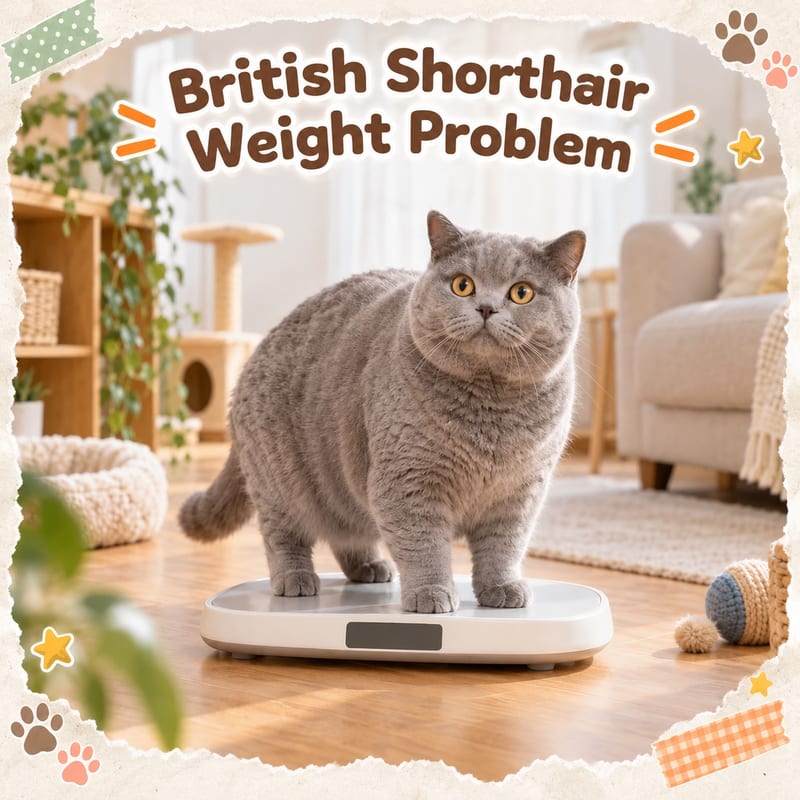
Disadvantage 1: Really prone to obesity
The British Shorthair has a sturdy frame, a naturally round shape, and a strong appetite, making it one of the breeds most recognised for easy overweight. Overweight is not 'cute'; it is a real burden on joints, the urinary system, and the heart, and losing weight is always harder than preventing gain. Management: scheduled, portioned feeding, no free-feeding, choose calorie-controlled formulas, play at set times daily, weigh once a month, and reduce portions as soon as weight rises. Breed information from the UK's Governing Council of the Cat Fancy (GCCF) and cat registries in many places lists 'prone to obesity' as a top item to note when keeping a British Shorthair; in obese cats, joint load and urinary risk rise together.
Disadvantage 2: More shedding than you'd think
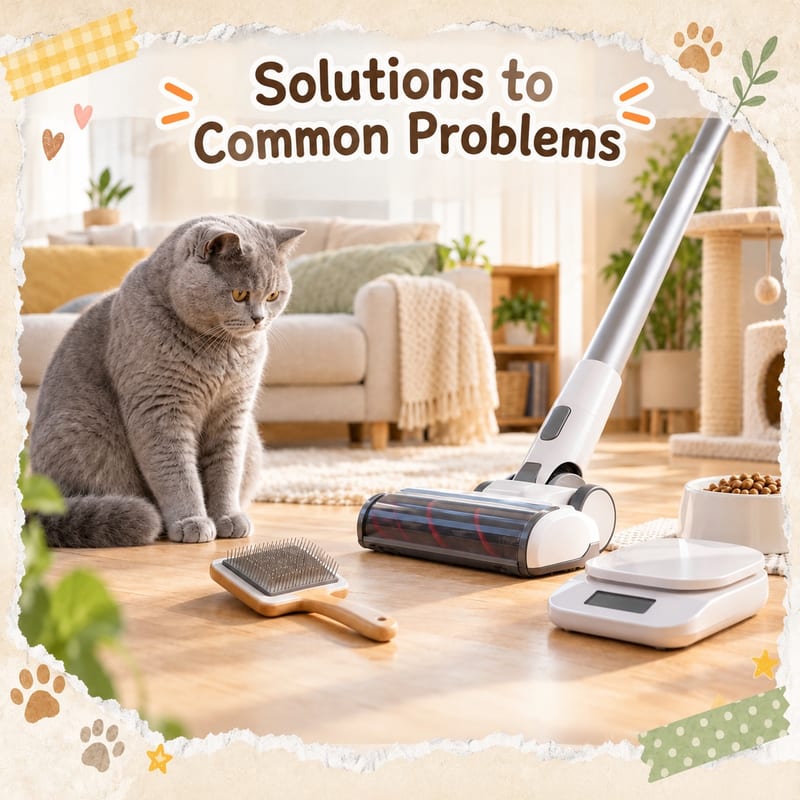
The hair is short but extremely dense, plush like a teddy bear; in coat-change season, one brushing can produce a small pile of fur. Management: brush two to three times a week, more often in coat-change season, and get into the habit of a daily pass with a vacuum cleaner. Also, don't keep all the windows shut for fear of the cat catching cold—install window screens and keep ventilation, which helps skin and mood; adding an appropriate amount of unsaturated fatty acids to the diet supports coat health.
Disadvantage 3: Doesn't like being held
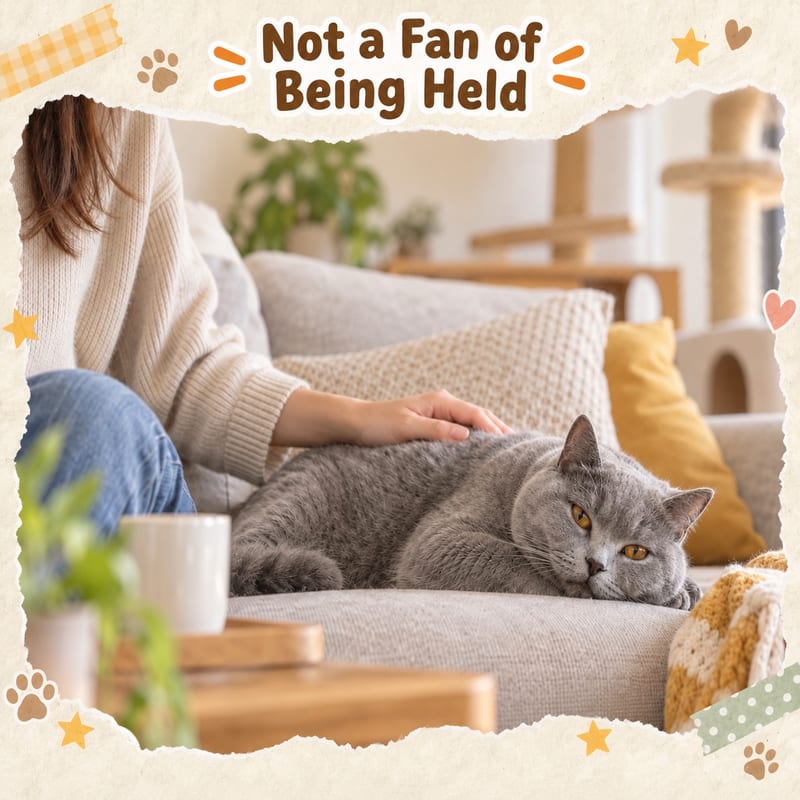
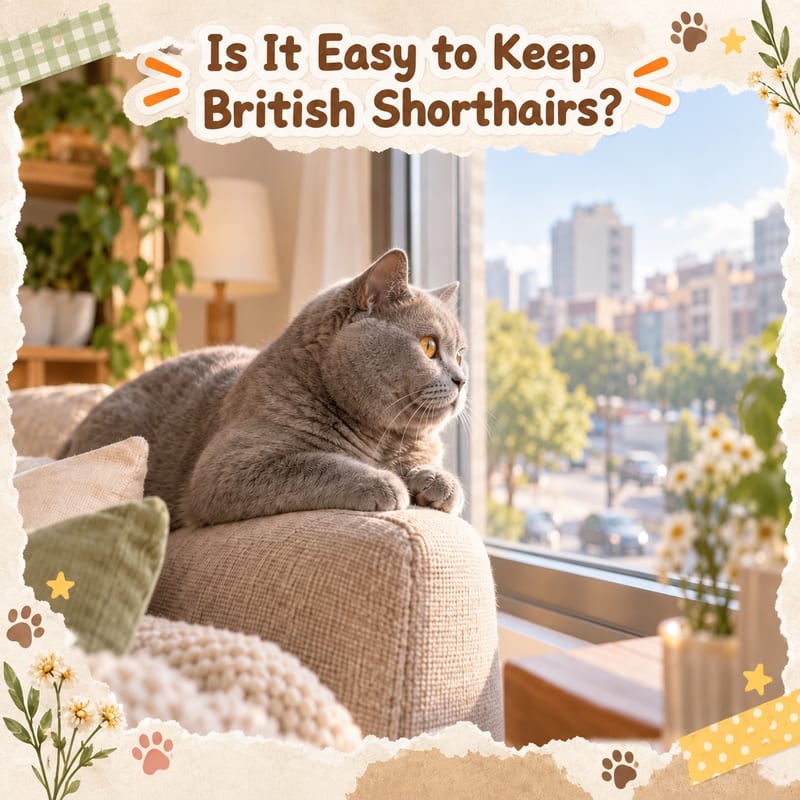
This is the point that hurts many beginners most: the British Shorthair is a 'companion' type, not a 'clingy' type. It likes to sit quietly on the sofa next to you, but most will struggle if you pick them up or put them on your shoulder. This is the breed's nature, not a lack of love—it expresses trust by 'sitting next to you', and this feline companionship is already the British Shorthair's highest form of affection. Those who want a cat to shower them with affection may need to reconsider their breed choice, or adjust expectations to a 'slow-burning' relationship.
Disadvantage 4: So quiet you sometimes check if it's still moving
British Shorthairs vocalise little, move little, and like to lie around; their daily quietness makes it easy to overlook their condition. The risk is that some discomforts (such as urinary problems or appetite changes) are easily masked by 'it's always this quiet'. Spend a few minutes each day checking food intake, litter box visits, and alertness: a sudden increase in drinking, frequent litter box visits with small urine output, or hesitation on the cat tree are all signals to see the veterinarian early; don't wait 'a couple more days' when something changes.
Disadvantage 5: Genetic diseases need screening
Breed health information from the University of California, Davis School of Veterinary Medicine (UC Davis) and CFA breed information generally remind owners that the British Shorthair needs attention for polycystic kidney disease (PKD) and hypertrophic cardiomyopathy (HCM), and urinary stones are also a common clinical topic. Reputable catteries provide parents' screening certificates; after adoption, regular urinalysis and ultrasound as advised by the veterinarian are also recommended—this is one expense not to skimp on.
Disadvantage 6: Keeping costs are not low
Besides food and litter, there are calorie-controlled food, grooming tools, annual screening, and a medical reserve. For a single cat in Hong Kong, extra management costs start at several hundred Hong Kong dollars a month, and an annual medical reserve of HK$3,000–6,000 is recommended. This is not scaremongering but a way to translate 'disadvantages' into a concrete budget—with a budget in hand, disadvantages become items on a to-do list rather than sudden crises.
British Shorthair vs American Shorthair: different disadvantages
Those searching for 'American Shorthair disadvantages' often put the two breeds head to head; a direct comparison: simply put, the British Shorthair wins on quietness and ease, the American Shorthair wins on liveliness and interaction; the shared 'disadvantages' are shedding and breed health concerns.
| Item | British Shorthair | American Shorthair |
|---|---|---|
| Activity level | Low, likes quiet | Medium-high, loves jumping and playing |
| Body tendency | Easy weight gain, sturdy | Lean, muscular |
| Interaction needs | Independent, dislikes being held | Affectionate, actively seeks attention, finds things to do if ignored |
| Shedding | Dense plush coat, heavy in coat-change season | Also sheds but coat lies closer, visually less dramatic |
| Health concerns | PKD, HCM, urinary stones | Generally hardy, but HCM also to watch |
Summary table of responses to disadvantages
| Disadvantage | Response | Cost direction |
|---|---|---|
| Easy weight gain | Portioned feeding, no free-feeding, daily play, monthly weighing | Calorie-controlled cat food |
| Heavy shedding | Brush 2–3 times a week + vacuuming habit | Grooming tools one-off |
| Dislikes being held | Accept breed nature; use ground-level interaction instead | Free |
| Too quiet, easily overlooked | Daily observation of food intake, litter box, and alertness | Free |
| Genetic disease risk | Buy a cat with screening certificates + regular checks | Annual medical budget |
| Keeping costs | Make a budget sheet in advance | Monthly fixed expenses |
So is the British Shorthair easy to keep?
Frankly: it is 'easy to care for' and 'easy to get along with' are two different things. On the care side—short hair, stable, few illnesses, little noise, no walks needed—it is easy; on the relationship side—if you want a cat that clings to you and interacts intensely, it may not suit you. If what you want is a quiet cat with its own world, sitting by the window to keep you company after work, the British Shorthair's so-called disadvantages all become advantages. Conversely, if you expect a cat to rush to the door, burrow into your arms, and follow you around, be prepared: you may be buying a roommate, not a sidekick.
Frequently asked questions
Q: Is the British Shorthair easy to keep? A: Overall, yes: short hair is easy to groom, the temperament is stable, and they are not noisy. The main challenges are easy weight gain and low activity; scheduled, portioned feeding plus daily play manages them well.
Q: What is the most common disadvantage of the British Shorthair? A: Easy weight gain, heavy shedding, dislike of being held, low activity, and the need for genetic disease screening (PKD, HCM). Each has a management method; the key is knowing the challenges before getting one.
Q: Is shedding severe in the British Shorthair? A: The coat is dense, so shedding is heavier than in typical shorthairs, especially in spring and autumn. Brushing two to three times a week keeps it at an acceptable level.
Q: Are British Shorthairs lazy? A: They are naturally quiet; free-feeding easily leads to overweight, which in turn causes joint, urinary, and heart problems. Portion control plus two daily play sessions is the minimum.
Q: British Shorthair or American Shorthair? A: For quiet independence, choose the British Shorthair; for lively interaction, choose the American Shorthair. The American Shorthair is equally hardy but loves jumping high; choose according to your lifestyle and available time—neither is difficult to keep.
Q: What is the monthly management cost of keeping a British Shorthair? A: Beyond regular food and litter, budget for grooming tools, calorie-controlled food, and annual screening; a medical reserve of a few hundred Hong Kong dollars per month is recommended.
Q: Are the disadvantages of a blue British Shorthair different from other colours? A: No. Easy weight gain, shedding, dislike of being held, low activity, and the need for PKD and HCM screening are all breed issues, unrelated to coat colour.
Q: Is 'Ying Short' the same as British Shorthair? A: Yes. 'Ying Short' is the common Hong Kong abbreviation, and the English name is the same, British Shorthair; it is the same breed, and the disadvantages discussed in this article apply to both.
Key takeaways
- ✅ Six main disadvantages of the British Shorthair: easy weight gain, shedding, dislike of being held, too quiet, genetic disease screening, and cost.
- ✅ Easy weight gain is the number one issue: portioned feeding + daily play + monthly weighing, none can be skipped.
- ✅ Dislike of being held is breed nature; don't take it personally—build the relationship through ground-level interaction.
- ✅ Being too quiet can mask symptoms; daily observation of food intake and litter box is free insurance.
- ✅ Before buying, check PKD and heart screening certificates; after adoption, follow the veterinarian's advice for regular urinalysis and ultrasound checks.
- ✅ Compared with the American Shorthair: the British is quiet, the American is active; neither is better or worse—choosing the one that fits your lifestyle is the right cat for you.
Related articles
- British Shorthair personality and intelligence
- British Shorthair lifespan and longevity guide
- British Shorthair weight growth chart
- British Shorthair price and adoption guide
- British Shorthair Hong Kong keeping guide: small flats and hot humid weather
- British Shorthair colours explained: golden shaded, blue-and-white, and Hong Kong prices
- Practical help for shedding and obesity: visit PetChill pet supplies to choose slicker brushes, timed treat-dispensing toys, and weight-management cat food, turning the responses in this article into low-cost physical items.
This article is generally based on breed consensus; individual cats vary widely. For health issues, consult a registered veterinarian.
Further reading
- 7 real challenges every Hong Kong owner must read and how to respond →
- Hong Kong owners must read: 7 hidden problems of the Chihuahua →
- Before keeping a Corgi in Hong Kong: 8 realities + zero-cost house rules →
- Comparison of 12 cat breeds' personality and price →
- Common diseases, preventive care, and veterinarian information →
- Do cats hold grudges? →
- Cat trust signals →
- Complete guide to cat microchipping →
- Cat ringworm →



