
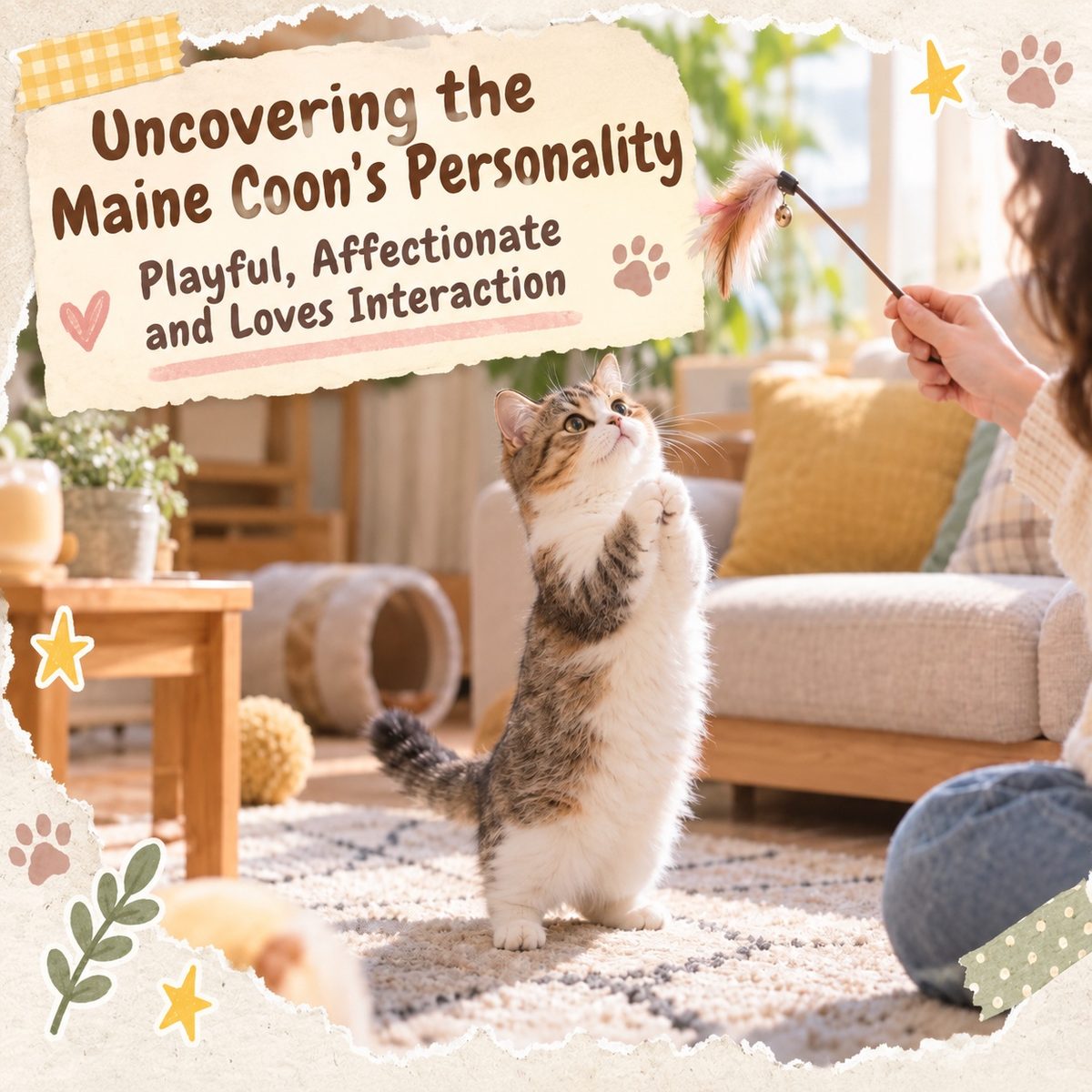
Quick answer: The one-sentence summary of a Munchkin cat's personality is 'cat version of a dachshund': lively and outgoing, people-oriented and home-loving, loves to join in the fun, full of humour—likes to stand up on hind legs to 'beg' for things, and knows how to use speed and brains to make up for jumping ability. High tolerance for children and other pets, a social breed; only one thing to note: lifelong playfulness, daily interaction cannot be skipped.
Want to know Munchkin cats comprehensively? First see the Munchkin breed profile and the Munchkin complete guide.
What is a Munchkin cat? Key points in 30 seconds
The Munchkin (also called Munchkin or short-legged cat) is a breed with short limbs due to a natural genetic mutation, officially recognised by TICA in the 1990s. Short legs do not affect running speed or overall lifespan; the personality is outgoing and people-oriented, playful for life, and it is one of the fastest-rising breeds in popularity in Hong Kong in recent years. The table below shows the specifications most commonly checked by Hong Kong owners, and each item is explained further below.
| Item | Munchkin cat |
|---|---|
| Origin | Louisiana, USA (systematic records from 1983) |
| Average lifespan | 12–15 years |
| Weight | Male 3.5–4.5 kg / Female 2.5–3.5 kg |
| Leg length | About half to two-thirds of a standard cat |
| Coat | Short hair / long hair, moderate shedding |
| Vocalisation | Moderate, short calls when seeking attention |
| Tolerance of being alone | Medium-low (high social needs) |
| Hong Kong price | About HK$15,000–35,000 |
| Monthly basic expenses | About HK$800–1,500 |
Three essential basics:
- Short legs are not a disease — Cats' spinal load-bearing structure differs from dogs; Munchkins do not directly develop dachshund-style intervertebral disc problems due to short legs; what really needs managing is weight.
- Cannot jump high does not mean no exercise — They run fast, turn agilely, have amazing short-distance explosive power, and daily exercise needs are the same as ordinary domestic cats.
- The comedian comes at a cost — Lifelong playfulness means daily interaction time is a mandatory expense; families without time to accompany should consider carefully.
Munchkin cat price and monthly expenses (2026 Hong Kong market)
Hong Kong's Munchkin supply is smaller than that of ordinary breeds, prices are firm and fluctuate greatly. Below are actual market ranges; ask clearly about each item before paying a deposit:
| Item | Range | Remarks |
|---|---|---|
| Registered cattery | HK$18,000–35,000 | Higher for those with complete short-leg gene testing and parental screening |
| Licensed pet shop | HK$15,000–28,000 | Coat colour (pointed, bicolour) affects pricing |
| Adoption | HK$0–2,000 | Purebred rare, short-legged domestic cats occasionally appear |
| Vaccines (first year, three doses) | HK$900–1,500 | Annual booster thereafter |
| Neutering | HK$1,500–3,500 | Cheaper for males, more expensive for females |
| Monthly food | HK$350–700 | Weight control is the top priority; measured feeding recommended |
| Monthly cat litter | HK$120–250 | Choose a low-sided litter box for easy access |
| Monthly deworming (shared) | HK$80–150 | Internal and external |
| Medical reserve (recommended) | HK$200–500 | Annual joint and spine check amortised |
| Monthly total | About HK$800–1,500 | Excluding major medical care |
The most underestimated cost for Munchkins is weight management. Short legs make even one extra pound more obvious, and obesity directly increases the burden on the lumbar spine and joints; a measuring cup, complete wet food and two daily floor-level play sessions are the cheapest 'orthopaedic insurance'.
What kind of person is a Munchkin cat suitable for?
The personality threshold for a Munchkin is low, but the time threshold is high. Use the table below to compare with your lifestyle:
| Owner type | Suitability | Reason |
|---|---|---|
| Families with children | Suitable | High tolerance, but must teach holding posture (support bottom and hind legs) |
| Multi-pet households | Suitable | Social, but manage food/water positions and high-place allocation |
| First-time cat owner | Suitable | Emotions easy to read, good training response, gentle learning curve |
| Single, working 9 to 9 | Not recommended | Lifelong playfulness + high social needs; long periods alone can cause problems |
| Multi-storey duplex | Needs assessment | Stairs put pressure on short-legged joints; add ramps or restrict floors |
Reverse self-check (three questions):
- Can you spare two sessions of ten to fifteen minutes each day to play with it?
- Are you willing to modify cat trees and window platforms into low-level versions?
- Can you accept a cat that still chases you for play every day at seven or eight years old?
If you cannot answer 'yes' to two of the three, the Munchkin's comedian halo will become a burden for you; consider an independent breed like the British Shorthair instead.
Munchkin cat compared with other breeds
Choosing a breed is not about choosing 'the best', but 'the best fit'. Below are four common breeds side by side with the Munchkin, so you can see its position at a glance:
| Breed | Activity level | Affection level | Monthly basic expenses | Suitable for beginners |
|---|---|---|---|---|
| Munchkin | Medium-high (floor-level) | High | HK$800–1,500 | Yes |
| British Shorthair | Low | Medium | HK$600–1,200 | Yes |
| American Shorthair | Medium | Medium | HK$600–1,200 | Yes |
| Ragdoll | Low | High | HK$900–1,600 | Yes (long hair grooming) |
| Siamese | High | Very high | HK$800–1,500 | Only if you have time |
In one sentence: for quiet, low maintenance choose a British Shorthair; for interaction and entertainment choose a Munchkin; the Munchkin's uniqueness has no substitute, but the time commitment cannot be saved either.
Munchkin cat health check schedule: when to test what
The three things to watch most in Munchkins are spine, joints and weight. Regular checks are much cheaper than remedial treatment after problems arise:
| Age | Recommended items | Approximate cost |
|---|---|---|
| 2–4 months | First-year vaccines (three doses) + deworming | HK$900–1,500 |
| 6 months | Pre-neutering blood test + neutering | HK$2,000–4,000 |
| 1 year | Annual check-up + vaccine booster + body condition assessment | HK$600–1,000 |
| 2–6 years | Annual check-up; palpation of spine and limb joints | HK$800–1,500 |
| 7 years and above | Every six months: blood test, X-ray (spine) as needed | HK$1,200–2,500 per visit |
Orthopaedic problems in short-legged cats often show no obvious symptoms in the early stages, so the purpose of checks is not to 'test for disease' but to establish a baseline—the first X-ray kept on file allows comparison later.
Three daily observation points (free but must be checked daily):
- Getting up: slower to rise, unwilling to jump onto low cabinets they used to jump on—signals of joint or lumbar spine issues.
- Weight: weigh monthly; if a male exceeds 4.5 kg or a female exceeds 3.5 kg, review feeding amounts.
- Running posture: sudden change in the outward swing of the hind legs when running—worth filming a clip for the veterinarian.
Three budget plans: thrifty, standard, secure
The same Munchkin can be kept in three ways. The point is not which is 'right', but to choose in advance so you do not discover a shortfall after a problem occurs:
| Item | Thrifty | Standard | Secure |
|---|---|---|---|
| Food | HK$350/month (measured dry food) | HK$500/month (dry and wet mixed) | HK$700/month (mainly complete wet food) |
| Cat litter | HK$120/month | HK$180/month | HK$250/month |
| Deworming | Shared HK$80/month | HK$100/month | HK$150/month |
| Medical reserve | HK$0 (rely on immediate cash) | HK$200/month | HK$500/month |
| Extras | — | Annual check-up | Half-yearly check-up + pet insurance |
| Monthly total | About HK$550 | About HK$980 | About HK$1,600 |
| Suitable for | Tight budget, with cash reserve | Most families | Want to avoid sudden large expenses |
Insurance vs self-funded reserve: Hong Kong pet insurance annual premiums generally range from HK$1,500–4,000. If you have more than HK$20,000 in liquid cash, saving yourself is usually more flexible; if not, insurance is a tool to spread sudden risks. Before insuring, ask clearly about the terms defining congenital and hereditary conditions.
Also remember: these three plans can be mixed. For example, 'standard' plus a low-coverage insurance is the actual landing point for many Hong Kong families—the key is to calculate monthly expenses before getting the cat, not to think about it afterwards.
Four most common Munchkin misconceptions
Before deciding, clear away these four common misunderstandings:
| Misconception | Reality |
|---|---|
| Short-legged cats must have spinal disease | Cats' spinal structure differs from dogs; the incidence of intervertebral disc problems in Munchkins is far lower than in dachshunds; weight control is key |
| Short legs mean no exercise needed | Activity needs are the same as ordinary domestic cats; only the play style needs to be floor-level, not that play is unnecessary |
| Munchkins are 'disabled cats' | The genetic mutation only affects the long bones of the limbs, not internal organs, intelligence or lifespan |
| Short-legged cats cannot jump onto anything | They can jump onto low cabinets and sofas, and even know to push stools to climb higher—hard to guard against |
After reading the five sections above, you should already be able to answer 80% of the question 'Is a Munchkin right for me?'. The remaining 20% is broken down item by item in the personality section below.
1. Five core traits: how the comedian is made
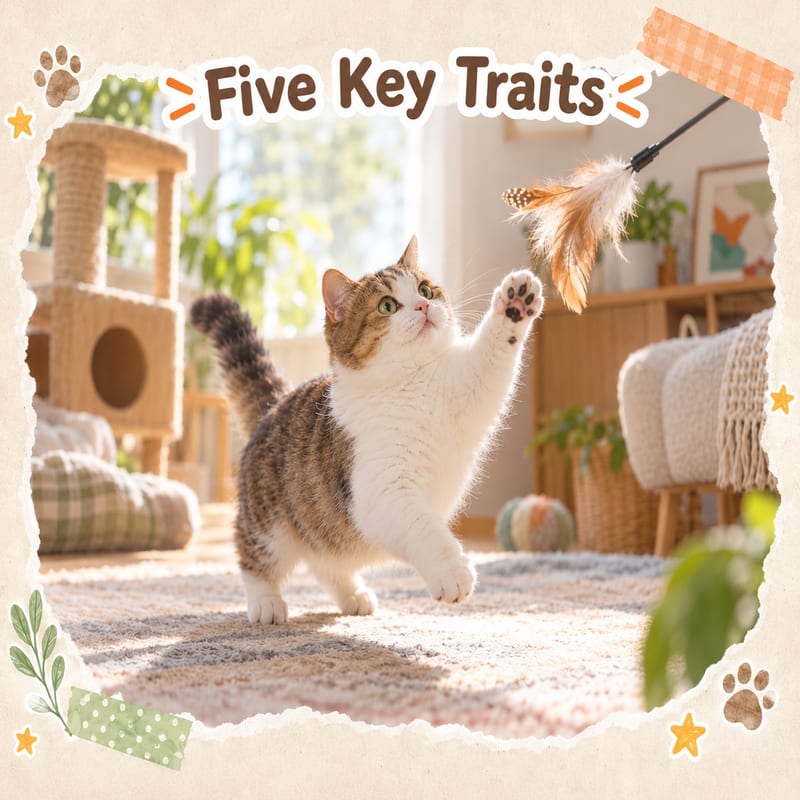
The Munchkin's personality reputation is 'zero complaints' among all breeds, and the core traits can be summarised in five points. First, outgoing and people-oriented: follows the owner everywhere, trusting of guests; many owners describe it as 'more like a dog than a cat'. Second, lifelong playfulness: most breeds calm down after three years, but Munchkins generally remain enthusiastic until seven or eight. Third, problem-solving intelligence: cannot jump high? They find alternative routes—pushing stools, pawing doors, using objects to launch; puzzle feeders do not last a night in their paws. Fourth, humour gene: the signature 'begging' stance and 'kangaroo-style' sit (hind legs extended, supported by tail) are evergreen social media material. Fifth, honest body language: purrs when happy, short calls when unhappy; emotions are easier to read—a major advantage for beginners, as both illness and stress signals are detected earlier.
| Trait | Daily behaviour | Owner response |
|---|---|---|
| Outgoing and people-oriented | Follows you, seeks being held, walks on the keyboard | Fixed daily companionship time; avoid long periods alone |
| Lifelong playfulness | Still chases wand toys at seven or eight | Schedule two floor-level play sessions; prevent obesity and boredom |
| Problem-solving | Opens doors, cabinets, finds alternative routes to climb | Keep valuables in cabinets; dangerous items (medication, wires) stored away |
| Humorous postures | 'Begging' for things, 'kangaroo' sit | Enjoy but remember: prolonged standing strains the lumbar spine; control frequency |
| Honest emotions | Calls, purrs, avoidance are all obvious | Establish a 'normal baseline'; deviations are signals |
2. Intelligence: smart at 'figuring out', not 'obeying'
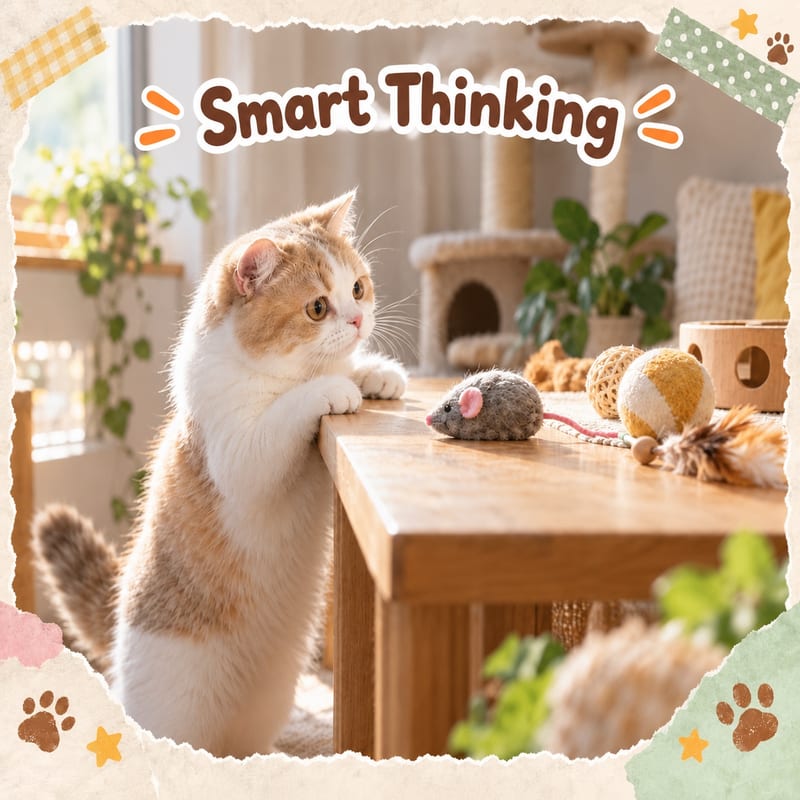
Cat cognition research (e.g., the cat social cognition study published by Oregon State University in 2019) supports an observation: cat intelligence has multiple dimensions, and obeying commands has never been a feline strength. The Munchkin's intelligence spectrum is concentrated in instrumental problem-solving and social referencing: they observe where the owner keeps treats, who opens the cans, when the door is unlocked; they use combinations of 'pawing, pushing, jumping to reach the lock' to achieve goals; some individuals can distinguish their own name from ordinary speech. Countermeasures: positive training (treat immediately upon completing an action) is highly efficient; scolding and finger-flicking directly destroy trust—this breed is proud but non-aggressive, and its reaction to being scolded is to sulk and avoid you.
3. Getting along with children, cats and dogs: two things to note
With children: The Munchkin's tolerance for children is generally rated highly in breed communities; 'even when its tail is pulled, it just walks away' is a common owner description. But two premises cannot be omitted: adults must teach gentle contact (no tail pulling, no leg pulling, no disturbing during sleep), and be aware of a risk specific to short-legged cats—children's 'pick up and put down' actions are unfriendly to the joints of short-legged individuals; the holding posture must support the bottom and hind legs firmly. With other pets: due to their social nature, they generally get along well with cats and dogs; note two points—food and water should be at ground level within their reach, so long-legged roommates do not monopolise high places; introduce new and old pets with gradual isolation—short-legged cats are slower at escaping conflict, so initial routes should be designed so they can run faster than the conflict (multiple escape routes, low hiding spots).
4. Male-female differences and the impact of neutering
To put it safely in clinical consensus: individual overlap is far greater than sex differences. General observations: females are more attentive and strong-willed, figuring out how to get attention themselves; males are more overt, directly seeking to be held and played with. These tendencies narrow significantly after neutering—once hormone-driven calling, spraying and roaming urges disappear, the breed's personality foundation truly emerges. So when choosing a cat, on-site interaction (whether it is friendly, whether it fears new environments) is far more reliable than sex. Another breed trait to know: after neutering, the Munchkin's metabolism drops, and it gains weight faster than ordinary breeds—the personality reward remains, but weight prevention homework intensifies from the day of neutering.
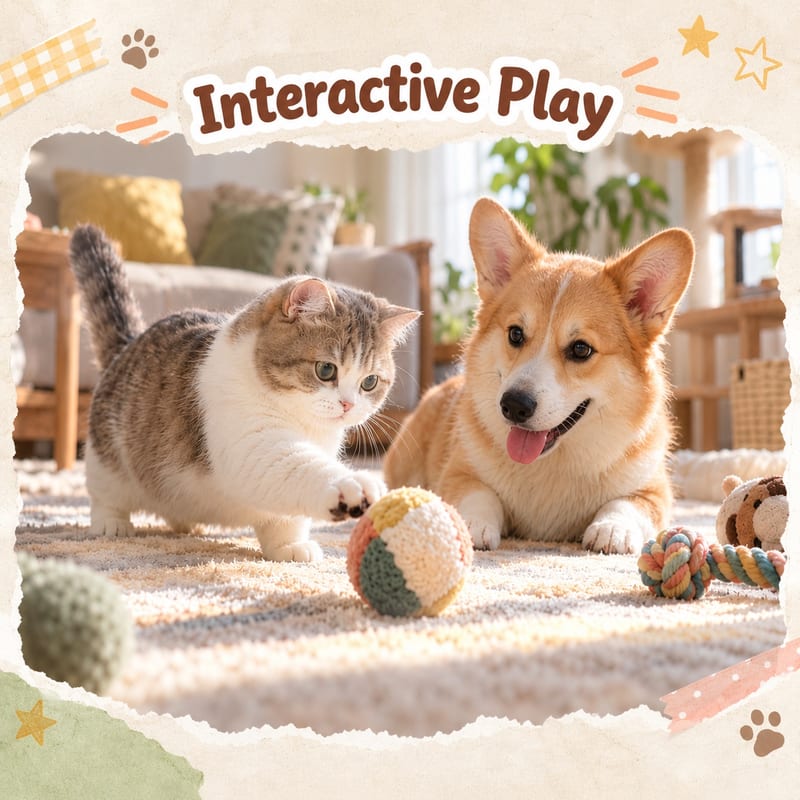
5. Daily interaction suggestions: three floor-level games
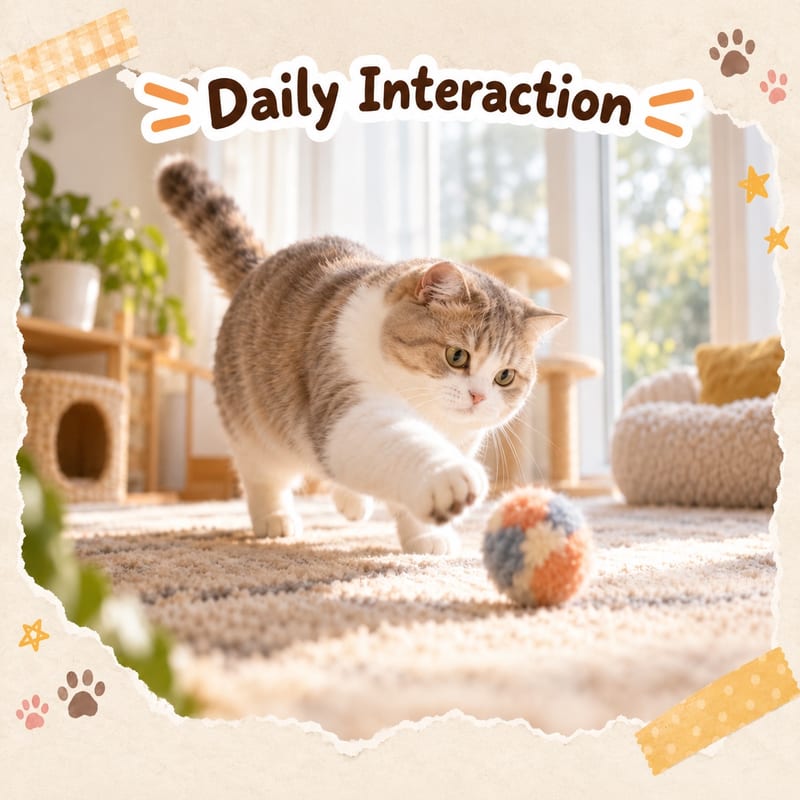
Short legs do not mean no exercise needs—the Munchkin's activity requirements are the same as ordinary domestic cats, only the play style needs to change. Three recommended: floor-level chasing (drag a wand toy along the ground, simulating prey movement; their short-distance acceleration is astonishing); puzzle feeders and poker-box mazes (satisfy the 'figuring out' mental need; mental drain also helps weight control); tunnels and low-level hide-and-seek (place treats under low cabinets and let them discover). Schedule: two sessions daily, ten to fifteen minutes each, one in the morning to burn energy, one at dusk; after the pre-sleep play session, feed the main meal, following the natural 'hunt—eat—groom—sleep' cycle. Play to avoid: holding toys high to make them jump—every forced jump counts against the joints. Besides games, this breed has two 'interaction bonuses' worth developing: first, name-response training—they have strong social cognition; call the name, they look, look means treat; generally established within two weeks, and this reflex can be used directly to stabilise emotions at the clinic; second, nail and palpation desensitisation—when they are playing to the fullest and lying soft, casually touch the paws, press the joints, flip the ears and check the teeth, pairing each with a treat, linking 'being handled' with good things; the Munchkin's annual orthopaedic check requires touching all four limbs and the spine; desensitised young, they will not need to be held down for every check as adults, saving half the effort for both owner and veterinarian.
Key summary
- ✅ Five traits: outgoing and people-oriented, lifelong playfulness, problem-solving intelligence, humorous postures, honest and readable emotions.
- ✅ Smart at 'figuring out', not 'obeying'; positive training is highly efficient, scolding directly destroys trust.
- ✅ First-tier performance in getting along with children and pets; note holding posture and high-place resource allocation.
- ✅ Male-female differences are smaller than individual differences; the breed foundation emerges after neutering.
- ✅ Two daily floor-level games instead of jumping high; mental exercise also helps weight control.
- ✅ Honest emotions are a hidden benefit: illness and stress signals are detected earlier.
Related reading
- Disadvantages of keeping a Munchkin cat and how to cope
- Munchkin cat lifespan and health risks
- Munchkin cat Hong Kong keeping guide
- Puzzle feeders, cat tunnels and wand toys: shop at PetChill pet supplies.
The behavioural descriptions in this article are general breed observations; individual differences are large; for persistent anxiety or aggression, consult a registered veterinarian or cat behaviourist.



