
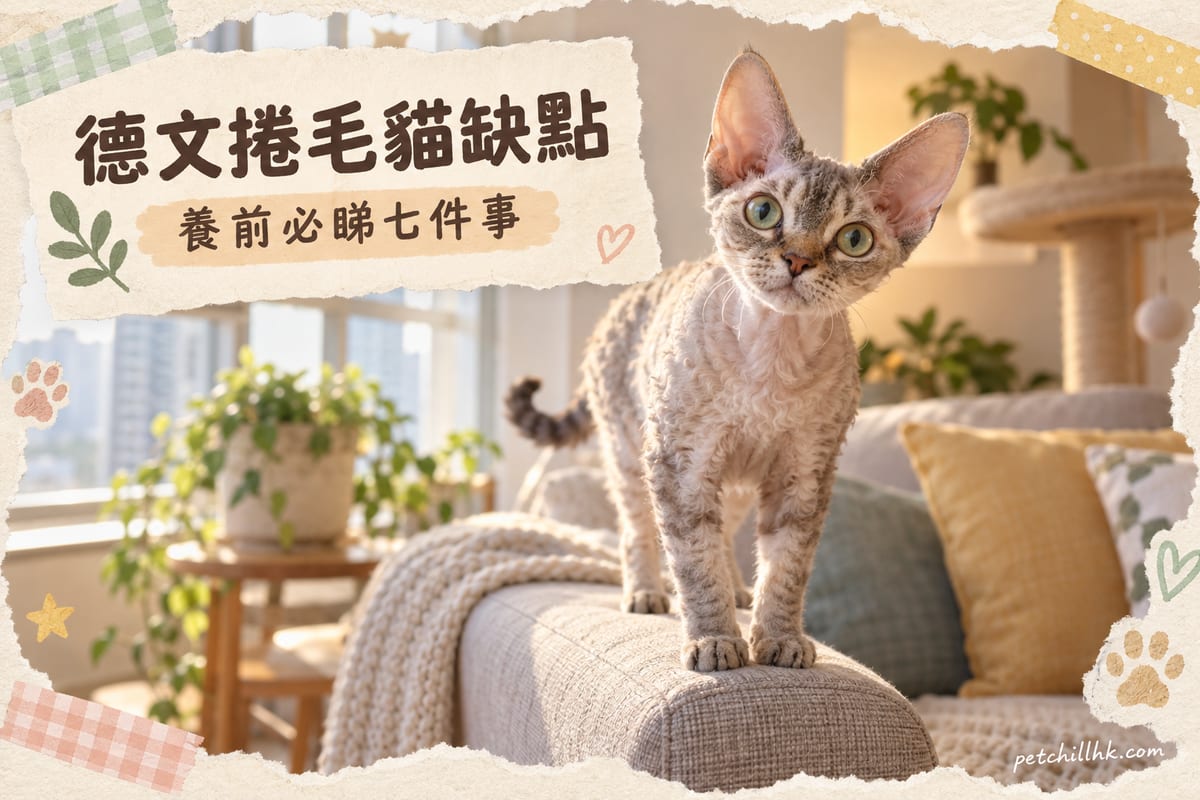
Quick answer: The seven major downsides of the Devon Rex (Devon cat): oily skin requiring regular bathing, large ears prone to wax buildup needing frequent cleaning, fragile curls that cannot be over-brushed, sensitivity to cold, extreme clinginess leading to separation anxiety, greediness and easy weight gain, and risk of hereditary diseases, plus a relatively high purchase price. Each has a solution (see the breakdown below). If you can accept this 'high-care plus high-companionship' lifestyle, it is the most affectionate companion cat.
Want to know more about the Devon Rex? Continue reading the series below.
1. Overview of downsides: which affects life most
| Downside | Severity | Root cause | Response | Cost direction |
|---|---|---|---|---|
| Oily skin, body odour | High | Short sparse coat, sebum not absorbed by fur | Bathe every 2–4 weeks + daily wiping | Low to medium (mainly time) |
| Lots of earwax, prone to ear infections | High | Large ears, moisture accumulates in ear canal | Weekly ear cleaning + keep dry | Cleaning solution, occasional vet fees |
| Fragile curls, easily broken or bald | Medium | KRT71 gene causes abnormal hair shaft structure | Gentle stroking with hands, no over-brushing | Low (mainly habit) |
| Sensitive to cold | Medium-high | Thin coat, poor insulation | Warm mat, blanket, raise air-conditioning temperature | $100–$300 per month |
| Extremely clingy, separation anxiety | Medium-high | Companion-type genetic makeup | Consistent companionship, consider a companion cat | Mainly time |
| Greedy, easy weight gain | Medium | High metabolism, good appetite | Scheduled and measured feeding, weekly weighing | Low |
| Hereditary disease risk | Medium | HCM, muscle disease, etc. | Regular screening from age three | $600–$1,500 per year |
| Relatively high price | Medium | Limited breed supply, screening costs | Verify channels and documents | One-time |
Of these eight, the first two (oil and earwax) are daily issues almost every Devon Rex will encounter; cold sensitivity and clinginess are major factors affecting quality of life; hereditary risk is the one that most needs verification beforehand. Below we break down the causes and responses for each — treat it as a self-assessment checklist. If you can't tolerate three or more, it's time to reconsider.
2. Oily skin: not like an ordinary short-haired cat
This is the biggest grooming misconception about the Devon Rex. Ordinary domestic cats' sebum is absorbed and dispersed by the coat; the Devon Rex has a short, sparse coat with no such buffer, so oil accumulates directly on the skin surface, feeling slightly sticky to the touch. If left untreated for a week or two, it builds up into a pale yellow greasy film, and can stain the ears and neck of lighter-coloured individuals, followed by skin problems and odour. Response: Bathe every 2–4 weeks with a mild, fragrance-free shampoo; in between, wipe the body with pet wipes to absorb oil; always dry thoroughly after bathing. Time cost is the real issue — cats that establish a bathing routine from a young age cooperate much better.
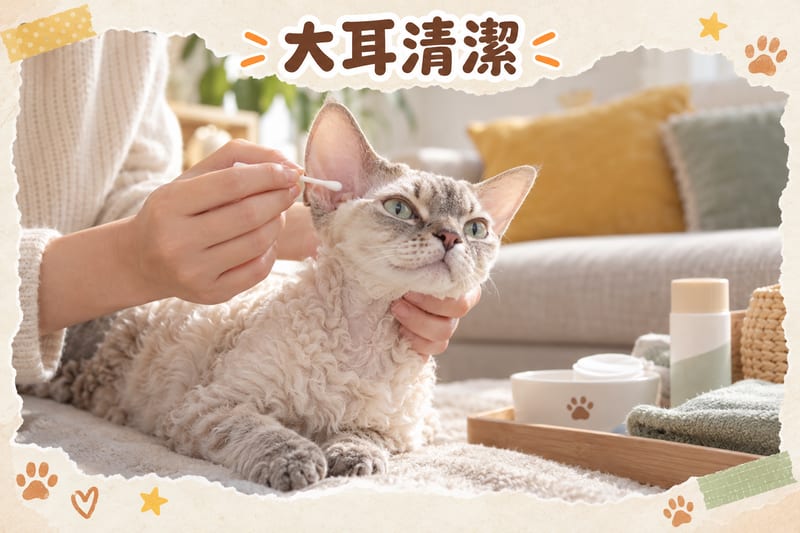
3. Large ears with lots of wax: ear cleaning is essential
The Devon Rex has large, open ears and produces more earwax than average cats. Hong Kong's humidity makes the ear canal damp faster, making yeast or bacterial infections more likely. Response: Clean once a week with a pet ear cleaning solution; avoid water entering the ears during bathing and keep the ear canal dry; if you see head shaking, ear scratching, odour, or red swelling of the ear flap, see a veterinarian immediately. This is one of the most common minor ailments in this breed and a major source of medical expenses.
4. Fragile curls: do not over-brush
Many people think curly cats need frequent combing, but the opposite is true. Research shows that the Devon Rex's curls come from a KRT71 gene mutation, causing abnormal hair shaft structure that breaks easily; over-brushing will straighten the curls or even cause bald patches. Response: Gently stroking with fingers or a rubber grooming glove is enough, at most once a week; do not use a stiff-bristle brush, do not comb daily; treat mats locally first, do not pull hard. For good looks, rely on bathing and care, not brushing. Remember: not brushing doesn't mean no grooming — it means shifting the focus from brushing to washing and wiping.
5. Sensitive to cold: keep warm in Hong Kong winters
The Devon Rex feels warm to the touch, but that's an illusion because they can't dissipate heat: their coat is thin and they lack a thick fat layer, so they lose heat faster than ordinary cats. Hong Kong winters are damp and cold, and kittens and senior cats are more susceptible. Response: Prepare warm mats, blankets, and a few warm cat clothes; raise the air-conditioning temperature or avoid placing beds in draughts; dry immediately after bathing. In summer, don't overdo the air-conditioning either — they feel the cold more than you do.
6. Clingy to the extreme: the number one reason for surrender
When rescue organisations take back Devon Rex cats, the surrender reasons are highly consistent: 'too clingy, can't stand it.' They knock on the door when you go to the toilet, sit on your keyboard during meetings, and burrow under the covers when you sleep. This is not a training issue but breed nature — they are highly dependent on humans and behave like dogs. Response: Schedule high-quality companionship daily, play for fifteen minutes before leaving to burn energy, and seriously consider keeping two. For long-working-hour families, a companion cat is the most effective vaccine against separation anxiety.
7. Greedy and prone to weight gain, plus hereditary risks
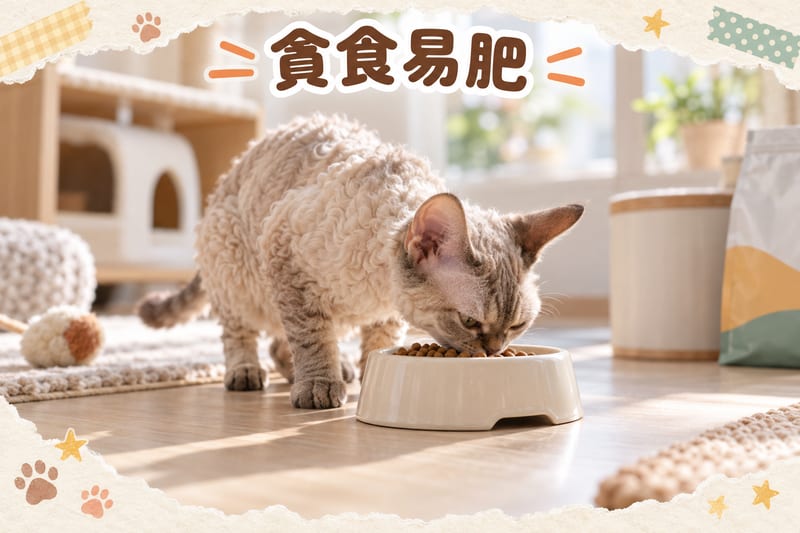
The Devon Rex has a high metabolism and good appetite; eating a lot is normal, but without control they easily become overweight, increasing strain on joints and the cardiovascular system. Response: Scheduled and measured feeding, use a measuring cup rather than pouring freely, count treats in daily calories, weigh once a week. Hereditarily, hypertrophic cardiomyopathy (HCM) is a line to take seriously in this breed, and there are also reports of breed-related muscle disease and skin problems; it is advisable to ask about the parents' screening records before getting a kitten, and to have regular heart checks from age three.
In addition, regarding skin, besides oil and ear canals, there are reports of conditions such as pigmentary urticaria; orthopaedically, there are breed reports of patellar luxation. This doesn't mean every cat will be affected, but asking about the parents' records before getting a kitten and having regular check-ups from age three are practical ways to minimise risk.
8. Who is really unsuitable (and who is suitable)
Three blunt truths: those away from home more than ten hours a day without a companion-cat plan, those unwilling to bathe and clean ears regularly, and those wanting an independent 'look-after-itself' cat — if any applies, the Devon Rex is not your best choice. Conversely, if you seek a cat that greets you at the door, chats with you, and burrows under the covers at night, and you are willing to make skin and ear care part of the daily routine, this breed's return rate ranks among the highest of all cats. The purpose of the downside list is to help you match, not to discourage.
Key summary
- ✅ Seven major downsides: oil, earwax, fragile curls, cold sensitivity, clinginess, greediness, hereditary risks
- ✅ Downsides don't disappear because of popularity; they only cause problems when you're unprepared
- ✅ Skin and ear care are essential: bathing plus ear cleaning, always dry after bathing
- ✅ Fragile curls cannot be over-brushed; gentle stroking with hands is enough
- ✅ Clinginess is nature, not habit; for long-working-hour families the answer is a companion cat or not getting one
- ✅ HCM requires regular screening from age three; ask about parents' records before getting a kitten
- ✅ The downside list is for matching, not discouraging — accept high care and you get high returns
Related reading
- Devon Rex price Hong Kong: full analysis of buying vs adopting
- Devon Rex Hong Kong care guide: managing the humid climate
- Devon Rex lifespan and hereditary disease guide
- Devon cat personality and intelligence: must-know for Hong Kong owners
- PetChill pet supplies: fragrance-free shampoo, ear cleaning solution, and warm products — everything to handle the downsides in one place
Medical content in this article is general information; for heart, skin, and muscle-related symptoms, please consult a registered veterinarian. Regular screening is better than anything.
 Fuji One full guide →





