
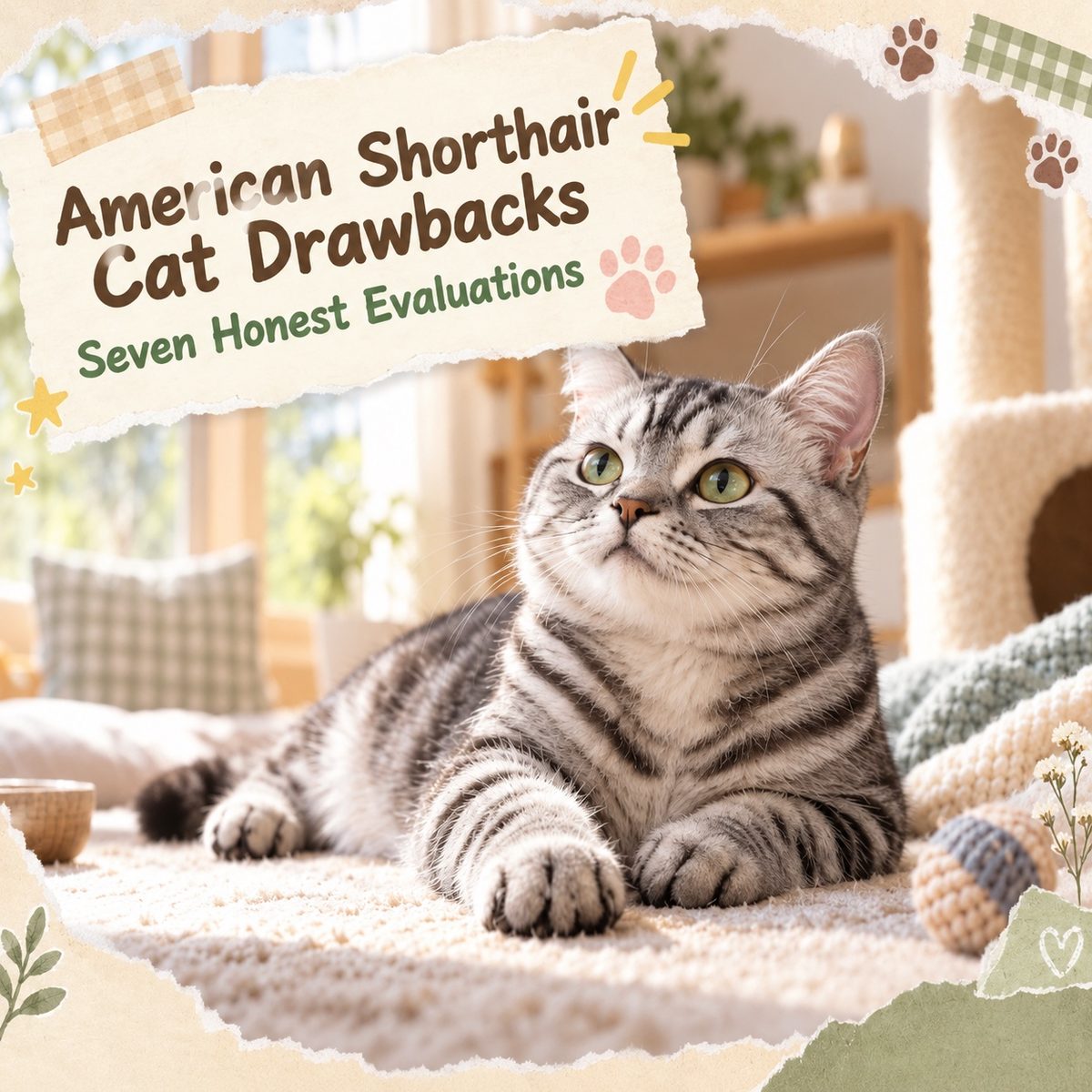
Quick answer: The American Shorthair is a robust and easy breed, but there are still seven disadvantages to be honest about: excess energy leading to self-entertainment, separation anxiety tendency, easy weight gain, HCM heart screening needs, shedding more than expected, some individuals being vocal, and strong hunting instinct. Each has clear solutions; this article breaks them down one by one—owners who do their homework generally find the American Shorthair highly rewarding.
Want a full picture of the American Shorthair? Start with the American Shorthair breed profile.
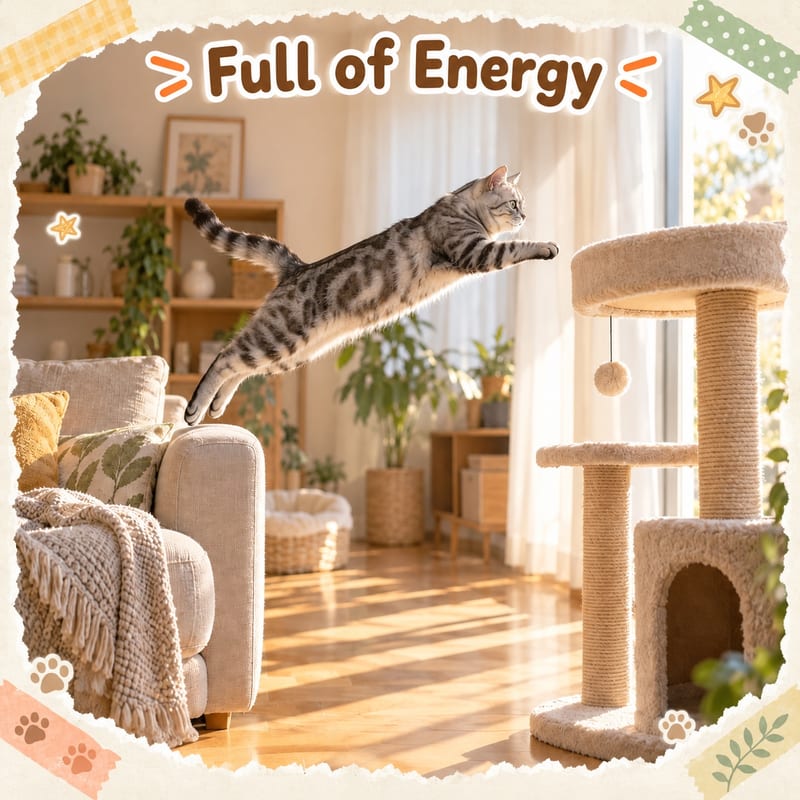
Disadvantage 1: Excess energy—the price of a "farm cat"
The American Shorthair's ancestors were working farm cats in North America, with top-tier hunting instinct and physical reserves. The flip side of this excellent gene: they need an outlet. An American Shorthair without enough daily stimulation will start its own projects—pushing things off tables, pulling curtains, indoor athletics at 3am. Solution: two daily sessions of 10–15 minutes each with a wand toy (mimicking prey sequence: stalk, pounce, catch), plus puzzle feeders to drain mental energy. Keeping an American Shorthair costs money, but you must budget time—admit this before getting the cat.
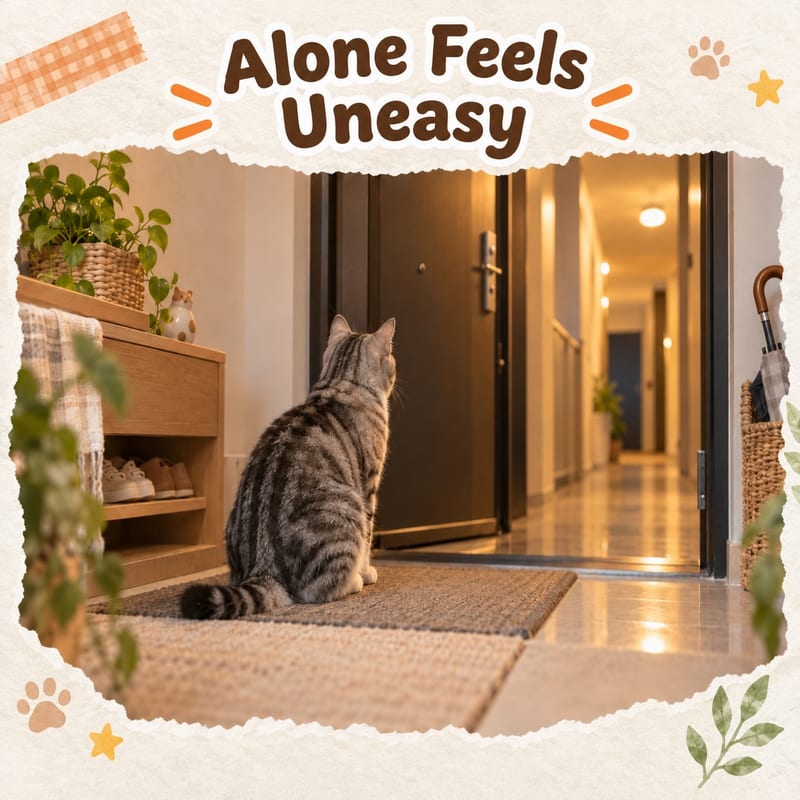
Disadvantage 2: Separation anxiety tendency
The American Shorthair is more affectionate than many aloof breeds; the consequence is that some individuals dislike being alone for long periods: excessive vocalisation, waiting at the door, even inappropriate elimination to express dissatisfaction. Solution: fixed feeding and play schedule for the whole family; play a session before leaving home, then let them sleep; add puzzle toys for "solo entertainment" training; families working 8-hour days are usually OK, but arrange boarding early for long holidays. For severe anxiety cases, consult a veterinarian; supportive products and behavioural plans are available.
Disadvantage 3: Easy weight gain, not obvious
The American Shorthair has a muscular frame; early obesity cannot be judged by eye—only the scale tells. Solution: weigh monthly at a fixed time and plot a trend line; feed measured portions with calorie counting, no free feeding; reduce portions by about 20–30% immediately after neutering. Obesity has combined harmful effects on a cat's joints, urinary and metabolic systems; if this disadvantage is not addressed, all the others become more costly.
Disadvantage 4: HCM heart screening needs
Hypertrophic cardiomyopathy (HCM) is one of the most common cardiomyopathies in cats; several breeds including the American Shorthair have a genetic predisposition, often asymptomatic early on. Veterinary consensus: auscultation to detect heart murmur or arrhythmia followed by ultrasound is a cost-effective screening path; checking parents' screening records when buying a kitten is even safer. Solution: annual check-up including auscultation, more frequent after age 7; sudden reluctance to walk, hind leg weakness, rapid breathing are emergency signals—seek veterinary care immediately.
Disadvantage 5: Shedding volume severely underestimated
"Short hair = no brushing" is the biggest misconception among American Shorthair owners. They have a thick undercoat; during the spring and autumn shedding seasons the amount of hair lost is astonishing—clothes, sofas, air all affected. Solution: brush every 2–3 days during shedding season, once a week otherwise; feed an Omega-3 formula to support coat health; include the cat in your vacuuming plan as a permanent resident.
Disadvantage 6: Hunting instinct—small pet families must assess
The American Shorthair's hunting drive towards small moving animals (goldfish, hamsters, birds) is seriously high. Living with dogs is generally fine, but small pet cages must be physically isolated; do not expect "the cat will be friends with them". Solution: small pet cages must have lids and be in rooms the cat cannot enter; do not let young birds or mice roam freely on the floor.
Disadvantage 7: Some individuals are not quiet
The American Shorthair is not considered noisy overall, but many owners report they "have things to say": wanting food, wanting play, not getting a share when a can is opened—they will express directly. Compared with low-volume breeds like the Exotic Shorthair and British Shorthair, the American Shorthair's volume range is wider. Solution: do not respond immediately to every meow (it reinforces), feed at set times and reward quiet behaviour, turning "meowing" back into a signal rather than a control method.

Disadvantage × Solution × Cost summary table
| Disadvantage | Solution | Cost direction |
|---|---|---|
| Excess energy | Two daily play sessions plus puzzle toys | Toys HK$100–300 one-off |
| Separation anxiety | Fixed routine, drain energy before leaving | Puzzle feeders, boarding if necessary |
| Easy weight gain | Measured feeding, monthly weighing | Food scale, weight management food |
| HCM risk | Annual auscultation, parents' screening records | Check-up HK$800–2,000 per year |
| Heavy shedding | Regular brushing, vacuuming plan | Slicker brush, vacuum electricity |
| Hunting instinct | Physical isolation for small pets | Cage modification |
| Vocal expression | Scheduled feeding, no reinforcement | Time cost |
Fair statement: the American Shorthair is actually a "few disadvantages" type
Frankly: the American Shorthair does not have the breathing constraints of flat-faced cats, nor the daily grooming boot camp of Persians; its genetic disease list is shorter than most purebreds. Of the seven above, five are behaviour management issues (cheap), two are routine screening (all cats should have). Those searching "British Shorthair disadvantages" or "is the British Shorthair easy to care for" can compare the two lists—the truly difficult cat is never a breed, but an owner-cat combination unprepared to do the homework.
Before getting an American Shorthair, honestly answer five questions
- Can you spare 20 minutes daily for play? If not, energy will find its own outlet.
- Do you have lockable cabinets and tables that are safe from pushing? Smart plus curious is a disaster for open storage.
- Is the whole family's routine stable? Separation anxiety is half prevented by a fixed schedule.
- Can you budget HK$2,000 per year for medical care? Check-ups and screening cannot be skimped.
- Can you accept a layer of fur on the sofa? Short hair does not mean no shedding, especially in shedding season.
It is unlikely that all five answers are "no problem at all"; adjust your lifestyle before getting the cat—the American Shorthair's disadvantage list is essentially a mirror of the owner's lifestyle. Conversely, if you already have an exercise habit, vertical space at home, and a medical budget, most of these seven disadvantages will not surface.
A subtraction approach: which disadvantages can be solved with money
Of the seven, three can actually be made easier with product investment: excess energy—automatic rotating toys and puzzle mats to cover times you are busy (investment about HK$200–400); separation anxiety—timed feeder and camera for remote play (about HK$300–600); shedding—slicker brush and vacuuming plan (about HK$150–300). But be clear about what cannot be bought: actual daily human interaction, the discipline of a fixed routine, and the execution of check-ups and screening—money cannot buy responsibility. Buying a buffer is smart; treating the buffer as a substitute is putting the cart before the horse—this difference determines your true evaluation of "is the American Shorthair easy to care for" three years from now.

Key summary
- ✅ Seven disadvantages of the American Shorthair: energy, separation anxiety, easy weight gain, HCM screening, shedding, hunting instinct, vocal expression.
- ✅ Five behavioural issues are solved with time management; two screening items are routine for all cats.
- ✅ Two daily play sessions and measured feeding are the two bottom lines for keeping an American Shorthair.
- ✅ Check parents' heart screening records when buying; annual auscultation, more frequent after age 7.
- ✅ For small pet families, hunting instinct is a real risk; physical isolation is required.
Related reading
- American Shorthair personality and intelligence analysis
- American Shorthair lifespan and longevity guide
- American Shorthair colours full analysis
- Wand toys, puzzle feeders and slicker brushes: see the exercise and enrichment series at PetChill pet supplies.
Behaviour and disease descriptions in this article are general breed tendencies; consult a registered veterinarian for individual cat conditions; severe behavioural problems may be referred to a behaviour consultant.



