Quick answer: In 2026 Hong Kong, Siamese cats generally cost pet-grade around $8,000–18,000, pedigree-grade around $18,000–35,000; 'free kitten adoption, take it home now' and 'no home visit' are high-risk signals. The SPCA and adoption platforms occasionally have Siamese or crossbreed cases. Monthly expenses are estimated at $1,100–1,950; whether buying or adopting, verification comes first.
Want to know all about Siamese cats? Start with the Siamese breed profile and the complete Siamese guide.
What does Siamese cat pricing mean? Key points in 30 seconds
Siamese cat prices are determined by three things: grade (pet-grade / pedigree-grade / show-grade), appearance route (modern wedge-head or traditional applehead), and source (registered cattery, licensed pet shop, or adoption). Price only reflects bloodline popularity and certificates, not health. The table below covers the specs Hong Kong owners look up most; we'll break down prices and costs item by item afterwards.
| Item | Siamese cat |
|---|---|
| Origin | Thailand (formerly Siam) |
| Average lifespan | 12–15 years |
| Adult weight | Male 4–5.5 kg / Female 3–4 kg |
| Coat | Short, single-layer, close-lying, moderate shedding |
| Personality | Extremely high social needs, easily bored |
| Vocalisation | Frequent, loud (breed trait) |
| Hong Kong price | About HK$8,000–35,000 |
| Monthly basic expenses | About HK$1,100–1,950 |
Three fundamentals you must know:
- Grade determines price, not health — pedigree papers have no direct relation to health; parental screening records matter more.
- The price gap between modern and traditional types is aesthetics, not quality — both are Siamese cats, with no difference in temperament or health.
- The chance of adopting a purebred is low but exists — Oriental Shorthair crosses are much more likely to be available for adoption than purebreds.
Siamese cat prices and monthly expenses (2026 Hong Kong market)
The purchase price is only the beginning; the real planning is for fixed monthly expenses. The table below shows actual market ranges in Hong Kong; figures are for reference only—ask about each item clearly before committing.
| Item | Range | Notes |
|---|---|---|
| Pet-grade (licensed pet shop) | HK$8,000–18,000 | With pedigree documents, often includes neutering clause |
| Pedigree-grade (registered cattery) | HK$18,000–35,000 | Parents have champion bloodlines or imported lines |
| Show-grade / well-known bloodline | HK$35,000 and above | With show records or top bloodlines |
| Adoption | HK$0–2,000 | Mostly already neutered and vaccinated |
| Vaccines (first year, three doses) | HK$900–1,500 | Annual booster afterwards |
| Neutering | HK$1,500–3,500 | Cheaper for males, more for females |
| Monthly food | HK$450–800 | High-protein formula, measured feeding |
| Monthly litter and supplies | HK$150–300 | Clumping clay / tofu litter |
| Monthly deworming (share) | HK$80–150 | Internal and external |
| Medical reserve (recommended) | HK$300–500 | Urinary and gastrointestinal issues are more common |
| Monthly total | About HK$1,100–1,950 | Excludes major medical costs |
The most underestimated item for Hong Kong owners is the medical reserve. Siamese cats are sensitive in the urinary and gastrointestinal tracts; a single ultrasound plus blood test starts at HK$1,500, so saving HK$300–500 per month is a practical approach. Before bringing a cat home, we recommend setting aside an emergency medical fund equal to at least six months' expenses.
Who is a Siamese cat suitable for?
| Owner type | Suitability | Reason |
|---|---|---|
| Work from home / semi-retired | Very suitable | Plenty of companionship time; loud voice and clinginess become advantages |
| Two-person household with shifts | Suitable | Someone is home for long periods; loneliness stress is manageable |
| Single, 9-to-9 | Not recommended | Left alone >8 hours daily; high risk of separation anxiety |
| Family with children | Depends on age | Tolerant but doesn't like being held; teach children |
| Rented flat / public housing | Assess | Loud voice carries; neighbour complaints are a real risk |
Reverse self-check (three questions):
- How many hours a day is someone at home?
- Can you accept being woken up several times a night for months?
- Do you have a monthly medical reserve of HK$300–500?
If you can't answer 'yes' to two of the three, it's time to consider another breed, or adopt two cats to keep each other company.
Siamese cat prices compared with other breeds
| Breed | Hong Kong entry price | Monthly basic expenses | Grooming difficulty | Suitable for beginners |
|---|---|---|---|---|
| Siamese | HK$8,000–35,000 | HK$1,100–1,950 | Medium (short hair) | If you have time |
| British Shorthair | HK$6,000–20,000 | HK$900–1,600 | Low | Yes |
| Ragdoll | HK$8,000–30,000 | HK$1,200–2,000 | High (long hair) | Yes (needs brushing) |
| Russian Blue | HK$10,000–28,000 | HK$1,000–1,800 | Low | Yes |
| Maine Coon | HK$12,000–40,000 | HK$1,500–2,500 | High (long hair, large size) | Yes |
In one sentence: the median Siamese price is close to Ragdoll and Russian Blue, but monthly expenses are lower and interaction is higher; the trade-off is vocalisation and companionship needs. Similar prices don't mean similar ease of care—remember to factor in 'time cost' when comparing.
Four common misconceptions about Siamese cat prices
Before deciding, clear up these four common misunderstandings:
| Misconception | Reality |
|---|---|
| The more expensive, the healthier | Price reflects bloodline popularity and certificates, not health; parental screening records are key |
| Show-grade bloodlines are always best to keep | Show-grade is about appearance standards, not directly related to temperament or health, and doesn't mean suitable for ordinary families |
| Adopted cats are never purebred | The SPCA and rescue organisations occasionally have purebred or crossbreed Siamese cases, mostly adult cats rehomed mid-life |
| Free adoption = best deal | 'Completely free, take it now' is a high-risk signal of unlicensed breeding; medical risks fall on the owner |
Siamese cat prices: adoption vs purchase cost comparison
Many people only compare the 'entry price', but the real figure is the three-year total cost. Here's a rough comparison using Hong Kong market rates:
| Item | Adoption | Purchase (pet-grade) |
|---|---|---|
| Entry fee | HK$0–2,000 | HK$8,000–18,000 |
| Vaccines | Mostly included | HK$900–1,500 (first year) |
| Neutering | Mostly included | HK$1,500–3,500 |
| First-year medical | HK$1,000–3,000 | HK$2,500–5,000 |
| Estimated three-year total | About HK$15,000–30,000 | About HK$25,000–45,000 |
In one sentence: adoption saves on the entry fee and first-year medical costs; long-term monthly expenses are not much different from buying. The real difference is 'source transparency'—adoption has organisational follow-up, while unknown sources leave you to bear the risk.
Siamese cat price verification: how to tell a reasonable quote
Faced with quotes for the same breed ranging from HK$8,000 to HK$35,000, use these four steps to screen quickly:
- Ask for parental screening records: any documents for AMY2-related neuropathy, eye and dental checks.
- Ask about neutering clauses: reputable catteries usually include a neutering clause and do not encourage unplanned breeding.
- Ask to see the mother cat: refuse arrangements where only the 'goods' are handed over without seeing the mother.
- Verify pedigree paper numbers: can be checked with registries such as CFA/TICA; the number on the paper must match the cat's microchip.
Characteristics of a reasonable quote: willing to put in writing the health guarantee period, return clauses, and responsibility for vaccinations and microchip registration; conversely, be wary of those who only emphasise 'great deal' or 'limited stock' and refuse to provide documents.
Siamese cat money-saving tips
You can save thousands on the same cat without affecting health:
- Choose adoption over purchase, saving HK$8,000–18,000 on the entry fee.
- Use SPCA low-cost schemes for vaccinations and neutering, 30–50% cheaper than private clinics.
- Buy large bags of main food and portion them, saving HK$100–200 per month.
- Set aside a fixed HK$300–500 monthly medical reserve to avoid credit card bills in emergencies.
Saving money is fine, but don't skimp on annual check-ups and vaccinations—these are the cheapest, highest-return investments in longevity.
Siamese cat price quick reference
Finally, all the key figures in one page for easy comparison:
| Scenario | Figure |
|---|---|
| Pet-grade reference price | HK$8,000–18,000 |
| Pedigree-grade reference price | HK$18,000–35,000 |
| Show-grade reference price | HK$35,000 and above |
| Adoption reference fee | HK$0–2,000 |
| Monthly expenses | HK$1,100–1,950 |
| Recommended emergency medical fund | About six months' expenses |
| Neutering cost | HK$1,500–3,500 |
Remember: price is an entry ticket, not a quality certificate. Spending more time checking parental records is better than spending more money on certificates.
1. Siamese cat prices: how much difference between pet-grade and pedigree-grade
The Siamese is Hong Kong's most recognisable Oriental Shorthair. Below are reference ranges for the general market in 2026; actual prices depend on supply and demand at the time, and the figures only reflect approximate market levels—they do not constitute a recommendation of any merchant:
| Grade | Reference price (HKD) | Common differences | Suitable for |
|---|---|---|---|
| Pet-grade | About $8,000–18,000 | With pedigree documents, often includes neutering clause | Those wanting a companion, not planning to show |
| Pedigree-grade | About $18,000–35,000 | Parents have champion bloodlines or imported lines | Advanced owners who value traceable bloodlines |
| Show-grade / well-known bloodline | $35,000 and above | With show records or top bloodline offspring | Those clearly aiming to breed or show |
One principle worth repeating: high price does not equal health. The Siamese's genetic predispositions (AMY2-related familial neuropathy, strabismus, etc.) are not directly related to certificates, but depend on whether the breeder has screened the parents. Asking clearly whether the parents have relevant screening records and whether there is inbreeding is more important than asking for papers; by the way, regarding 'Ragdoll prices'—Ragdoll and Siamese entry ranges in Hong Kong roughly overlap, but Ragdolls have higher long-hair grooming costs, so remember to include brushing time when comparing.

2. Traditional vs modern wedge-head: the price gap comes from aesthetics, not health
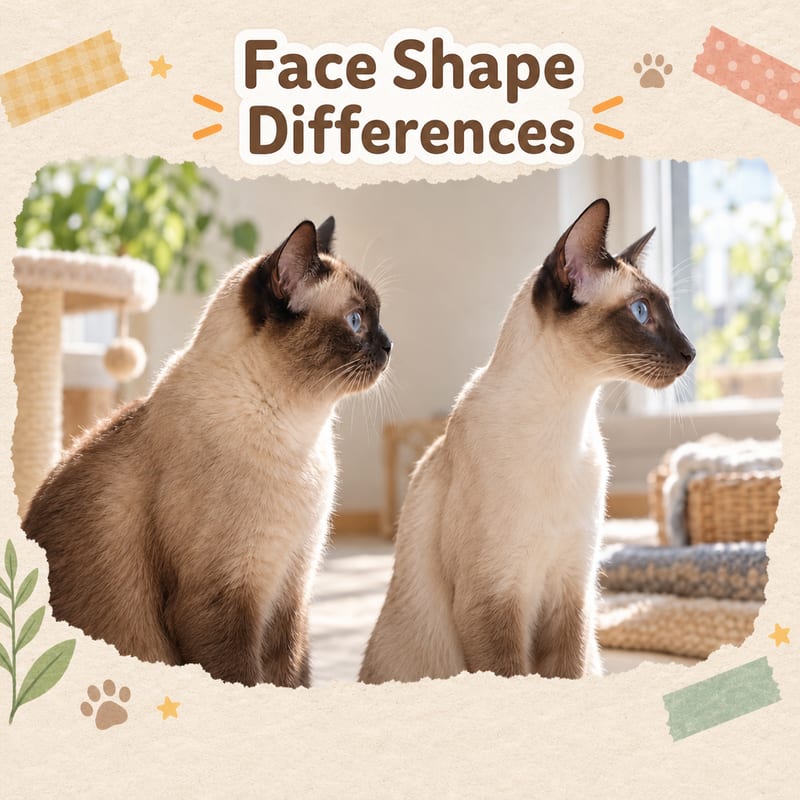
When searching for 'Siamese cat prices', you'll find huge differences, mainly because there are two appearance routes: modern show lines favour an extremely wedge-shaped head, large ears and a slender 'modern' build; traditional types (also called applehead) have rounder heads and sturdier bodies, closer to the appearance depicted in the ancient Thai 'Cat-Book Poems'. Major cat associations (CFA, TICA and World Cat Federation) recognise the modern standard; traditional types are more common in Southeast Asian pedigree circles. Both are Siamese cats, with no difference in temperament or health; the price gap reflects bloodline popularity and show demand, not a quality gap.
3. Three routes to adopting a Siamese cat
Many people search for 'where can I adopt a cat' or 'Siamese cat adoption': honestly, the chance of finding a purebred Siamese on organisational lists is not high, because most cats taken in are domestic shorthairs and crossbreeds, but these three routes are worth checking regularly:
- SPCA (Society for the Prevention of Cruelty to Animals): The cat list can be searched by breed keyword; Siamese or Siamese crosses appear from time to time, and the chance of adult cats rehomed mid-life is significantly higher than kittens.
- International Rescue Committee (IRC) and local cat rescue groups: Occasionally there are purebred or crossbreed Siamese cases, mostly involving former owners or abandonment follow-up; procedures vary by group.
- Adoption platforms and cattery return schemes: Some reputable catteries accept returned cats for rehoming; you can register your interest when enquiring with catteries.
Legitimate adoptions usually charge a nominal fee (often already including vaccinations, microchip and neutering, sometimes initial deworming), so 'free kitten adoption' often means 'fees already bundled'; conversely, sources claiming completely free, take-it-now handovers are high-risk signals of unlicensed breeding, and the consequences are usually borne by the cat and your medical bills.
4. Before meeting the seller: eight-point verification checklist
No matter which source you find online, bring this eight-point checklist and go through each item; only consider a deposit after all are passed:
- See the mother cat on site: refuse arrangements where only the 'goods' are handed over without seeing the mother
- Vaccination and deworming records: check dates, drug labels and veterinarian signatures
- Parental health information: eye, dental and family history records
- Observe the cat's condition on the spot: be cautious with kittens with heavy eye discharge, sneezing, or dirty anus
- Written contract: health guarantee period, return clauses, neutering clauses in black and white
- Microchip registration: who is responsible for the transfer, stated clearly
- Pedigree paper authenticity: can be verified with the corresponding registry such as CFA/TICA; the number on the paper must match the cat's microchip
- After-sales follow-up: whether there is a veterinarian contact network and behavioural consultation support
5. Monthly expense estimate: can you afford to keep it?
The key holding costs for a Siamese are diet quality and companionship arrangements—they are active and easily bored, and some individuals need interactive toys and companionship plans:
| Item | Monthly estimate (HKD) | Notes |
|---|---|---|
| Main food and wet food | $450–800 | High-protein formula, measured feeding to prevent overeating |
| Cat litter and daily supplies | $150–300 | Share of litter box cleaning supplies |
| Preventive healthcare share | $200–350 | Vaccines, deworming, annual health check |
| Medical reserve | $300–500 | For urinary, dental and gastrointestinal issues |
| Toys and environmental enrichment | $50–150 | Siamese get bored easily; cat trees and interactive toys are essential |
| Total reference | About $1,100–1,950 | Excludes boarding and one-off medical expenses |
Before bringing the cat home, we recommend setting aside an emergency medical fund equal to at least six months' expenses. Short-haired cats may seem low-maintenance, but when Siamese urinary and respiratory sensitivities flare up, a single episode can cost more than several months of routine expenses; this breed's 'chattiness' is no joke—it's a real personality cost to budget for.

6. Buy or adopt: a practical way to decide
Ask yourself three questions: First, do you absolutely need a purebred Siamese, or would a crossbreed with point colouring and blue eyes also be acceptable? Second, can you accept the Siamese's famous 'talkativeness' and companionship needs—households where no one is home during the day should think twice? Third, does your budget have a fallback for medical reserves? If pedigree is a hard requirement, allow more time to screen sources and carry out the eight-point checklist in section 4 to the end; if you just want a smart, affectionate cat, the Oriental Shorthair crosses on adoption lists are often a bigger surprise than expected.
Key takeaways
- ✅ 2026 Hong Kong Siamese reference prices: pet-grade about $8,000–18,000, pedigree-grade $18,000–35,000; high price does not equal health
- ✅ The price gap between traditional and modern wedge-head types comes from aesthetic popularity, not a health difference
- ✅ The chance of adopting a purebred Siamese is low but exists; the SPCA, IRC and local rescues are all worth registering interest with
- ✅ 'Completely free, take it now' and 'no home visit' are high-risk signals; legitimate adoption fees already bundle vaccinations and neutering
- ✅ Prepare $1,100–1,950 for monthly expenses and go through the eight-point verification checklist item by item
- ✅ If you're not set on a purebred, point-coloured crossbreeds are a hidden gem on adoption lists
If you want to know how to tell seal, blue, chocolate and other point colours and tabby variants apart, see the Siamese colour guide.
Related reading
- Siamese cat Hong Kong care guide: climate, regulations and damp-proofing
- Siamese cat disadvantages and how to cope
- Complete Siamese guide
- PetChill pet supplies: high-protein cat food, interactive toys and cat litter all in one place
 Fuji One full guide →