
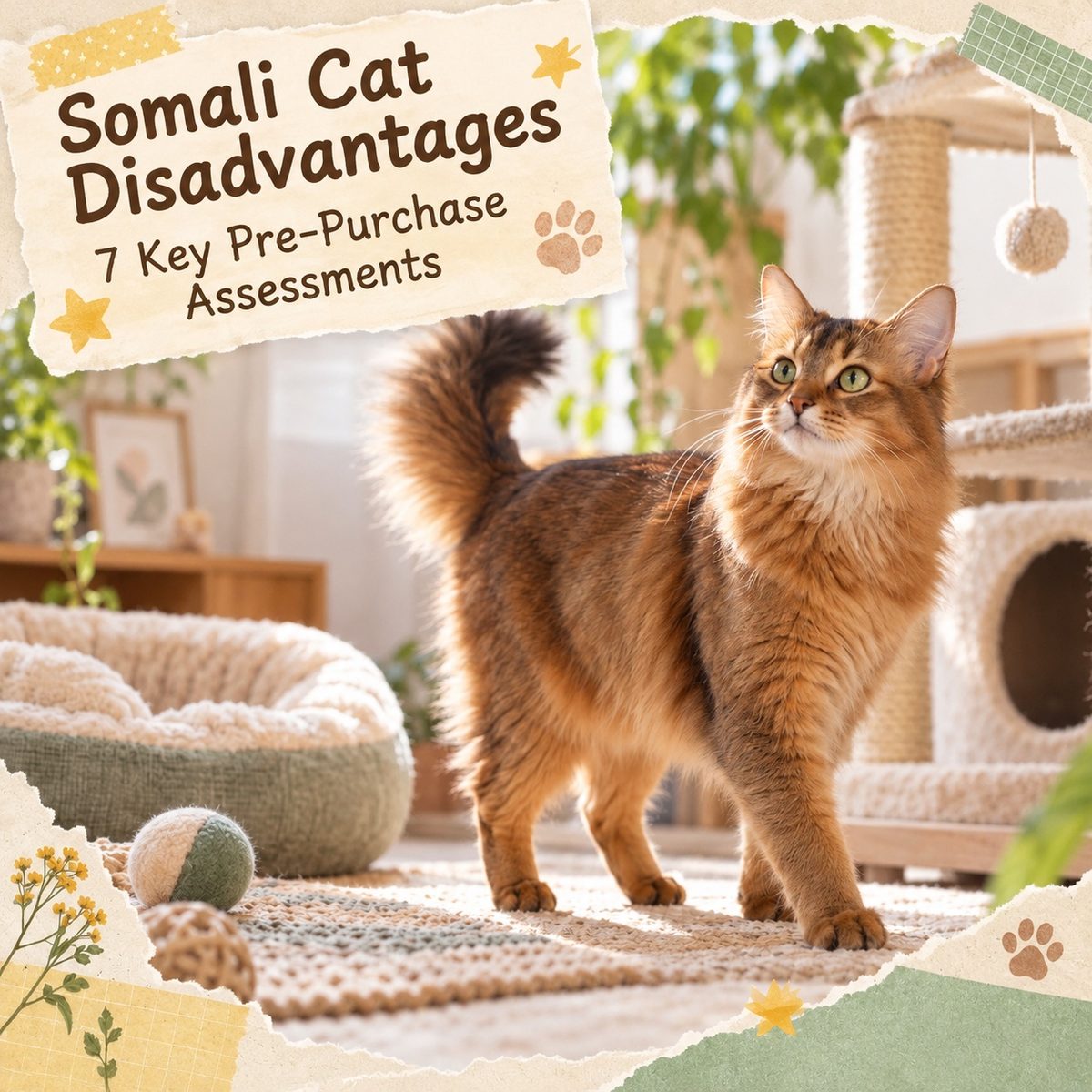
Quick answer: The seven main disadvantages of the Somali cat: relentless energy, extremely high interaction needs, a semi-long coat and big tail requiring frequent grooming, destruction when bored, strong jumping that leaves no safe spot in the home, dislike of being held tightly, and genetic risks such as PK deficiency. Each has a coping strategy (see the breakdown below), but only if you acknowledge they exist—if you can handle this 'high-power' lifestyle, it is the most entertaining roommate.
Want to know more about the Somali cat? Keep reading our series.
1. Overview of disadvantages
| Disadvantage | Severity | Root cause | Coping strategy | Cost direction |
|---|---|---|---|---|
| Top-level activity | High | Hunting-type genetic programming | Three interactive play sessions daily | Mainly time |
| Extremely high interaction needs | High | Highly social, highly intelligent | Companion cat, scheduled play | Time plus pet expenses |
| Semi-long coat matting | Medium-high | Double coat plus fluffy tail | Groom 3–4 times a week | Tools tens of dollars per month |
| Destruction when bored | Medium-high | High intelligence, low boredom threshold | Puzzle feeders plus vertical routes | Tens to over a hundred per month |
| No safe spot in the home | Medium | Strong standing jump | Fragile items in cabinets, limit heat sources | Almost zero |
| Dislikes being held tightly | Low | Independent companion personality | Respect boundaries, close but not restraining | Zero |
| Genetic risks such as PK deficiency | Medium | Breed genetics | Genetic testing, regular check-ups | Testing from several hundred |
The cost directions in the table are rough references; actual spending depends on your choices for medical care and supplies at home. The key is to plan early, not scramble when you need it.
2. 'Can't stop': the cost of high activity
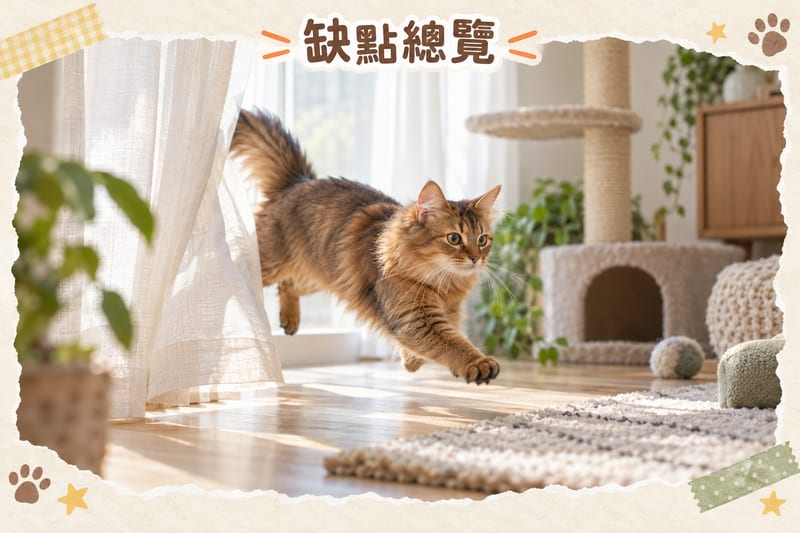
The Somali cat retains the skills of its desert ancestors and is among the most active of cats. They do not lie next to you all day; they lie on top of cabinets, on windowsills, on your shoulder; they follow you everywhere. For daily life this means three things: first, the floor has almost no 'safe zone'—cups and ornaments are best kept in cabinets; second, exercise is a necessity—two to three hunting play sessions of ten to fifteen minutes each day plus puzzle feeders, and if not enough, it triggers the 'destruction logic' in the next chapter; third, the living room will gradually fill with cat trees, and 'minimalist style' is basically ineffective with this breed. Their jumping is not just for play but also for patrolling and observing; if there is no high place to go at home, they become restless and may even resort to constant meowing.
3. Extremely high interaction needs: mischief when alone
The saying 'keeping a cat saves effort' holds for round, static cats but not at all for the Somali. They have high social needs, and long periods alone can lead to excessive vocalisation, following you around, and even destructive behaviour. The formula: full daily interaction plus environmental enrichment—puzzle toys, climbable vertical routes, timed feeders to create activities. If destructive behaviour suddenly worsens, first rule out medical causes such as thyroid or pain, then review environmental adequacy. For long-working households the standard answer is to keep two, or arrange for someone to come and play during the day. Also note that the Somali's meow is not loud but high-frequency; they will 'talk' to you with a series of soft sounds, with energy peaks around 4–5 am and dusk, so light sleepers should be prepared.
4. Semi-long coat and big tail: grooming is daily homework
The Somali's 'long hair' is relative to the Abyssinian; in reality it is a semi-long coat, soft in texture, with the fluffy tail as its trademark. The good news is it does not mat as easily as a Persian; the cost is that during shedding season it still tangles, especially under the armpits, hind legs and tail base. The routine is to groom 3–4 times a week for 5–10 minutes each time using a slicker brush and comb, section by section, and more often during shedding season. This is fixed work for the breed, not something to do 'when you feel like it'. If a mat has already formed, do not pull hard; first use a detangling spray or separate with your fingers before combing, as pulling hard can hurt the skin.
5. Medical side: PK deficiency and kidneys, two lines of defence
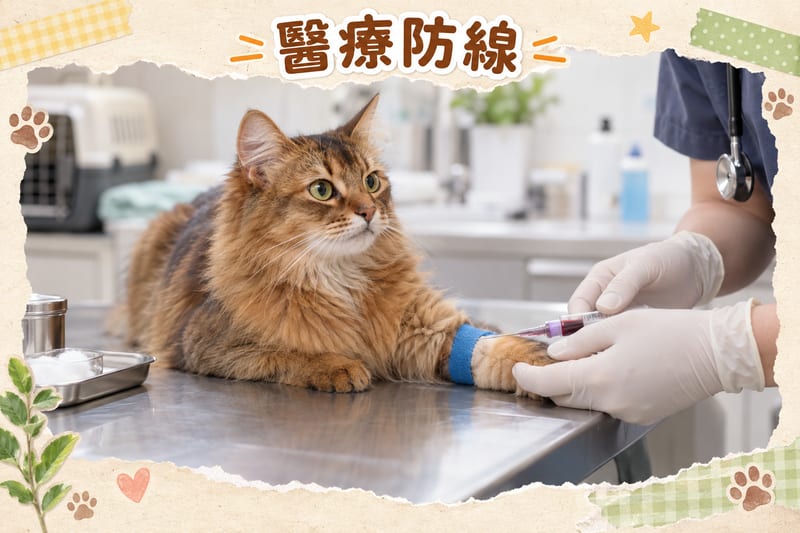
There are two breed-related medical lines to face. The first is pyruvate kinase deficiency (PK deficiency): a lack of the PK enzyme in red blood cells causes chronic haemolytic anaemia, and it is inherited recessively—both parents must carry the gene for the cat to be affected, and severe cases have decreased since screening became widespread. Before getting a cat, ask for the parents' PK gene test records. The second is kidneys: this breed has reports of renal amyloidosis, with warning signs of a sudden increase in water intake and weight loss; annual blood tests plus urine tests from age 7–8 are recommended. Add the risk of gingivitis from crowded teeth in a small jaw, and the most practical approach is to start a medical budget early. The three lines (genetics, kidneys, dental) together are the core of long-term medical preparation for the Somali cat.
6. No safe spot in the home: the side effect of vertical jumping
The Somali cat has a strong standing jump; tabletops, stovetops, fridge tops, bathroom windows—nowhere is 'safe if it can be placed there'. Practical adjustments: build a 'no counter' habit from kittenhood, keep all medicines and cosmetics in cabinets, and always keep hot water kettles and soup pots out of cat reach. On the other hand, this vertical ability is exactly why they suit small flats—disadvantage or advantage depends on your furniture layout. Medicines, cleaning products and small items must all be put away, because they will push, bat, and even carry them off.
7. Emotional side: loves you, but won't let you hold
Finally, an easily misunderstood 'disadvantage': many prospective owners think 'clingy = happy to be held'. The Somali's clinginess is the 'follow you around and lie on top of you' type; being held tightly usually earns you an annoyed squirm. This is not lack of love—on the contrary, it chose you as its companion and so follows you everywhere. Families with young children should be taught: hold the cat gently, allow it to leave, and do not chase. For people seeking 'ragdoll-style cuddling', this breed's mode of interaction may need an adjustment period.
Before getting one, do an honest self-check: do you have 45 consecutive minutes each day to play? Will you freak out at 4 am parkour sounds? Can your ornaments stay put or must they all go into cabinets? If two out of three are 'no', seriously consider whether a Somali cat suits you. This list may read scary, but it really says one thing—the type of owner this breed needs is very specific.
Key takeaways
- ✅ High activity is genetic: daily interactive play is a necessity, not a bonus
- ✅ Destruction and constant meowing are boredom signals; puzzle feeders and vertical routes are standard
- ✅ Semi-long coat plus big tail = grooming 3–4 times a week, this is fixed homework
- ✅ PK deficiency is a breed self-test: ask for parents' gene test records before getting a cat
- ✅ Kidneys and dental are two long-term lines: annual blood tests from age 7–8, brushing from kittenhood
- ✅ No safe spot in the home: fragile items in cabinets, set rules for heat sources early
- ✅ Its love is 'following you' not 'letting you hold it'—set expectations correctly and the Somali is the most entertaining companion
Related reading
- Somali cat price and adoption guide
- Somali cat lifespan and health explained
- Somali cat Hong Kong keeping guide
- Somali cat coat colour guide
- Puzzle feeders, tall cat trees and grooming tools: get them all at PetChill pet supplies.
The medical content in this article is general information; for symptoms related to anaemia, kidneys and dental care, please consult a registered veterinarian. Genetic screening is better than anything.
 Almo Nature full guide →



