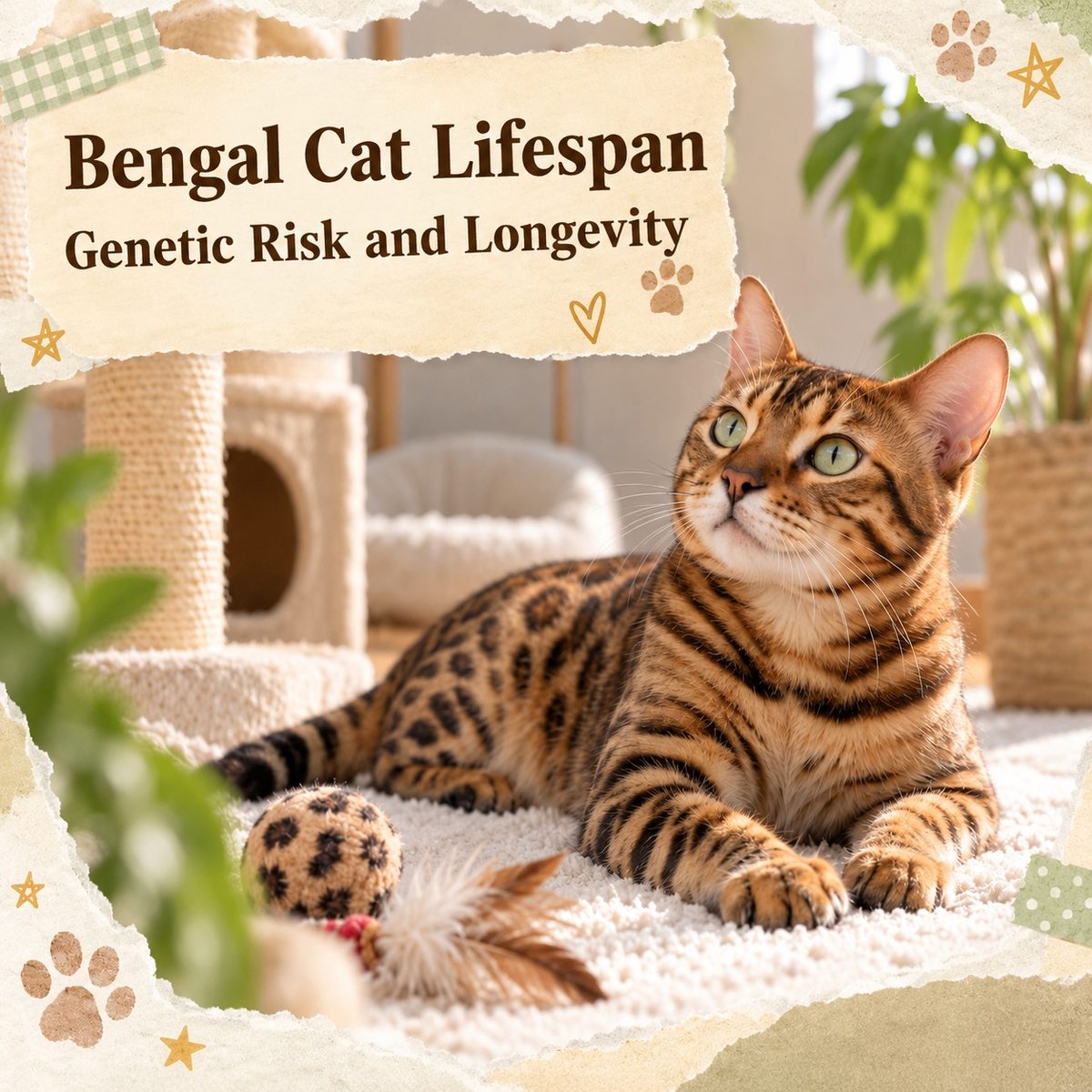
Quick answer: Bengal cats are generally thought to live about 12–16 years, which is medium-to-long among purebred cats. To keep them long, this breed has two specific keywords: heart (HCM screening) and weight (weight control), plus verification of genetic diseases such as PKdef. Free-roaming outdoors is a double risk for spotted cats; indoor keeping with anti-loss measures is the right answer. For medical issues, always rely on your veterinarian's judgment.
Want to know all about Bengal cats? First see the Bengal cat breed profile and the Complete Bengal Cat Guide.
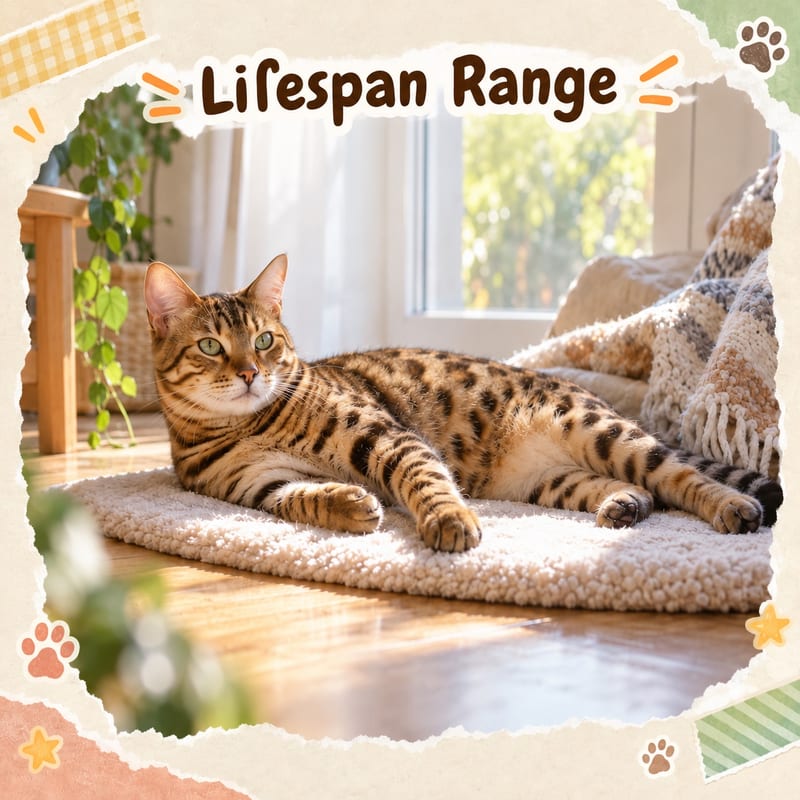
1. Lifespan range: what 12–16 years means
Based on international cat registry breed data and general veterinary clinical observations, the expected lifespan of a Bengal cat is about 12 to 16 years. Two points to note: first, 'average lifespan' is a population figure; individual differences depend on genetics, diet, weight, and medical care, so don't be scared by a single case—the lifespan range is a population expectation, not an individual upper limit. Cases of Bengal cats over eighteen years old are not rare in the literature; their short coat and strong muscle mass are actually a foundation for longevity. Second, Bengal cats are a medium-to-large breed with a late-maturing physique and high muscle mass; 'looks not fat' does not equal 'not fat'—rib palpation and body condition scoring are far more reliable than a scale.
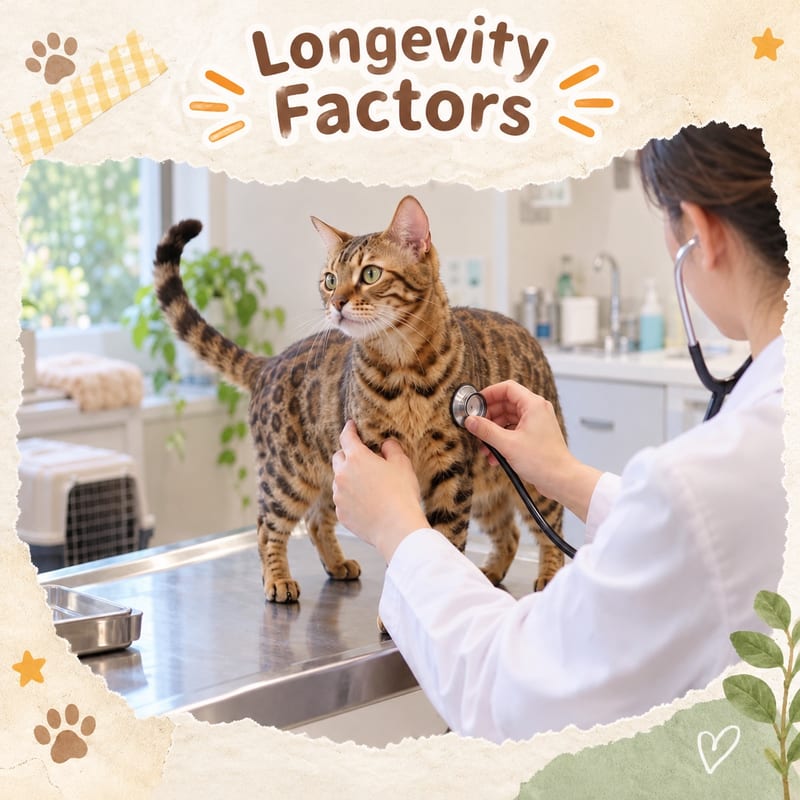
2. Four major factors affecting lifespan
Genetic health: The main hereditary problems reported in Bengal lines are three: hypertrophic cardiomyopathy (HCM), pyruvate kinase deficiency (PKdef, which can cause hemolytic anemia), and progressive retinal degeneration. International feline veterinary consensus lists HCM as the most common cardiomyopathy in cats and recommends regular screening for susceptible breeds; HCM can be asymptomatic for years, so 'eating well and moving well' does not mean the heart is fine.
Weight management: For a high-activity breed, once overfed and under-exercised, the burden on joints, heart, and urinary system rises simultaneously. Obesity is an important risk factor for feline urinary tract disease and diabetes, and veterinary nutritionists generally consider 'maintaining ideal body condition' the most economical means of extending lifespan.
Environmental stress: Highly intelligent cats are more sensitive to environmental changes and stress from being alone; chronic stress is associated with lower urinary tract disease outbreaks, a point widely supported in feline behavioral medicine literature. For Bengals, a breed with high interaction needs, 'quality time with humans' is itself part of health management, not a luxury.
Access to medical care: Vaccines, deworming, annual screening, and early treatment are the realistic variables that determine whether a purebred cat's lifespan range can be realized.
3. Age-based health check schedule
| Stage | Recommended check focus | Frequency |
|---|---|---|
| Kitten (2–12 months) | Vaccination schedule, deworming, weight growth curve | Every 1–2 months |
| Young adult (1–6 years) | Body condition score, teeth, urinary system questionnaire | Once a year |
| Cardiac special | HCM heart ultrasound screening (recommended for susceptible breeds) | Discuss with vet every 1–2 years |
| Middle-aged (7–10 years) | Add blood biochemistry, urinalysis | Once a year |
| Senior (10+ years) | Blood pressure, thyroid, kidney function, joint assessment | Every 6 months |
Please adjust specific items and frequency with your veterinarian according to individual circumstances; the table above is a general framework, not diagnostic advice. If your Bengal comes from a breeder with clear lineage, ask the breeder for the parents' heart ultrasound results and PKdef genetic test reports, and keep these records to give to your vet—screening strategies (frequency and starting point) differ significantly between individuals with and without family data.
4. Longevity checklist: ten things you can do
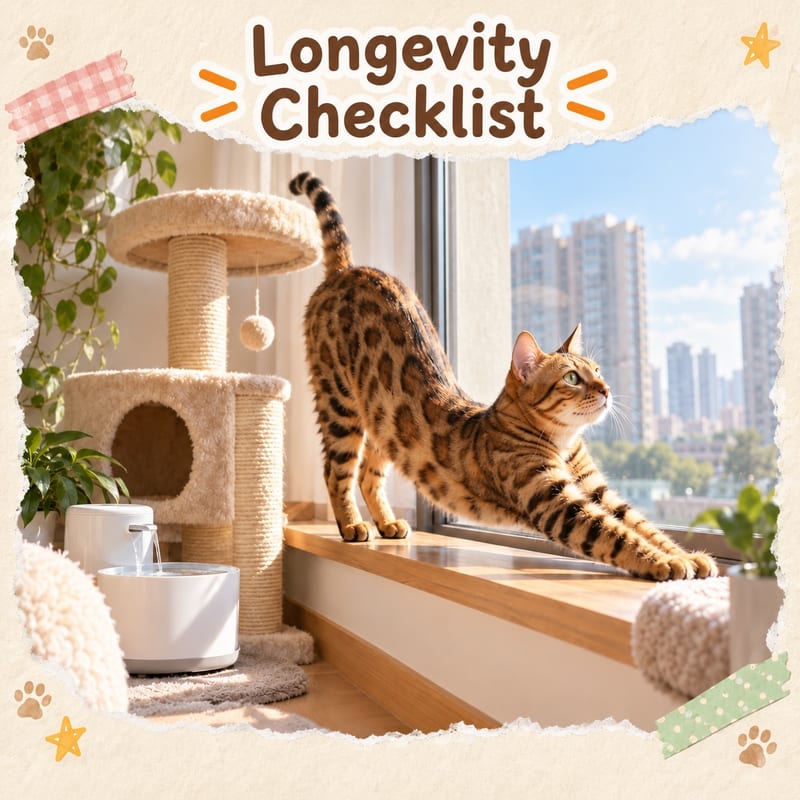
One, weight control: fixed times and portions, judge feeding amount by body condition score rather than appetite. Two, high-quality diet: clear protein sources and sufficient proportions, transition foods over seven to ten days; high-activity cats are not suited to low-quality filler foods—saving on food often costs more at the vet. Three, annual screening: heart ultrasound plus blood and urine tests according to aging pace. Four, environmental enrichment: cat walls, play, puzzle feeders, a baseline daily exercise amount. Five, adequate water: flowing water fountains increase water intake, protecting the urinary and kidney systems. Six, prevent loss and falls: window screen limiters, reducing the number one cause of accidental death. Seven, dental care: regular gum checks, dental disease is linked to systemic inflammation. Eight, stress management: fixed routines, advance warning for moving or renovation. Nine, no random medication: human painkillers can be fatal to cats, ask your vet before any medication. Ten, timely neutering: reduces reproductive system disease and loss risk, while preventing obesity. Among these ten, the easiest combination to stick to is 'one active, one passive': write fixed daily playtime into the calendar, and write the annual check-up date into the calendar—a cat's lifespan is not lengthened by supplements, but by these seemingly mundane repetitions.
5. Senior signals: don't dismiss these changes as 'natural aging'
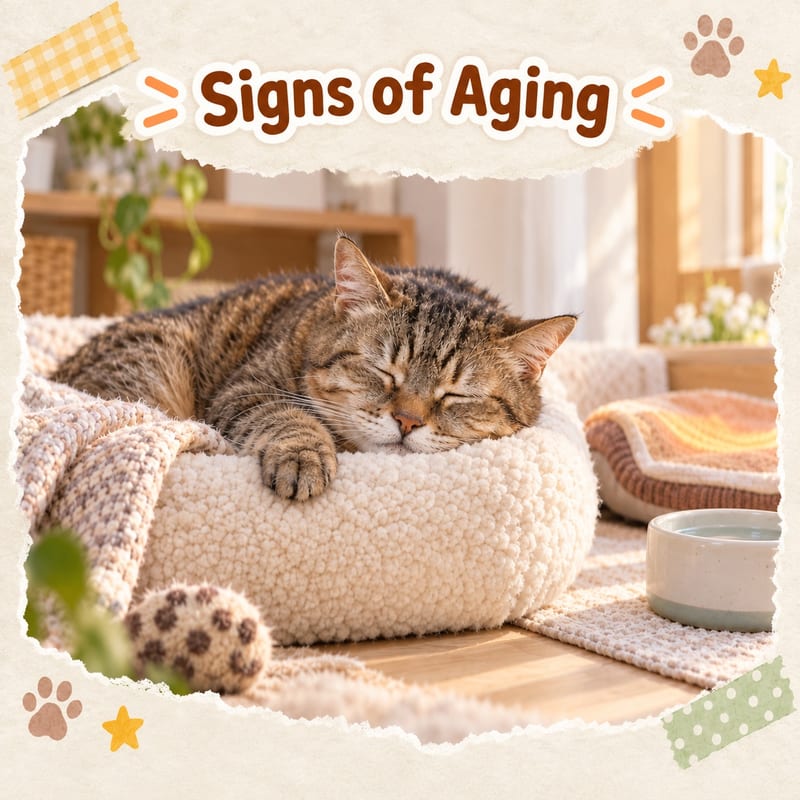
For Bengal cats over ten, the following changes warrant early veterinary attention rather than waiting: continuous weight loss (sarcopenia, kidney disease, thyroid problems can all be causes), significantly increased drinking and urination (warning signs of kidney and diabetes), unable to jump to previous high places (joint pain, especially regrettable in a high-activity breed), sudden appetite or personality changes. The goal of senior care is not to prolong days but to preserve quality—soft food, low-entry litter boxes, warm beds, and more frequent checks can make the final years much better. For high-activity breeds, two small things can also be done: lower the jumping route by one level, and add non-slip mats at common landing spots, protecting joints while preserving their dignity of 'climbing high and looking far'; maintain low-intensity sniffing games for mental stimulation, as brain stimulation is equally important for cognitive health in senior cats.

Key summary
- ✅ Bengal cat expected lifespan about 12–16 years; whether the range is realized depends on care
- ✅ Two breed-specific keys: HCM heart ultrasound screening + weight management
- ✅ For genetic diseases like PKdef and retinal degeneration, checking parents' screening results when buying is the most proactive step
- ✅ Ten longevity actions; lowest cost and best effect are weight control and environmental enrichment
- ✅ Senior signals (weight drop, increased drinking, inability to jump up) warrant early vet visit; quality over quantity of days; also remember, any medication (including Chinese medicine, supplements) ask vet first—human fever/painkillers can be fatal to cats in small amounts, this bottom line must be known by the whole family
- ✅ Medical judgment relies on the vet; this article is for health literacy reference only
Related reading
- Bengal cat disadvantages and how to cope
- Bengal cat personality and intelligence full analysis
- Bengal cat price and adoption full guide
- Complete Bengal Cat Guide
- Weight management food bowls, senior cat soft mats and water fountains: find them at PetChill pet supplies.
The medical content in this article is for reference only (cardiomyopathy can be asymptomatic for years; the significance of annual heart ultrasound is to find problems during the window period) and does not constitute diagnosis or treatment advice; consult a licensed veterinarian before any medication, examination, or dietary adjustment.
 Fuji One full guide →