
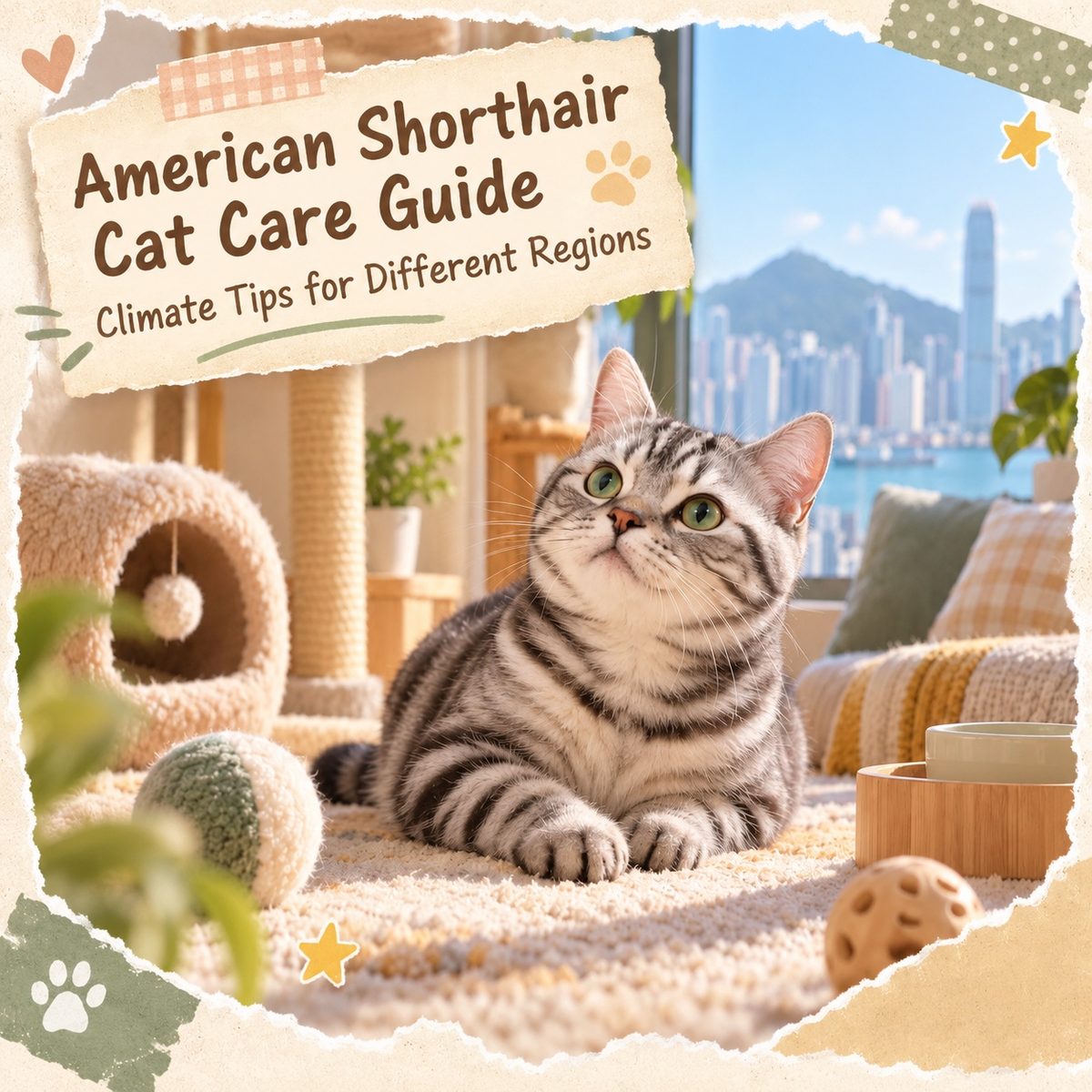
Quick answer: The American Shorthair is a breed that is quite friendly to Hong Kong's environment: it does not have the heatstroke burden of flat-faced cats, its coat care is simple, and it is robust. The real assessment points are two: do you have the time and energy every day for two play sessions with an over-active cat, and does your tenancy agreement or building deed of mutual covenant allow cats. This article gives you a directly actionable care guide based on Hong Kong's climate and housing conditions.
Want a full introduction to the American Shorthair? Start with the American Shorthair breed profile.
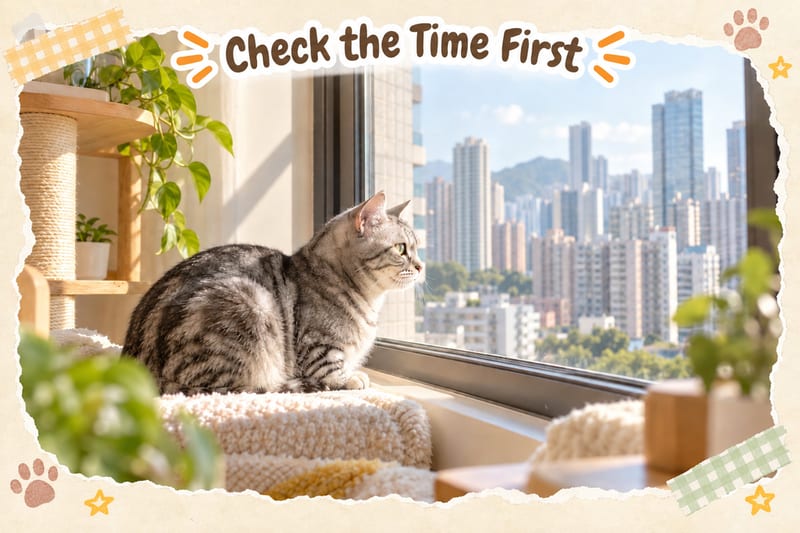
American Shorthair in Hong Kong: Ask About Time First, Then Space
Many people searching "American Shorthair Hong Kong" or "American Shorthair Hong Kong" live in flats of a few hundred square feet. The conclusion first: for a small flat, space is never the bottleneck; time is. American Shorthairs are farm-cat descendants with top-level exercise needs, and what usually fails in comparison is not a big house but a routine of "leave at 7 am, back at 9 pm, want to sleep in on weekends". The specific requirements: two interactive play sessions a day, 10–15 minutes each, plus a vertical environment to climb and jump. If you work long hours and want a cat that "entertains itself", lower-activity breeds like the British Shorthair or Exotic Shorthair will suit you better; if you are willing to spend time every day, the American Shorthair can be kept well even in a small flat and offers very high-quality interaction.
| Your lifestyle | Match suggestion |
|---|---|
| Can set aside 20–30 minutes daily for interaction | American Shorthair: high match |
| Out most of the time, expect the cat to be independent | Consider a lower-activity breed |
| Have young children, want a playful companion cat | American Shorthair: high match (with supervision) |
| Want zero grooming and a quiet environment | Consider Exotic Shorthair or British Shorthair |
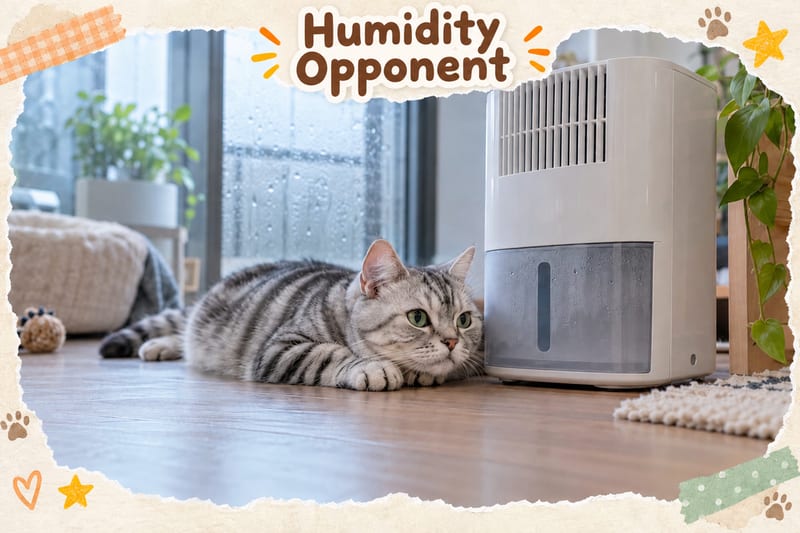
Hong Kong Climate: Humidity Is the Opponent, Not Temperature
The American Shorthair has no flat-face structure, so standard summer air-conditioning (around 26°C) is enough for them, and heat stress is far lower than for Persian-type cats. What really needs managing is humidity:
| Item | Suggestion |
|---|---|
| Summer | Room temperature 25–27°C is acceptable; ensure plenty of water points, and do not leave wet food out for more than half a day |
| Humid spring (Feb–Apr) | Dehumidifier target humidity 50–60%; brush more often to remove damp undercoat; watch for chin acne and ear canals |
| All year | Place cat litter in a ventilated spot, scoop the litter daily from covered boxes; wash and dry sleeping beds in hot water weekly |
| Typhoon season | Close windows and check window grilles; cats need hiding spots during thunder, do not force-hold them |
Damp undercoat is the main cause of skin problems—American Shorthairs have a thick undercoat, and when shedding season meets the humid spring, shedding and dermatitis can flare up together. Raising brushing frequency from once a week to once every two or three days is the cheapest effective prevention.
Small Flat Setup: Ask the Walls for Space
| Item | Suggestion |
|---|---|
| Window grilles | Always check window grilles; American Shorthairs jump powerfully, do not gamble on fall risk |
| Vertical space | Tall cat tree or wall-mounted shelves so the cat can "walk" across a whole wall |
| Food bowls | Normal depth is fine; a timed feeder helps a lot |
| Litter box | Large size (American Shorthairs are big), one box per cat plus one, placed separately |
| Scratching posts | One pillar type and one flat type, protect the sofa by setup from the start |
| Hiding spots | Cardboard boxes or beds, giving the cat control over when to come out |
Public Housing, Private Buildings and Deeds: Two Documents to Check Before Getting a Cat
Keeping cats in Hong Kong is not prohibited by law; the gate is at the contract level: the Housing Department has a clear policy restricting animals in public rental units, and violations may affect the tenancy; private buildings depend on whether the deed of mutual covenant has a no-pet clause, and some buildings have clauses but in practice tolerate indoor cats. Prospective buyers often search "British Shorthair Hong Kong" or "American Shorthair price Hong Kong" to compare breeds and prices, but whichever breed you choose, checking your own tenancy agreement and deed of mutual covenant is more important than reading any breed introduction. If your living conditions do not allow it, getting a cat will only make things difficult for both the cat and you.
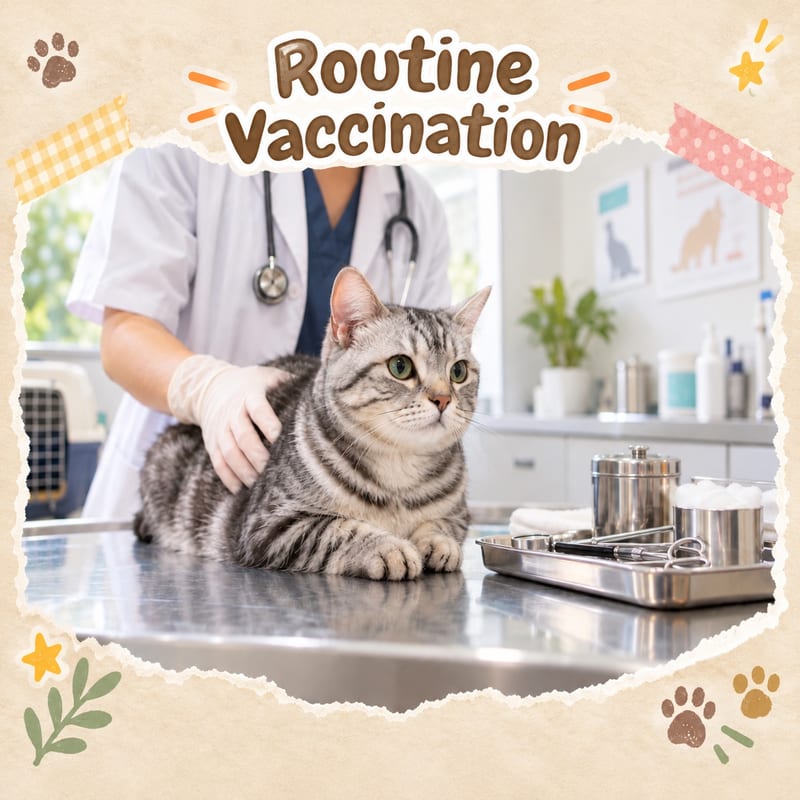
Vaccines, Deworming and Neutering: Three Routines for Indoor Cats
Indoor-only does not mean zero risk: pathogens can enter via shoe soles, window gaps and contact. Complete core vaccines (feline panleukopenia, herpesvirus, calicivirus) and regular internal and external deworming as advised by your veterinarian; if there is a chance of contact with street cats where you live, discuss the feline leukemia vaccine with your veterinarian. Neutering should be done at the time advised by your veterinarian—besides behaviour management, for female cats not intended for breeding, neutering is a practical preventive measure against mammary and uterine diseases.
Monthly Budget and Time Budget
| Item | Monthly estimate (HK$) | Notes |
|---|---|---|
| Main food (dry food plus wet food) | 400–700 | High activity, needs enough protein |
| Cat litter | 150–300 | A larger cat uses slightly more |
| Toys, scratching post wear | 100–200 | Rotate toys to keep them fresh |
| Medical reserve (spread) | 300–600 | Vaccines, deworming, check-ups spread out |
| Total | About 1,000–1,800 | Plus time: 20–30 minutes of interaction daily |
Outings and Emergencies: Two Checklists for Cat Owners in Hong Kong
Vet visit checklist: airline carrier (not a fabric bag; there are many cases of American Shorthairs bursting open carriers), a scarf to wrap the base for stress relief, a spare leash (some cats are used to harnesses), vaccination record and clinic appointment. Hong Kong streets have high traffic and dog density, so "walking the cat" style socialisation is not recommended; outings should be only for vet visits and necessary travel. Home emergency checklist: temporary sealing materials for damaged window grilles, ice packs and a ventilated spot for heatstroke, and the vet's emergency contact stuck on the fridge door for ingestion cases (lilies, thread and rubber bands are all cat-level dangers). American Shorthairs are curious, so these two checklists are more useful for them than average.
Choosing a Boarding Place: Take the Cat or Leave the Cat During Holidays
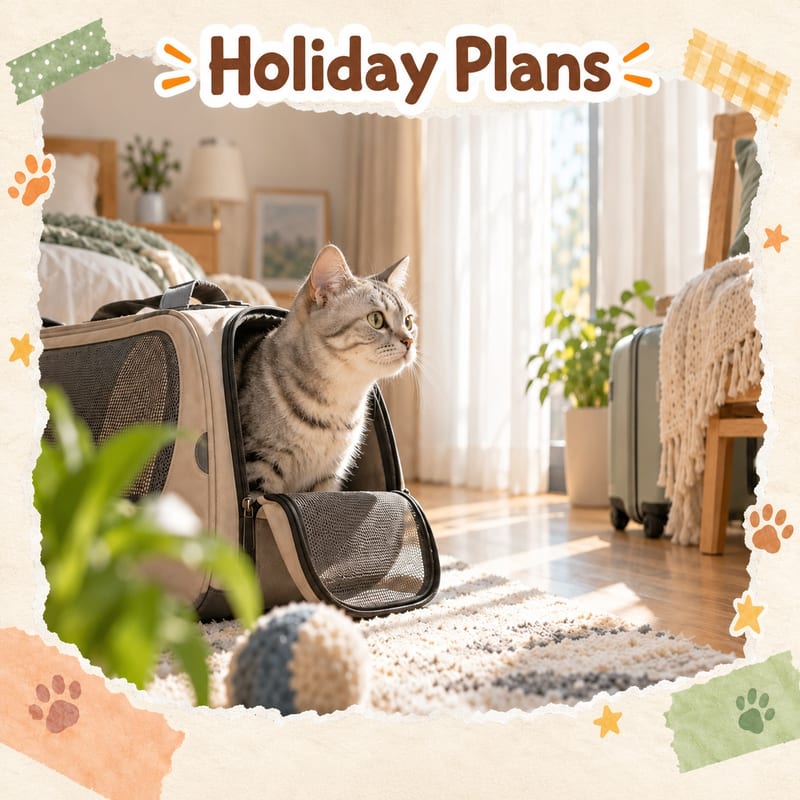
For long holidays and travel in Hong Kong, the principle for American Shorthairs is "environment first": they adapt reasonably well to new environments, but the combined stress of an unfamiliar place and the owner's disappearance is the most likely trigger for stress. Priority suggestions: first, a familiar friend visits to feed and play (at least one session daily, not just topping up food); second, a cat-experienced household takes the cat short-term (with an isolation period and vaccination records); third, a boarding hotel, choosing a place with separate cat rooms, 24-hour air-conditioning and on-duty care, and visiting in person before check-in to observe the condition of current guests. Whichever arrangement, leaving written feeding amounts and usual routines is far more reliable than verbal instructions before you go; do not leave "make them happy" free-feeding snacks, as overfeeding is the most common accident during boarding.
Related Reading
- American Shorthair disadvantages and how to cope
- American Shorthair weight and growth guide
- American Shorthair price and adoption full guide
- Cat trees, dehumidifiers and grooming supplies: see the Hong Kong home-compatible range at PetChill pet supplies.
The housing policy descriptions in this article are a general summary; for individual tenancy agreements and deed of mutual covenant clauses, please refer to the documents you hold and enquiries with the management office; for vaccination schedules, please consult a registered veterinarian.
 Fuji One full guide →





