
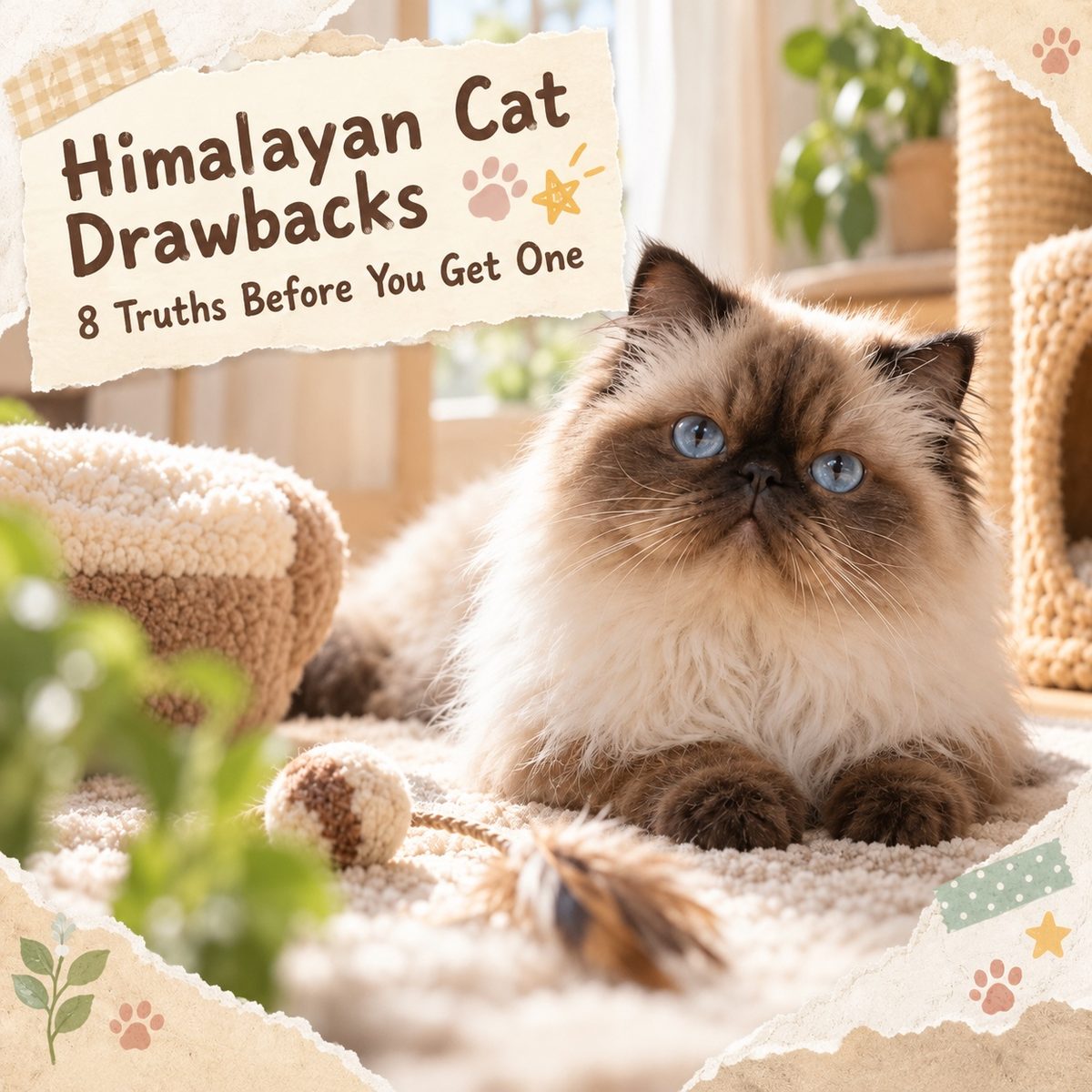
Quick answer: The Himalayan cat's disadvantages can be summed up in one sentence: "Beauty comes at the cost of homework." The eight practical downsides—daily brushing and tear-stain cleaning, heat and humidity sensitivity, PKD genetic risk, frequent respiratory and eye problems, easy weight gain, heavy shedding, poor tolerance of being alone, and higher expenses. Each has a corresponding solution, but all require your daily time and a budget set aside. Below we break down each one, with a decision checklist at the end.
Want to know the Himalayan cat inside out? Start with the Himalayan cat breed profile.
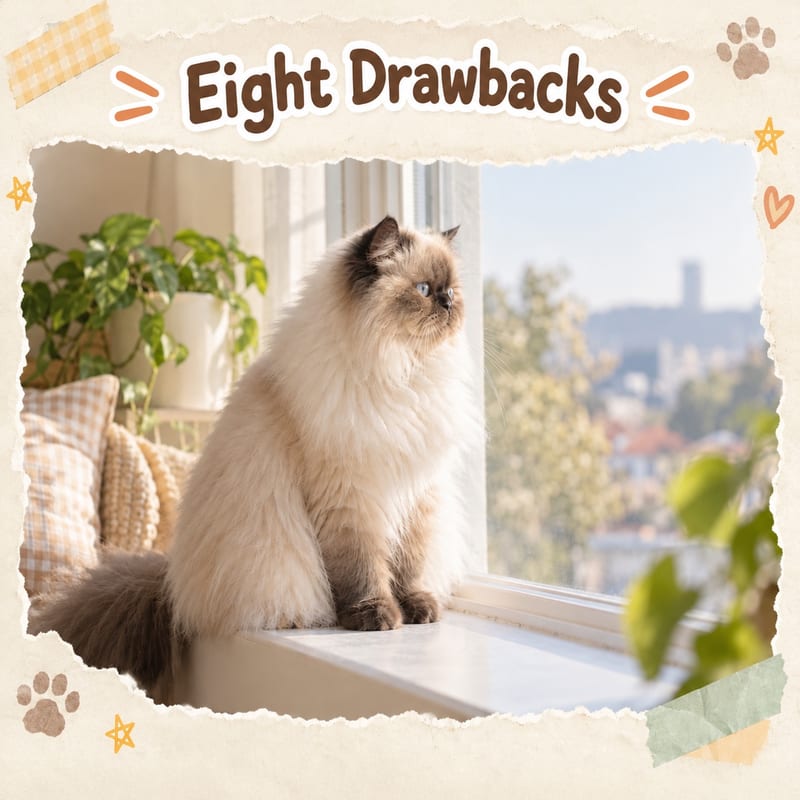
1. Overview of disadvantages: all eight pitfalls at a glance
| # | Disadvantage | Severity | Solution | Monthly cost direction |
|---|---|---|---|---|
| 1 | Daily brushing and tear-stain cleaning | ★★★★ | Fixed routine 20–30 minutes | Supplies $100–150 |
| 2 | Heat and humidity sensitivity (flat face + long hair) | ★★★★ | Constant air-conditioning and dehumidifying | Extra electricity bill |
| 3 | PKD genetic risk | ★★★★★ | Only buy screened bloodlines + annual ultrasound | Amortised $100–200 |
| 4 | Respiratory/eye problems | ★★★ | Humidity control, avoid smoke and dust, regular check-ups | Medical reserve |
| 5 | Easy weight gain | ★★★ | Scheduled, portioned feeding | Almost zero |
| 6 | Heavy shedding | ★★ | Daily brushing + cleaning tools | One-off setup cost |
| 7 | Poor tolerance of being alone | ★★★ | Companion cat / fixed companionship time | Depends on arrangement |
| 8 | Higher expenses | ★★★ | Budget + medical reserve | Total about $1,000–1,600 |
2. The homework: brushing, tear stains, and "the cost of laziness"
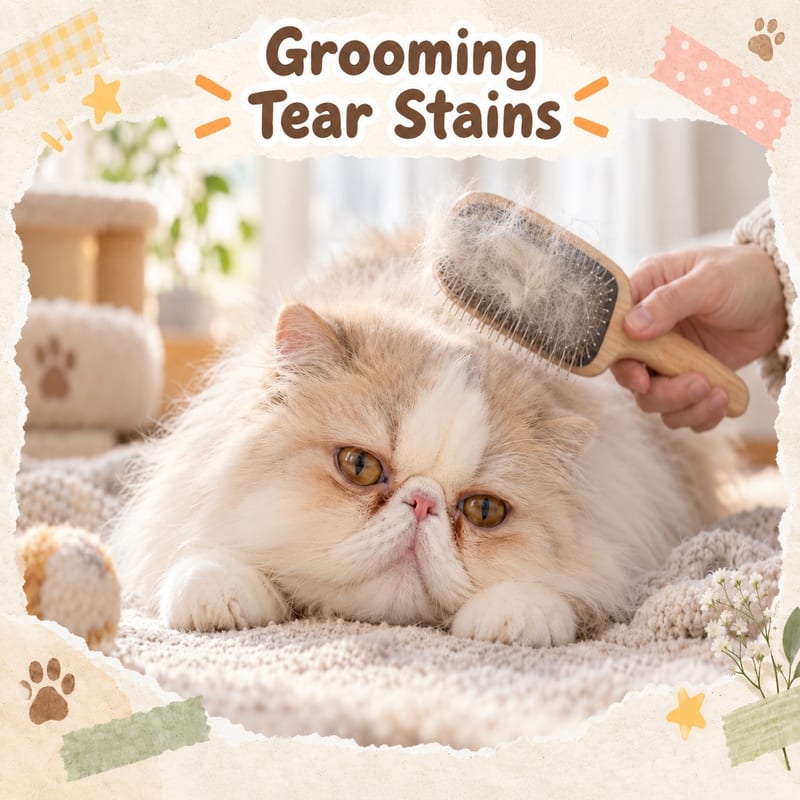
The first thing that puts people off isn't money—it's time. The Himalayan's Persian-style double long coat needs daily brushing down to the undercoat—a quick surface brush is as good as nothing. Behind the ears, armpits, the neck "scarf" area, under the tail, and the groin are the five major knot hotspots; skip a week or two and it can felt into a solid mat, leaving you with no choice but professional grooming or even a vet visit. The flat face brings the second chore: tear stains. The tear ducts are short and curved, so tears overflowing onto the face is normal; skip daily wiping and you get reddish-brown stains plus fold dermatitis. Together these take 20–30 minutes daily, rain or shine—business trips, holidays, sleeping in are no excuse. Practical kit: slicker brush and grooming spray, saline-soaked cotton pads, hairball gel—buy once and they last a long time. PetChill pet supplies has a full line of cat grooming tools.
3. The body build: the bill for a flat face and long hair
Heat and humidity sensitivity: Flat-faced cats are naturally inefficient at cooling down by panting, and the double long coat traps heat, making Hong Kong's June–September a high-risk period for them; prolonged high humidity also lets the undercoat stay damp, raising the chance of skin disease and fungal infections. The only solution is artificial climate. Air-conditioning and dehumidifying aren't pampering—they're survival conditions for this breed. That also means electricity bills and "someone at home" schedules are practical considerations before getting one.
Respiratory and eye issues: The short nasal passages mean a higher rate of snoring, sleep apnoea, and laboured breathing in heat; shallow eye sockets and facial folds make corneal damage and fold inflammation common. Avoid aromatherapy and smoke, keep humidity in range, and annual eye check-ups are standard. For flights, note that because of airway risks, many airlines have transport restrictions on flat-faced cats—check before any cross-city move.
Hairballs: Long-haired cats ingest more hair when self-grooming, so the risk of vomiting hairballs and intestinal blockage is higher than in short-haired cats. Daily brushing plus hairball products can noticeably reduce hairball frequency.
4. Genetic health: PKD is a veto item
Polycystic kidney disease (PKD) from the Persian lineage is the most important genetic risk for the Himalayan cat. Genetic testing is well established, and ultrasound can detect it early. The rule is simple: do not buy a cat whose parents have no PKD screening records, no matter how good it looks; if you already have one, annual kidney function tests plus ultrasound are a fixed routine from middle age. Cats caught early can extend their quality-of-life period through diet and medication management; late detection means an expensive and heartbreaking battle. In addition, flat-faced breeds have more malocclusion and periodontal problems—don't skimp on a dental check every six months.
5. Personality and lifestyle: easy weight gain, shedding, poor tolerance of being alone
Easy weight gain: This breed's default mode is lying still in a cool spot, with activity levels so low that owners easily overlook calorie control. Obesity worsens the already strained breathing and joint stress of a flat-faced cat, compounding the disadvantages. Feed scheduled, weighed portions; no free feeding.
Shedding: In the spring and autumn shedding seasons, black clothes and sofas will tell the truth. Remedies: daily brushing to collect loose fur, robot vacuum, lint roller, air purifier—effective for symptoms, but the root is diligent brushing.
Poor tolerance of being alone: Siamese blood makes them more affectionate than Persians, but also less able to tolerate long periods without company. Households where the cat would be alone 10+ hours a day should consider getting two (Himalayans accept gentle companion cats well), or choose another breed.
6. Money: an honest bill
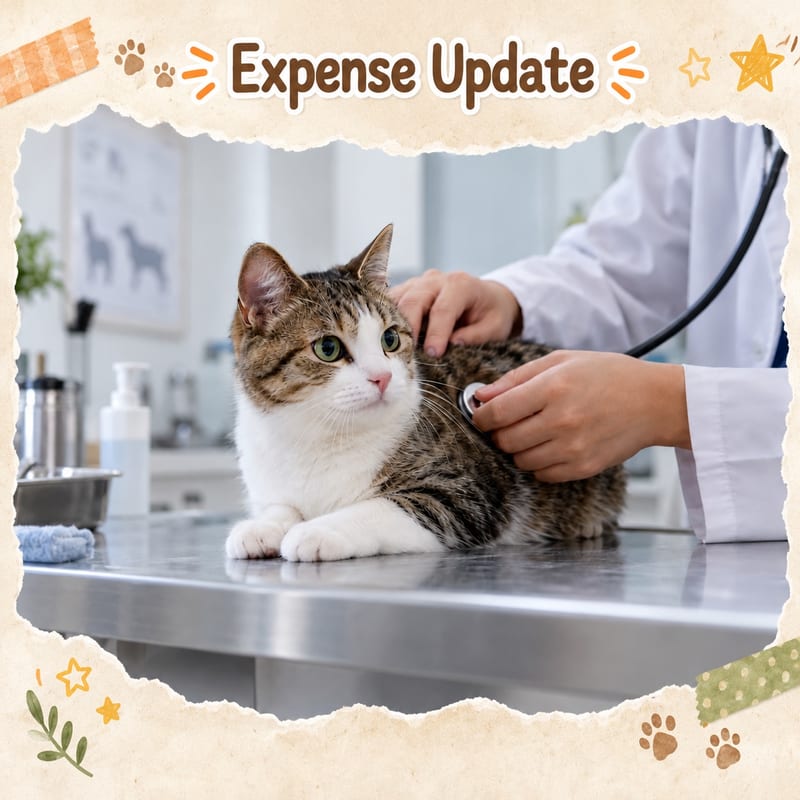
Purchase: papered catteries HK$12,000–25,000 (pedigree level costs more); monthly: food, litter, grooming, medical reserve total about HK$1,000–1,600; professional grooming $400–700 per session; kidney screening from middle age $1,500–3,000 per year. Compared with short-haired domestic cats, the Himalayan is clearly a "high cost of ownership" breed.
7. Pre-purchase decision checklist: answer eight questions honestly
Turn the eight disadvantages into an entrance ticket: One, can you commit 20–30 minutes daily to grooming—do you travel often? Two, with air-conditioning running long hours in summer, can you handle the electricity bill and being at home? Three, have you budgeted HK$12,000–25,000 to buy and $1,000–1,600 per month to own? Four, does anyone in the household have cat allergies—long-haired cats expose more allergen surface area? Five, is the home environment quiet and stable long-term? (This breed is incompatible with renovation noise and screaming toddlers.) Six, can you give 15 minutes of pure companionship daily? (Poor tolerance of being alone.) Seven, do you accept a life of black clothes and robot vacuums? Eight, do you have a medical buffer fund (so a single emergency costing $3,000–8,000 doesn't touch your savings)? If any one of the eight is a long-term "no", consider a lower-maintenance short-haired breed instead—it's not that you don't love cats, it's loving the right one. For a similar comparison, see Persian cat disadvantages full list.
To be fair: none of the eight above is a "fatal flaw"; all have standard response routines. The real filter is whether you're willing to make these routines part of daily life. The right way to use a disadvantage list isn't to scare you off—it's to replace "get one first and figure it out later" with "see clearly, then decide".
Key takeaways
- ✅ The core disadvantage = "beauty comes at the cost of homework": daily brushing + tear-stain cleaning is a non-negotiable must
- ✅ PKD is a veto item: don't buy a cat without parental screening records; annual kidney checks from middle age
- ✅ Heat and humidity sensitivity can only be solved by artificial climate; electricity bills and time at home are both costs
- ✅ Easy weight gain, shedding, and poor tolerance of being alone are the three personality/lifestyle pitfalls—all solvable, but all require owner effort
- ✅ Honest bill: purchase over ten thousand, monthly expenses over a thousand, regular medical screening from middle age
- ✅ Suits slow-paced families with time, budget, and air-conditioning; otherwise look at short-haired breeds
Related reading
- Himalayan cat keeping in Hong Kong: what to do about the hot, humid climate
- Himalayan cat lifespan and health full analysis
- Himalayan cat price and adoption full guide
- Slicker brush, grooming spray, hairball gel, shallow bowls: get everything in one place at PetChill pet supplies.
This article is a general summary of breed tendencies; for individual health and behaviour issues, consult a licensed veterinarian or cat behaviourist.
 Fuji One full guide →


 Almo Nature full guide →



