
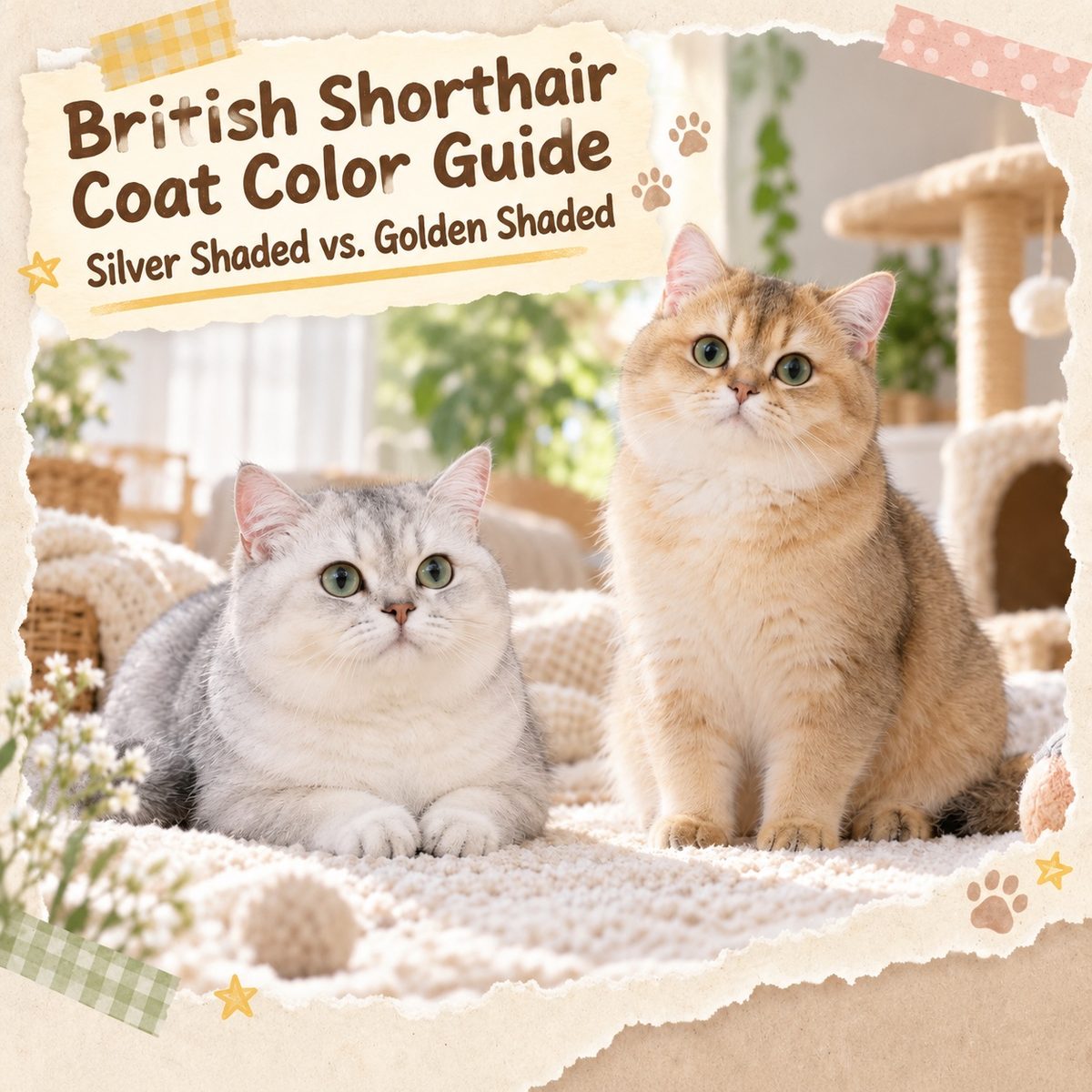
Quick answer: Silver shaded cats and golden shaded cats are both high-priced popular British Shorthair colours; the British Shorthair has more than a hundred coat colour combinations registered with associations such as CFA and GCCF, and in Hong Kong the most common is solid blue (British Blue), followed by blue-and-white bicolour and tabby series. Before choosing a colour, understand each colour's care requirements and breeding background, and don't let the words "rare colour" lead you by the nose.
Want to know the British Shorthair inside out? Start with the British Shorthair breed profile and the Complete British Shorthair Guide.
What is a silver shaded cat? The key points in 30 seconds
A silver shaded cat is not a separate breed but a shaded colour within the British Shorthair: the undercoat is near silvery-white and each hair has a black tip, creating a "silver frosted" effect, with green eyes and black eyeliner as signature features. In the Hong Kong market, "silver shaded" almost always means the British Shorthair silver shaded. The table below covers the specs buyers most often check; prices and suitability are broken down further below.
| Item | Silver shaded British Shorthair |
|---|---|
| Breed | A shaded colour of the British Shorthair (not a separate breed) |
| Coat structure | Silvery-white undercoat + black tips (tipped) |
| Eye colour | Green is the mainstream, with black "eyeliner" |
| Weight | Male 5–8 kg / female 3.5–5.5 kg |
| Average lifespan | 12–15 years |
| Coat texture | Short double coat, dense undercoat, heavy shedding in moulting season |
| Personality | Quiet, independent, not clingy but bonded to its owner |
| Hong Kong price | About HK$10,000–28,000 |
| Monthly basic costs | About HK$700–1,300 |
Three basics you must know:
- Silver shaded is a "colour", not a "breed" — the breed field on the pedigree says British Shorthair; the colour field says silver shaded.
- Tip colour only stabilises at 2–3 years old — a kitten's shade is not reliable; photos of the parents as adults are more reliable.
- A thick undercoat means heavy shedding — short-haired but double-coated, it sheds as much as a long-haired cat in moulting season.
Silver shaded cat prices and monthly costs (2026 Hong Kong market)
Silver shaded pricing mainly depends on three things: evenness of the tipping, depth of eye colour, and the parents' screening records. The table below shows actual Hong Kong price ranges; figures are for reference only, and you should ask about every item before paying a deposit.
| Item | Range | Notes |
|---|---|---|
| Registered cattery | HK$15,000–28,000 | Pedigree certificate, parents' heart and kidney screening records |
| Licensed pet shop | HK$10,000–20,000 | Evenness of tipping and completeness of eyeliner affect the price |
| Adoption (British Shorthair type) | HK$0–2,000 | Shaded colours very rarely appear; be prepared for a long wait |
| Vaccines (first year, three doses) | HK$900–1,500 | Annual booster afterwards |
| Neutering | HK$1,500–3,500 | Cheaper for males, more expensive for females |
| Monthly food | HK$350–700 | Mix of dry and wet, control weight to prevent obesity |
| Monthly cat litter | HK$120–250 | Clumping or tofu litter |
| Grooming tools (one-off) | HK$200–600 | Slicker brush + undercoat rake essential |
| Medical reserve (recommended) | HK$200–500/month | Mainly heart and kidney checks |
| Monthly total | About HK$700–1,300 | Excludes major medical costs |
The price gap between silver shaded and golden shaded can reach HK$5,000–10,000, but care costs are the same — that premium buys aesthetics, not health. Before paying extra for a colour, confirm the parents' screening documents are complete.
Who is a silver shaded cat suitable for?
| Owner type | Suitability | Reason |
|---|---|---|
| 9-to-6 office workers | Suitable | British Shorthairs tolerate being alone well; 6–8 hours alone per day is acceptable |
| First-time cat owners | Suitable | Stable personality, low destructiveness, clear health path |
| Families with children | Suitable | Tolerant but doesn't like being held; teach children to interact instead of forcing cuddles |
| People wanting an extremely clingy cat | Not recommended | Silver shaded is a "companion nearby" type, not a "sleeps on you" type |
| People very sensitive to cat hair | Not recommended | Double undercoat sheds heavily in moulting season; allergy risk is not low |
Reverse self-check (three questions):
- Can you accept brushing for 10 minutes every day for several weeks during moulting season?
- Do you mind having floating fur at home long-term, with the vacuum cleaner becoming a daily item?
- Do you want "a cat that quietly keeps you company" or "a cat that clings to you all day"?
If two of the three lean towards "clingy" or you can't answer "yes", a silver shaded may not be your cup of tea — choosing a more interactive breed would be more practical.
Silver shaded cat compared with other British Shorthair colours
| Colour | Commonness in Hong Kong | Price direction | Care difficulty | Eye colour |
|---|---|---|---|---|
| Silver shaded | Medium | Medium-high (HK$10,000–28,000) | Medium (thick undercoat needs frequent brushing) | Green with black eyeliner |
| Solid blue | Highest | Baseline (HK$8,000–18,000) | Low | Copper-gold |
| Blue-and-white bicolour | High | Slightly above baseline | Medium (white areas need daily wiping) | Copper-gold |
| Golden shaded | Medium-low | Highest (HK$15,000–35,000) | Medium | Green or gold |
| Silver tabby | Medium | Medium | Low | Gold or green |
In one sentence: for value for money choose solid blue; for the silver frosted look choose silver shaded; for market heat choose golden shaded. All three are British Shorthairs with similar personality and care; the difference is mainly looks and price.
After a silver shaded cat comes home: first 90 days care schedule
| Time | What to do | Approximate cost |
|---|---|---|
| Week 1 | Confine to one room to settle in; don't change food immediately | HK$0 |
| Weeks 2–4 | Seven-day gradual transition to new food, first deworming and faecal test | HK$300–600 |
| Month 1 | Complete vaccinations, register with a veterinarian | HK$500–900 |
| Month 2 | Establish grooming habit (2–3 times a week), watch for tear stains | HK$200–400 (tools) |
| Month 3 | First basic health check, discuss neutering schedule | HK$600–1,200 |
The first 90 days are the golden period to "see the cat clearly": record appetite, water intake and litter box habits daily; the next ten years of health judgements will be compared against this baseline.
Four most common silver shaded cat misconceptions
Before paying a deposit, clear up these four common misunderstandings:
| Misconception | Reality |
|---|---|
| Silver shaded is a separate breed | It is a coat colour of the British Shorthair; ask sellers claiming "purebred silver shaded cat" for the pedigree registration |
| The blacker the eyeliner, the purer the breed | Black eyeliner is a colour trait with individual variation; it has no direct bearing on purity — pedigree documents are the basis |
| Short-haired cats don't need much brushing | The silver shaded undercoat is extremely thick; without brushing in moulting season it mats and fur flies everywhere — brush at least 2–3 times a week |
| A kitten with a dark coat has "good pigment" | Tipping only sets at 2–3 years old; kittens being darker or lighter is normal, and baby photos are no reference |
See through these four misconceptions and you're already ahead of half of impromptu buyers. The only homework left: look at the parents' screening documents, not the baby photo filters.
How to choose a cattery for a silver shaded cat: 5 checkpoints
Silver shaded has been a hyped colour in Hong Kong in recent years, and many backyard breeders have entered the market. Before paying a deposit, screen with these five checkpoints:
| Checkpoint | Pass standard | Fail signal |
|---|---|---|
| 1. Pedigree registration | CFA/TICA/GCCF registered, breed field says British Shorthair | Says "purebred" but can't produce documents |
| 2. Parent screening | Can produce heart ultrasound and kidney test reports | Only says "the parents are very healthy" |
| 3. Photos of adult parents | Proactively provides photos of the parents after 2 years old | Only baby photos, refuses to show parents |
| 4. Colour change disclosure | States in writing that tipping only sets at 2–3 years old | Guarantees "the colour now is the final colour" |
| 5. After-sales commitment | Health guarantee period and genetic disease clauses | No recognition after leaving, no written commitment |
If three of the five checkpoints fail, walk away no matter how attractive the price. The silver shaded premium should be based on documents and screening, not on the seller's word. Remember: a HK$2,000 heart ultrasound report for the parents is the best-value insurance you'll buy for the next ten-plus years.
Three questions to ask before paying a deposit for a silver shaded cat
| Question | Key points in the answer |
|---|---|
| How is it different from a silver tabby? | Shaded means "coloured tips, clean undercoat"; tabby means "clear stripes"; if the pattern doesn't line up and the base colour is even, it's shaded |
| Are males or females more expensive? | Within the same bloodline the difference is usually HK$1,000–3,000, with males more expensive; but coat colour quality is the main pricing factor |
| Is one enough? | British Shorthairs tolerate being alone relatively well, so a single cat is acceptable; if no one is home often, consider two (monthly costs increase by HK$700–1,200) |
Bring these three questions and the five checkpoints to the cattery, and the seller will immediately know you're a buyer who has done their homework; the room for negotiation and the transparency of information usually change completely.
British Shorthair colours overview: one "blue" rules them all
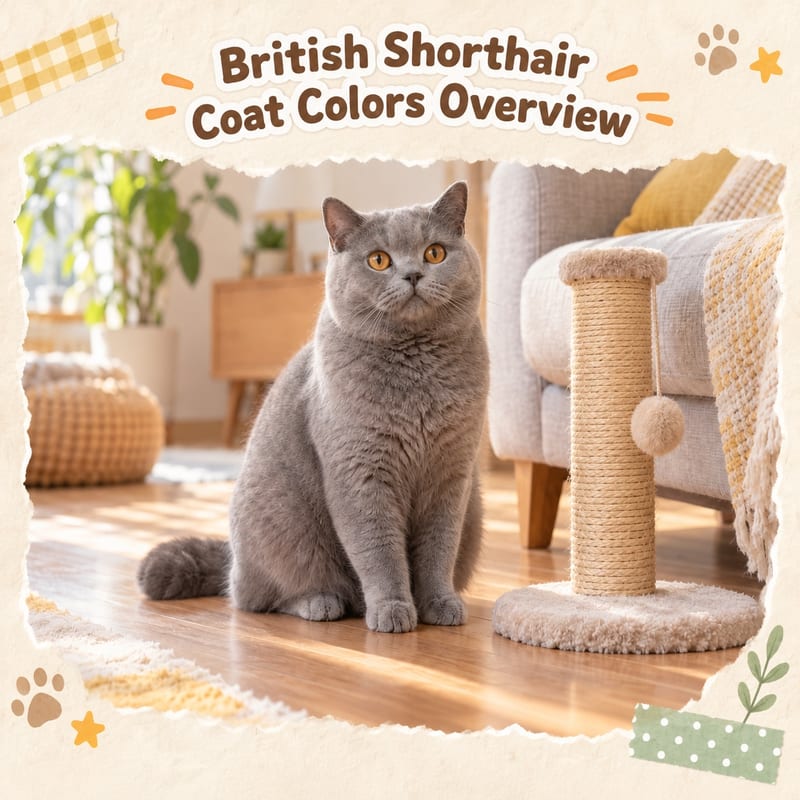
When people think of the British Shorthair, most first picture that blue teddy bear. The British Shorthair's "blue" is actually a short dense coat with a silvery-grey tone; the official colour name is blue, and it looks like a layer of frosted blue-grey velvet — that frosted texture is where the value of the blue colour lies; whether the colour is true shows under a daylight lamp. Because of this, although solid blue is the most common, "cheapest" is actually a misconception: a blue British Shorthair with true colour, a thick plush coat, a round head and copper eyes can be worth more at shows than many patterned colours. The CFA and UK GCCF breed standards accept a large number of colours, from solid, bicolour, tabby, shaded to smoke, and the registered combinations can be described as "a hundred colours blooming". But in Hong Kong's street-cat-level stock and cattery supply, the distribution is as in the table below:
| Colour | Features | Commonness | Price direction |
|---|---|---|---|
| Solid blue (British Blue) | Even blue-grey all over, copper-gold eyes | Highest | Baseline |
| Blue-and-white bicolour | Blue plus white patches, inverted V face marking | High | Slightly above baseline |
| Silver tabby / silver shaded | Silvery-white base with black stripes or tips | Medium | Medium-high |
| Golden shaded | Warm golden base with black tips, green or gold eyes | Medium-low | Highest |
| Cream, blue-cream, calico | Warm light colours; calico almost always female | Medium-low | Medium |
| Solid black, solid white, fawn | Solid colour system; black and white cats each have fans | Low | Depends on pedigree |
Why blue-and-white British Shorthairs are so popular
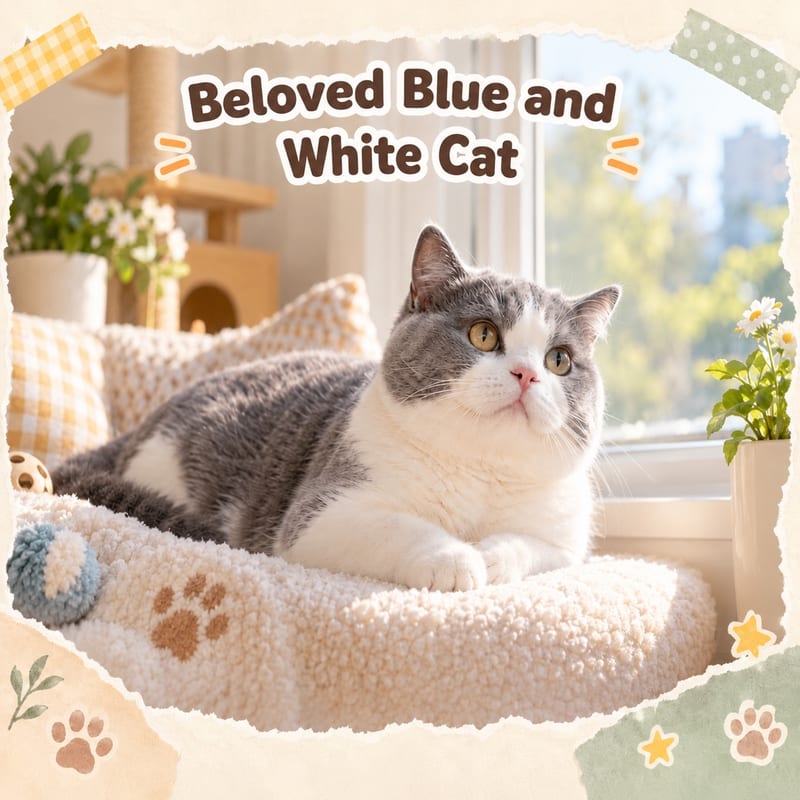
Searches for "blue-and-white British Shorthair" consistently beat "British Shorthair colours", for a simple reason: white makes the round face look even more like a cute sticker. Blue-and-white is a bicolour system, with three key points to observe:
- Symmetry of the white distribution: whether the white inverted V on the nose is left-right symmetrical and whether it spreads past the eyes;
- Four white paws: consistent height of the white boots is a plus;
- Quality of the blue areas: the blue parts should be even, without stray coloured spots.
A bucket of cold water: the patch distribution of blue-and-white kittens adjusts slightly as they grow, and the "good look" at three months may not equal the adult result. This is a common uncertainty with all bicolour cats, and reputable breeders usually state this in the contract or price list. Buyers should not pay a deposit based on a single baby photo; it is best to ask the breeder for photos of the adult parents and then assess whether it is within your acceptable range.
The shaded colour debate: golden shaded vs silver shaded
Shaded/tipped means coloured tips with a lighter hair shaft. Silver shaded has a near-white undercoat with black tips, greenish eyes and black eyeliner; golden shaded has a warm golden undercoat with black tips, and in recent years the market has pushed its price to a peak, with some "NY" (colorpoint code) golden shaded cats priced at tens of thousands each. Be clear-headed: the value of shaded colours is largely determined by market sentiment, not by a ranking of breed standards; paying a colour premium while ignoring heart, lung and kidney screening is putting the cart before the horse. Also, the tipping pigment of shaded cats changes with age and only stabilises after two or three years; it is normal for it to be hard to judge when young.
Care differences by colour
| Colour | Care focus |
|---|---|
| Solid blue | Dark fur shows floating hairs; brush diligently in moulting season; even sheen on the coat is a health indicator, while patchy fading means a vet visit |
| Blue-and-white / lots of white | White fur shows dirt easily; wipe the chin daily with a damp cotton pad to prevent chin acne; white fur around the eyes easily shows tear stains, clean gently with eye cleaner |
| Golden / silver shaded | Dense undercoat mats easily; brush at least twice a week; keep the skin dry |
| Tabby | Clear stripes need good protein; a balanced diet keeps the coat glossy |
| Cream / calico | Light fur is translucent; long exposure to strong UV by a window can yellow the white areas — add a sheer curtain by the window |
How to tell a British Shorthair from other blue cats
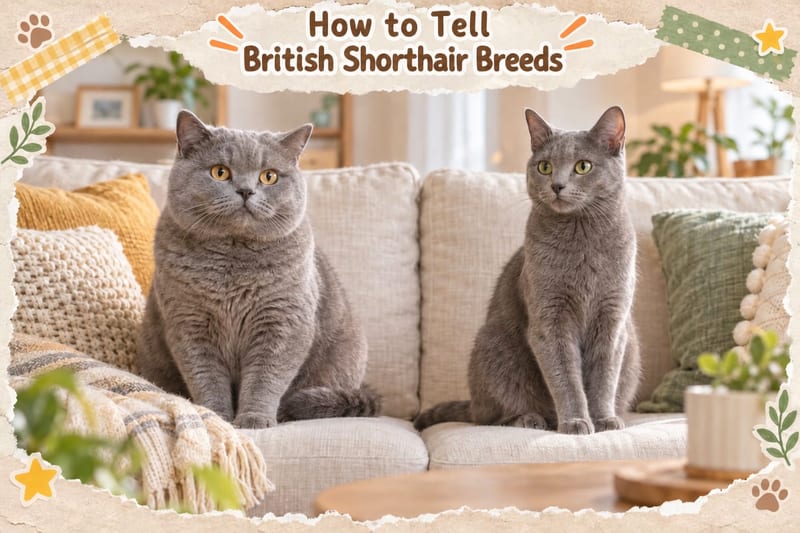
Blue cats are not only British Shorthairs: Russian Blues have wedge-shaped faces and green eyes with silky coats; Chartreux and domestic blue-grey cats are also often mistaken for them. The British Shorthair identification combination is: round head and face, full cheeks, short dense plush coat, large round copper-gold eyes, sturdy cobby body. If two of the three are missing, don't buy it as a British Shorthair, and certainly don't pay a British Shorthair price. There are also extremely beautiful blue-grey short-haired domestic cats; there's no problem admiring them, but looking similar doesn't mean the pedigree is the same — before paying, be clear whether you're buying a breed or a chance encounter.
Beyond coat colour: health before colour
One serious point: some colours (for example colorpoint plus white, extreme golden shaded) have in the past been popular targets for "colour-driven inbreeding", which amplifies genetic disease risk; American veterinary literature has criticised "colour-first breeding" for years. Whichever colour you like, the order of verification should be: parents' health screening certificates → pedigree registration → then coat colour preference. Colour determines how much you enjoy each day; screening determines how many years you enjoy. Also note: the same pair of blue parents can produce blue-and-white or tabby offspring; coat colour inheritance is not as linear as you might think.
Kittens' coat colour "changing period": why baby photos are unreliable
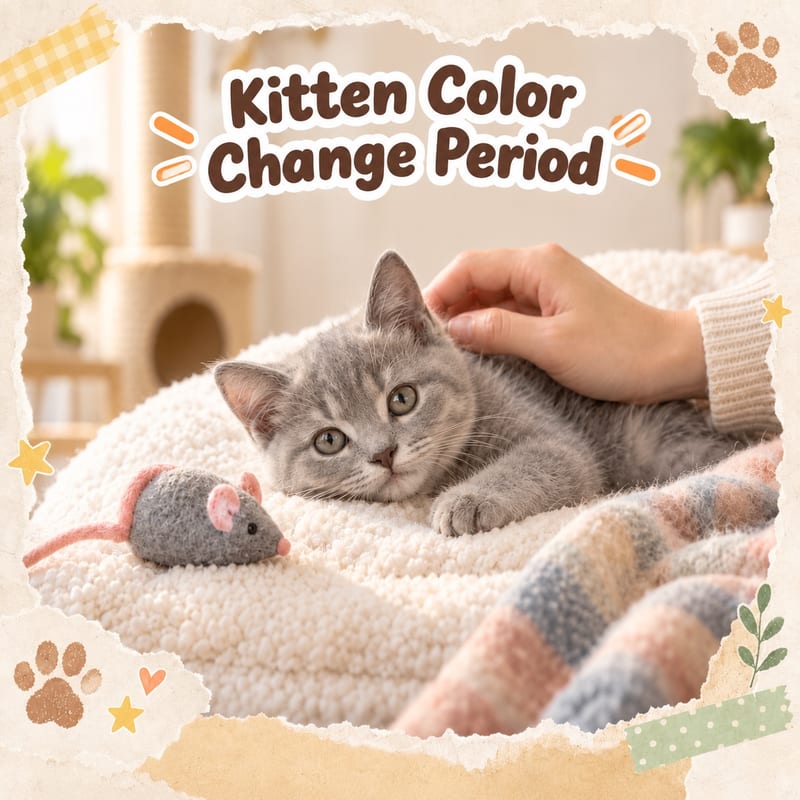
Many buyers don't know: a British Shorthair's coat colour only fully sets at one to two years old. Blue kittens are born with grey-brown fuzz and go through a patchy transitional period at three to six months; reddish-brown tips are normal and not "fake colour"; shaded individuals' tip pigment and eye pigment (green eyes only deepen at two or three years old) are similarly late to develop; colorpoint individuals get darker as they grow, and the final depth can't be seen as kittens. So the most reliable way to assess coat colour is: ask the breeder for photos of the parents as adults for reference, state the expected colour and range of change in the contract, and confirm with the adult parents' photo album when taking the cat home. Conversely, a seller with only a highly saturated baby photo who refuses to explain the expected colour change should be treated with caution no matter how pretty the colour.
Key takeaways
- ✅ The British Shorthair has over a hundred registered colours; in Hong Kong solid blue has the largest stock, followed by blue-and-white and tabby.
- ✅ For blue-and-white, check three things: symmetrical inverted V, consistent white paws, even blue areas.
- ✅ The highest price for golden shaded is market sentiment, not a health guarantee.
- ✅ Individuals with a lot of white need daily chin wiping and eye-corner cleaning to prevent stains and acne.
- ✅ Light-coloured fur yellows with long sun exposure; watch window spots.
- ✅ Order of choosing a colour: health screening → pedigree registration → coat colour preference; don't reverse the order.
Related reading
- British Shorthair personality and intelligence
- British Shorthair weight and growth curve
- British Shorthair prices and adoption guide
- Grooming and cleaning tools for all colours: choose slicker brushes, de-shedding brushes and eye cleaner at PetChill pet supplies.
The colour descriptions in this article are based on the general classification of CFA/GCCF breed standards; individual catteries' naming may differ from official terminology. For health issues, consult a registered veterinarian.
 Fuji One full guide →





