
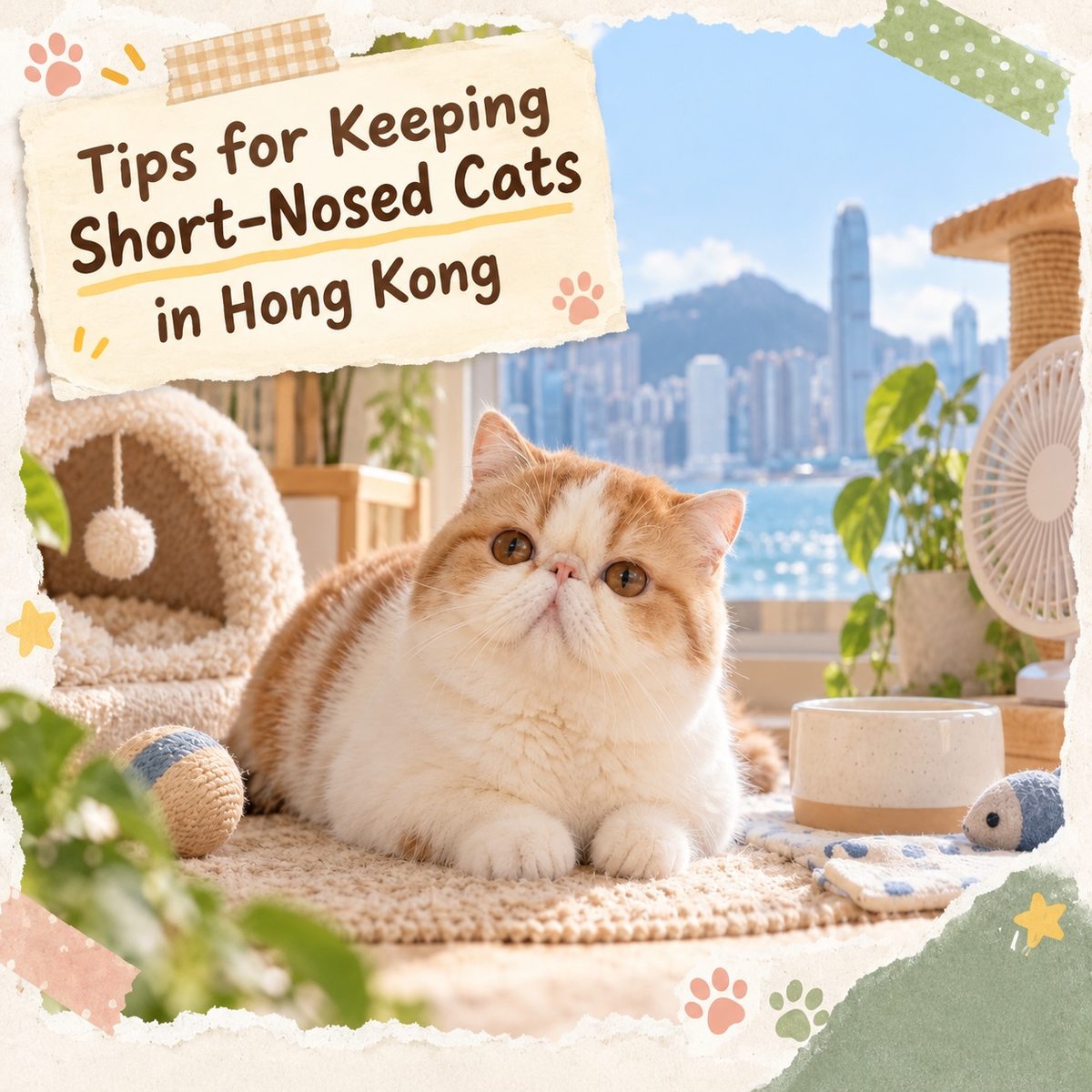
Quick answer: Exotic Shorthairs are suitable for indoor keeping in Hong Kong, but there are three hard prerequisites: sufficient air-conditioning in summer (flat-faced cats dissipate heat poorly and have a high risk of heatstroke), dehumidification during the return-of-southern-dampness season plus daily facial fold cleaning, and confirmation that the tenancy agreement or building deed of mutual covenant permits cat keeping. They do not need and are not recommended to go outdoors, have low activity levels, and suit families with limited space who are willing to spend time on care.
Want a full understanding of the Exotic Shorthair? First see the Exotic Shorthair breed profile.
Hong Kong cat buying recommendations: assess living conditions before choosing a breed
Many people searching "Hong Kong cat buying recommendations" have not thought one thing through clearly: breed choice is actually a function of living conditions. The typical Hong Kong environment—high density, indoor-oriented, hot and humid summers—varies greatly in friendliness towards different cat breeds. The Exotic Shorthair's combination is: low activity level (small units OK), no need to go out (safe), short coat easy to manage (less burden in humid weather than the Persian); but the flat-faced structure is sensitive to heat dissipation and humidity, and these two points are the core homework of keeping an Exotic Shorthair in Hong Kong. Also showing: many people searching British Shorthair Hong Kong, British Shorthair price Hong Kong compare them with the Exotic Shorthair—the two have similar household needs; the British Shorthair is larger and more tolerant of heat and humidity, while the Exotic Shorthair is more "static companionship". American Shorthair price Hong Kong is also often compared alongside; the American Shorthair has a high activity level and actually demands more from small units and time investment.
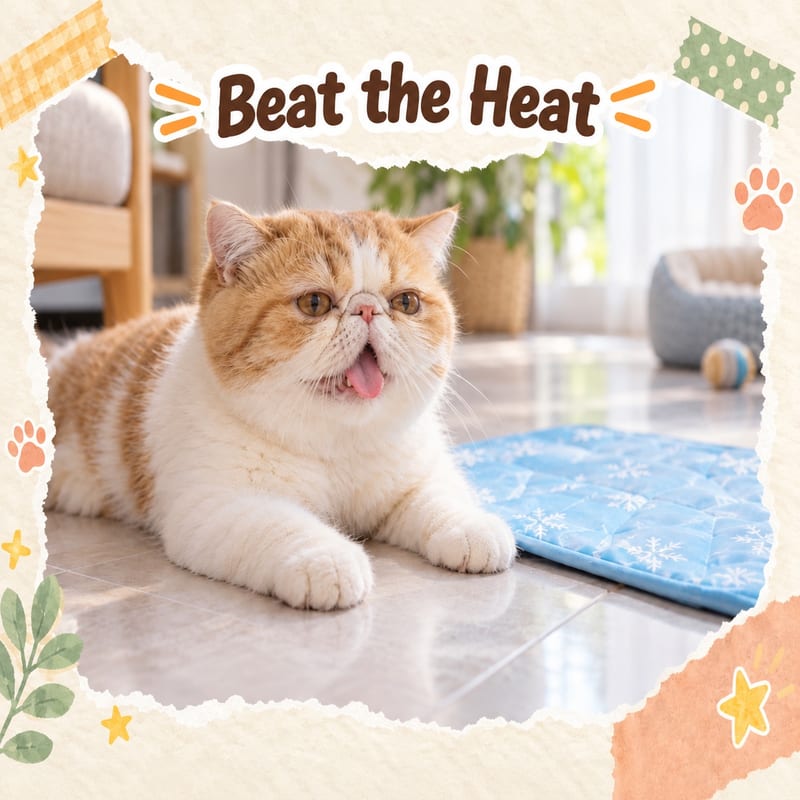
Flat-faced cats through summer: heat prevention is a medical issue, not a comfort issue
The Exotic Shorthair's nasal structure makes heat dissipation inherently less efficient, and vets generally classify brachycephalic cats as a high-risk group for heatstroke. Hong Kong nights remain muggy from May to October; the following are practical operating baselines:
| Item | Recommendation |
|---|---|
| Room temperature | Maintain 24–26°C in summer; when the owner is out, do not set the air-conditioning higher than 27°C |
| Power backup | For long holidays out, arrange in advance for a neighbour to visit or a pet boarding hotel; do not assume "turning on a fan is enough" |
| Drinking water | Flowing water fountain plus multiple water points; flat-faced cats can only drink from shallow bowls |
| Feeding times | Place at cooler times of day; do not leave wet food out for more than half a day |
| Heatstroke symptoms | Rapid panting, drooling, deep red gums, general weakness—send to the vet immediately; this is an emergency |
Never leave the cat in a room or car without air-conditioning, not even for a minute.
Return-of-southern-dampness moisture prevention: facial folds and skin are the battleground
Every year in February and March during the return-of-southern-dampness season, walls sweat and cats get damp too. For the Exotic Shorthair, humidity directly affects two things: facial folds and the eye area. Moist folds are where bacteria and yeast breed, and tear staining noticeably worsens in humid weather. Practical approach:
- Keep the dehumidifier running; target indoor humidity of 50–60%.
- Daily, use cat-specific cleaning solution and a soft cloth to wipe the eye corners and folds around the nose, then gently pat dry—leaving them wet is worse than keeping them dry.
- Place the litter box in the most ventilated spot; in humid weather litter clumps easily and loses accuracy, so consider an enclosed litter box with dehumidifying pads.
- Wash and dry bedding weekly in hot water; flat-faced cats like to sleep close to the floor, and floor mats are the mould frontline.
Public housing, private buildings and deeds of mutual covenant: read the paperwork clearly before keeping a cat
Keeping cats in Hong Kong is not prohibited by law, but restrictions at the residential contract level are the real gate: the Housing Department has a clear policy restricting animal keeping in public rental housing, and breaches may affect the tenancy; for private buildings, check whether the deed of mutual covenant contains a clause prohibiting animal keeping—some buildings have such clauses but in practice mostly tolerate indoor cats. Prospective buyers often search "British Shorthair Hong Kong" and "Oriental Shorthair Hong Kong" to compare breeds, but whichever you choose, checking your own tenancy agreement and deed of mutual covenant first is more important than reading any breed introduction. If living conditions truly do not allow it, keeping a cat will only make things difficult for both the cat and you.
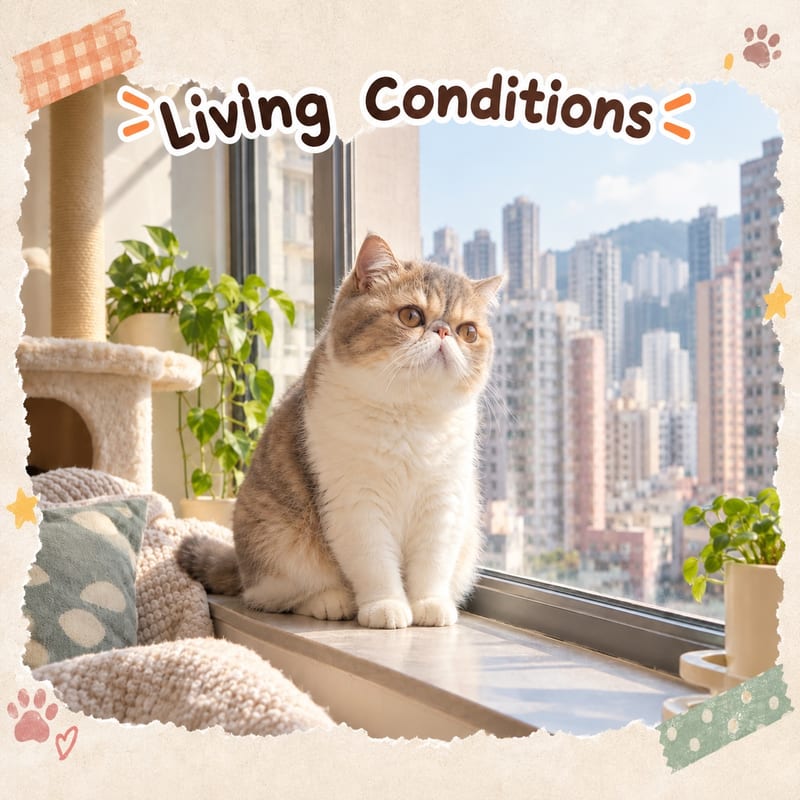
Indoor environment setup: a small unit is enough, but you need to "build upwards"
The Exotic Shorthair does not need large space; what it needs is structure:
| Item | Recommendation |
|---|---|
| Window screens | Always check window grilles; flat-faced cats generally have shallower vision, so do not gamble on fall risk |
| Vertical space | A low cat tree plus a window perch is enough; no need for a tall tower |
| Food bowls | Shallow bowls designed for flat faces, reducing whisker pressure and choking |
| Litter box | Large, low-sided (comfortable for flat-faced cats to enter and exit); one box per cat plus one |
| Sleeping spots | Cooling mat (summer) and nest (winter); Exotic Shorthairs especially like to sleep with their owners |
Four-season management table
| Season | Key points |
|---|---|
| Spring (Feb–Apr) | Dehumidify during return-of-southern-dampness, increase fold cleaning frequency, daily grooming during shedding |
| Summer (May–Oct) | Air-conditioning baseline, water points, educate the whole family on heatstroke symptoms |
| Autumn (Oct–Nov) | Dry-to-humid seasonal transition; check skin and eye-area condition |
| Winter (Dec–Jan) | Hong Kong winters are short; a warm nest is enough; watch for stiff joints in elderly individuals |
Comparison with domestic cats and British Shorthairs: which type of cat best suits Hong Kong flats
Some prospective buyers ask: since the Exotic Shorthair is so dependent on air-conditioning and dehumidification, how does it compare with an ordinary domestic cat or a British Shorthair? An honest framework is this: domestic cats have high genetic diversity and normal respiratory structure, giving them the highest "error tolerance" for the Hong Kong environment and making them the least worrisome choice; the British Shorthair is solidly built and slightly more heat-tolerant, but requires management of obesity and regular checks for heart muscle issues; the Exotic Shorthair is "trading extra environmental and medical management for the ultimate in quiet and companionship quality". There is no objectively best—only which one fits your lifestyle. If you work nine to nine and your home has no habit of air-conditioning, honestly, the Exotic Shorthair is not the best choice for you, and this judgement matters more than any price list.
Newbie three-cat supplies list: buy the right things first, do not overbuy
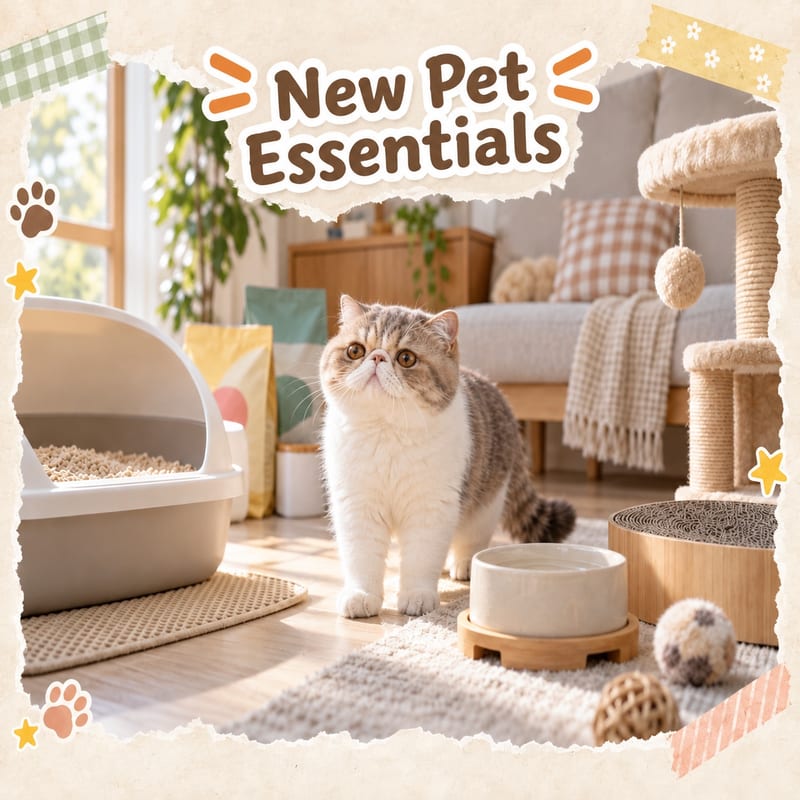
Purchases before bringing the cat home, in priority order: must-buys include shallow food and water bowls suitable for flat faces (ceramic is more stable), a large low-sided litter box with scoop, a washable cat bed, pheromone calming products (useful in the first two weeks of relocation), cat eye cleaning solution and cotton pads, and an airline carrier (the only proper way to see the vet); second-tier items are the cat tree, automatic feeder and water fountain. The most common newbie mistake is "buying all the toys before bringing the cat home"—in the first two weeks the Exotic Shorthair usually will not play with anything; it only needs a quiet corner and a stable routine. It is suggested to set aside an entry supplies budget of HK$1,500–2,500, and add the rest after the cat has settled in for a month and you have seen its preferences clearly.
Key summary
- ✅ The Exotic Shorthair is suited to indoor keeping in Hong Kong, with three major prerequisites: sufficient air-conditioning, diligent dehumidification, and a tenancy agreement and deed of mutual covenant that permit it.
- ✅ Heatstroke in flat-faced cats is an emergency risk; target summer room temperature of 24–26°C, and do not leave the cat in an environment without air-conditioning.
- ✅ During the return-of-southern-dampness season, clean facial folds daily and pat dry; control humidity at 50–60%.
- ✅ Public and private housing restrictions come from the tenancy agreement and the building's deed of mutual covenant; always verify before buying a cat.
- ✅ Shallow bowls, a large low-sided litter box, window screens and vertical space are the core of small-unit setup.
Related reading
- Exotic Shorthair disadvantages and how to cope
- Exotic Shorthair lifespan and tips to extend it
- Exotic Shorthair price and adoption guide
- Heat-relief and dehumidifying supplies and flat-faced food bowls: check out the summer cooling mats, circulating water fountains and cat wipes series at PetChill Pet Supplies.
The housing policy descriptions in this article are a general summary; for individual tenancy agreements and deed of mutual covenant terms, please refer to the documents you hold and enquiries with the management office; for medical symptom assessment, please consult a registered veterinarian.



