
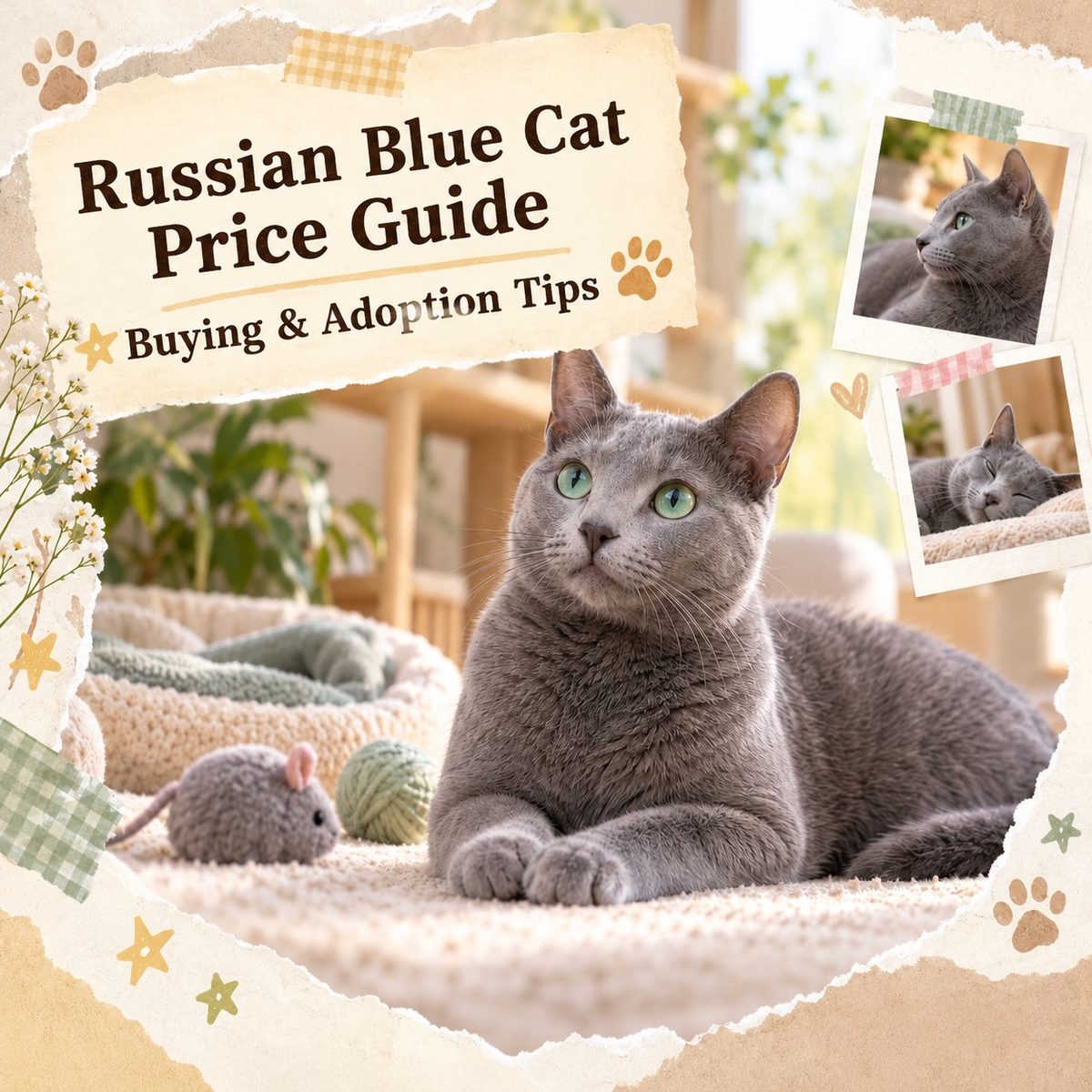
Quick answer: Russian Blue prices in Hong Kong in 2026: pet-quality around HK$10,000–16,000, pedigree-quality around HK$18,000–25,000 or more, generally more expensive than British Shorthairs and Siamese. Adopting a purebred Russian Blue is a matter of chance; SPCA and IRC occasionally have blue-grey domestic cats. Any 'free cat but you pay shipping or must buy specified food' is almost certainly a cat dealer's pitch.
Want to know all about Russian Blues? Start with the Russian Blue breed profile and the Complete Russian Blue Guide.
What is a Russian Blue? 30-second summary
The Russian Blue is a traditional natural breed recognised by both CFA and TICA, known for its silver-blue double coat and emerald green eyes. It is quiet and independent, slow to warm to strangers, the 'not too noisy but follows you around' type. The table below covers the specs Hong Kong owners ask about most.
| Item | Russian Blue |
|---|---|
| Origin | Arkhangelsk, Russia (White Sea port) |
| Average lifespan | 15–20 years |
| Weight | Male 4–5.5 kg / Female 3–4 kg |
| Coat | Double short coat, silver-blue, dense, velvety to the touch |
| Eyes | Emerald green in adults; kittens start yellow-green and gradually change |
| Temperament | Quiet, intelligent, slow to warm, loyal to owner |
| Vocalisation | Low (much quieter than Siamese or Oriental Shorthairs) |
| Hong Kong price | Pet-quality HK$10,000–16,000; pedigree-quality HK$18,000–25,000+ |
| Monthly basic expenses | About HK$800–1,400 |
Three things you must know:
- Green eyes are key — adult cats should have emerald green eyes; persistently yellow eyes usually indicate the bloodline or age isn't there yet.
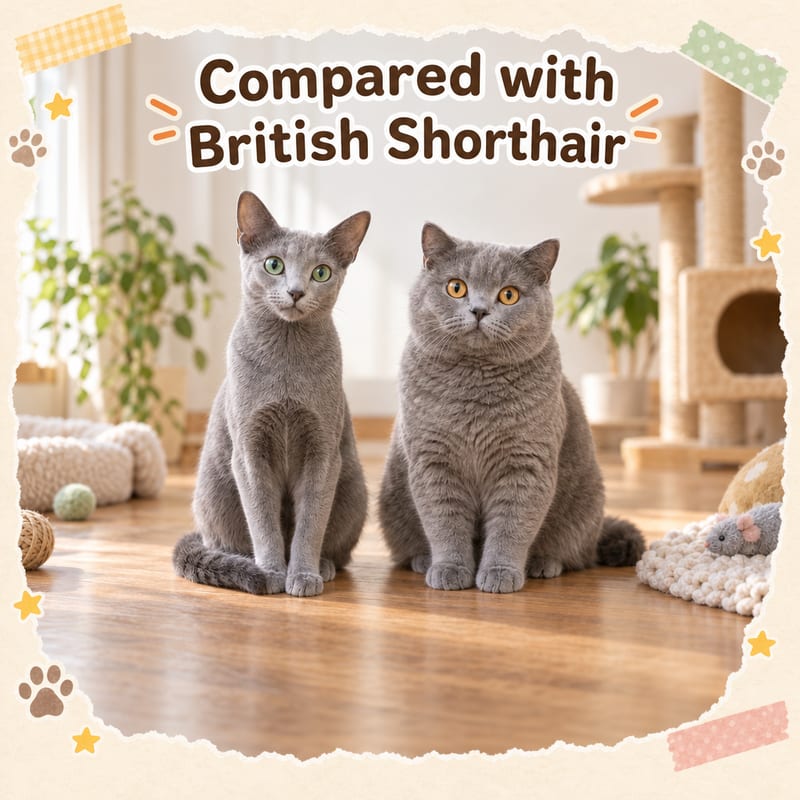
- Two kinds of 'blue cat' — Russian Blues have a wedge-shaped head and slender body; British Shorthair blues have a round head and face and are stocky. The price difference is about 20%.
- Shedding is not minimal — the double coat still needs brushing during shedding season; twice a week is the minimum.
Russian Blue price and monthly expenses (2026 Hong Kong market)
Price is just the entry fee. Russian Blues are bred less than British Shorthairs, and many catteries import breeding cats, so costs are reflected in the price and delivery time. The table below shows Hong Kong market ranges; ask about each item clearly before ordering.
| Item | Range | Notes |
|---|---|---|
| Pet-quality | HK$10,000–16,000 | Purebred but not show-quality appearance; usually with neutering clause |
| Pedigree-quality | HK$18,000–25,000+ | Parents with show records, clear bloodline |
| Imported bloodline | HK$20,000–30,000+ | Imported from overseas recognised catteries, with international pedigree |
| Vaccines (first year, three doses) | HK$900–1,500 | Annual booster thereafter |
| Neutering | HK$1,500–3,500 | Cheaper for males, more for females |
| Microchip + registration | HK$200–500 | Some catteries include this |
| Monthly food | HK$400–700 | Dry food + complete wet food |
| Monthly cat litter | HK$150–250 | Clumping clay / tofu litter |
| Monthly deworming (amortised) | HK$100–150 | Internal and external |
| Medical reserve (recommended) | HK$150–300 | For annual vaccines and emergencies |
| Monthly total | About HK$800–1,400 | Excludes major medical costs |
The most underestimated cost for Hong Kong owners is the import premium. The same bloodline of Russian Blue can differ by over HK$5,000 between a local cattery and direct import, and delivery time can differ by 2–3 months. Before paying a deposit, ask clearly about the pedigree source and the cat's actual location.
Who is a Russian Blue suitable for?
| Owner type | Suitability | Reason |
|---|---|---|
| 9-to-9 office workers | Very suitable | Highly independent, low vocalisation, tolerates being alone well |
| Small flat / public housing | Suitable | Quiet, low risk of neighbour complaints |
| First-time cat owner | Suitable | Stable constitution, moderate grooming difficulty |
| People who want to cuddle daily | Needs assessment | Slow to warm, needs patience to build trust |
| People sensitive to cat hair | Must test in person | Moderate shedding, not truly hypoallergenic; must test contact first |
Reverse self-check (three questions):
- Can you accept that the cat may hide from you and not approach for the first month or two?
- Are you willing to spend 10 minutes brushing twice a week?
- Do you have a budget of over HK$10,000 to get the cat, plus monthly expenses from HK$800?
If you can't answer 'yes' to two of the three, consider adopting a similarly coloured blue-grey domestic cat — equally stable in temperament.
Russian Blue compared with other breeds
| Breed | Vocalisation | Clinginess | Monthly basic expenses | Hong Kong price (pet-quality) |
|---|---|---|---|---|
| Russian Blue | Low | Medium-high | HK$800–1,400 | HK$10,000–16,000 |
| British Shorthair | Low | Medium | HK$600–1,200 | HK$8,000–15,000 |
| Siamese | High | Very high | HK$800–1,500 | HK$7,000–14,000 |
| American Shorthair | Low | Medium | HK$600–1,200 | HK$8,000–15,000 |
| Ragdoll | Low | High | HK$900–1,600 | HK$12,000–20,000 |
In one sentence: want quiet and not too clingy — choose Russian Blue; want lots of interaction — choose Siamese; budget first — choose British Shorthair.
Four most common Russian Blue misconceptions
| Misconception | Reality |
|---|---|
| All blue cats are Russian Blues | Most 'blue cats' on the market are actually British Shorthair blues; you need the pedigree and head shape to tell them apart |
| Russian Blues are hypoallergenic, so they definitely won't cause allergies | Russian Blues produce relatively lower Fel d 1, but not zero; allergy sufferers still need to test in person |
| Short hair doesn't need brushing | The double coat sheds heavily during shedding season; brushing twice a week is the minimum |
| Green eyes are always innate | Kittens' eyes are yellow-green and gradually turn emerald around 4–6 months old |
Russian Blue health check schedule
| Age | Recommended items | Approximate cost |
|---|---|---|
| 2–4 months | First-year vaccines (three doses) + deworming | HK$900–1,500 |
| 6 months | Pre-neutering blood test + neutering | HK$2,000–4,000 |
| 1 year | Annual check-up + vaccine booster | HK$500–900 |
| 2–7 years | Annual check-up | HK$600–1,200 |
| 8+ years | Every six months: blood test, urine test, thyroid | HK$1,200–2,000 per visit |
Three daily observation points:
- Weight: weigh once a month; a loss of more than 5% in a month warrants a vet visit.
- Teeth: Russian Blues are prone to tartar; start brushing from 1 year old.
- Water intake: a sudden large increase may signal kidney or diabetes issues.
5 things to check before buying a Russian Blue
| Item | Pass standard | Red flag |
|---|---|---|
| Pedigree | CFA/TICA/WCF recognised association | Only photocopies, refuses verification |
| Parents' records | Health and genetic screening | Says 'no need to see' |
| Vaccination and deworming booklet | Clear doses and dates | Handwritten, not issued by a vet |
| Cattery premises | Video or in-person visit | Only willing to hand over on the street |
| Written guarantee | Health guarantee terms | Verbal promises, no contract |
Three ways to keep a Russian Blue: monthly expense comparison
The same Russian Blue can be kept in different ways. The point isn't which is 'right', but to decide in advance so you don't discover a shortfall when something happens.
| Item | Budget | Standard | Secure |
|---|---|---|---|
| Food | HK$400/month (mainly dry) | HK$550/month (dry and wet mixed) | HK$700/month (mainly complete wet food) |
| Cat litter | HK$150/month | HK$200/month | HK$250/month |
| Deworming | HK$100/month | HK$120/month | HK$150/month |
| Medical reserve | HK$0 (rely on cash) | HK$150/month | HK$300/month |
| Extras | — | Annual check-up | Six-monthly check-up + pet insurance |
| Monthly total | About HK$650 | About HK$1,020 | About HK$1,400 |
| Suitable for | Tight budget, have cash reserve | Most families | Want to avoid sudden large expenses |
Insurance vs self-funded reserve: Hong Kong pet insurance annual premiums are generally HK$1,500–4,000, with excess and caps. If you already have over HK$20,000 in liquid cash, self-funding is usually more flexible; otherwise insurance is a tool to spread sudden risks. You don't need both.
1. Russian Blue price: two-tier market ranges
The Russian Blue is an officially registered traditional natural breed with CFA and TICA; its silver-blue double coat and emerald green eyes are its signature. Because local catteries are far fewer than for mainstream breeds like British Shorthairs and American Shorthairs, many sources import breeding cats from Japan, Europe, or Australia, and the cost is directly reflected in the price.
| Tier | Price range (HKD) | Characteristics |
|---|---|---|
| Pet-quality (not for showing) | 10,000–16,000 | Purebred but not show-quality appearance; neutered or with neutering clause |
| Show/pedigree-quality | 18,000–25,000+ | Parents with show records, clear bloodline, eligible for pedigree registration |
| Imported bloodline | 20,000–30,000+ | Directly imported from overseas recognised catteries, with international pedigree |
These ranges are general observations of the local market; actual prices vary with bloodline fame, coat quality, and delivery time. If you see a 'Russian Blue baby' significantly below market, the first step isn't to rejoice — it's to verify.
2. Compared with British Shorthair and Siamese: where does the Russian Blue cost more?
Many readers come from searches like 'Siamese cat price' or 'British Shorthair price' and want to know where the Russian Blue sits among mainstream breeds. Comparison below:
| Breed | Pet-quality (HKD) | Relative to Russian Blue |
|---|---|---|
| British Shorthair (blue) | 8,000–15,000 | About 20% cheaper |
| Siamese | 7,000–14,000 | About 30% cheaper |
| American Shorthair | 8,000–15,000 | About 20% cheaper |
| Russian Blue | 10,000–16,000 | Baseline |
The gap mainly comes from supply: British Shorthairs and Siamese have been bred in Hong Kong for years, with many catteries and choices; Russian Blues have few breeding catteries and long cycles, so prices naturally stay high. By the way, most blue short-haired cats seen under 'British blue cat' searches are British Shorthairs, not Russian Blues — always rely on the pedigree breed field before ordering.
3. Adoption routes: SPCA, IRC, and blue domestic cats
Let's be honest about the chances of adopting a purebred Russian Blue: rare, but not zero.
- SPCA Hong Kong: adoption process includes health checks, neutering, and vaccines; the cat's background can be checked.
- International Cat Organisation (IRC): mainly rescue cats; blue-grey short-haired domestic cats appear from time to time.
- Local rescue organisations and social platforms: occasionally pedigree or mixed-breed cats are rehomed; always verify the source and health records yourself.
It's worth noting: many domestic cats (mixed breeds) carry grey short-haired genes, with a coat colour similar to Russian Blues, and genetic diversity is generally considered better — hardiness and fewer genetic burdens are actually advantages. If what you like is the silver-blue look and quiet temperament, adopting a similarly coloured domestic cat is a cost-effective option; but if you're after the purebred standard wedge head, straight ears, and emerald green eyes, adoption can't guarantee that — booking with a registered cattery is the right way.
4. Red flags of 'free kitten adoption'
Searching 'free kitten adoption Hong Kong' brings up many posts; use three measures:
- Is there screening? Legitimate rescues do home visits or video assessments to confirm window screens, living environment, and financial capability. Those with no home visit at all and immediate handover are extremely high risk.
- Are there fee items? Claimed free but you pay shipping, collect from a warehouse, must buy specified cat food, or sign a purchase contract — these are standard cat dealer and sales chain setups; walk away immediately.
- Are there medical records? At least a vaccination booklet and deworming records; kittens under 8–12 weeks handed over without assessment have high survival and behavioural risks.
5. Pre-purchase verification checklist
Before paying a deposit to a cattery, check each item:
- Pedigree issued by a recognised association (CFA/TICA/WCF), with breed field stating Russian Blue
- Parents' health check and genetic screening records (Russian Blues are generally robust; you can ask specifically about hypertrophic cardiomyopathy HCM screening)
- Vaccination and deworming booklet, with the first two doses matching the age in months
- Visit the cattery in person or by video, see the cat's condition with your own eyes
- Written health guarantee: observation period length, genetic disease terms, return/exchange arrangements
- Diet records and socialisation progress provided at handover
6. Monthly expense estimate
| Item | Monthly (HKD) |
|---|---|
| Quality staple food / wet food mix | 400–700 |
| Cat litter and supplies | 150–250 |
| Internal and external deworming | 100–150 |
| Vaccines and health checks (amortised) | 150–300 |
| Grooming tools and grooming (amortised) | 50–100 |
| Total | About 800–1,400 |
Also recommended to set aside an annual reserve (HK$3,000–5,000) for unexpected medical costs. Although the silver-blue double coat doesn't mat as easily as long-haired cats, it needs weekly brushing during shedding season; a slicker brush and a de-shedding glove are enough.
7. Start-up costs for the first three months
Besides regular monthly expenses, it's best to look at start-up costs all at once before getting a cat, so you're not caught out by 'hidden thresholds'.
| Item | Budget (HKD) | Notes |
|---|---|---|
| Carrier | 300–600 | Essential for bringing the cat home and same-day vet visits |
| Litter box and first batch of litter | 250–450 | Large open-top recommended; Russian Blues dislike small spaces |
| Ceramic or stainless steel bowls | 150–300 | Avoid plastic bowls, a common source of chin acne and sensitivities |
| Scratching post and high routes | 300–800 | One-time investment, insurance for your sofa |
| First-year vaccines and neutering (if not included) | 1,500–3,000 | Confirm with the cattery what's already done |
| Microchip and registration | 400–700 | Required by Hong Kong law; omission is punishable |
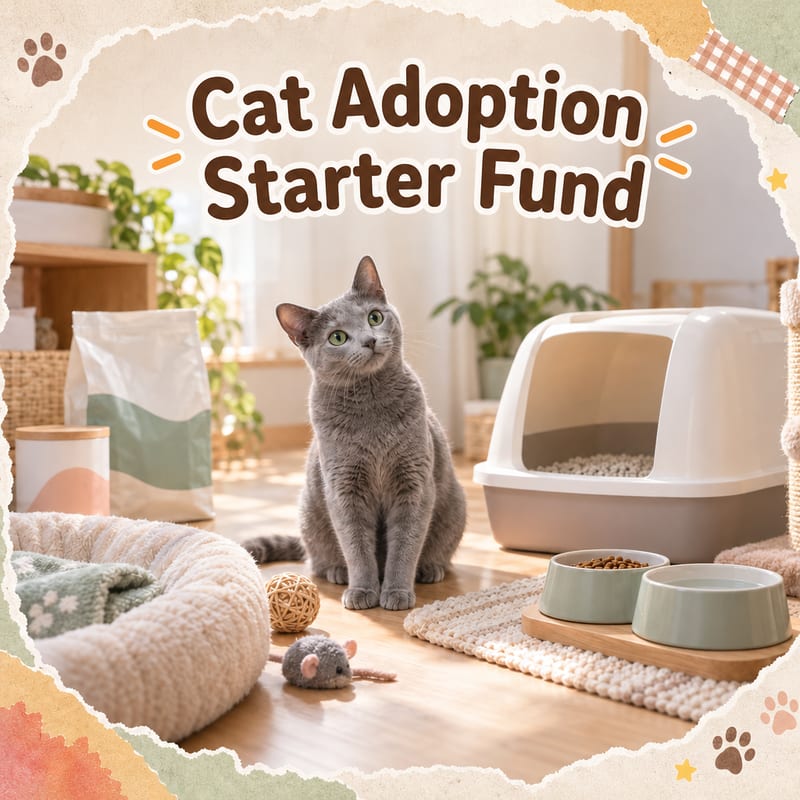
Including the first batch of cat food, the start-up reserve should be around HK$4,000–6,500. The money for buying the cat is just the entry ticket; this table is the real picture of daily costs. The real question isn't 'can I afford to buy' but 'can I afford to keep it comfortably'.
Key takeaways
- ✅ Russian Blue pet-quality about HK$10,000–16,000, pedigree-quality HK$18,000–25,000+, generally more expensive than British Shorthairs and Siamese
- ✅ The price gap comes from supply: few local Russian Blue breeding catteries, high cost of imported breeding cats
- ✅ Many 'blue cats' are actually British Shorthair blues; rely on the pedigree breed field before ordering
- ✅ Adopting a purebred is a matter of chance; a blue-grey domestic cat is a practical alternative
- ✅ Free + pay shipping / must buy specified food = cat dealer red flag; walk away immediately
- ✅ Verify five things: pedigree, parents' health records, vaccination booklet, premises verification, written guarantee
- ✅ Monthly expenses about HK$800–1,400, plus an annual medical reserve
Related reading
- Russian Blue personality full analysis
- Disadvantages of keeping a Russian Blue and how to cope
- Russian Blue lifespan and health
- Find litter boxes, slicker brushes, and starter food all at once at PetChill pet supplies.
The price ranges in this article are general observations of the local market in 2026; actual prices are subject to individual catteries and organisations. This article does not recommend specific merchants; for adoption, please follow the procedures of legitimate organisations.
Further reading
- Schnauzer price Hong Kong 2026: three sizes buying and adoption guide →
- Shiba Inu Hong Kong price and adoption guide: 2026 buy or adopt →
- Siamese cat price and adoption guide (Hong Kong) 2026 →
- Comparison of 12 cat breeds' temperament and price →
- Common diseases, preventive care, vet information →
- Cat ringworm →
- Cat vomit colour chart →
- Cat ear mite guide →
- Cat skin diseases full guide →
 Fuji One full guide →





