

Quick answer: The key words for the Russian Blue personality are 'loyal at home, reserved outside': clingy and following their chosen owner everywhere, cautious and slow to warm up with strangers and new environments; quiet, intelligent, and fond of a fixed routine. They are not aloof; they are shy and selective. They suit families with a stable pace of life who are willing to give them time to build trust.
Want to know more about the Russian Blue? Start with the Russian Blue breed profile and the Russian Blue complete guide.
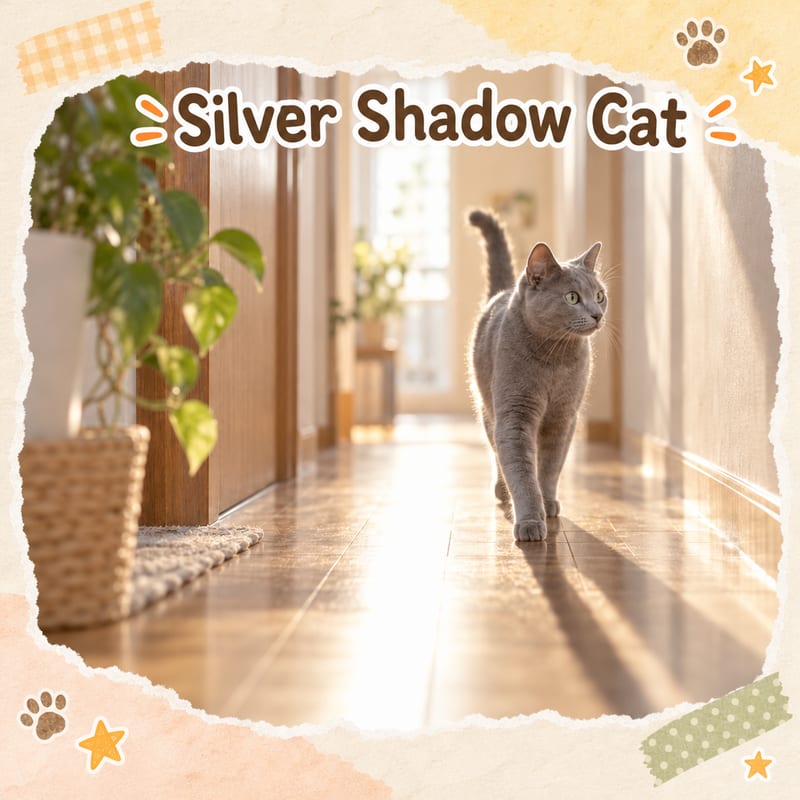
1. Five core traits: the silver 'shadow cat'
The CFA and TICA breed standards are highly consistent in describing the Russian Blue's personality: quiet, gentle, intelligent, and devoted to their chosen person. Among owners, the common saying is 'one-person cat'—they may be polite to the whole family, but in their heart there is only one 'their person'.
- Loyal and devoted: Once they choose their owner, they follow you everywhere; nicknamed the 'shadow cat'.
- Slow to warm up and shy: They keep their distance from strangers and new environments, needing an observation period before approaching.
- Quiet: Naturally soft-voiced, with a gentle meow; they won't hold a concert at 3 a.m.
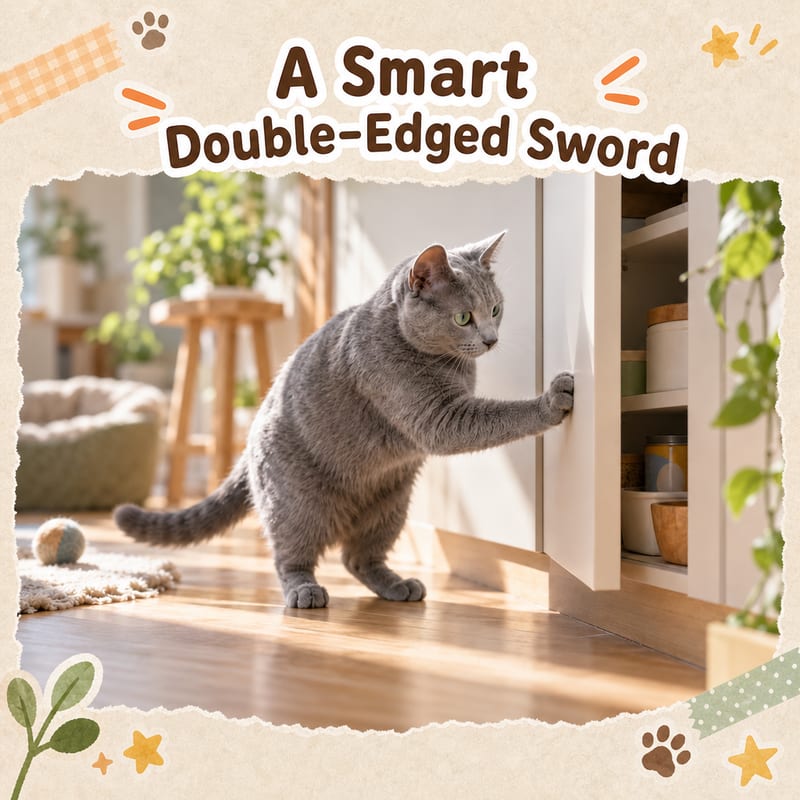
- Intelligent: Quick learners with good memories; they know how to use switches, door handles, and cabinets.
- Routine-oriented: They have expectations about daily schedules, the position of their bowls, and litter box cleanliness; changes can stress them.
2. Intelligence: a double-edged sword
The Russian Blue is never absent from discussions about feline intelligence. Common 'tricks' observed by owners include: opening doors by themselves, pulling open drawers to get toys, sitting ready at feeding time, and learning to press light switches.
Intelligence combined with sensitivity means two things: first, they learn good habits quickly—using positive reinforcement to teach sitting, returning to the cat tree, or entering a carrier is more efficient than with many breeds. Second, they learn bad habits just as quickly—if they once get to play by opening a cabinet all night, they will perform it every day at the same time. Without enough mental stimulation, they will find something to do, and you may not like their choice. Puzzle feeders, clicker training, and 10–15 minutes of interactive play daily are standard for this breed.
3. Trait × behaviour × response table
| Trait | Daily behaviour | Suggested response |
|---|---|---|
| Slow to warm up, shy | Hides when guests arrive, then comes out to inspect afterwards | Don't force socialisation; provide high places and hiding spots |
| Loyal and clingy | Follows owner everywhere, supervises your work | Set regular companionship times; avoid long periods alone in an empty room |
| Quiet, low volume | Rarely meows loudly; makes requests with eyes and soft sounds | Pay attention to subtle meows; if they meow, there's usually a specific reason |
| High intelligence | Opens doors and cabinets, uses switches | Puzzle feeders + clicker training to burn mental energy |
| Routine-oriented | May protest by refusing food if litter box moves or routine changes | Make changes gradually; place new items next to the old spot |
| Sensitive | Loud noises cause stress | Keep the home atmosphere calm; avoid conflicts near the cat |
4. Getting along with children and other pets
Children: Russian Blues are not the 'hold and cuddle' type. Their first reaction to pressure is to retreat, not attack, so polite, calm children can get along well; families with toddlers should teach the 'three rules of touching cats' and provide high escape routes.
Other cats: They are slow-paced and avoid conflict, so they can usually be introduced gradually to a multi-cat household using room-by-room introductions; but they dislike having their food or litter box taken, so resources should be separated (one food bowl, water bowl, and litter box per cat plus one).
Dogs: They can coexist peacefully with calm dogs; chasing-type dogs will cause chronic stress for a Russian Blue and need careful assessment.
5. Male vs female differences and interaction tips
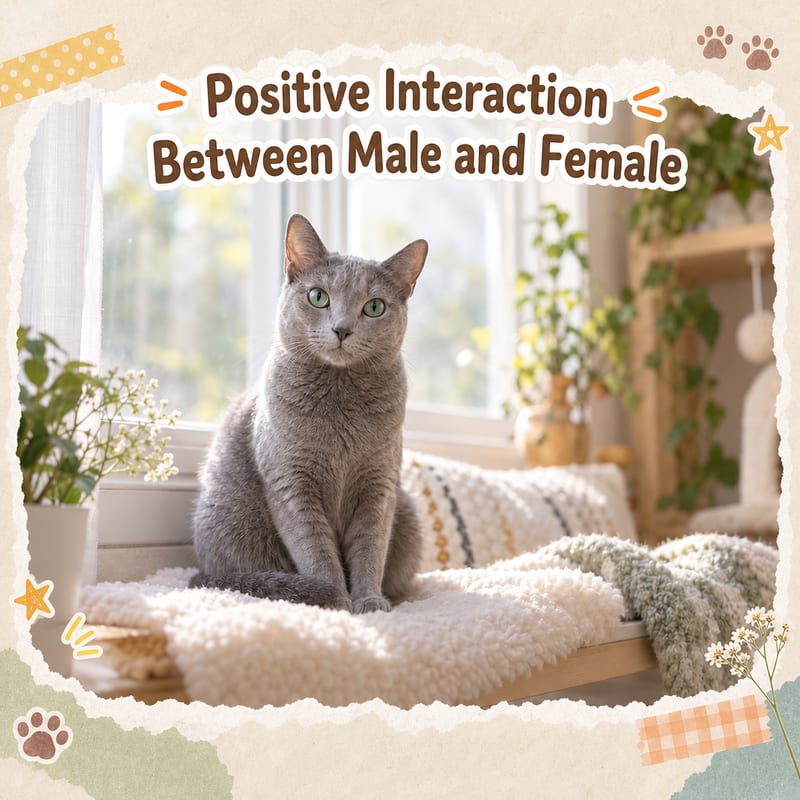
In general observations, males are more willing to express affection and show more obvious cuddling; females are more independent, and their way of bonding is 'sitting next to you rather than sleeping on you'. But remember: even littermates can have very different personalities; individual differences far outweigh sex differences. When choosing a cat, observe for half an hour in person—whether they approach you, whether they allow touching, how they react to sounds—this is more useful than asking about sex.
Three interaction tips: 1. Build trust with fixed rituals (feed at the same time, call their name with the same voice); 2. Use a wand toy to mimic prey, not your fingers; 3. When they hide, let them hide and come out on their own—'not chasing' is Russian Blue for 'I respect you'.
6. Who suits a Russian Blue best: a self-assessment
The end of a personality article is about match. Based on breed standards and general owner feedback, Russian Blues are most satisfied in the following environments:
- Families with fixed working hours: They build security through routine; a predictable 9-to-6 schedule suits their rhythm.
- Quiet residents: People who work in a study and dislike parties are a perfect match for a low-volume cat.
- Elderly people and flatmates: They won't hold nighttime concerts and have modest space needs.
- Single-cat or two-cat households: They need 'their person', but not a whole house of people.
Conversely, think twice if: you move frequently or travel long-term, your home frequently has gatherings and visitors, you want a social cat that anyone can hold, or you expect the cat to actively approach all guests. These are not the Russian Blue's fault, nor yours—just a different script. Forcing the same play makes both sides miserable.
7. Trust-building timeline: what to do in the first four weeks
- Week 1: Confine to one room with bed, litter box, food and water; feed at set times and sit with them, no holding or chasing.
- Week 2: Start interactive play with a wand toy to build the association 'you = fun and reliable'.
- Week 3: Open up one more room and observe where they choose to spend time.
- Week 4: If they actively rub against your legs and sleep next to you, trust is established and you can move to normal daily interaction.
Some cats take two weeks, others three months—both are normal. The only consistently failing approach is forcing them out to socialise because you think they are too slow.

Key points
- ✅ Russian Blue personality core: loyal and clingy at home, slow to warm up and shy outside, quiet and intelligent
- ✅ 'Shadow cat' follows their owner everywhere, but dislikes being held for long; their way of bonding is companionship
- ✅ High intelligence = learns good and bad habits quickly; needs daily mental stimulation
- ✅ Routine-oriented: changes in schedule and environment should be gradual
- ✅ Can get along with children if they are calm and polite + provide escape routes
- ✅ Males are more outgoing, females more independent as a general tendency, but individual differences outweigh sex
- ✅ The secret to building trust: fixed rituals + no chasing, no forcing
Related reading
- Russian Blue price and adoption guide
- Disadvantages of keeping a Russian Blue and how to cope
- Russian Blue lifespan and health
- Find puzzle feeders, wand toys and cat trees at PetChill pet supplies.
The personality descriptions in this article combine breed standards and general owner observations; individual differences are large. If behavioural problems persist and become unmanageable, consult a practising veterinarian or feline behaviour expert.
 K9 Natural full guide →
 Feline Natural full guide →



